Intelligent BOD Meter
Mercury-free differential pressure BOD meter measuring 0-4000mg/L range with automated sample handling, temperature control, and 10-year data storage capacity.

Louise Corscadden, PhD
Director of Science · ConductScience
Ask Louise about Intelligent BOD Meter fit, setup, configuration, or quote prep.
Already working with us? Sign in to connect this with My Scientist.
Key Specifications
Full details →- Model fit
- 2 selectable configurations
- SKU family
- CS-958406
- Shipping box
- 10.71 x 7.28 x 2.95 cm
- Ordering
- Online checkout and quote request available
- Category
- Imaging & Analysis
- Build notes
- Confirm accessories, station layout, and support needs before purchase
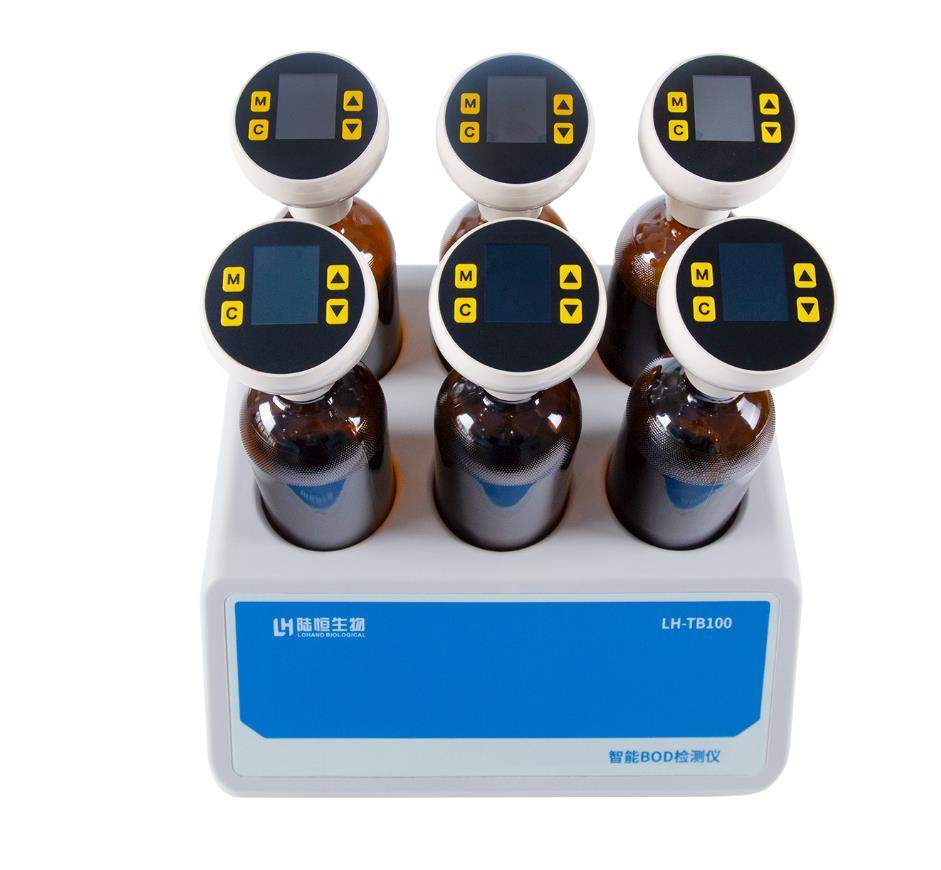
The Intelligent BOD Meter employs mercury-free differential pressure sensing to measure biochemical oxygen demand in wastewater samples with a measuring range of 0-4000mg/L and 0.01mg/L resolution. This automated instrument accommodates 1-6 samples simultaneously, maintaining precise temperature control at 20±1℃ during the measurement period to ensure accurate oxygen consumption readings by microorganisms.
The system features intelligent mixing capabilities and provides direct concentration readings with ±8% accuracy. Data storage capacity extends to 10 years of testing results, supporting comprehensive long-term monitoring programs in wastewater treatment facilities. The upgrade configuration offers enhanced functionality including dilution concentration capabilities, wireless data upload, and extended testing periods up to 30 days with 30-960 sampling points for detailed analysis protocols.
How It Works
The Intelligent BOD Meter utilizes mercury-free differential pressure sensing technology to measure oxygen consumption during the biochemical oxidation of organic matter in wastewater samples. The system maintains samples at a controlled temperature of 20±1℃ while microorganisms consume dissolved oxygen, creating a measurable pressure differential that correlates directly with biochemical oxygen demand.
During the measurement period, the instrument continuously monitors pressure changes within sealed sample bottles. As microorganisms metabolize organic compounds, they consume available dissolved oxygen, reducing the partial pressure of oxygen in the sample headspace. The differential pressure sensor detects these changes with 0.01mg/L resolution across the full 0-4000mg/L measuring range.
The system incorporates intelligent mixing to ensure homogeneous sample conditions and prevent stratification effects that could compromise measurement accuracy. Real-time data processing converts pressure differential readings to BOD concentration values, with results stored digitally for up to 10 years of historical data analysis.
Features & Benefits
Instrument Type
- Water Quality
Application Area
- Environmental Testing
Automation Level
- fully-automated
Measurement Parameter
- Biochemical Oxygen Demand (BOD)
Sample Type
- Wastewater
Automation Features
- Temperature compensation, real-time data analysis
Data Capabilities
- Data storage, reporting
Monitoring Features
- Remote monitoring and control, alarms
Application Environment
- Wastewater treatment plants, sewage treatment plants, industrial and municipal environments
Research Domain
- Analytical Chemistry
- Environmental Monitoring
- Food Science
- Industrial Hygiene
- Microbiology
- Pharmaceutical QC
Shipping weight
- 5.29 lb
Shipping box
- L: 10.71 cm
- W: 7.28 cm
- H: 2.95 cm
| Feature | This Product | Typical Alternative | Advantage |
|---|---|---|---|
| Sample Capacity | 1-6 samples simultaneously | Entry-level models often accommodate 1-2 samples only | Higher throughput enables batch processing of multiple samples for improved laboratory efficiency |
| Measurement Range | 0-4000mg/L with 0.01mg/L resolution | Basic instruments may offer narrower ranges or lower resolution | Wide dynamic range accommodates both clean water and highly contaminated samples in a single instrument |
| Data Storage | 10 years of data storage capacity | Standard models typically store weeks to months of data | Extended storage supports long-term monitoring programs and regulatory compliance documentation |
| Temperature Control | Automated control at 20±1℃ | Manual incubators require separate temperature monitoring | Integrated temperature control ensures standardized conditions without external equipment requirements |
| Safety Design | Mercury-free differential pressure sensing | Traditional systems may still use mercury-based manometers | Eliminates hazardous material handling and disposal requirements while maintaining measurement precision |
| Automation Features | Intelligent mixing and direct concentration readout | Manual systems require operator intervention for mixing and calculations | Reduces operator workload and potential for human error in routine BOD determinations |
The Intelligent BOD Meter combines mercury-free safety with multi-sample automation and extended data storage capabilities. The system provides wide-range measurement capability (0-4000mg/L) with high resolution (0.01mg/L) and integrated temperature control for standardized operation.
| Model | SKU | Listed price | Status | Shipping box |
|---|---|---|---|---|
| Upgrade Set | LB-BOD-US | $6,210.00 | Available | 10.71 x 7.28 x 2.95 cm |
| Standard Set | LB-BOD-SS | $4,990.00 | Available | 10.71 x 7.28 x 2.95 cm |
Practical Tips
Verify temperature control accuracy periodically using an independent thermometer to ensure the 20±1℃ setpoint is maintained throughout the measurement chamber.
Why: Temperature variations directly affect microbial oxygen consumption rates and measurement accuracy.
Allow samples to equilibrate to room temperature before loading to minimize thermal shock effects on the differential pressure sensor.
Why: Temperature differences can create pressure artifacts that interfere with accurate BOD measurements.
Clean sample bottle interfaces regularly and inspect seals for integrity to maintain proper pressure differential conditions.
Why: Leaks in the measurement system compromise pressure sensing accuracy and lead to erroneous BOD values.
Use the intelligent mixing feature consistently throughout the measurement period to prevent sample stratification.
Why: Stratified samples can develop oxygen gradients that do not reflect true biochemical oxygen demand.
If readings appear unstable, verify that the instrument is positioned on a vibration-free surface away from air currents.
Why: External disturbances can affect the sensitive differential pressure measurements and create measurement noise.
Handle wastewater samples using appropriate personal protective equipment despite the mercury-free operation of the instrument.
Why: Biological and chemical hazards in wastewater samples require standard laboratory safety precautions regardless of instrument design.
Document sample dilution factors when using the upgrade system's dilution concentration feature for traceability in data analysis.
Why: Proper dilution records are essential for accurate BOD calculation and regulatory reporting requirements.
Setup Guide
What’s in the Box
- Intelligent BOD Meter main unit
- Power cord and adapter
- Sample bottle holders (typical)
- User manual and operation guide
- Calibration certificate (typical)
- USB cable for data transfer (typical)
Warranty
ConductScience provides a comprehensive 1-year manufacturer warranty covering parts and labor, with technical support for calibration procedures and troubleshooting assistance.
Compliance
References
Background reading relevant to this product:
What is the minimum detection limit for BOD measurements?
The system provides 0.01mg/L resolution across the 0-4000mg/L measuring range with ±8% accuracy, suitable for detecting low-level organic contamination in clean water samples.
How does the mercury-free sensing method compare to traditional manometric BOD measurements?
The differential pressure sensing eliminates mercury handling hazards while maintaining measurement accuracy, providing safer operation with equivalent sensitivity to conventional manometric methods.
Can the system handle samples with high solids content or turbidity?
The intelligent mixing system accommodates various sample matrices, though specific turbidity limits should be verified against the product datasheet for optimal performance.
What data output formats are available for integration with LIMS systems?
The upgrade configuration includes wireless data upload and unlimited printing capabilities; consult product datasheet for specific file formats and communication protocols supported.
How frequently does the instrument require calibration?
Calibration frequency depends on usage patterns and accuracy requirements; the differential pressure sensor typically maintains stability over extended periods with periodic verification recommended.
What is the maximum sample volume that can be accommodated?
The system handles 1-6 samples simultaneously in standard BOD bottles; specific volume requirements should be confirmed against sample bottle specifications provided with the unit.
Can measurement periods be customized beyond the standard 7-day protocol?
Standard configuration supports up to 7 days, while the upgrade version extends to 30 days with programmable sampling intervals from 30-960 points for specialized research applications.
Have a question about this product?
Have a question? Just ask.
Send it over and we'll email you a personalized answer — no call, no scheduling.
Prefer to talk it through?