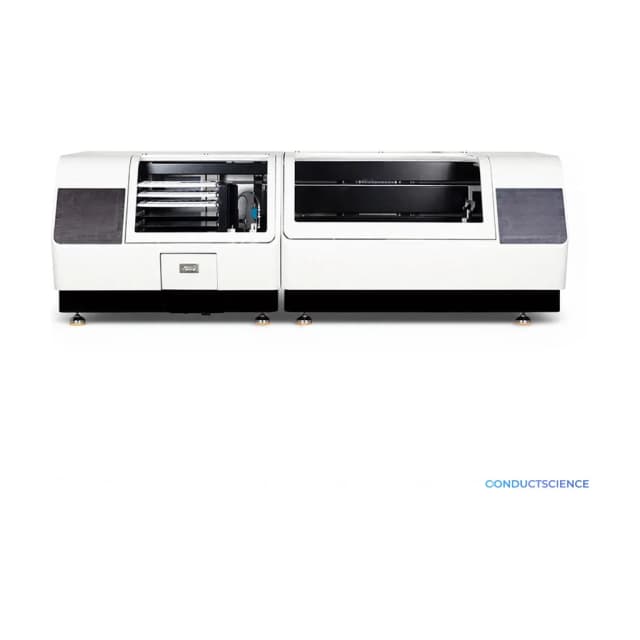
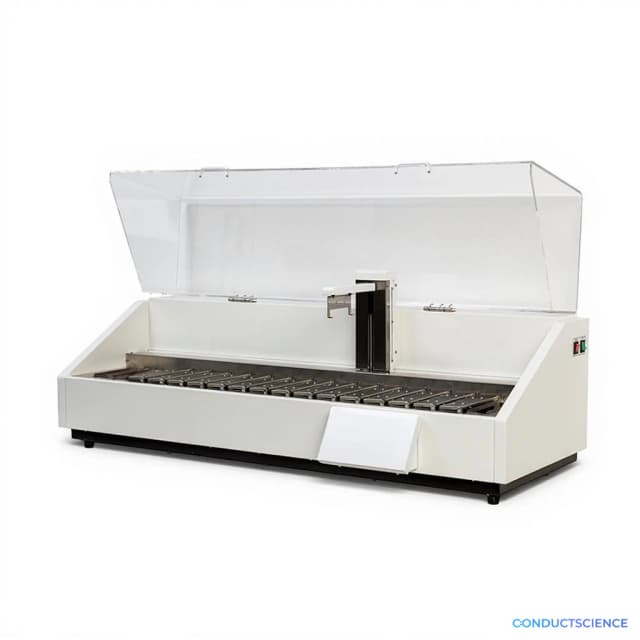
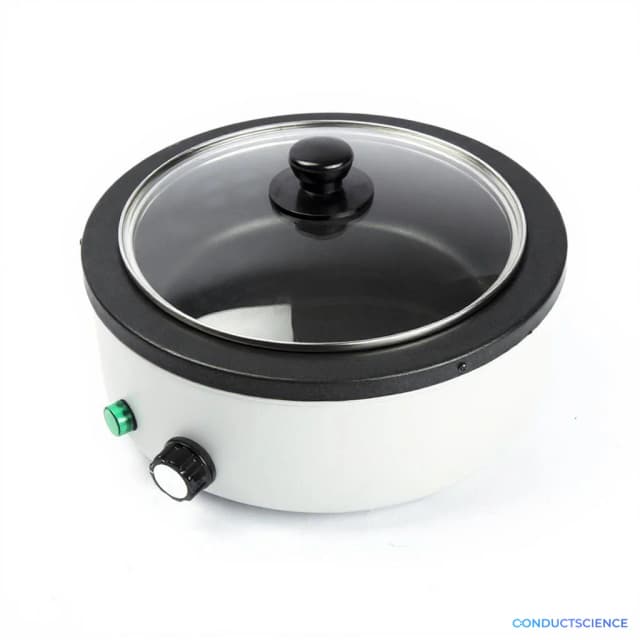
Combination Tissue Flotation Bath and Slide Dryer
Integrated tissue flotation bath and slide dryer combining section mounting and slide preparation functions in a single benchtop unit for histopathology workflows.
| Automation Level | manual |

The Combination Tissue Flotation Bath and Slide Dryer integrates two essential histopathology functions into a single benchtop unit, streamlining tissue section mounting and slide preparation workflows. This dual-function system provides controlled water bath flotation for paraffin sections alongside precision slide drying capabilities, eliminating the need for separate equipment and optimizing laboratory bench space utilization.
The integrated design enables seamless transition from tissue flotation to slide drying within a single unit, reducing handling steps and potential artifacts in tissue sections. Temperature-controlled flotation facilitates proper section expansion and mounting, while the drying component ensures consistent slide preparation for subsequent staining protocols.
How It Works
The tissue flotation component operates through controlled water bath heating that maintains precise temperatures for paraffin section expansion. When tissue sections are placed on the water surface, controlled thermal expansion eliminates wrinkles and folds, allowing proper section flattening before mounting onto glass slides. The water bath temperature is regulated to optimize section expansion without compromising tissue morphology.
The slide drying function utilizes controlled heat distribution to remove excess moisture from mounted slides. The drying surface maintains uniform temperature to ensure consistent dehydration while preventing thermal damage to tissue sections. This dual-function approach eliminates transfer steps between separate instruments, reducing handling artifacts and improving workflow efficiency.
Features & Benefits
Automation Level
- manual
Research Domain
- Cancer Research
- Cell Biology
- Developmental Biology
- Histopathology
- Neurodegeneration
- Toxicology
Weight
- 4.41 kg
Dimensions
- L: 78.0 mm
- W: 70.0 mm
- H: 73.3 mm
Comparison Guide
| Feature | This Product | Typical Alternative | Advantage |
|---|---|---|---|
| Integration Level | Combines flotation and drying functions in single unit | Separate flotation baths and slide warmers require multiple instruments | Reduces bench space requirements and simplifies workflow with fewer equipment pieces to manage |
| Temperature Control | Dual-zone temperature control for flotation and drying | Single-function units may offer more specialized temperature control for individual processes | Optimizes both flotation expansion and drying conditions within integrated workflow |
| Workflow Efficiency | Seamless transition from flotation to drying eliminates transfer steps | Separate systems require manual transfer between instruments | Reduces handling artifacts and processing time by maintaining sections within single unit |
| Bench Space Utilization | Compact dual-function footprint | Multiple instruments require larger total bench space allocation | Maximizes functionality per square inch of laboratory bench space |
This combination unit provides integrated tissue flotation and slide drying capabilities in a space-efficient design. The dual-function approach streamlines histopathology workflows while maintaining performance standards equivalent to separate dedicated instruments.
Practical Tips
Verify water bath temperature with calibrated thermometer monthly and adjust controls as needed.
Why: Temperature accuracy is critical for proper paraffin section expansion without thermal damage.
Change flotation water daily and clean bath surfaces weekly to prevent contamination buildup.
Why: Clean water and surfaces prevent artifacts and cross-contamination between tissue samples.
Allow drying surface to reach target temperature before placing slides to ensure uniform moisture removal.
Why: Temperature equilibration prevents uneven drying that could affect subsequent staining quality.
If sections wrinkle during flotation, gradually increase water temperature in 1-2°C increments.
Why: Gradual temperature adjustment prevents section tearing while achieving proper expansion.
Ensure complete slide drying before storage or staining to prevent section detachment.
Why: Residual moisture compromises section adhesion and can cause artifacts during staining procedures.
Use distilled water only in flotation bath to prevent mineral deposits and potential electrical hazards.
Why: Pure water prevents buildup that could interfere with heating elements and temperature sensors.
Setup Guide
What’s in the Box
- Combination tissue flotation bath and slide dryer unit (typical)
- Power cord (typical)
- User manual and operation guide (typical)
- Temperature calibration instructions (typical)
Warranty
ConductScience provides a standard one-year manufacturer warranty covering defects in materials and workmanship, with technical support for operation and maintenance guidance.
Compliance
What temperature range is optimal for different paraffin types during flotation?
Flotation temperature depends on paraffin melting point; typically 40-45°C for standard paraffin. Consult product datasheet for specific temperature control range and adjustment procedures.
How many slides can the drying surface accommodate simultaneously?
Slide capacity depends on drying surface dimensions and slide spacing requirements. Consult product specifications for exact capacity and recommended slide arrangement.
Can the unit handle both routine and specialty staining protocols?
Yes, the controlled flotation and drying conditions are suitable for sections destined for H&E, IHC, and special stains. Ensure complete drying before staining procedures.
What maintenance is required for optimal performance?
Regular water changes, cleaning of flotation surface, and temperature calibration checks. Detailed maintenance schedule provided in user manual.
Is the unit compatible with automated staining systems?
Yes, properly floated and dried slides are compatible with automated stainers. Ensure complete moisture removal before loading into staining systems.
How does this compare to separate flotation bath and slide warmer units?
Integrated design reduces bench space and handling steps while maintaining equivalent performance to separate units. May offer slight workflow advantages in high-throughput settings.
Have a question about this product?