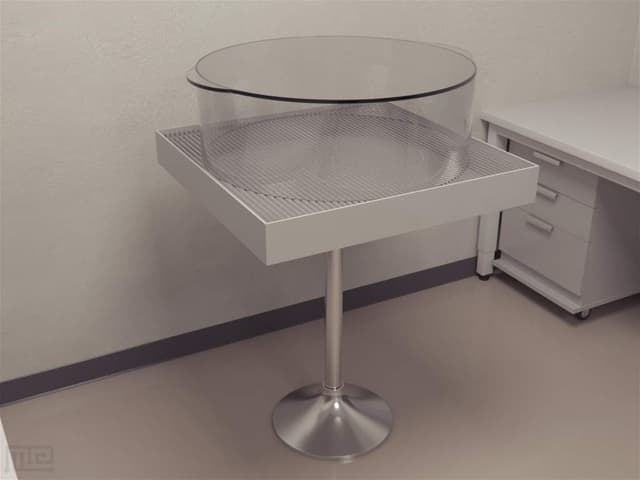
Complex Fish Maze
Behavioral testing apparatus for spatial learning and memory assessment in zebrafish and aquatic model organisms, featuring configurable maze pathways for cognitive function evaluation.
| Automation Level | manual |
| Species | Zebrafish |

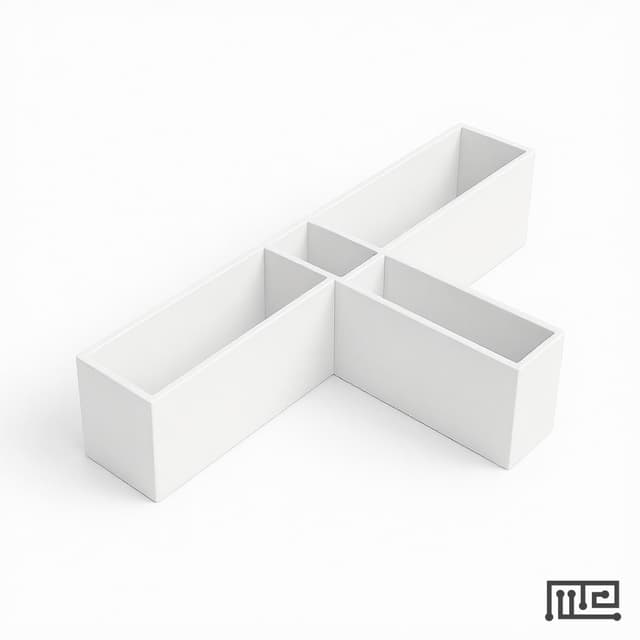
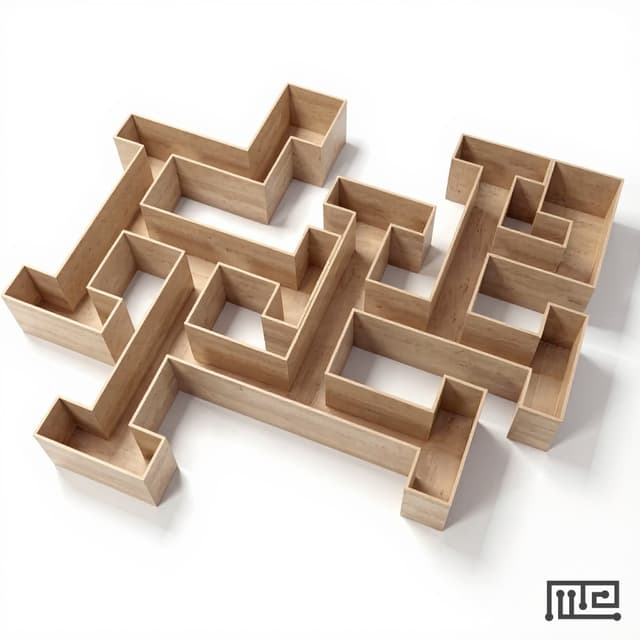
The Complex Fish Maze is a sophisticated behavioral testing apparatus designed for comprehensive spatial learning and memory assessment in zebrafish and other aquatic model organisms. This specialized maze system provides researchers with a controlled environment to evaluate cognitive function, spatial navigation abilities, and learning paradigms in fish subjects through carefully designed pathway configurations and choice points.
The system enables quantitative assessment of spatial memory formation, retention, and retrieval in aquatic behavioral studies. Researchers can implement various experimental protocols including reference memory tasks, working memory assessments, and reversal learning paradigms to investigate the neural mechanisms underlying cognition in fish models.
How It Works
The Complex Fish Maze operates on principles of spatial cognition assessment through controlled choice-point navigation in an aquatic environment. Fish subjects navigate through a series of interconnected pathways and decision points, with their movement patterns and choices recorded to quantify spatial learning performance. The maze configuration creates multiple possible routes to target locations, requiring subjects to form spatial representations and utilize memory-guided navigation strategies.
Behavioral assessment relies on measuring latency to reach designated goal zones, path efficiency, and choice accuracy across repeated trials. The system allows for implementation of various cognitive paradigms including reference memory protocols where spatial relationships remain constant, and working memory tasks requiring trial-specific information retention. Performance metrics include swimming patterns, turn preferences, and error rates at choice points.
The aquatic environment maintains appropriate water conditions while providing visual cues and spatial landmarks that fish subjects can utilize for navigation. Data collection focuses on quantitative measures of spatial learning acquisition, memory consolidation, and behavioral flexibility through systematic manipulation of maze configurations and reward contingencies.
Features & Benefits
Behavioral Construct
- Spatial Learning
- Spatial Memory
- Reference Memory
- Working Memory
- Cognitive Flexibility
Automation Level
- manual
Research Domain
- Behavioral Pharmacology
- Developmental Biology
- Learning & Memory
- Neurodegeneration
- Neuroscience
- Toxicology
Species
- Zebrafish
Weight
- 6.06 kg
Dimensions
- L: 65.0 mm
- W: 36.0 mm
- H: 27.0 mm
Comparison Guide
| Feature | This Product | Typical Alternative | Advantage |
|---|---|---|---|
| Pathway Complexity | Multiple interconnected pathways with numerous choice points | Simple two or three-arm configurations | Enables assessment of sophisticated spatial navigation strategies requiring multi-step planning and memory integration. |
| Cognitive Paradigms | Supports reference memory, working memory, and reversal learning protocols | Limited to basic choice-based tasks | Allows comprehensive evaluation of different memory systems and cognitive flexibility within a single apparatus. |
| Environmental Control | Configurable maze layout with integrated cue positioning | Fixed configurations with limited spatial manipulation | Provides experimental flexibility to investigate spatial vs. cued navigation strategies through systematic environmental modification. |
| Behavioral Metrics | Multiple performance measures including path efficiency and choice accuracy | Basic latency and choice measurements | Enables detailed behavioral analysis of navigation strategies and spatial learning mechanisms through comprehensive performance quantification. |
The Complex Fish Maze provides sophisticated spatial cognition assessment capabilities through multi-pathway configurations and diverse cognitive paradigms. The system supports comprehensive behavioral analysis with configurable environmental conditions for advanced aquatic behavioral research applications.
Practical Tips
Ensure consistent water depth across all maze arms and verify that visual cues are positioned at standardized distances from choice points.
Why: Uniform conditions are critical for reliable spatial learning assessment and cross-trial comparisons.
Clean maze pathways thoroughly between subjects and replace water regularly to prevent chemical cue accumulation.
Why: Residual chemical traces from previous subjects can influence navigation behavior and confound spatial learning measurements.
Implement consistent inter-trial intervals and maintain stable lighting conditions throughout experimental sessions.
Why: Standardized timing and environmental conditions are essential for reproducible spatial memory formation and retrieval.
Record baseline swimming behavior during habituation sessions to establish individual performance baselines before cognitive testing.
Why: Individual differences in swimming capacity can affect maze performance independent of spatial learning abilities.
If subjects show persistent side preferences, rotate the maze orientation or modify cue positions to eliminate spatial biases.
Why: Uncontrolled spatial preferences can mask true learning performance and reduce the sensitivity of cognitive assessments.
Monitor water temperature continuously during extended testing sessions and provide appropriate oxygenation for subject welfare.
Why: Physiological stress from suboptimal water conditions can impair cognitive performance and affect experimental validity.
Setup Guide
What’s in the Box
- Complex Fish Maze apparatus (typical)
- Pathway divider components (typical)
- Assembly hardware and connectors (typical)
- Setup and protocol manual (typical)
- Visual cue markers (typical)
Warranty
ConductScience provides a standard one-year manufacturer warranty covering defects in materials and workmanship, with technical support for setup and protocol optimization.
Compliance
References
Background reading relevant to this product:
What cognitive paradigms can be implemented using this maze system?
The maze supports reference memory protocols with fixed spatial relationships, working memory tasks requiring trial-specific information, reversal learning paradigms, and spatial vs. cued navigation assessments through systematic manipulation of environmental cues.
How is behavioral performance quantified in maze studies?
Primary metrics include latency to reach goal zones, path efficiency measures, choice accuracy at decision points, error patterns, and swimming velocity. Video tracking enables automated analysis of movement patterns and spatial preferences.
What are the optimal water conditions for zebrafish maze testing?
Maintain water temperature at 26-28°C with appropriate pH (7.0-7.5) and conductivity levels. Ensure adequate water depth for normal swimming behavior while preventing jumping or escape behaviors.
How many trials are typically required for spatial learning assessment?
Standard protocols employ 4-8 trials per day over 5-10 consecutive days for acquisition phase assessment, followed by probe trials without reward to test memory retention and spatial preference.
Can the maze configuration be modified for different experimental needs?
Yes, the pathway layout can be reconfigured to create different levels of complexity, alternative choice patterns, and varied spatial relationships to support diverse cognitive assessment paradigms.
What video tracking requirements are needed for automated analysis?
Overhead camera positioning with sufficient resolution for accurate position detection, consistent lighting to minimize shadows, and compatible tracking software capable of real-time position analysis and path reconstruction.
How does maze performance compare to other cognitive assessment methods?
The maze provides more complex spatial assessment than simple T-maze or Y-maze configurations, enabling evaluation of sophisticated navigation strategies while maintaining standardized testing conditions for reproducible results.
Have a question about this product?