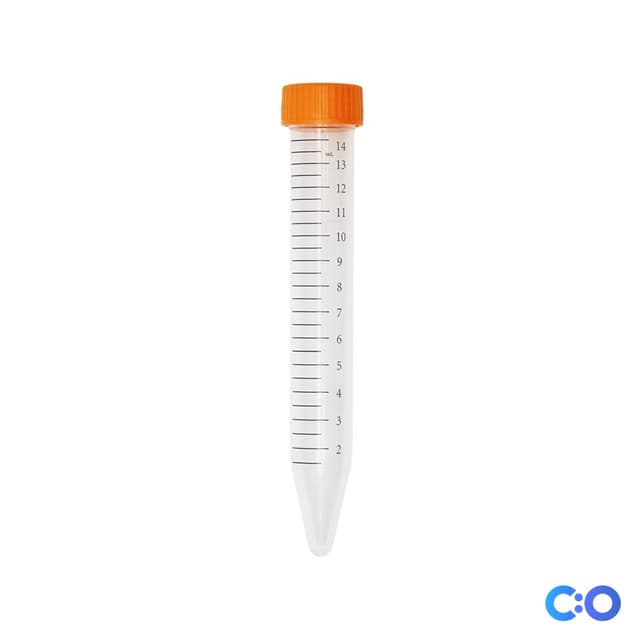
ConductScience Cryogenic Vials 1.0mL, Internal Thread, Sterile (Pack of 10)
$78.00 per unit | 10 units per pack Bulk pricing: Pack of 10 at $780.00 ($78.00 per unit)
| Automation Level | manual |

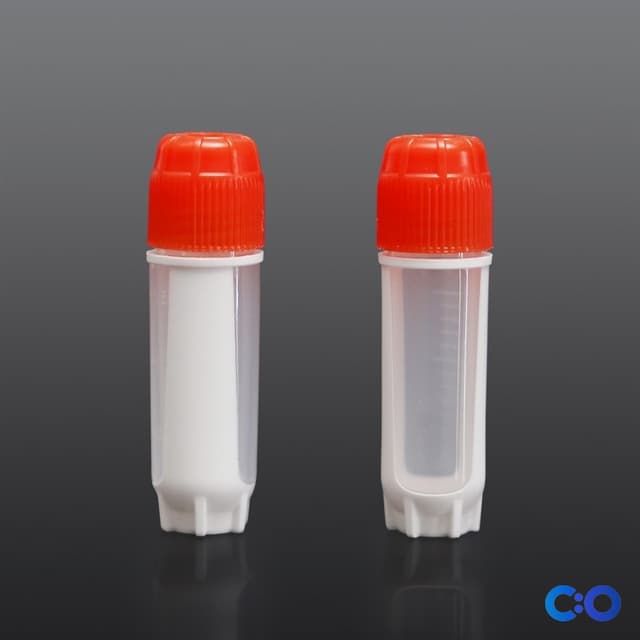
ConductScience Cryogenic Vials provide reliable sample storage at ultra-low temperatures for long-term preservation of biological specimens, cell lines, and chemical compounds. Each 1.0mL vial features internal threading with a silicone O-ring seal to maintain sample integrity during cryogenic storage and freeze-thaw cycles. The self-standing design facilitates organized storage in freezer racks and dewars.
These sterile vials withstand temperatures down to -196°C, making them suitable for liquid nitrogen storage applications. The internal thread design provides secure closure while minimizing the risk of cross-contamination during sample handling. The vials are supplied sterile and ready for immediate use in research and clinical laboratory environments.
How It Works
Cryogenic preservation relies on reducing molecular motion through extreme temperature reduction, effectively halting biochemical degradation processes. At -196°C (liquid nitrogen temperature), enzymatic activity ceases and ice crystal formation is minimized through rapid cooling, preserving cellular structures and molecular integrity.
The internal thread design creates a mechanical seal enhanced by the silicone O-ring, which maintains flexibility at cryogenic temperatures while preventing vapor infiltration and sample contamination. The polypropylene construction provides chemical inertness and maintains structural integrity through repeated freeze-thaw cycles without becoming brittle.
During storage, the self-standing base design allows for organized placement in freezer racks and facilitates sample identification. The 1.0mL capacity provides optimal volume for most biological samples while minimizing storage space requirements in liquid nitrogen dewars or ultra-low temperature freezers.
Features & Benefits
Automation Level
- manual
Research Domain
- Cancer Research
- Cell Biology
- Clinical Diagnostics
- Immunology
- Microbiology
- Pharmaceutical QC
Weight
- 30.92 kg
Dimensions
- L: 43.2 mm
- W: 36.0 mm
- H: 28.8 mm
Comparison Guide
| Feature | This Product | Typical Alternative | Advantage |
|---|---|---|---|
| Thread Design | Internal threading with silicone O-ring seal | External threads or snap-cap closures are common in basic models | Internal threads provide better sealing integrity and reduce contamination risk during storage. |
| Temperature Range | Withstands -196°C (liquid nitrogen compatible) | Some economy vials only rated to -80°C | Full cryogenic compatibility enables long-term storage in liquid nitrogen systems. |
| Base Design | Self-standing design | Round-bottom vials require rack support | Self-standing feature facilitates organized storage and reduces handling complexity. |
| Sterility | Supplied sterile and ready-to-use | Non-sterile vials require pre-treatment | Eliminates sterilization step and reduces contamination risk in sterile applications. |
These vials combine internal threading, cryogenic temperature compatibility, and sterile packaging to provide reliable sample storage for demanding research applications. The self-standing design and silicone O-ring sealing system offer practical advantages for laboratory workflows.
Practical Tips
Leave 10-20% headspace when filling vials to accommodate thermal expansion during freezing.
Why: Prevents vial cracking and seal failure due to sample expansion at low temperatures.
Always use insulated forceps and appropriate PPE when handling vials in liquid nitrogen.
Why: Direct contact with cryogenic materials can cause severe frostbite injury.
Inspect O-ring seals for damage or wear before each use in critical applications.
Why: Compromised seals can lead to sample contamination or loss during storage.
Record freezing date and cooling rate for each sample to track storage history.
Why: Documentation enables correlation of storage conditions with sample viability and integrity.
Use controlled-rate freezing to -80°C before liquid nitrogen transfer for cell samples.
Why: Gradual cooling minimizes ice crystal formation and preserves cellular structure.
If caps become difficult to remove after cryogenic storage, allow gradual warming to room temperature.
Why: Thermal contraction can make threads tight; forcing may damage the vial or seal.
Store vials upright in organized racks with clear labeling systems for easy identification.
Why: Systematic storage prevents sample mix-ups and enables efficient inventory management.
Setup Guide
What’s in the Box
- 500 x 1.0mL cryogenic vials with caps
- Internal threaded caps with silicone O-rings
- Certificate of sterility (typical)
- Product documentation (typical)
Warranty
ConductScience provides standard warranty coverage for manufacturing defects with technical support for proper use and storage recommendations.
Compliance
What cryoprotectants are compatible with these vials?
The polypropylene construction is compatible with standard cryoprotectants including DMSO, glycerol, and ethylene glycol. The chemical inertness prevents interactions with most biological preservatives.
How many freeze-thaw cycles can these vials withstand?
The polypropylene material maintains structural integrity through multiple freeze-thaw cycles. Consult product datasheet for specific cycle testing data and recommended usage limits.
Are these vials compatible with automated storage systems?
The self-standing design and standard dimensions are compatible with most automated cryogenic storage systems and robotic handling equipment. Verify dimensional compatibility with specific system requirements.
What is the recommended cooling rate for sample preservation?
Cooling rates depend on sample type and volume. For cell lines, controlled-rate freezing at 1°C/minute to -80°C followed by liquid nitrogen transfer is typically recommended.
Can these vials be autoclaved before use?
The vials are supplied sterile. If re-sterilization is required, polypropylene can withstand standard autoclave cycles, though this may affect the silicone O-ring performance.
What labeling methods work at cryogenic temperatures?
Use cryogenic-compatible adhesive labels or permanent markers designed for low-temperature applications. Standard labels may lose adhesion at -196°C.
Have a question about this product?
Upgrade Options
Related Products