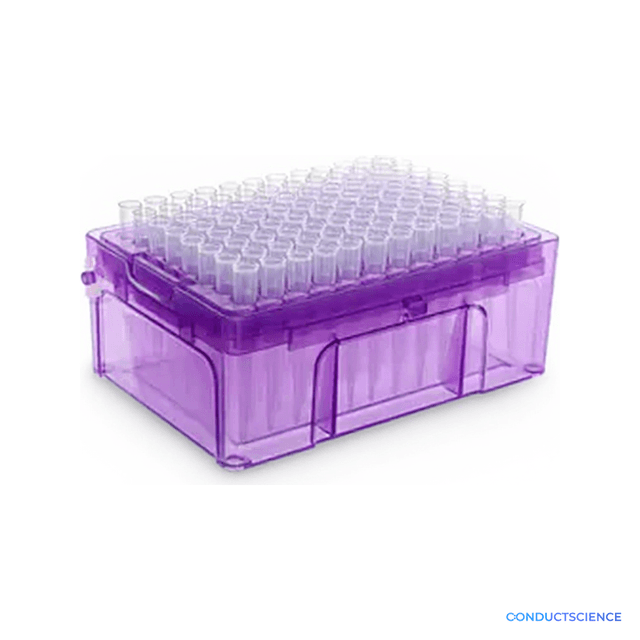
ConductScience Cryogenic Vials 5.0mL, External Thread, Sterile (Pack of 15)
$45.00 per unit | 15 units per pack Bulk pricing: Pack of 15 at $675.00 ($45.00 per unit)

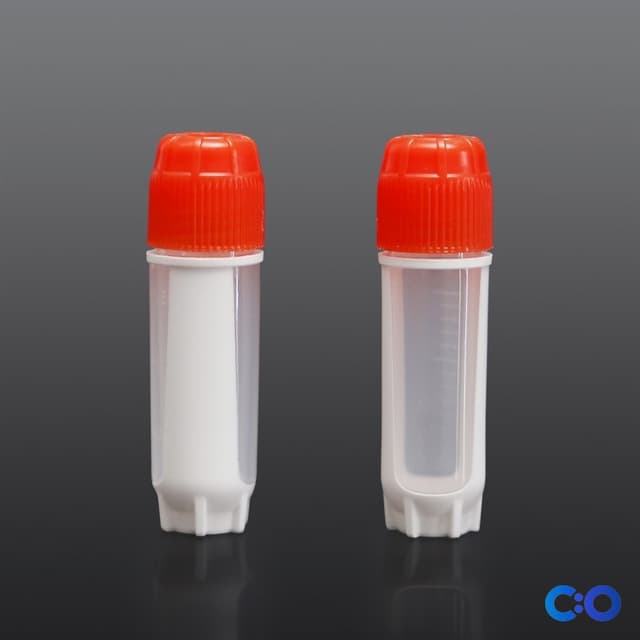
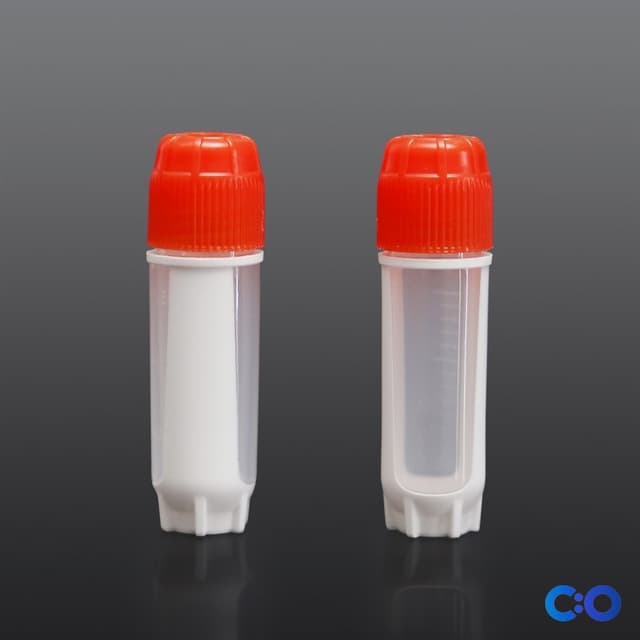
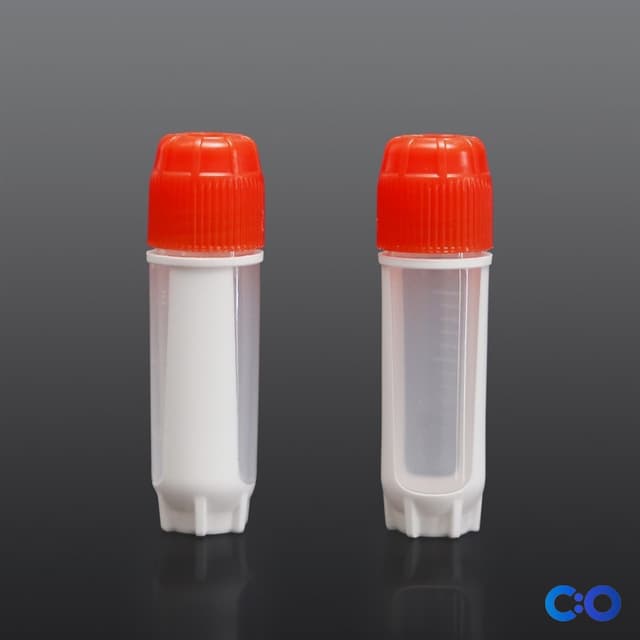
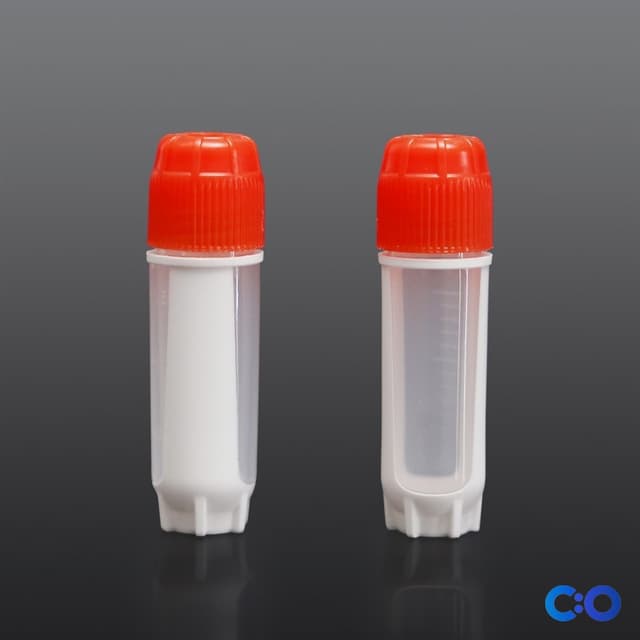
These 5.0mL cryogenic vials are designed for large-volume biobanking applications requiring ultra-low temperature storage. Constructed to withstand temperatures down to -196°C, they feature external threading for secure closure and a self-standing base for stable upright positioning in freezer racks and dewars. The sterile packaging maintains sample integrity for critical biological preservation workflows.
The external thread design provides reliable sealing performance under extreme temperature cycling while allowing for easy identification and retrieval in cryogenic storage systems. Each vial accommodates up to 5.0mL of biological samples, making them suitable for storing larger volume specimens such as tissue homogenates, cell pellets, or concentrated solutions that require long-term preservation at liquid nitrogen temperatures.
How It Works
Cryogenic preservation relies on the principle that extremely low temperatures dramatically slow molecular motion and enzymatic activity, effectively halting biological degradation processes. At -196°C (liquid nitrogen temperature), cellular metabolism ceases and ice crystal formation is minimized through rapid freezing, preserving cellular structure and molecular integrity.
The external thread closure system creates a secure seal that maintains sample integrity during temperature cycling. The polypropylene construction provides chemical inertness and thermal stability across the full temperature range from ambient to liquid nitrogen temperatures. The self-standing base design ensures stable positioning during freezing and storage, preventing sample loss due to tipping in storage racks.
Features & Benefits
Research Domain
- Cancer Research
- Cell Biology
- Developmental Biology
- Immunology
- Microbiology
- Pharmaceutical QC
Weight
- 30.92 kg
Dimensions
- L: 43.2 mm
- W: 36.0 mm
- H: 28.8 mm
Comparison Guide
| Feature | This Product | Typical Alternative | Advantage |
|---|---|---|---|
| Volume Capacity | 5.0mL | Standard models typically offer 1.5-2.0mL capacity | Accommodates larger tissue samples and concentrated solutions without requiring multiple vials per specimen |
| Thread Design | External threading | Many models use internal thread designs | Easier to handle with cryogenic gloves and provides visual confirmation of proper cap seating |
| Base Design | Self-standing base | Some models require rack support for upright positioning | Maintains stability during sample preparation and reduces risk of spills or contamination |
| Temperature Rating | -196°C tolerance | Entry-level models may be limited to -80°C applications | Enables direct liquid nitrogen storage for maximum preservation effectiveness |
These vials combine high-volume capacity with external threading for improved handling in cryogenic environments. The self-standing design and -196°C rating make them well-suited for demanding biobanking applications requiring reliable long-term storage.
Practical Tips
Allow samples to equilibrate to room temperature gradually before opening to prevent condensation contamination.
Why: Rapid temperature changes can cause moisture condensation that may contaminate samples or affect analysis.
Always use appropriate cryogenic PPE including insulated gloves and face protection when handling liquid nitrogen storage.
Why: Direct contact with cryogenic materials can cause severe frostbite and tissue damage.
Regularly inspect stored vials for cap integrity and ice buildup that might indicate seal failure.
Why: Early detection of seal problems prevents sample degradation and cross-contamination in storage systems.
Maintain detailed sample logs including freeze-thaw cycles and storage duration for each vial.
Why: Storage history directly impacts sample quality and experimental reproducibility.
If caps become difficult to remove after cryogenic storage, allow gradual warming rather than forcing.
Why: Thermal contraction can increase cap tightness, and forcing may damage threads or crack the vial.
Use a controlled-rate freezer or step-wise cooling protocol for temperature-sensitive samples.
Why: Gradual cooling minimizes ice crystal formation that can damage cellular structures.
Setup Guide
What’s in the Box
- 100 x 5.0mL cryogenic vials with external threads
- 100 x matching screw caps
- Product documentation and specifications
Warranty
ConductScience provides standard manufacturer warranty coverage against defects in materials and workmanship. Technical support available for application-specific storage protocols and compatibility questions.
Compliance
What is the maximum storage temperature these vials can withstand?
The vials are designed to withstand temperatures down to -196°C, making them suitable for direct liquid nitrogen storage.
How much headspace should be left when filling the vials?
Leave 10-20% headspace to accommodate thermal expansion during freezing and prevent seal failure or vial cracking.
Are these vials compatible with automated storage systems?
The self-standing design and standard dimensions make them compatible with most automated cryogenic storage and retrieval systems.
Can the vials be autoclaved before use?
The vials are supplied sterile, but if re-sterilization is required, consult product specifications for autoclave compatibility and maximum temperature limits.
What labeling options work at cryogenic temperatures?
Use cryogenic-compatible labels designed for -196°C exposure, typically using specialized adhesives that remain functional at ultra-low temperatures.
How do these compare to internal thread alternatives?
External threads provide easier handling with gloves and better visual confirmation of proper sealing compared to internal thread designs.
Have a question about this product?
Upgrade Options