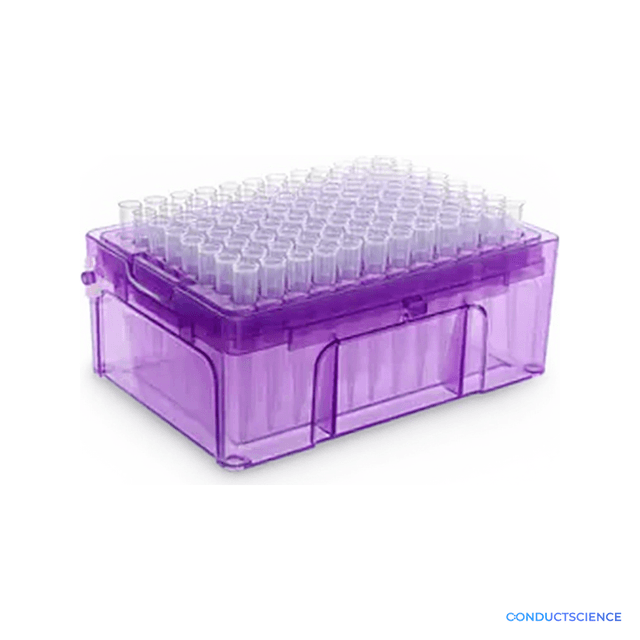
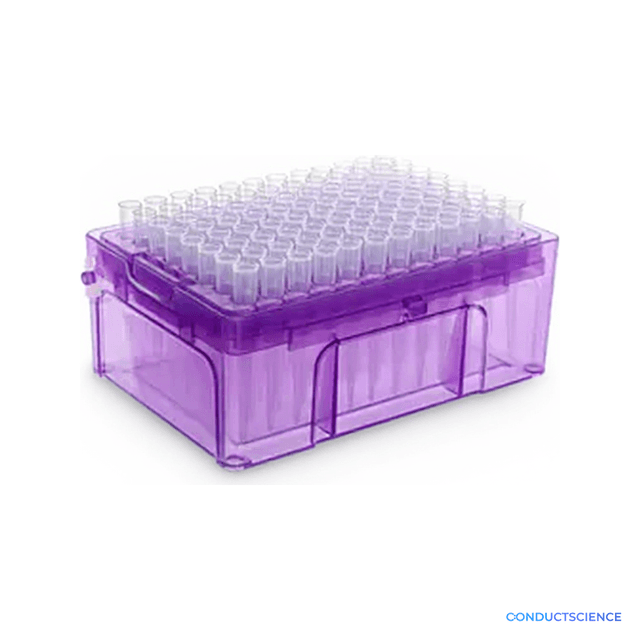
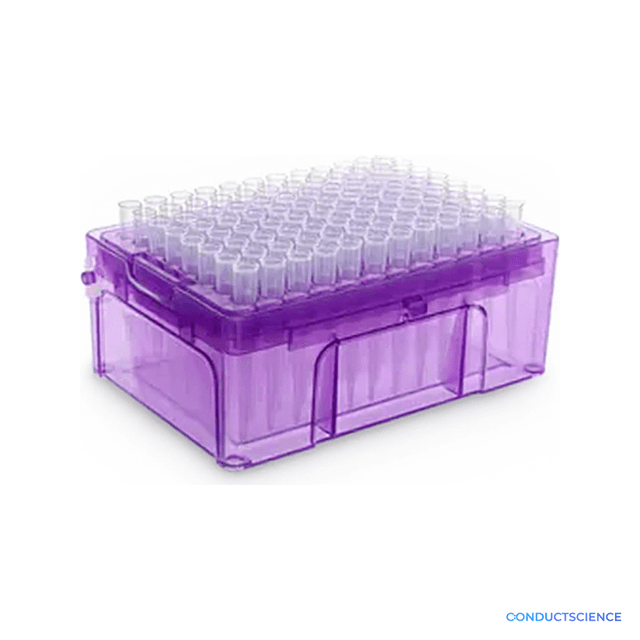
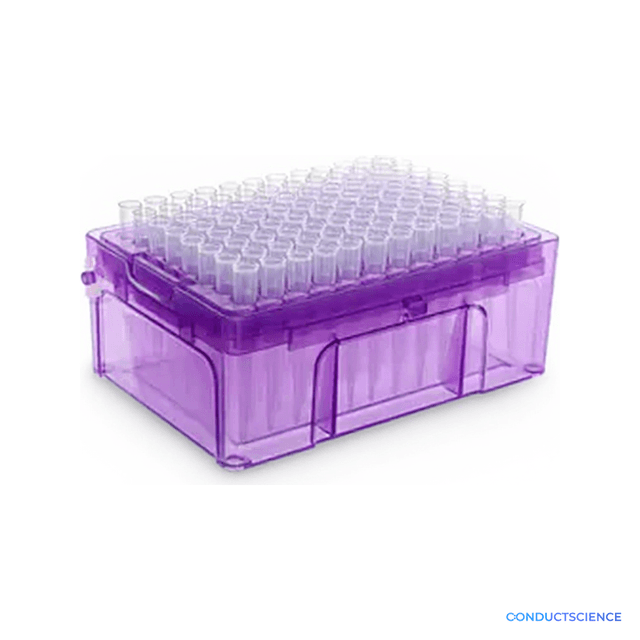
ConductScience Pipette Tips 1000uL, Non-Filtered, Sterile (Pack of 20)
$35.00 per unit | 20 units per pack Bulk pricing: Pack of 20 at $700.00 ($35.00 per unit)
| Automation Level | manual |

Universal-fit 1000µL pipette tips manufactured from medical-grade polypropylene for precise liquid handling in research applications. These sterile, DNase/RNase-free tips feature blue tinting for visual identification and compatibility with standard micropipettes. Autoclavable construction supports sterilization protocols required for molecular biology and cell culture work.
The tips are designed for accurate volume delivery in the 100-1000µL range, supporting protocols requiring contamination-free sample transfer. Pre-sterilized packaging eliminates preparation time while maintaining sterility until use. The universal fit design accommodates most major micropipette brands commonly used in research laboratories.
How It Works
Pipette tips function as disposable interfaces between micropipettes and liquid samples, providing contamination-free volume measurement through precise displacement mechanics. The tip creates a sealed connection with the pipette shaft, allowing accurate aspiration and dispensing through controlled piston movement. Medical-grade polypropylene construction provides chemical compatibility with most aqueous and organic solvents while maintaining dimensional stability.
The blue-tinted material aids in volume visualization and tip identification during multi-step protocols. Sterile packaging and DNase/RNase-free certification prevent enzymatic contamination that could compromise nucleic acid-based assays. The universal fit design accommodates standard pipette shaft geometries through engineered taper specifications.
Features & Benefits
Automation Level
- manual
Research Domain
- Analytical Chemistry
- Cell Biology
- Clinical Diagnostics
- Environmental Monitoring
- Microbiology
- Pharmaceutical QC
Weight
- 4.41 kg
Dimensions
- L: 22.6 mm
- W: 18.8 mm
- H: 15.1 mm
Comparison Guide
| Feature | This Product | Typical Alternative | Advantage |
|---|---|---|---|
| Volume Range | 1000µL maximum capacity | Entry-level tips often limited to 200µL or require multiple sizes | Single tip size handles most common laboratory liquid volumes, reducing inventory complexity |
| Sterility Assurance | Pre-sterilized and DNase/RNase-free certified | Basic tips may require user sterilization | Ready-to-use sterility saves preparation time and ensures contamination-free molecular biology work |
| Material Grade | Medical-grade polypropylene construction | Standard laboratory grade plastics vary in purity | Medical-grade certification provides consistent chemical compatibility and reduced leachables |
| Visual Identification | Blue-tinted for easy recognition | Clear tips can be difficult to distinguish | Color coding reduces tip size confusion during complex multi-step protocols |
| Compatibility Design | Universal fit for most pipette brands | Brand-specific tips limit equipment flexibility | Reduces inventory requirements in laboratories with multiple pipette manufacturers |
These tips combine medical-grade construction with universal compatibility and pre-sterilization, offering laboratory-ready performance for molecular biology and cell culture applications. Blue tinting aids protocol management while maintaining chemical compatibility standards.
Practical Tips
Pre-wet tips 2-3 times with sample liquid before final aspiration to ensure accurate volume delivery.
Why: Eliminates volume errors caused by liquid film retention on tip interior surfaces.
Use new tip for each sample transfer and avoid touching tip orifices with gloved hands.
Why: Prevents cross-contamination between samples and maintains sterility for sensitive applications.
Store opened tip boxes in clean, dry environment and reseal packaging when not in use.
Why: Maintains tip cleanliness and prevents dust accumulation that could affect volume accuracy.
If volume delivery appears inconsistent, check tip seating on pipette shaft and inspect for damage.
Why: Poor tip seal or damage can cause volume errors and liquid retention issues.
Inspect pipette shaft for residue buildup that could affect tip seating and clean as needed.
Why: Contamination on pipette shaft can prevent proper tip seal and compromise volume accuracy.
For critical quantitative work, verify volume accuracy using gravimetric method with distilled water.
Why: Ensures measurement uncertainty is within acceptable limits for your specific analytical requirements.
Dispose of tips in appropriate sharps or biohazard containers depending on sample exposure.
Why: Prevents accidental exposure and meets laboratory waste disposal safety requirements.
Setup Guide
What’s in the Box
- 960 x 1000µL pipette tips (typical)
- Sterile packaging (typical)
- Certificate of analysis (typical)
Warranty
ConductScience provides standard manufacturer warranty covering material defects and sterility assurance. Technical support available for compatibility and application questions.
Compliance
References
Background reading relevant to this product:
What is the volume accuracy specification for these tips?
Consult product datasheet for specific accuracy and precision specifications. Volume accuracy depends on both tip manufacturing tolerances and micropipette calibration status.
Are these tips compatible with electronic micropipettes?
Universal fit design accommodates most standard micropipette types including electronic models. Verify shaft diameter compatibility with your specific pipette model.
Can these tips be used with viscous solutions?
Yes, polypropylene construction handles most viscous laboratory solutions. Use slower aspiration/dispensing rates and pre-wet tips for optimal accuracy with high-viscosity samples.
What temperature range can these tips withstand?
Polypropylene tips typically handle standard laboratory temperatures. Consult product datasheet for specific temperature limits, particularly for heated applications or cold storage use.
How should unused tips be stored after package opening?
Store in clean, dry environment away from direct sunlight. Re-seal packaging to maintain cleanliness. For sterile applications, consider transferring to sterile containers if original packaging is compromised.
Are these tips suitable for organic solvents?
Polypropylene shows good compatibility with many organic solvents. Test compatibility with specific solvents used in your protocols, particularly for long-term contact applications.
Have a question about this product?
Accessories
Enhance your setup with compatible accessories
Frequently Bought Together
Upgrade Options
Related Products