ConductScience Sampling Tubes 10mL with Screw Cap, Sterile (Case of 10)
$55.00 per unit | 10 units per pack Bulk pricing: Case of 10 at $550.00 ($55.00 per unit)
| Automation Level | manual |

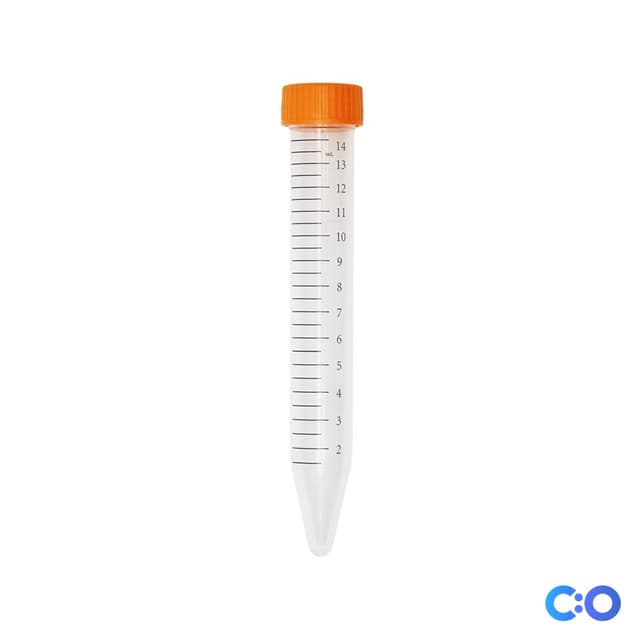
The ConductScience Sampling Tubes 10mL with Screw Cap represent essential laboratory consumables designed for sterile sample collection, transport, and storage applications. These self-standing tubes feature secure screw caps with O-ring seals to maintain sample integrity and prevent contamination during handling and transport. The sterile packaging ensures immediate use in aseptic environments without additional sterilization steps.
Each tube provides 10mL capacity with graduated markings for accurate volume measurement. The polypropylene construction offers chemical resistance across a broad pH range while maintaining clarity for visual inspection of samples. The threaded cap design with integrated O-ring creates a reliable seal that withstands temperature variations and mechanical stress during laboratory workflows.
How It Works
The sampling tubes function through a combination of material selection and mechanical design optimized for sterile sample containment. The polypropylene construction provides a hydrophobic surface that minimizes sample adhesion while offering excellent chemical resistance to acids, bases, and organic solvents commonly encountered in laboratory samples.
The screw cap mechanism employs multiple thread engagement points to distribute closure force evenly around the circumference. The integrated O-ring seal creates a compression barrier between the cap and tube rim, forming a leak-proof seal that maintains sample integrity during transport and storage. The self-standing base design provides stability during filling operations and prevents tip-over contamination risks.
Features & Benefits
Automation Level
- manual
Research Domain
- Analytical Chemistry
- Cell Biology
- Clinical Diagnostics
- Environmental Monitoring
- Food Science
- Microbiology
- Pharmaceutical QC
Weight
- 4.41 kg
Dimensions
- L: 22.6 mm
- W: 18.8 mm
- H: 15.1 mm
Comparison Guide
| Feature | This Product | Typical Alternative | Advantage |
|---|---|---|---|
| Closure Mechanism | Screw cap with integrated O-ring seal | Entry-level models often use snap caps or simple screw caps without O-rings | Provides reliable leak-proof seal that maintains sample integrity during transport and storage |
| Base Design | Self-standing flat bottom | Many sampling tubes have conical bottoms requiring rack support | Enables stable filling and storage without requiring specialized tube racks |
| Sterility Assurance | Individual sterile packaging | Bulk packaging often requires additional sterilization steps | Eliminates pre-use sterilization requirements and reduces contamination risks in aseptic workflows |
| Volume Capacity | 10mL working volume | Standard options range from 5mL to 50mL capacities | Accommodates most analytical sample volumes while minimizing storage space requirements |
The ConductScience sampling tubes combine secure screw-cap closure with O-ring sealing, self-standing design, and sterile packaging. The 10mL capacity serves standard analytical requirements while the polypropylene construction offers broad chemical compatibility for diverse sample types.
Practical Tips
Fill tubes to no more than 80% capacity to allow for thermal expansion during temperature changes.
Why: Prevents cap loosening or tube rupture when samples are subjected to temperature variations during storage or transport.
Label tubes before sample collection to maintain proper chain of custody and prevent sample mix-ups.
Why: Ensures accurate sample identification throughout the analytical workflow and meets quality system requirements.
Wear appropriate personal protective equipment when handling samples and dispose of tubes according to sample hazard classification.
Why: Protects laboratory personnel from exposure to potentially hazardous sample materials and ensures proper waste management.
Store unopened sterile tubes in original packaging in a clean, dry environment away from direct sunlight.
Why: Maintains sterility and prevents degradation of the polypropylene material that could affect sample integrity.
If cap threads feel rough during closure, inspect for cross-threading and restart the threading process.
Why: Cross-threading can damage the cap or tube and compromise the seal integrity leading to sample leakage.
Record fill volume and visual sample characteristics at the time of collection for quality control documentation.
Why: Provides baseline data for sample integrity assessment and helps identify potential issues during subsequent analysis.
Setup Guide
What’s in the Box
- 10mL sampling tubes with screw caps (quantity per package - consult product specifications)
- Individual sterile packaging per tube
- Product documentation and certificates (typical)
Warranty
ConductScience provides standard manufacturer warranty coverage against defects in materials and workmanship. Technical support is available for product selection and application guidance.
Compliance
What is the maximum temperature tolerance for these sampling tubes?
Consult the product datasheet for specific temperature limits. Polypropylene typically withstands temperatures up to 121°C for autoclaving, but verify specifications for your application requirements.
Are these tubes compatible with organic solvents used in extraction procedures?
Polypropylene construction provides good resistance to most organic solvents including alcohols, ketones, and hydrocarbons. Test compatibility with specific solvents in your protocol before routine use.
Can the O-ring seals withstand freeze-thaw cycles for long-term sample storage?
The O-ring material typically maintains seal integrity through standard laboratory freeze-thaw cycles, but repeated cycling may affect long-term performance. Monitor seal quality for extended storage applications.
What is the shelf life of the sterile packaging?
Consult product labeling for specific expiration dates. Sterile packaging integrity should be maintained when stored in dry conditions away from direct sunlight and temperature extremes.
Are the volume graduations accurate enough for quantitative analytical work?
The graduated markings provide approximate volume measurement suitable for general laboratory use. For precise quantitative work, use calibrated pipettes for sample addition and measurement.
Can these tubes be autoclaved for reuse after initial sample collection?
While polypropylene can typically withstand autoclave temperatures, these tubes are designed as single-use consumables for optimal sterility assurance. Reuse may compromise sterility and seal integrity.
What sample types are not recommended for these tubes?
Avoid samples containing strong oxidizing agents, aromatic hydrocarbons at high concentrations, or samples requiring specialized container materials such as borosilicate glass for trace metal analysis.
Have a question about this product?
Accessories
Enhance your setup with compatible accessories
Frequently Bought Together
Upgrade Options
Related Products