Formaldehyde Emission Test Chamber
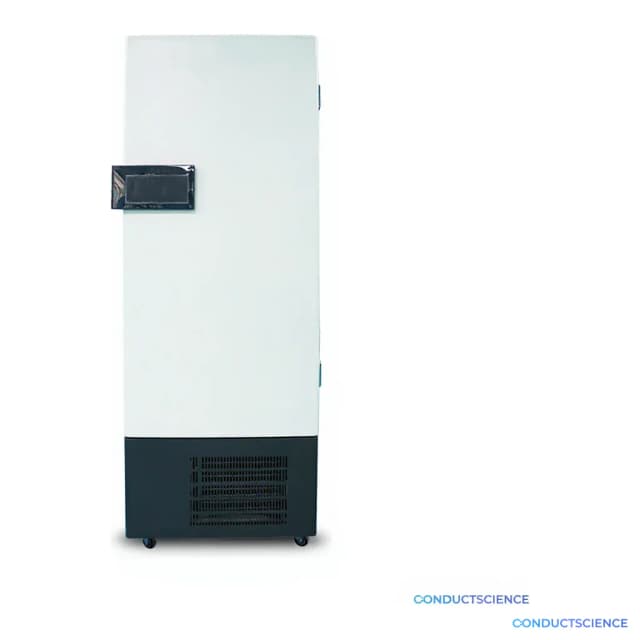
Precision 1.0 m³ environmental test chamber for quantitative formaldehyde emission assessment from building materials and consumer products under controlled temperature, humidity, and air exchange conditions.

Louise Corscadden, PhD
Director of Science · ConductScience
Ask Louise about Formaldehyde Emission Test Chamber fit, setup, configuration, or quote prep.
Already working with us? Sign in to connect this with My Scientist.
Key Specifications
Full details →- Model fit
- Configured during quote
- SKU family
- BIO-0237
- Shipping box
- 115.0 x 80.0 x 100.0 cm
- Ordering
- Online checkout and quote request available
- Category
- Stability Chambers
- Build notes
- Confirm accessories, station layout, and support needs before purchase
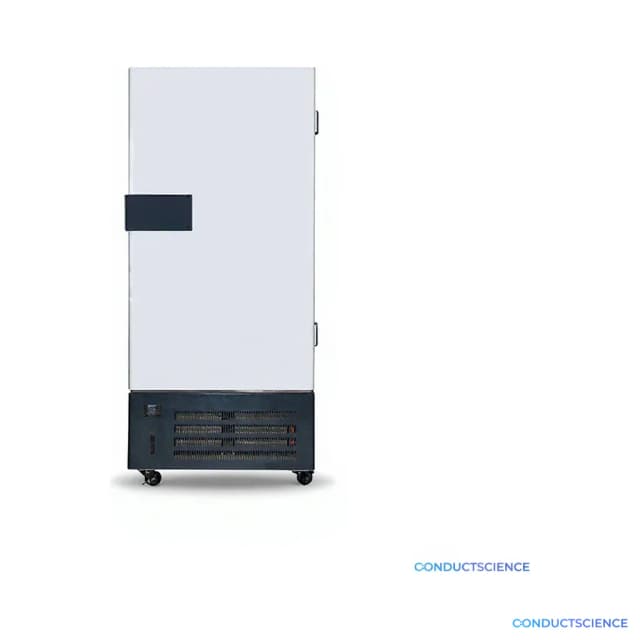
The Formaldehyde Emission Test Chamber is a precision environmental testing instrument designed for quantitative assessment of formaldehyde emissions from building materials, furniture, and consumer products. The system maintains controlled temperature (15–40°C ±0.5°C) and humidity (±3%RH) conditions while providing regulated air exchange rates from 0.2–2 m³/h with ±1% accuracy.
This 1.0 m³ test chamber features an internal working space of 800×1000×1150mm with precise pressure control (10±5Pa) and controlled air velocity (0.1–0.5 m/s, continuously adjustable) to simulate realistic indoor exposure conditions. The dual humidity control system combines dry-wet and dew-point techniques for stable humidity regulation, operated through a 7-inch touchscreen interface with high/low temperature and water level alarm functions.
The system enables standardized emission testing protocols for material safety evaluation and indoor air quality research across multiple industries, with a maximum continuous operation duration of ≤40 days. Power consumption is 3 kW on AC 220V, 50 Hz supply.
How It Works
The formaldehyde emission test chamber operates by creating a controlled microenvironment that simulates real-world exposure conditions while enabling precise quantification of volatile emissions. The system maintains target temperature and humidity levels through integrated environmental control systems, while a calibrated air exchange mechanism provides continuous ventilation at specified rates.
Test specimens are placed within the chamber's 1.0 m³ internal volume, where controlled airflow patterns ensure uniform distribution of emitted compounds. The chamber's low air velocity design (≤0.05m/s) minimizes turbulence while maintaining sufficient mixing for representative sampling. Pressure regulation systems maintain slight positive pressure to prevent infiltration of external contaminants.
Emission quantification is achieved through sampling ports that allow collection of chamber air for analytical determination of formaldehyde concentrations. The controlled environment enables calculation of emission rates based on chamber loading, air exchange rates, and measured concentrations over time.
Features & Benefits
Automation Level
- semi-automated
Temp Accuracy
- ±0.5℃
Humidity Accuracy
- ±3%RH
Air Exchange Rate Range
- 0.2~2m3/h(Air change rate 0.2~2 times/h)
Air Exchange Rate Accuracy
- Ventilation rate±1%
Test Chamber Size
- 1±0.01m3
Internal Size
- 800×1000×1150mm
Pressure
- 10±5Pa
External Size
- 1100×1760×1820mm
Brand
- ConductScience
Research Domain
- Analytical Chemistry
- Environmental Monitoring
- Food Science
- Industrial Hygiene
- Materials Science
- Pharmaceutical QC
Temperature Range
- 15~40℃
Weight
- 480kg
Air Velocity
- 0.1~0.5m/s (continuously adjustable)
Sampler Suction Speed
- 0.25~2.5 L/min
Suction Speed Accuracy
- ±5%
Noise Level
- ≤60dB
Max Continuous Operation
- ≤40 days
Power Consumption
- 3kW
Power Supply
- AC 220V, 50Hz
Shipping weight
- 450.0 lb
Shipping box
- L: 115.0 cm
- W: 80.0 cm
- H: 100.0 cm
| Feature | This Product | Typical Alternative | Advantage |
|---|---|---|---|
| Test Chamber Volume | 1.0 m³ internal volume | Entry-level models often provide 0.2-0.5 m³ volume | Larger volume enables testing of full-scale specimens and more representative loading ratios |
| Temperature Control Range | 15-40°C with ±0.5°C accuracy | Basic systems may offer ±1-2°C accuracy | Precise temperature control ensures reproducible emission rates across different environmental conditions |
| Air Exchange Rate Control | 0.2-2 m³/h with ±1% accuracy | Fixed air exchange rates or lower accuracy control | Variable air exchange enables simulation of different building ventilation scenarios |
| Air Velocity Specification | ≤0.05 m/s throughout chamber | Higher air velocities in basic systems | Low air velocity minimizes forced convection effects for more realistic emission conditions |
| Pressure Control | 10±5Pa positive pressure | No pressure control in basic chambers | Controlled pressure prevents infiltration of external contaminants during testing |
| Internal Dimensions | 800×1000×1150mm working space | Smaller chambers limit specimen size options | Accommodates large building material samples and furniture components for comprehensive testing |
This chamber provides intermediate-scale testing capabilities with precise environmental control suitable for both research and commercial testing applications. The 1.0 m³ volume with accurate temperature, humidity, and airflow control enables standardized emission testing protocols while maintaining practical laboratory footprint requirements.
Practical Tips
Perform multi-point temperature calibration across the full 15-40°C range using certified reference thermometers placed at different chamber locations.
Why: Ensures temperature uniformity and accuracy throughout the test volume for reliable emission rate calculations.
Clean chamber surfaces with appropriate solvents and allow complete outgassing between different material types to prevent cross-contamination.
Why: Residual formaldehyde or other compounds can create elevated background levels that compromise measurement accuracy.
Allow specimens to reach chamber temperature before sealing to minimize initial temperature transients that can affect early emission measurements.
Why: Temperature equilibration prevents artificial spikes in emission rates due to thermal expansion or moisture redistribution.
Collect multiple air samples from different chamber locations during steady-state conditions to verify concentration uniformity.
Why: Spatial concentration gradients can indicate inadequate mixing or preferential airflow patterns affecting representative sampling.
Monitor pressure differentials and airflow patterns if emission rates appear inconsistent between similar specimens.
Why: Changes in air exchange patterns can significantly affect mass transfer from specimen surfaces to bulk air.
Install appropriate ventilation in the laboratory housing the chamber and use personal protective equipment when handling specimens with known emissions.
Why: Formaldehyde exposure during specimen loading and sampling operations requires proper safety precautions.
Document specimen conditioning history including temperature, humidity, and storage time before testing.
Why: Pre-test conditions significantly influence emission rates and must be controlled for reproducible results.
Setup Guide
What’s in the Box
- Formaldehyde emission test chamber (main unit)
- Environmental control system
- Air circulation and exchange system
- Temperature and humidity sensors
- Pressure monitoring system
- Sampling ports and fittings
- Power cables and connections
- User manual and calibration documentation
- Initial calibration certificate (typical)
Warranty
ConductScience provides a standard 1-year manufacturer warranty covering defects in materials and workmanship, with technical support for calibration and operational guidance throughout the warranty period.
Compliance
What is the maximum specimen size that can be tested in this chamber?
The internal dimensions of 800×1000×1150mm accommodate specimens up to these physical limits, though loading ratios should follow relevant test standards (typically 0.4-1.0 m²/m³) for accurate emission rate calculations.
How long does the chamber require to reach thermal equilibrium?
Equilibration time depends on target conditions and ambient environment, but typically requires 2-4 hours for temperature stabilization and 4-8 hours for complete humidity equilibration before testing can begin.
What analytical methods are compatible with this chamber's sampling system?
The chamber supports various formaldehyde analytical methods including DNPH derivatization with HPLC, acetylacetone colorimetric methods, and real-time electrochemical sensors through standard sampling ports.
Can the chamber test multiple specimens simultaneously?
Yes, multiple specimens can be tested concurrently provided the total loading ratio remains within standard specifications and specimens do not interfere with airflow patterns or sampling access.
What maintenance is required for the environmental control systems?
Regular calibration of temperature and humidity sensors (quarterly recommended), replacement of air filters, cleaning of internal surfaces between tests, and annual verification of airflow measurement accuracy.
How does this chamber compare to small-scale emission testing methods?
Large-scale chambers like this provide more realistic emission conditions and specimen loading ratios compared to small-scale methods, though they require larger specimens and longer equilibration times.
What background formaldehyde levels can be expected?
Well-maintained chambers typically achieve background levels below 0.01 mg/m³, though this should be verified through blank chamber tests before each testing campaign.
Can the chamber be used for other volatile organic compounds besides formaldehyde?
Yes, the controlled environment is suitable for testing various VOCs, though sampling and analytical methods must be adapted for specific compounds of interest.
Have a question about this product?
Have a question? Just ask.
Send it over and we'll email you a personalized answer — no call, no scheduling.
Prefer to talk it through?
Accessories
Enhance your setup with compatible accessories
Replacement Parts & Consumables
Frequently Bought Together