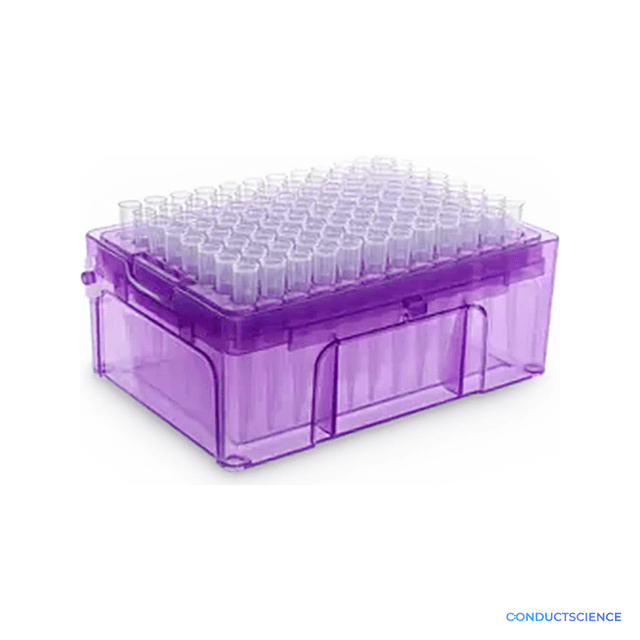
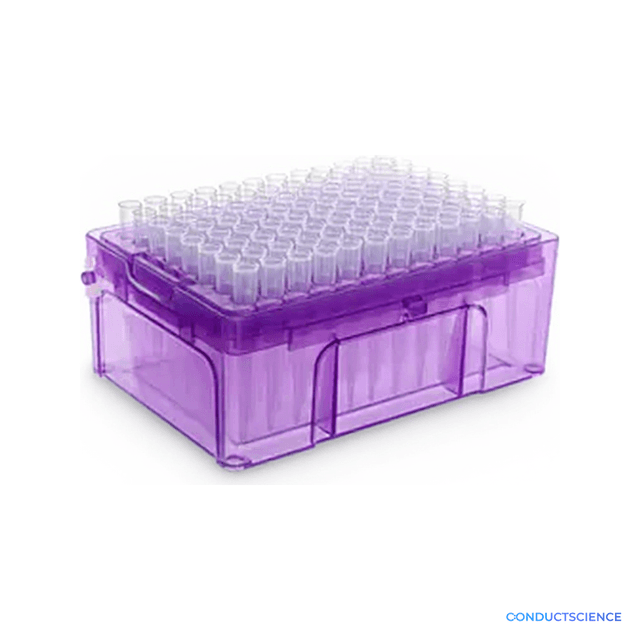
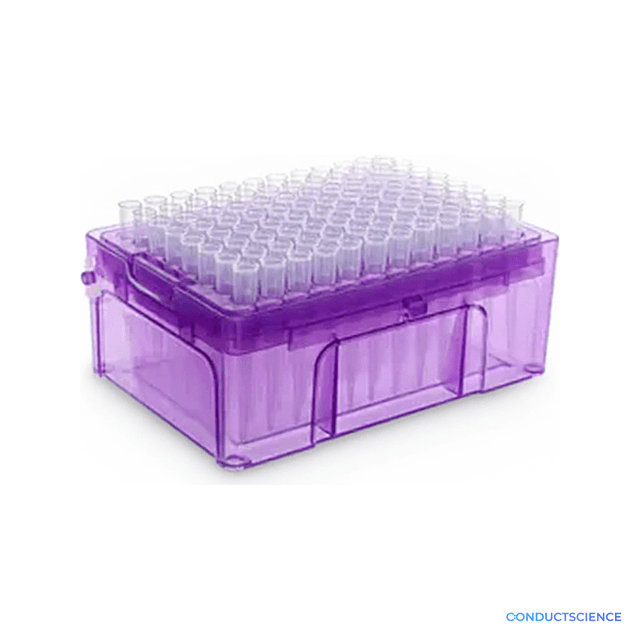
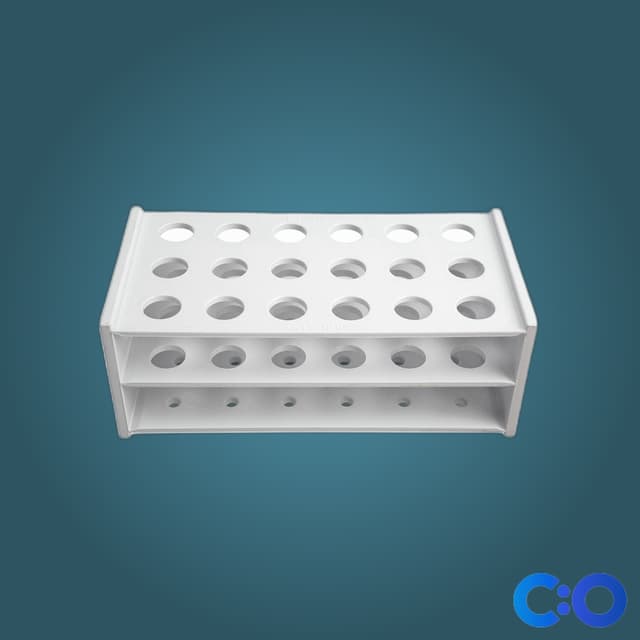
ConductScience Tube Racks, 80-Well, for 1.5/2.0mL Tubes (Pack of 25)
$22.00 per unit | 25 units per pack Bulk pricing: Pack of 25 at $550.00 ($22.00 per unit)

The ConductScience 80-Well Tube Racks provide organized storage and processing for standard 1.5mL and 2.0mL microcentrifuge tubes in laboratory workflows. Manufactured from autoclavable polypropylene, these racks withstand repeated sterilization cycles while maintaining structural integrity. Each rack features numbered well positions to facilitate sample tracking and reduce handling errors during multi-sample protocols.
The assorted color options enable visual coding systems for different experimental conditions, time points, or sample types. The precision-molded wells accommodate both 1.5mL and 2.0mL tube formats commonly used in molecular biology, biochemistry, and analytical chemistry applications.
How It Works
The tube racks function through precision-molded polypropylene wells designed to securely hold standard microcentrifuge tubes while providing easy access for pipetting and sample manipulation. The well geometry creates a friction fit that prevents tubes from falling while allowing single-handed removal. Numbered positions from 1-80 provide systematic organization that integrates with laboratory information management systems and experimental protocols.
The polypropylene construction enables autoclave sterilization at standard laboratory conditions (121°C, 15 psi), ensuring sterile handling environments for sensitive samples. The material maintains dimensional stability through repeated sterilization cycles, preserving well alignment and tube fit. Color-coded options facilitate visual organization systems, allowing researchers to assign different colors to experimental groups, time points, or sample types without requiring additional labeling.
Features & Benefits
Research Domain
- Analytical Chemistry
- Cell Biology
- Clinical Diagnostics
- Microbiology
- Molecular Biology
- Pharmaceutical QC
Weight
- 4.41 kg
Dimensions
- L: 22.6 mm
- W: 18.8 mm
- H: 15.1 mm
Comparison Guide
| Feature | This Product | Typical Alternative | Advantage |
|---|---|---|---|
| Well Capacity | 80 numbered wells | Entry-level racks often provide 24-50 wells | Higher sample density reduces bench space requirements and enables processing of larger sample sets in single racks. |
| Tube Compatibility | Accepts both 1.5mL and 2.0mL tubes | Some racks are sized for specific tube volumes only | Flexibility to accommodate different experimental protocols and reagent volumes without requiring multiple rack types. |
| Position Identification | Numbered positions 1-80 | Basic racks may use grid coordinates or no marking | Sequential numbering integrates directly with laboratory protocols and data recording systems. |
| Sterilization Capability | Autoclavable polypropylene construction | Metal racks require different cleaning protocols | Standard autoclave sterilization supports sterile technique requirements in molecular biology and cell culture applications. |
| Color Options | Assorted colors available | Many racks available in single color only | Visual coding enables experimental organization without additional labeling, reducing setup time and identification errors. |
This 80-well rack provides high-density sample organization with numbered positions and dual tube compatibility. The autoclavable polypropylene construction and color options offer operational flexibility for sterile applications and experimental coding systems.
Practical Tips
Load tubes systematically from position 1 onward to maintain consistent organization and simplify sample tracking.
Why: Sequential loading reduces the chance of skipping positions and makes sample location predictable during experimental procedures.
Inspect well integrity after each autoclave cycle, particularly checking for stress cracking around well edges.
Why: Repeated thermal cycling can cause material fatigue that could affect tube retention or lead to breakage.
Use consistent color assignments across experiments to reduce confusion when multiple racks are in use simultaneously.
Why: Standardized color coding becomes an automatic visual reference system that speeds sample identification.
Ensure tubes are properly seated before moving racks, especially when handling hazardous or valuable samples.
Why: Improperly seated tubes can fall out during transport, causing sample loss or contamination risks.
Photograph rack layouts when sample positions are critical for downstream analysis or long-term storage.
Why: Visual documentation provides backup sample identification if position numbers become unclear or samples are disturbed.
Clean racks immediately after use with protein-containing samples to prevent buildup that could affect well dimensions.
Why: Protein deposits can accumulate and create uneven surfaces that interfere with proper tube seating.
If tubes become difficult to remove, check for well deformation from over-tightening during loading.
Why: Excessive force during tube insertion can deform well walls, creating retention problems that affect workflow efficiency.
Reserve specific rack colors for different project phases or sample types to maintain clear experimental boundaries.
Why: Color segregation prevents cross-contamination between different experimental conditions or project stages.
Setup Guide
What’s in the Box
- 80-well tube rack (quantity per package - consult product datasheet)
- Product documentation (typical)
Warranty
ConductScience provides standard warranty coverage for manufacturing defects, with technical support available for product specifications and compatibility questions.
Compliance
Can these racks be used with both snap-cap and screw-cap microcentrifuge tubes?
Yes, the well design accommodates standard 1.5mL and 2.0mL microcentrifuge tubes regardless of cap type, as the wells are sized for the tube body rather than the closure mechanism.
What is the maximum temperature these racks can withstand during autoclaving?
The polypropylene construction supports standard autoclave conditions at 121°C. Higher temperatures may cause warping or dimensional changes that could affect tube fit.
Are the numbered positions printed or molded into the rack?
Consult the product datasheet for specific marking method. Molded numbers generally provide better durability through repeated cleaning and sterilization cycles.
Can multiple racks be stacked for storage?
Racks can be stacked when empty, but stacking with loaded tubes should be done carefully to prevent tube displacement or cap loosening, particularly with liquid samples.
What chemicals should be avoided when cleaning these racks?
While polypropylene has good chemical resistance, avoid strong oxidizing agents and aromatic solvents that could cause stress cracking. Standard laboratory detergents and alcohols are typically safe.
How do these compare to aluminum or metal tube racks?
Polypropylene racks offer autoclavability, chemical resistance, and lighter weight compared to metal alternatives, while providing similar sample organization capabilities at lower cost.
Can these racks be used in centrifuge rotors?
These racks are designed for benchtop sample organization, not centrifugation. Use appropriate centrifuge-rated tube holders for spinning applications.
Have a question about this product?
Accessories
Enhance your setup with compatible accessories

Frequently Bought Together
Related Products