1 / 3
Behavioral Mazes
 Schedule a Call Instead
Cubic Maze
$1,890.00 - $1,990.00
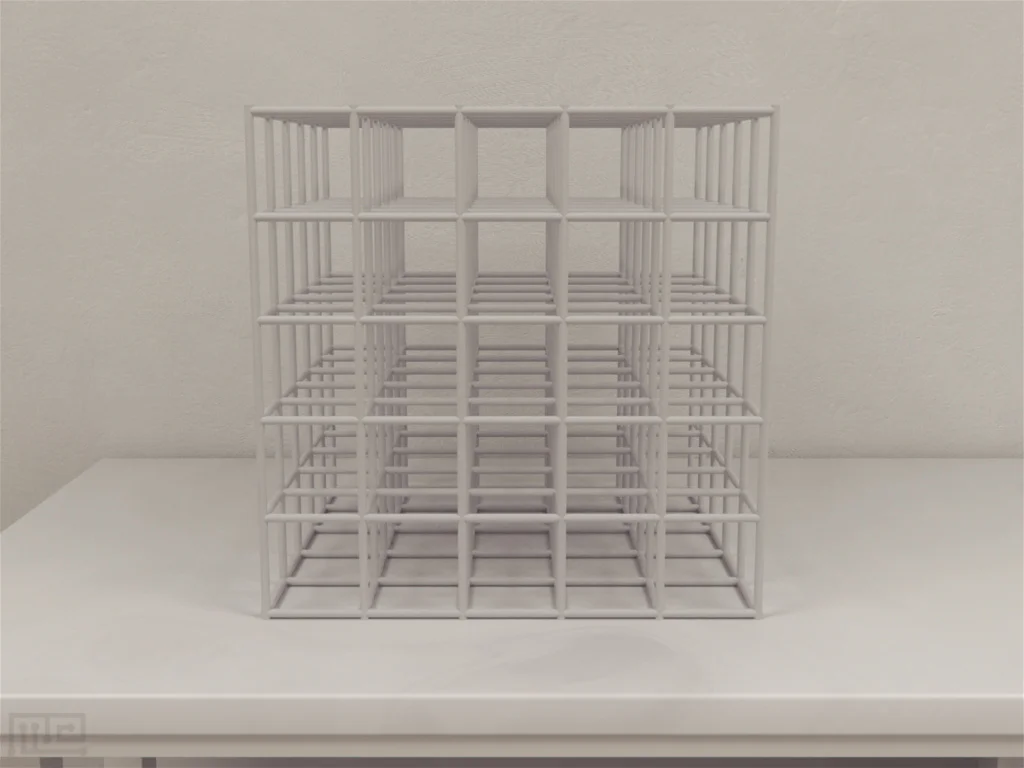
A Rodent Cubic Maze is a specialized behavioral test designed to evaluate spatial learning and memory in rodents. This maze features a network of connected cubes or boxes that the animal must traverse to find a reward. The maze’s configuration and...
Key Specifications
| grid_units | 27 interconnected units |
| unit_side_length | 25 cm |
| number_of_vials | 64 vials |
| vial_capacity | 200 µl |
| colored_disk_diameter | 1 cm |
| reward_location_arrangement | 9 units vertically and 16 units horizontally, distributed across 4 levels |
Need Help? Visit our Support CenterKnowledge base, order lookup, and ticket support
Our Staff are PhD Scientists
Get expert guidance on this product
Louise Corscadden
PhD, Neuroscience
grid_units
- 27 interconnected units
unit_side_length
- 25 cm
number_of_vials
- 64 vials
vial_capacity
- 200 µl
colored_disk_diameter
- 1 cm
reward_location_arrangement
- 9 units vertically and 16 units horizontally, distributed across 4 levels
elevation_above_floor
- about 30 cm
Species
- Mouse
- Rat
Material
- rods
Display Type
- None
Weight
- 21.0 kg
Dimensions
- L: 43.2 mm
- W: 38.0 mm
- H: 27.9 mm
| Mouse |
| 1 unit Arm Length: 5 cm |
| 1 unit Arm Width: 5 cm |
| 1 unit Arm Height: 5 cm |
| Number of units: 125 (5 x 5 x 5) |
| Rat |
| 1 unit Arm Length: 10 cm |
| 1 unit Arm Width: 10 cm |
| 1 unit Arm Height: 10 cm |
| Number of units: 125 (5 x 5 x 5) |

Introduction
The cubic maze is utilized to assess the spatial cognitive abilities of both hummingbirds and rodents within a three-dimensional environment. Unlike traditional two-dimensional mazes such as the Y-Maze and the Radial Arm Maze, which are limited to horizontal planes, the cubic maze simulates a more complex, multi-dimensional space that reflects real-world navigation challenges. While terrestrial animals like rats and mice primarily navigate in horizontal planes, animals that swim or fly, such as hummingbirds, can explore all three dimensions. This difference in movement modes often means that species may develop specialized skills for foraging and navigation in different spatial dimensions. Additionally, the energy required for movement may influence how these animals navigate their environments. The cubic maze provides a unique platform to observe how flying versus terrestrial species encode and navigate in a three-dimensional space. Constructed with rods to create a three-dimensional network of pathways and junctions, the cubic maze allows for the placement of rewards and goals at various points. To engage the birds, the goals are highlighted with brightly colored disks, as vivid colors can attract them. Other tools used for evaluating learning and memory include the Bee Radial Arm, the Drosophila Maze Array, the T-Maze, and the Barnes Maze.Apparatus and Equipment
The cubic maze is constructed from rods assembled to create a grid of 27 interconnected units, each with sides measuring 25 cm. It features 64 vials, each with a 200 µl capacity, positioned at various junction points and encircled by 1 cm diameter colored disks to enhance visibility. The reward locations are arranged with 9 units vertically and 16 units horizontally, distributed across 4 levels. The entire maze is elevated about 30 cm above the floor.Training Protocol
Clean the device before and after usage. Observation and recording of the movements of the subjects can be done using a tracking device such as ConductVision, the Noldus EthoVision XT. Fill one of the vials with sucrose solution and the rest with water. Let the bird navigate the maze and access the sucrose reward. Refill the rewarded vial promptly after the bird has consumed its contents. Continue this training process until the bird successfully locates the rewarded vial during three consecutive trials. Change the rewarded vial’s position for each bird, but keep the reward location consistent during each individual training session. After completing the training session, conduct a probe trial to assess the subject’s performance. During this trial, leave all vials empty and allow the bird to explore the maze freely. Observe and record the bird’s behavior throughout the trial to evaluate its spatial memory and navigation skills. Flores-Abreu, Hurly, Ainge, and Healy (2014) investigated how different locomotion styles influenced memory accuracy by studying naïve male Lister hooded rats and free-ranging male rufous hummingbirds. The research utilized specially designed cubic mazes tailored for each species. During the training phase, subjects were required to visit a designated rewarded location that met experimental criteria. After this training, they underwent a non-rewarded test trial to evaluate their performance. Results indicated that experience in the cubic maze enhanced the performance of both species. Notably, rats tended to move more frequently along the vertical axis during training, while hummingbirds navigated across all three dimensions. When rewards were removed, rats focused their search primarily on the vertical plane, whereas hummingbirds concentrated on horizontal exploration. Fill one of the vials with sucrose solution and the rest with water. Let the bird navigate the maze and access the sucrose reward. Refill the rewarded vial promptly after the bird has consumed its contents. Continue this training process until the bird successfully locates the rewarded vial during three consecutive trials. Change the rewarded vial's position for each bird, but keep the reward location consistent during each individual training session. After completing the training session, conduct a probe trial to assess the subject’s performance. During this trial, leave all vials empty and allow the bird to explore the maze freely. Observe and record the bird's behavior throughout the trial to evaluate its spatial memory and navigation skills. Flores-Abreu, Hurly, Ainge, and Healy (2014) investigated how different locomotion styles influenced memory accuracy by studying naïve male Lister hooded rats and free-ranging male rufous hummingbirds. The research utilized specially designed cubic mazes tailored for each species. During the training phase, subjects were required to visit a designated rewarded location that met experimental criteria. After this training, they underwent a non-rewarded test trial to evaluate their performance. Results indicated that experience in the cubic maze enhanced the performance of both species. Notably, rats tended to move more frequently along the vertical axis during training, while hummingbirds navigated across all three dimensions. When rewards were removed, rats focused their search primarily on the vertical plane, whereas hummingbirds concentrated on horizontal exploration.Data Analysis
The following data can be analyzed using the cubic maze:- Number of crossings within the maze in the horizontal and vertical direction.
- Number of times one unit was crossed.
- Number of times the rewarded location was visited.
- Time to reach each endpoint at the start of the maze.
- Time for total trips.
- Number of correct choices.
Strengths and Limitations
The cubic maze features a straightforward design that emulates complex three-dimensional movement environments. Its three-dimensional structure enables the observation of navigation and spatial encoding across all movement planes, in contrast to traditional two-dimensional setups. The maze’s simple construction facilitates easy modifications and adaptations for various research needs. By incorporating additional arrays, the maze can be tailored to different experimental requirements. Colored discs are used to encourage birds to explore and search for rewards. Additionally, the cubic maze can be adapted to assess navigation strategies, learning, and memory in various animals, including rats and bats. Performance in the cubic maze can be influenced by the foraging strategies and preferred locomotion planes of different species. Additionally, the subject’s exploratory drive and motivation for rewards play a significant role in the accuracy of the results. Various factors, including gender, appetite, and the test environment, can affect performance outcomes. External stimuli such as auditory, visual, or olfactory cues can also impact results significantly. Despite the maze’s intricate design being beneficial, subjects might not explore all available paths due to variations in the maze’s layout and patterns. The cubic maze features a straightforward design that emulates complex three-dimensional movement environments. Its three-dimensional structure enables the observation of navigation and spatial encoding across all movement planes, in contrast to traditional two-dimensional setups. The maze’s simple construction facilitates easy modifications and adaptations for various research needs. By incorporating additional arrays, the maze can be tailored to different experimental requirements. Colored discs are used to encourage birds to explore and search for rewards. Additionally, the cubic maze can be adapted to assess navigation strategies, learning, and memory in various animals, including rats and bats. Performance in the cubic maze can be influenced by the foraging strategies and preferred locomotion planes of different species. Additionally, the subject's exploratory drive and motivation for rewards play a significant role in the accuracy of the results. Various factors, including gender, appetite, and the test environment, can affect performance outcomes. External stimuli such as auditory, visual, or olfactory cues can also impact results significantly. Despite the maze's intricate design being beneficial, subjects might not explore all available paths due to variations in the maze's layout and patterns.Summary
- The cubic maze is used to compare the spatial cognitive ability of hummingbirds and rodents in a three-dimensional space.
- The cubic maze design replicates the complex topography of the real world; thus providing an ethologically relevant maze.
- The maze allows observation of locomotion strategies and navigational encoding in hummingbirds and rodents.
- The maze has a simple construction that allows modifications such as increasing or decreasing the array size.
- The use of colored disc motivates the birds to explore the maze and seek reward.
References
- Flores-Abreu, I. N., Hurly, T. A., Ainge, J. A. and Healy, S. D. (2014). Three-dimensional space: locomotory style explains memory differences in rats and hummingbirds. Proc. R. Soc. B. 281 (1784). doi: 10.1098/rspb.2014.0301
No Q&A yet. Have a question? Ask below.
Have a question about this product?
Accessories
Enhance your setup with compatible accessories

Total: $0.00

Cubic Maze
$1,890.00
Added to quoteView Quote
