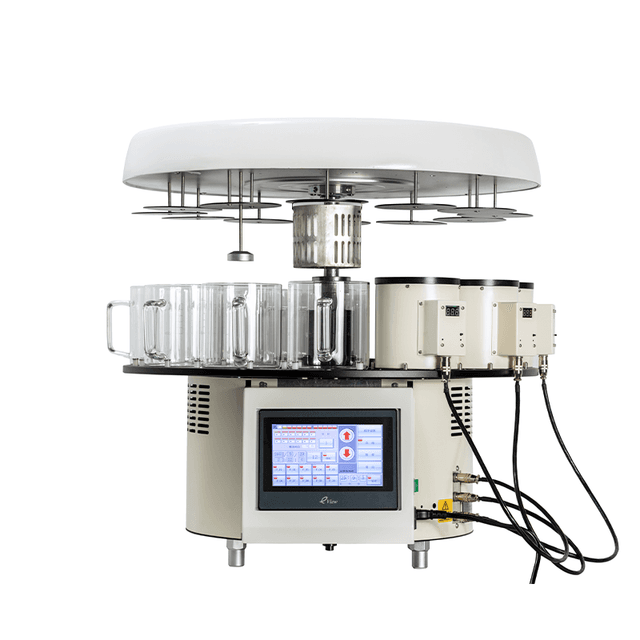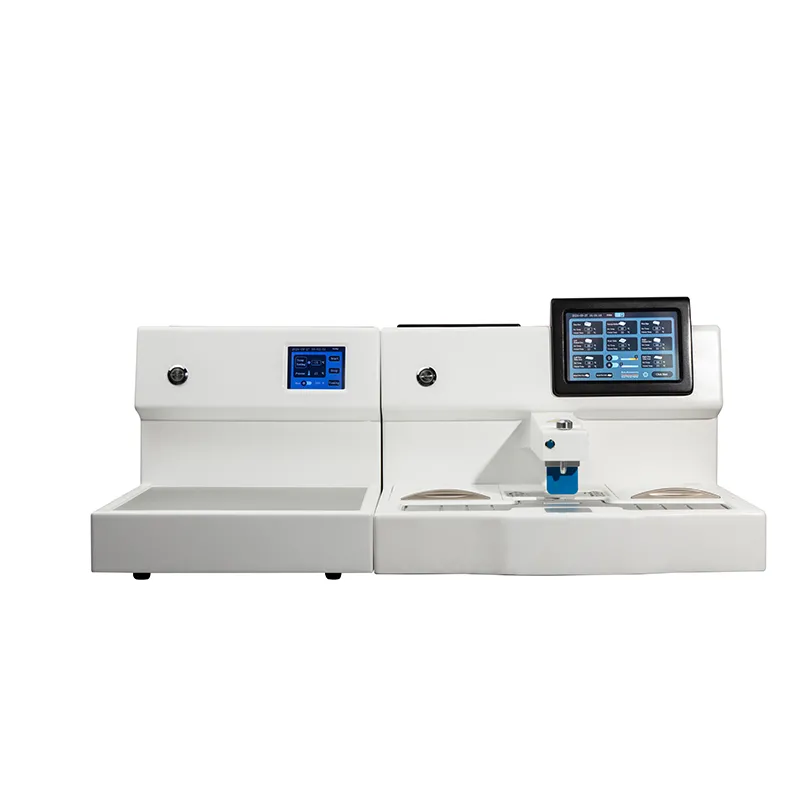
Digital Tissue Embedding Workstations
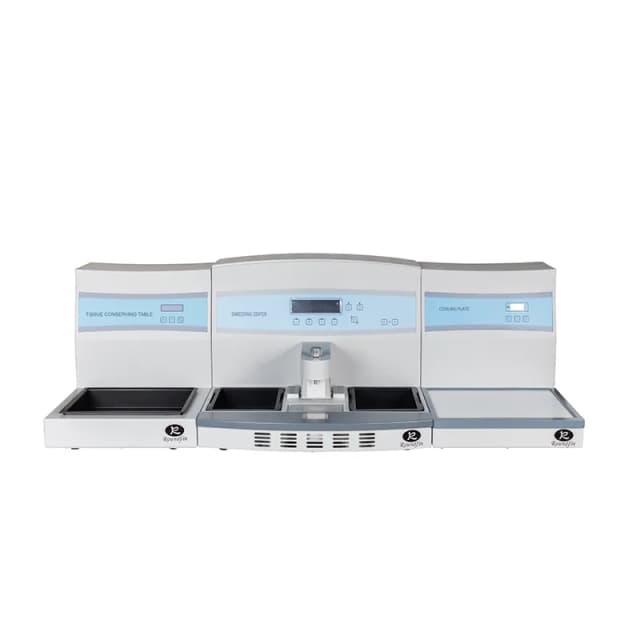
Temperature-controlled paraffin embedding system with LED touchscreen interface, precision wax dispensing, and cooling plate capacity for 70 cassettes in histological sample preparation.
| pa_equipment-type | 4953 |
| pa_automation-level | semi-automated |
| pa_pathology-application | 4968 |
| pa_temperature-range-path | 5016 |
| pa_specimen-capacity | 4999 |
| pa_tissue-compatibility | 4979 |
The Digital Tissue Embedding Workstation provides automated paraffin wax dispensing and temperature-controlled cooling for histological sample preparation. Available in standard (RF-RD-98) and advanced (RF-RD-98PRO) configurations, these systems feature independent temperature control for wax chambers, dispensing tubes, and work surfaces with precision to ±1°C. The integrated cooling plate achieves temperatures down to -30°C for rapid tissue block solidification.
The LED touchscreen interface enables precise control of wax flow, temperature settings, and system monitoring. Multi-point independent heating ensures consistent wax viscosity throughout the dispensing system, while the three-sensor temperature monitoring provides real-time feedback for optimal embedding conditions. The cooling plate accommodates approximately 70 cassettes for high-throughput processing workflows.
How It Works
The embedding workstation operates through controlled thermal management of paraffin wax and specimen cooling. The wax chamber maintains molten paraffin at optimal viscosity through multi-point independent heating, with three temperature sensors monitoring the wax tank, dispensing tube, and tabletop surfaces. Temperature precision of ±1°C ensures consistent wax flow characteristics and prevents thermal shock to tissue specimens.
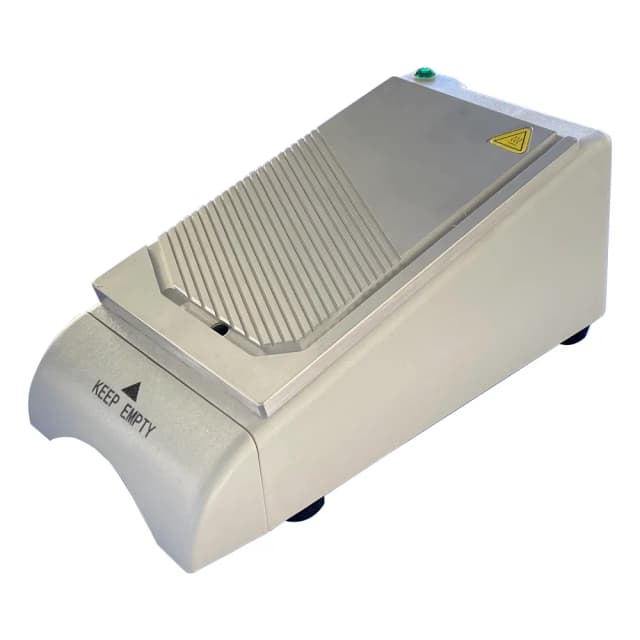
Wax dispensing occurs through finger touch plate activation or foot pedal control, delivering controlled volumes of molten paraffin around positioned tissue specimens in embedding molds. The integrated cooling plate utilizes refrigeration technology to achieve temperatures down to -30°C, rapidly solidifying paraffin blocks through controlled heat extraction. This thermal cycling from molten embedding temperature to solid block formation preserves tissue morphology while creating blocks suitable for microtomy.
Features & Benefits
pa_equipment-type
- 4953
pa_automation-level
- semi-automated
pa_pathology-application
- 4968
pa_temperature-range-path
- 5016
pa_specimen-capacity
- 4999
pa_tissue-compatibility
- 4979
standard_wax_box_capacity
- 5.5L (5500mL)
advanced_wax_tank_capacity
- 12L
cooling_plate_capacity
- approximately 70 cassettes
cooling_plate_minimum_temperature
- -30°C
tabletop_temperature_fluctuation
- ±1°C
wax_dispensing_methods
- button and foot pedal
temperature_control
- multi-point independent heating
safety_features
- wax dispensing protection system with three temperature sensors
Model
- Standard
- Advanced
Embedding center
- Parameter
Working environmental temperature
- 0℃ to 45℃
Paraffin chamber capacity
- 6L
Technical Data
- Voltage and frequency
cold plate
- Parameter
Capacity for wax blocks
- 70 pcs
Temperature Range
- down to -30°C
Display Type
- LED touchscreen
Research Domain
- Cancer Research
- Developmental Biology
- Histopathology
- Neuroscience
- Pharmaceutical QC
- Toxicology
Power/Voltage
- 1000VA
Dimensions
- Net weight
Size
- 380mmm*620mm*410mm
Weight
- 110.0 lbs
Dimensions
- L: 78.0 in
- W: 74.0 in
- H: 56.0 in
Comparison Guide
| Feature | This Product | Typical Alternative | Advantage |
|---|---|---|---|
| Wax Chamber Capacity | 6L standard, 12L advanced configuration | Entry-level models often provide 2-4L capacity | Extended operation periods reduce workflow interruptions in high-volume laboratories. |
| Temperature Monitoring | Three independent sensors for wax tank, dispensing tube, and tabletop | Basic systems typically use single-point monitoring | Multi-point sensing ensures thermal uniformity across all embedding zones. |
| User Interface | LED touchscreen with programmable settings | Manual controls with analog displays are common | Digital interface enables precise parameter control and user profile storage. |
| Cooling Capacity | 70 cassettes with -30°C minimum temperature | Smaller systems often accommodate 20-40 cassettes | Higher throughput capacity supports batch processing workflows. |
| Dispensing Control | Dual control with touch plate and foot pedal options | Single activation method is typical | Flexible control options accommodate different user preferences and embedding techniques. |
| Temperature Precision | ±1°C control precision across all zones | Basic models may have ±2-3°C variation | Tighter temperature control ensures consistent paraffin viscosity and embedding quality. |
This embedding workstation combines high-capacity wax storage, multi-sensor temperature monitoring, and flexible dispensing controls in configurations suitable for both standard and high-throughput laboratory environments. The LED touchscreen interface and precision thermal management provide operational consistency for demanding histological workflows.
Practical Tips
Verify temperature accuracy monthly using calibrated thermometers at each sensor location.
Why: Temperature drift affects paraffin viscosity and embedding quality over time.
Clean wax residue from dispensing surfaces daily to prevent flow obstruction and contamination.
Why: Accumulated paraffin affects dispensing accuracy and can introduce artifacts.
Pre-warm embedding molds on the heated surface before specimen placement.
Why: Thermal equilibration prevents rapid cooling that can create embedding artifacts.
If wax flow is inconsistent, check for air bubbles in the dispensing line and purge system.
Why: Air pockets disrupt smooth wax delivery and create volume variations.
Document temperature readings and embedding parameters for each batch processed.
Why: Consistent documentation enables troubleshooting and process optimization.
Use appropriate PPE when handling molten paraffin and ensure adequate ventilation.
Why: Molten paraffin can cause thermal burns and vapors require proper ventilation.
Allow adequate solidification time on cooling plate before removing blocks from molds.
Why: Incomplete solidification causes block deformation and sectioning difficulties.
Replace wax in chamber when contamination or color changes are observed.
Why: Contaminated paraffin can introduce staining artifacts and affect block quality.
Setup Guide
What’s in the Box
- Digital tissue embedding workstation (main unit)
- LED touchscreen control interface
- Foot pedal for wax dispensing (typical)
- Power cord and electrical connections
- User manual and setup documentation (typical)
- Temperature calibration certificate (typical)
Warranty
ConductScience provides standard manufacturer warranty coverage with technical support for installation, calibration, and operational guidance. Extended service plans available for high-use laboratory environments.
Compliance
What paraffin types are compatible with the wax dispensing system?
The system works with standard histological-grade paraffins with melting points between 56-60°C. Consult product datasheet for specific wax formulation recommendations.
How do I maintain consistent temperature across the work surface?
The three-sensor monitoring system automatically maintains ±1°C precision. Regular calibration verification and cleaning of temperature sensors ensures optimal performance.
Can the cooling plate temperature be adjusted for different solidification rates?
Yes, cooling temperature is adjustable down to -30°C through the LED touchscreen interface, allowing optimization for different paraffin formulations and block sizes.
What is the typical wax consumption rate during embedding?
Consumption depends on specimen size and embedding technique. The 6L-12L capacity typically supports 100-200 standard embedding procedures before refilling.
How does the foot pedal control integrate with manual positioning?
The foot pedal provides hands-free wax dispensing, allowing precise specimen manipulation during embedding while controlling flow timing and volume.
What maintenance is required for the temperature control system?
Regular cleaning of temperature sensors, periodic calibration verification, and wax chamber cleaning prevent thermal drift and ensure consistent performance.
Can multiple users operate the system with different temperature preferences?
The LED touchscreen interface allows saving of user-specific temperature profiles for consistent operation across different operators and protocols.
Have a question about this product?
Accessories
Enhance your setup with compatible accessories

Frequently Bought Together