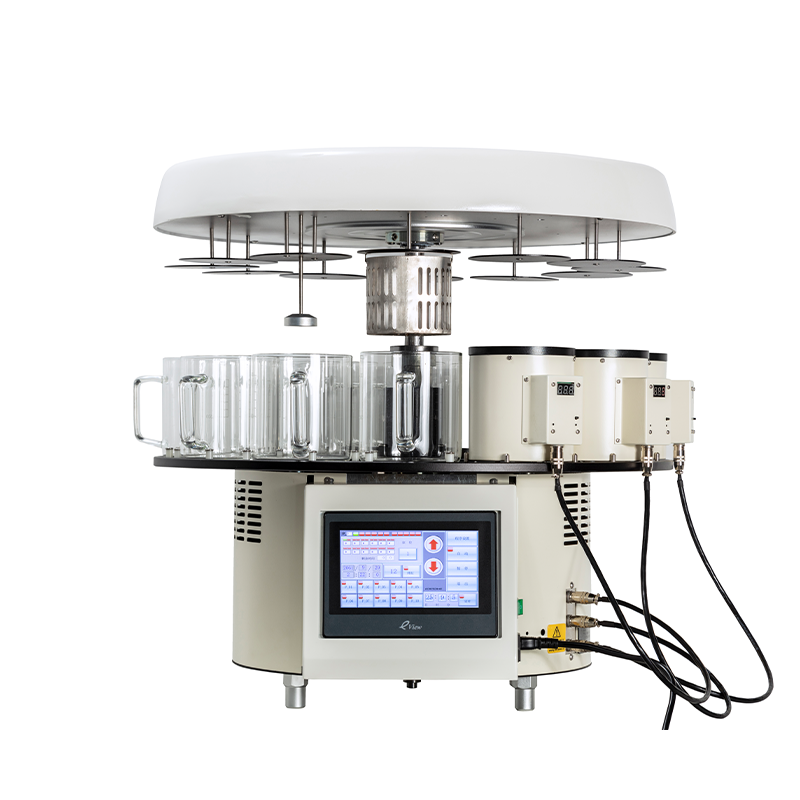
Carousel Tissue Processor
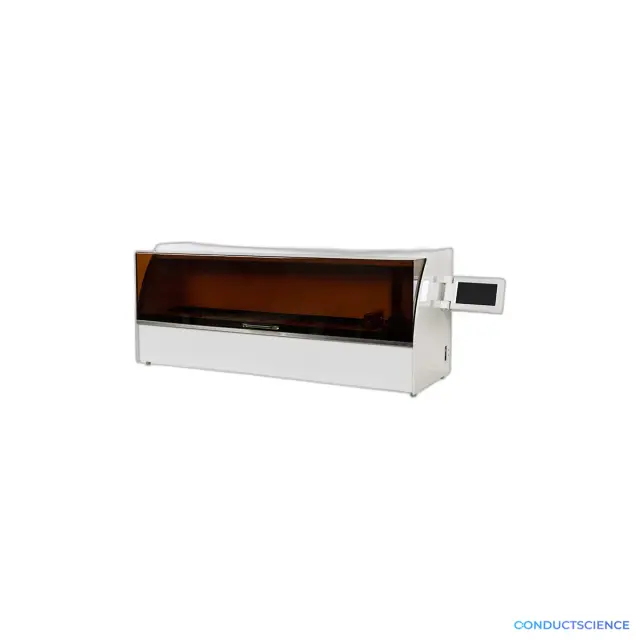
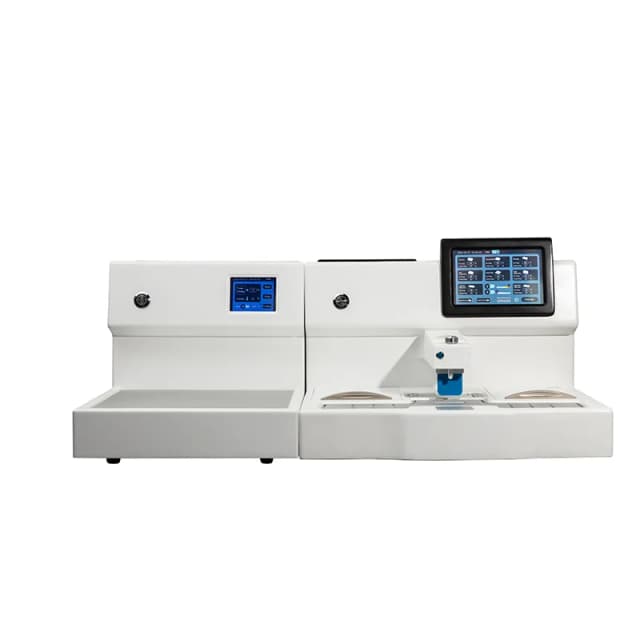
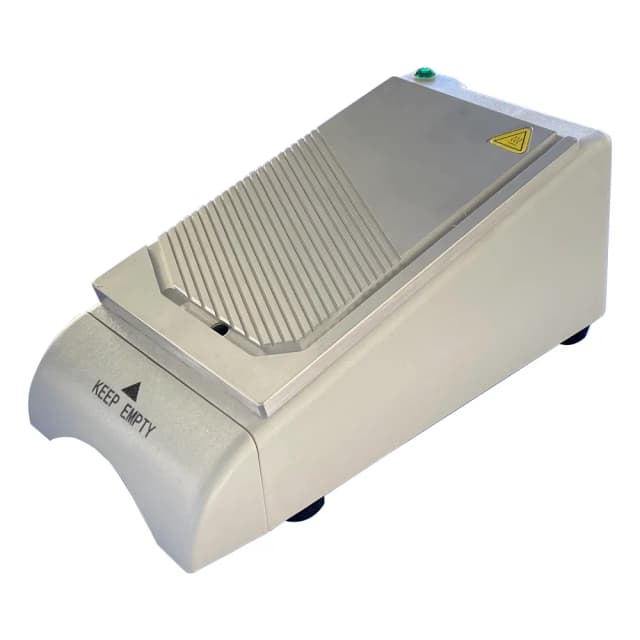
Automated carousel tissue processor with dual baskets, 12 reagent stations, and programmable timing for standardized histopathology specimen preparation in research and clinical laboratories.

Louise Corscadden, PhD
Neuroscience · ConductScience
Ask Louise about Carousel Tissue Processor fit, setup, configuration, or quote prep.
Already working with us? Sign in to connect this with My Scientist.
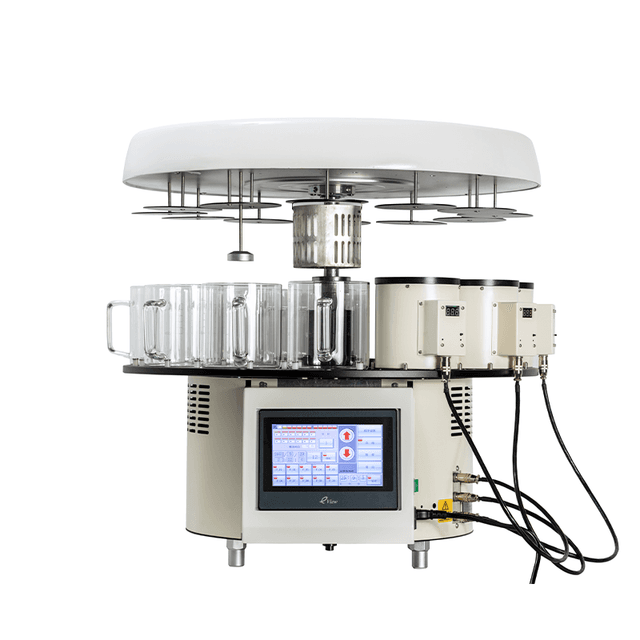
The Two Baskets Carousel Type Auto Tissue Processor is a fully automated histopathology instrument designed for routine tissue processing in research and clinical laboratories. This carousel-style processor accommodates dual specimen baskets with sequential processing through 12 reagent stations (9 reagent cups and 3 paraffin cups) with programmable timing from 0-2000 minutes per station. The system incorporates vacuum-assisted reagent exchange, automated basket stirring, and temperature-controlled paraffin infiltration up to 85°C.
The instrument features a 1.3L double basket configuration with 30-second draining cycles and integrated stirring mechanisms that operate for 1 minute every 5 minutes to ensure uniform reagent penetration. Operating temperature range spans room temperature to 70°C, accommodating various processing protocols from routine formalin-fixed paraffin-embedded (FFPE) preparation to specialized staining procedures. The system supports both 220V/50Hz and 110V/60Hz power configurations for global laboratory compatibility.
How It Works
The tissue processor operates on the principle of sequential reagent immersion with controlled timing and agitation. Specimens loaded into the dual basket system undergo systematic progression through 9 reagent stations containing graded alcohols for dehydration, clearing agents, and finally 3 temperature-controlled paraffin baths for infiltration. The carousel mechanism rotates baskets between stations according to programmed protocols, with each station maintaining precise timing control from 0-2000 minutes.
Vacuum assistance during reagent changes ensures complete drainage within 30 seconds, preventing cross-contamination between processing steps. Automated stirring mechanisms activate for 1-minute intervals every 5 minutes throughout the process, promoting uniform reagent penetration and reducing processing artifacts. The paraffin stations maintain temperatures up to 85°C for optimal wax infiltration, while the vacuum pump operates in 5-minute cycles with 1-minute intervals to facilitate reagent exchange.
Temperature control across the system ranges from room temperature to 70°C, accommodating various processing protocols. The programmable timing system allows customization of processing schedules based on specimen type, size, and specific research requirements, ensuring reproducible results across multiple processing runs.
Features & Benefits
Model
- RF-0037 ($15000)
- RF-RD-500 ($9500)
Weight
- 65.0 kg
Dimensions
- L: 7.8 mm
- W: 10.5 mm
- H: 8.0 mm
| Feature | This Product | Typical Alternative | Advantage |
|---|---|---|---|
| Reagent Station Configuration | 12 total stations (9 reagent + 3 paraffin cups) | Entry-level models often provide 8-10 stations with fewer paraffin baths | Additional reagent stations allow for more comprehensive processing protocols without manual intervention |
| Processing Time Range | 0-2000 minutes per station programmability | Limited timing ranges often restrict protocol customization | Extended timing capability accommodates specialized specimens requiring longer processing cycles |
| Basket Configuration | Dual basket system with 1.3L capacity each | Single basket systems with lower capacity | Simultaneous processing of multiple specimen batches increases laboratory throughput |
| Vacuum-Assisted Exchange | 30-second drainage with 5-minute vacuum cycles | Gravity drainage systems with longer transition times | Rapid reagent exchange reduces processing time and prevents cross-contamination |
| Temperature Control Range | Paraffin stations 0-85°C, working temperature RT-70°C | Limited temperature ranges may restrict processing options | Wide temperature range accommodates diverse processing protocols and specimen types |
| Automated Agitation | 1-minute stirring every 5 minutes throughout cycle | Manual agitation or limited automated mixing | Consistent agitation ensures uniform reagent penetration and reduces processing artifacts |
This automated tissue processor offers comprehensive processing capabilities with dual basket configuration, extended programmable timing, and vacuum-assisted reagent exchange. The 12-station design with temperature-controlled paraffin baths provides complete processing workflows from dehydration through infiltration in a single automated cycle.
Practical Tips
Verify paraffin station temperatures monthly using a calibrated thermometer and document readings for quality assurance records.
Why: Temperature accuracy directly affects paraffin infiltration quality and subsequent sectioning performance.
Clean reagent stations and baskets thoroughly after each processing cycle, paying particular attention to paraffin residue removal.
Why: Residual reagents and paraffin buildup can affect subsequent processing quality and contaminate specimens.
Monitor reagent levels before starting processing cycles and maintain consistent reagent change schedules based on processing volume.
Why: Depleted or contaminated reagents compromise tissue processing quality and can result in sectioning difficulties.
If baskets fail to advance properly, check vacuum system operation and ensure drainage cycles complete within 30 seconds.
Why: Incomplete drainage prevents proper carousel advancement and can disrupt programmed processing protocols.
Document processing protocols, reagent batch numbers, and processing times for each specimen batch to ensure traceability.
Why: Comprehensive documentation enables troubleshooting of processing issues and supports quality management requirements.
Ensure adequate ventilation around the unit and use appropriate personal protective equipment when handling reagents and specimens.
Why: Tissue processing reagents include hazardous chemicals requiring proper ventilation and safety precautions.
Schedule processing cycles during off-hours to maximize laboratory efficiency and reduce workflow disruption.
Why: Automated processing allows unattended operation, enabling 24-hour laboratory productivity while maintaining consistent results.
Inspect stirring mechanisms regularly and verify proper basket agitation during processing cycles.
Why: Consistent agitation is critical for uniform reagent penetration and preventing processing artifacts in tissue specimens.
Setup Guide
What’s in the Box
- Two Baskets Carousel Type Auto Tissue Processor main unit
- Dual processing baskets
- Power cord and fuse set
- User manual and programming guide
- Installation and calibration documentation
- Reagent level indicators (typical)
- Temperature probe and calibration certificate (typical)
- Safety documentation and operating procedures (typical)
Warranty
ConductScience provides a comprehensive 1-year manufacturer warranty covering parts and labor, with technical support for installation, calibration, and routine maintenance procedures.
Compliance
References
Background reading relevant to this product:
What is the maximum processing time per reagent station?
Each station can be programmed for up to 2000 minutes (approximately 33 hours), allowing for extended processing protocols for large or dense specimens.
How does the vacuum system prevent cross-contamination?
The vacuum pump operates for 5 minutes with 1-minute intervals, ensuring complete reagent drainage in 30 seconds between stations to prevent carry-over contamination.
Can the processor accommodate different basket configurations?
The system uses a dual basket design with 1.3L capacity configuration. Consult product datasheet for alternative basket options or custom configurations.
What temperature accuracy is maintained in paraffin stations?
Paraffin stations operate from 0-85°C with the overall system maintaining working temperatures from room temperature to 70°C. Consult product datasheet for specific temperature accuracy specifications.
How is processing uniformity achieved across specimens?
Automated stirring mechanisms operate for 1 minute every 5 minutes throughout the cycle, combined with vacuum-assisted reagent exchange to ensure uniform penetration.
What power requirements are needed for installation?
The unit operates at 300W with dual voltage capability (220V/50Hz or 110V/60Hz) and requires a 10A fuse rating for safe operation.
Can processing protocols be saved and recalled?
The programmable control system allows custom timing protocols. Consult product datasheet for specific memory capacity and protocol storage features.
What maintenance intervals are recommended?
Regular cleaning of reagent stations, basket inspection, and temperature calibration verification are essential. Consult user manual for detailed maintenance schedules.
Have a question about this product?