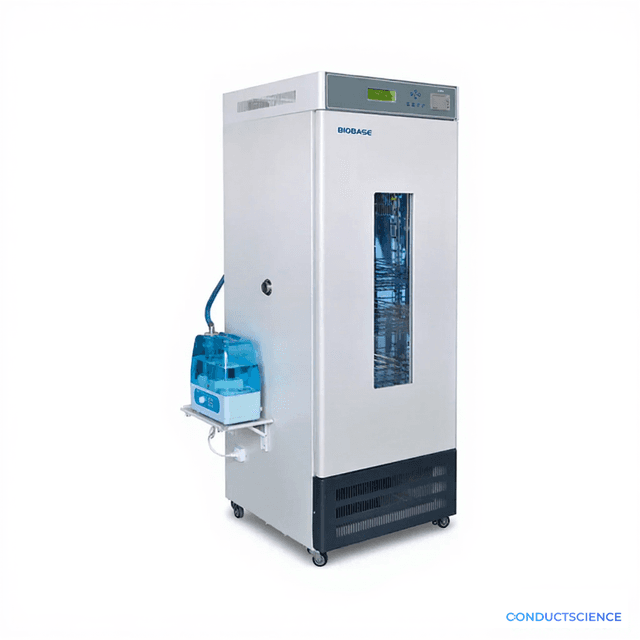
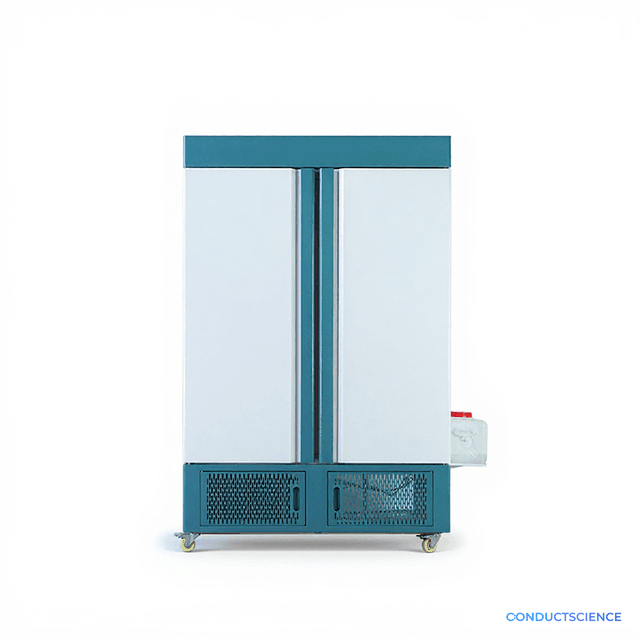
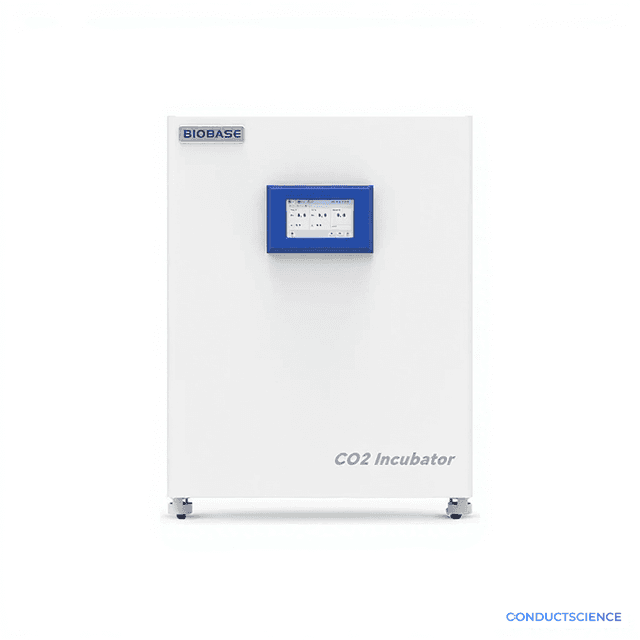
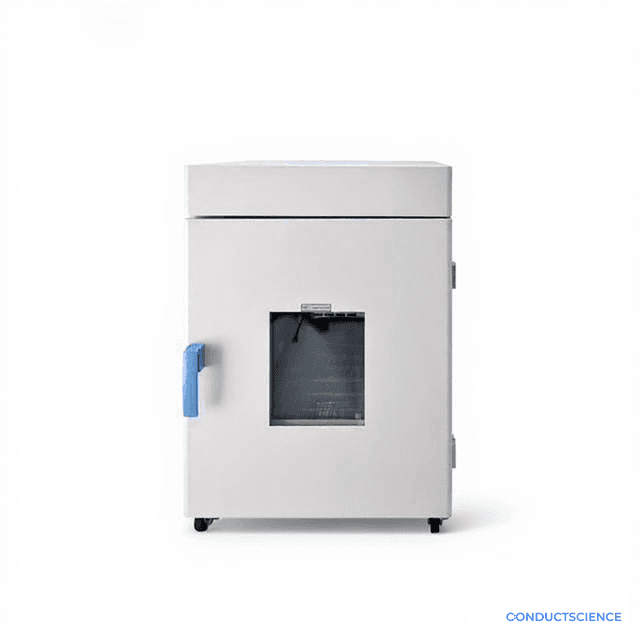
Essential CO2 Cell Incubators
Benchtop CO2 incubators with precise temperature, CO2, and humidity control for mammalian cell culture applications. Available in 50L, 80L, and 160L capacities with infrared CO2 sensing and UV sterilization.
| co2_range | 0-20% |
| co2_control_resolution | 0.1% |
| temperature_fluctuation | ≤ ±0.2°C (at 37°C) |
| temperature_uniformity | ≤ ±0.3°C (at 37°C) |
| ambient_temperature_range | 18-30°C |
| relative_humidity_requirement | ≤80% |
The Essential CO2 Cell Incubators provide precise environmental control for mammalian cell and tissue culture applications in research and laboratory settings. These benchtop units maintain stable temperature (±0.2°C fluctuation at 37°C), CO2 concentration (0-20% with 0.1% resolution), and humidity conditions necessary for optimal cell growth and viability. Available in 50L, 80L, and 160L capacities, the incubators feature dual heating options (air jacket or water jacket) and microcomputer control systems with LCD touch screen interface for consistent performance monitoring.
The incubators utilize infrared sensor technology with dual-channel dual-filter design for accurate CO2 monitoring and control. Natural humidity is provided through water tank evaporation, while UV sterilization maintains contamination control. Temperature uniformity of ≤±0.3°C at 37°C and CO2 uniformity of 0.2vol% ensure homogeneous culture conditions throughout the chamber. Data logging capabilities through USB port connectivity support experimental documentation and quality control protocols.
How It Works
The Essential CO2 Cell Incubators operate through integrated environmental control systems that regulate temperature, CO2 concentration, and humidity. The heating system utilizes either air jacket or water jacket technology to maintain uniform temperature distribution throughout the chamber. Air jacket models circulate heated air around the chamber walls, while water jacket models use heated water circulation for enhanced thermal stability and recovery after door openings.
CO2 regulation employs infrared sensor technology with dual-channel dual-filter design to continuously monitor and adjust atmospheric CO2 levels from 0-20% with 0.1% resolution. The IR sensor measures CO2 concentration by detecting the absorption of infrared light at specific wavelengths characteristic of CO2 molecules. Natural humidity is maintained through water tank evaporation, creating a saturated atmosphere that prevents culture medium evaporation and maintains osmotic balance.
UV sterilization provides contamination control through germicidal UV-C radiation that inactivates microorganisms on exposed surfaces. The microcomputer control system integrates all parameters through a feedback control loop, maintaining set points while providing real-time monitoring via LCD touch screen interface and data logging capabilities for experimental documentation.
Features & Benefits
Heating
- Air jacket
- Water jacket
co2_range
- 0-20%
co2_control_resolution
- 0.1%
temperature_fluctuation
- ≤ ±0.2°C (at 37°C)
temperature_uniformity
- ≤ ±0.3°C (at 37°C)
ambient_temperature_range
- 18-30°C
relative_humidity_requirement
- ≤80%
timing_range
- 999h or continuous
internal_chamber_dimensions
- 338×392×442 mm
heating_type
- Air jacket or Water jacket
sterilization_method
- UV lamp
sensor_type
- IR infrared sensor with dual-channel dual-filter technology
humidity_provision
- Water tank for natural evaporation
data_storage
- USB port
alarm_functions
- Audible and visual alarm, over-temperature alarm, CO2 concentration alarm
water_jacket_alarms
- High and low water level alarms
safety_features
- Leakage current and over-voltage protectors
Capacity
- 50L
- 80L
- 160L
Automation Level
- semi-automated
Type
- Dry heat series, air jacket
Sterilization
- 180°C dry heat sterilization
CO2 Uniformity
- 0.2vol%
Internal Dimensions (W×D×H)
- 332×326×496mm
External Dimensions (W×D×H)
- 660×552×764mm
Material
- 304 brushed stainless steel (water jacket inner tank)
- 304 mirror finish stainless steel (air jacket inner tank)
- cold-rolled steel with painting (external)
- stainless steel (internal)
Temperature Range
- +5 to 60°C
Display Type
- LCD touch screen
Weight
- 80kg
Dimensions
- 632 mm x 575 mm x 830 mm
Research Domain
- Cancer Research
- Cell Biology
- Developmental Biology
- Immunology
- Microbiology
- Pharmaceutical QC
Power/Voltage
- 1850W
Weight
- 180.78 lbs
Dimensions
- L: 45.0 in
- W: 39.8 in
- H: 44.8 in
Comparison Guide
| Feature | This Product | Typical Alternative | Advantage |
|---|---|---|---|
| CO2 Sensor Technology | Infrared sensor with dual-channel dual-filter technology | Entry-level models often use thermal conductivity sensors prone to drift and humidity interference | Provides stable, accurate CO2 measurement without recalibration requirements or environmental interference |
| Temperature Uniformity | ≤±0.3°C uniformity at 37°C | Basic models may have ±0.5°C or greater temperature variation | Ensures consistent culture conditions across all chamber locations, preventing growth variability between samples |
| Heating System Options | Choice of air jacket or water jacket heating | Most models offer only single heating type | Allows selection of optimal thermal management approach based on application requirements and budget |
| CO2 Control Range | 0-20% with 0.1% resolution | Limited models may restrict CO2 range to 0-10% or have lower resolution | Accommodates diverse culture requirements including anaerobic conditions and specialized atmospheric compositions |
| Data Logging Capability | USB port connectivity with parameter logging | Basic models often lack data logging or require separate data acquisition systems | Supports documentation requirements and experimental traceability without additional hardware |
| Capacity Options | Available in 50L, 80L, and 160L sizes | Limited size options may not match laboratory throughput needs | Provides scalability from individual research applications to higher-throughput core facility requirements |
The Essential CO2 Cell Incubators combine infrared CO2 sensing technology with dual heating options and comprehensive data logging capabilities. The systems provide precise environmental control with temperature uniformity of ≤±0.3°C and CO2 control from 0-20% with 0.1% resolution, supporting diverse cell culture applications across multiple research domains.
Practical Tips
Verify CO2 and temperature readings using independent reference standards during initial setup and quarterly thereafter.
Why: Independent verification ensures measurement accuracy and maintains culture reproducibility across experiments.
Clean water tank weekly and replace with fresh distilled water to prevent mineral buildup and microbial contamination.
Why: Regular water maintenance prevents humidity system fouling and reduces risk of introducing contaminants to culture atmosphere.
Allow 2-4 hours for thermal and atmospheric equilibration after any parameter changes before introducing cultures.
Why: Adequate equilibration time ensures stable conditions and prevents culture shock from parameter fluctuations.
If CO2 readings appear unstable, check for door seal integrity and verify water tank water level.
Why: Door leaks and low humidity can affect CO2 sensor readings and chamber atmospheric stability.
Download and archive parameter logs regularly through USB connectivity for experimental documentation.
Why: Continuous data logging provides evidence of stable culture conditions and supports experimental reproducibility.
Position incubator away from direct sunlight and ensure adequate ventilation clearance around the unit.
Why: Proper positioning prevents thermal interference and ensures adequate heat dissipation for optimal performance.
Rotate culture vessel positions periodically to account for any minor temperature gradients within the chamber.
Why: Position rotation helps ensure all cultures experience equivalent environmental conditions over extended incubation periods.
Schedule UV lamp replacement according to manufacturer specifications and monitor germicidal effectiveness.
Why: UV lamp aging reduces sterilization effectiveness, potentially compromising contamination control performance.
Setup Guide
What’s in the Box
- Essential CO2 Cell Incubator main unit
- Power cord and electrical connections
- Water tank for humidity generation
- Internal shelving system (typical)
- User manual and operation guide
- USB cable for data connectivity (typical)
- Calibration documentation (typical)
Warranty
ConductScience provides standard manufacturer warranty coverage including parts and technical support. Extended service plans are available for critical research applications requiring enhanced support coverage.
Compliance
References
Background reading relevant to this product:
What is the CO2 recovery time after door opening?
Recovery time depends on heating type and ambient conditions. Water jacket models typically provide faster recovery than air jacket due to thermal mass, but specific recovery times should be verified during installation validation.
Can the incubator maintain stable conditions during frequent door openings?
The dual heating system and infrared CO2 sensing provide rapid parameter recovery, though frequent openings will affect stability. Water jacket models offer superior recovery characteristics for high-access applications.
What data logging capabilities are available through the USB port?
The system logs temperature, CO2 concentration, and alarm events with timestamps. Consult product datasheet for specific data formats and logging intervals supported by the control software.
How often does the UV sterilization system require maintenance?
UV lamp replacement intervals depend on usage frequency and manufacturer specifications. Regular monitoring of germicidal effectiveness is recommended, particularly for critical applications requiring stringent contamination control.
What is the difference between air jacket and water jacket heating performance?
Water jacket models provide enhanced thermal stability and faster recovery after door openings due to thermal mass, while air jacket models offer simpler maintenance with comparable steady-state performance.
Can the incubator operate at CO2 concentrations other than 5%?
Yes, the infrared sensor system controls CO2 from 0-20% with 0.1% resolution, accommodating diverse culture requirements including anaerobic conditions and specialized atmospheric compositions.
What calibration standards are recommended for verification?
Independent temperature and CO2 standards traceable to national metrology institutes are recommended for validation. Consult product documentation for specific calibration gas concentrations and temperature references.
How does the alarm system function during parameter deviations?
The system provides both audible and visual alarms for over-temperature, CO2 concentration deviations, and water level issues. Alarm thresholds are user-configurable through the touch screen interface.
Have a question about this product?