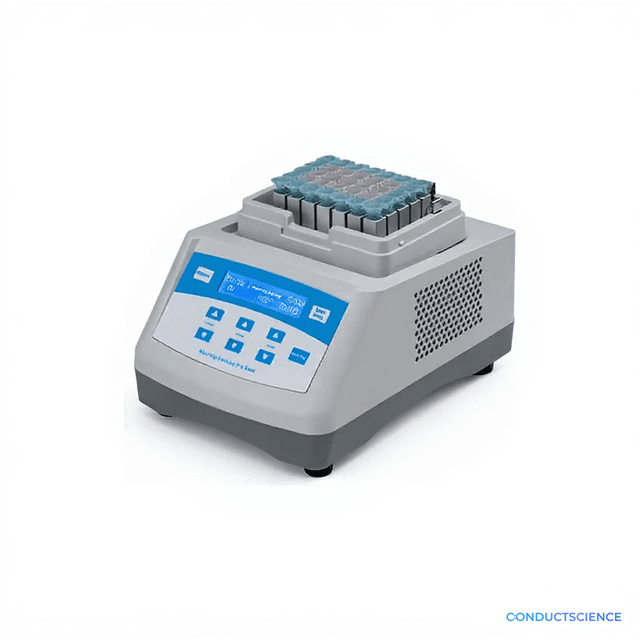
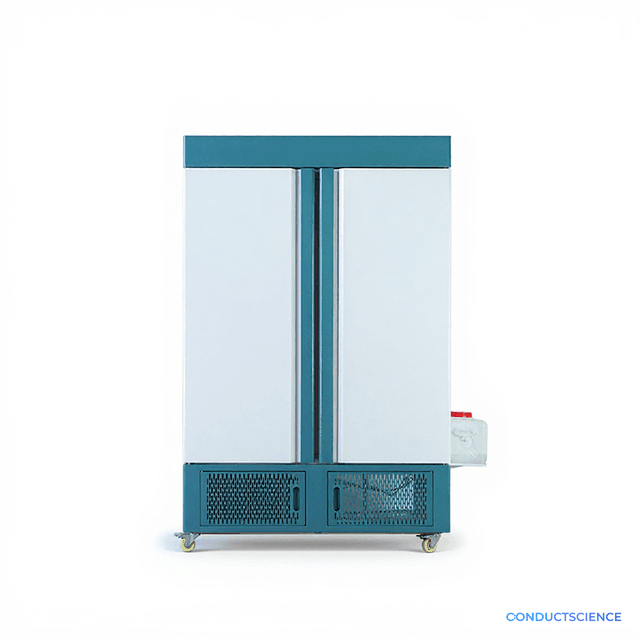
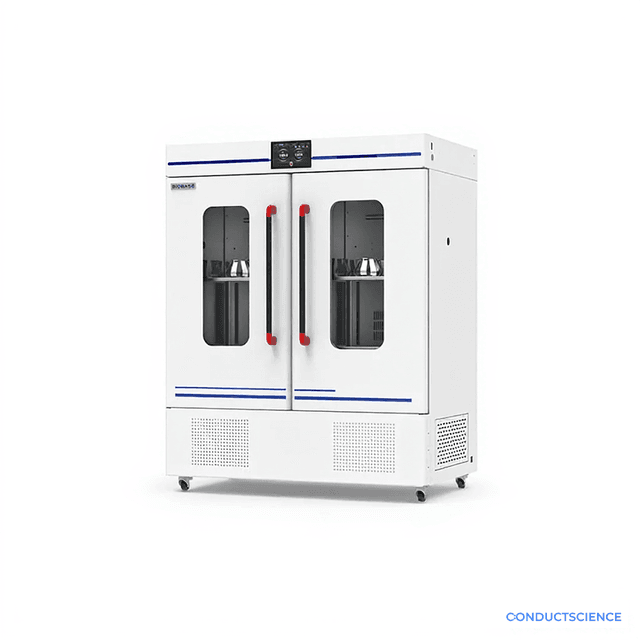
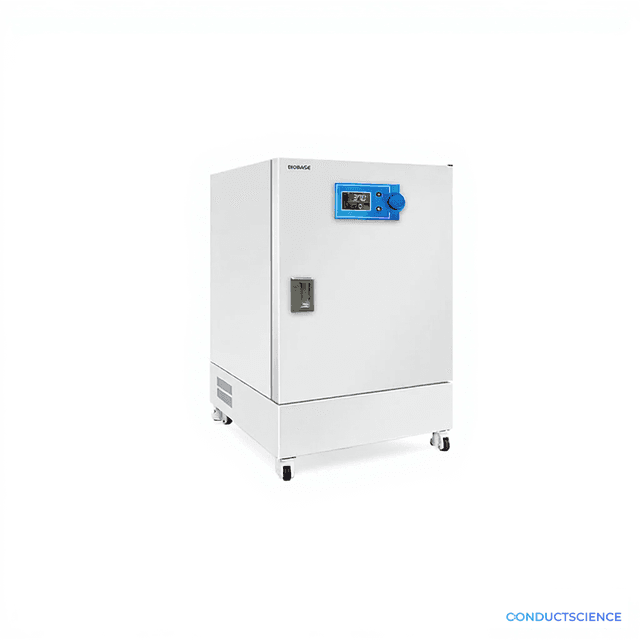
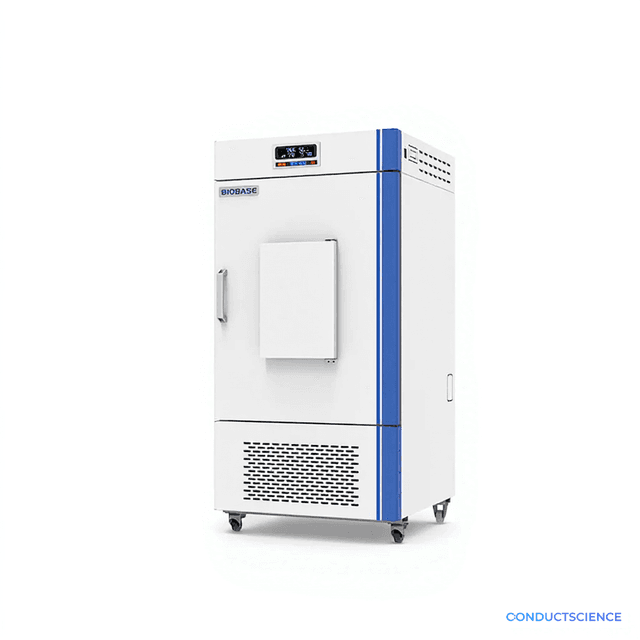
CO2 Incubator 50L 80L 160L 180L 220L 300L
Air jacket CO2 incubators with dry heat sterilization, available in 50L-300L capacities, featuring PT100 temperature control and touchscreen interface for cell culture applications.

Louise Corscadden, PhD
Director of Science · ConductScience
Ask Louise about CO2 Incubator 50L 80L 160L 180L 220L 300L fit, setup, configuration, or quote prep.
Already working with us? Sign in to connect this with My Scientist.
Key Specifications
Full details →- Model fit
- 6 selectable configurations
- SKU family
- Assigned during quote
- Shipping box
- 49.6 x 33.2 x 32.6 cm
- Ordering
- Online checkout and quote request available
- Category
- Laboratory Incubators
- Build notes
- Confirm accessories, station layout, and support needs before purchase
The CO2 Incubator series provides controlled atmospheric environments for cell and tissue culture applications requiring precise temperature and CO2 regulation. These air jacket incubators utilize dry heat sterilization at 180°C to maintain sterile conditions and feature PT100 temperature sensing for accurate thermal control. Available in multiple capacity options from 50L to 300L, the units accommodate varying laboratory throughput requirements.
The incubators maintain temperature stability within ±0.5°C with uniformity of ±1.0°C across the chamber, tightening to ±0.3°C fluctuation and ±0.5°C uniformity at the standard 37°C culture temperature. A 7-inch touchscreen interface provides intuitive operation with programmable timing from 0-999 hours or continuous operation modes.
How It Works
The CO2 incubator operates using an air jacket design that circulates heated air around the culture chamber to maintain uniform temperature distribution. The PT100 resistance temperature detector provides precise thermal feedback to the control system, which adjusts heating elements to maintain the setpoint within specified tolerances. The air jacket configuration creates a thermal buffer that minimizes temperature fluctuations when the door is opened.
Dry heat sterilization at 180°C eliminates contaminating microorganisms throughout the chamber and air circulation system. This sterilization temperature exceeds the thermal death point of vegetative bacteria, fungi, and viruses while being compatible with stainless steel construction materials. The sterilization cycle can be programmed through the touchscreen interface and operates independently of culture protocols.
Features & Benefits
Shipping weight
- 80.0 lb
Shipping box
- L: 49.6 cm
- W: 33.2 cm
- H: 32.6 cm
| Feature | This Product | Typical Alternative | Advantage |
|---|---|---|---|
| Temperature Control Accuracy | ±0.3°C fluctuation at 37°C with PT100 sensor | Entry-level models often provide ±0.5-1.0°C control | Tighter temperature control maintains optimal cell culture conditions and reduces experimental variability. |
| Sterilization Method | 180°C dry heat sterilization integrated into chamber | Many models rely on chemical sterilization or lower-temperature cycles | Dry heat sterilization eliminates residual chemicals and provides more reliable decontamination. |
| User Interface | 7-inch touchscreen with programmable timing | Basic models often feature simple digital displays or mechanical controls | Touchscreen interface simplifies parameter setting and provides better process monitoring capabilities. |
| Capacity Range | Available in 50L, 80L, 160L, 180L, 220L, and 300L options | Limited capacity options in many product lines | Multiple sizes accommodate laboratory scaling from research to production environments. |
| Temperature Uniformity | ±0.5°C uniformity at 37°C with air jacket design | Direct heating systems may show greater temperature gradients | Air jacket design provides more consistent conditions across all culture positions. |
This incubator series combines precise PT100 temperature control with integrated dry heat sterilization and touchscreen operation. The air jacket design ensures temperature uniformity while the multiple capacity options accommodate varying laboratory scales from research to high-throughput applications.
| Model | SKU | Listed price | Status | Shipping box |
|---|---|---|---|---|
| 300L | BJPX-C300D | $11,790.00 | Available | 49.6 x 33.2 x 32.6 cm |
| 220L | BJPX-C220D | $10,990.00 | Available | 49.6 x 33.2 x 32.6 cm |
| 180L | BJPX-C180D | $10,190.00 | Available | 49.6 x 33.2 x 32.6 cm |
| 160L | BJPX-C160D | $9,090.00 | Available | 49.6 x 33.2 x 32.6 cm |
| 80L | BJPX-C80D | $9,490.00 | Available | 49.6 x 33.2 x 32.6 cm |
| 50L | BJPX-C50D | $8,090.00 | Available | 49.6 x 33.2 x 32.6 cm |
Practical Tips
Verify temperature accuracy using calibrated reference thermometers placed at different shelf positions before critical experiments.
Why: Ensures actual chamber temperatures match display readings and confirms uniform temperature distribution.
Perform dry heat sterilization cycles regularly between culture batches to prevent contamination buildup.
Why: Regular sterilization maintains sterile conditions and prevents cross-contamination between experiments.
Allow chamber temperature to stabilize for at least 30 minutes after sterilization before loading cultures.
Why: Temperature equilibration ensures cultures are not exposed to thermal shock when placed in the chamber.
Position culture vessels with adequate spacing between containers to maintain air circulation.
Why: Proper air flow ensures uniform temperature distribution and prevents localized hot spots.
If temperature fluctuations increase, check door seals and ensure chamber is not overloaded.
Why: Poor sealing or restricted air flow can compromise temperature stability and uniformity.
Use appropriate PPE when handling cultures and avoid opening the door unnecessarily during sterilization cycles.
Why: Maintains sterile conditions and prevents exposure to high temperatures during sterilization.
Document sterilization cycles and temperature verification as part of experimental records.
Why: Proper documentation supports data integrity and regulatory compliance in validated environments.
Setup Guide
What’s in the Box
- CO2 incubator main unit
- Culture chamber shelves (typical)
- Power cable
- User manual and operating instructions
- Calibration certificate (typical)
- Warranty documentation
Warranty
ConductScience provides a standard one-year manufacturer warranty covering parts and labor, with technical support available for installation guidance and operational troubleshooting.
Compliance
What is the recovery time after door opening?
Consult product datasheet for specific recovery parameters. Air jacket design minimizes temperature fluctuations during door access compared to direct heating systems.
Can the sterilization cycle be automated or scheduled?
The touchscreen interface allows sterilization programming, though specific automation capabilities should be verified in the operating manual for your model.
What shelf configurations are available for different culture vessel types?
Standard shelf arrangements are included, with specific configurations and optional accessories detailed in the product specifications for each capacity model.
How is CO2 concentration controlled and monitored?
CO2 control specifications are not detailed in the basic product information - consult full technical specifications for gas control capabilities and sensor types.
What data logging and connectivity options are available?
The touchscreen interface provides operational control, though specific data export formats and connectivity options should be confirmed with technical specifications.
How does performance compare between different capacity models?
All models maintain the same temperature control specifications (±0.3°C at 37°C) with identical sterilization and interface features across the capacity range.
Have a question about this product?
Have a question? Just ask.
Send it over and we'll email you a personalized answer — no call, no scheduling.
Prefer to talk it through?
Accessories
Enhance your setup with compatible accessories