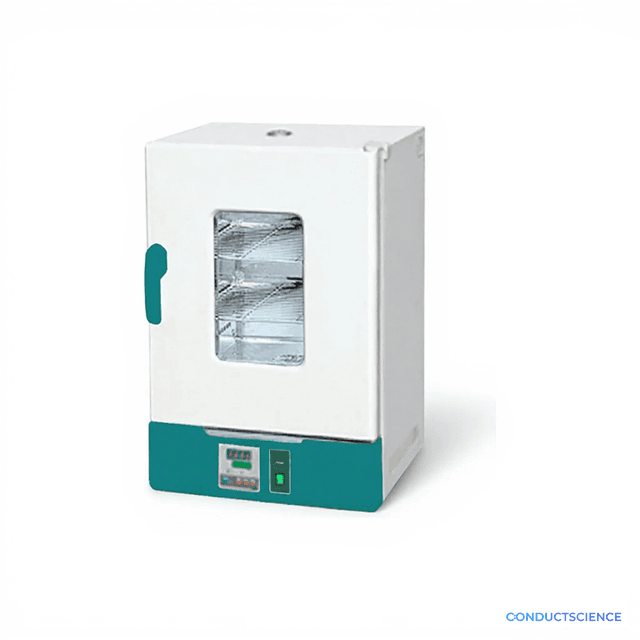
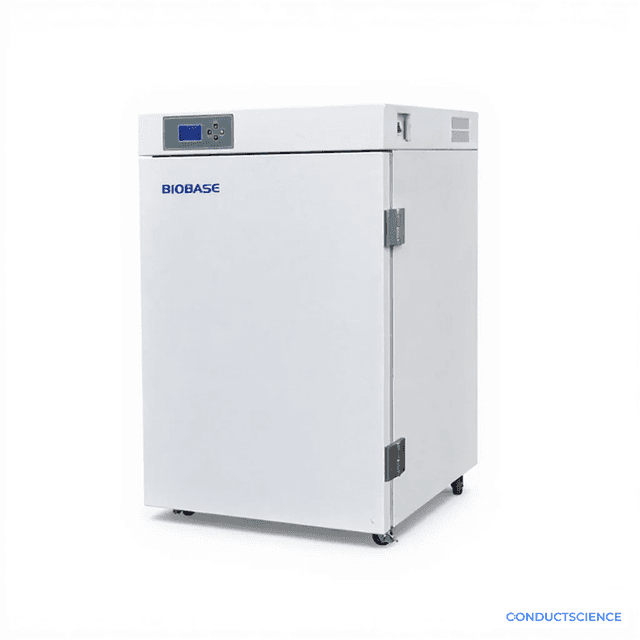
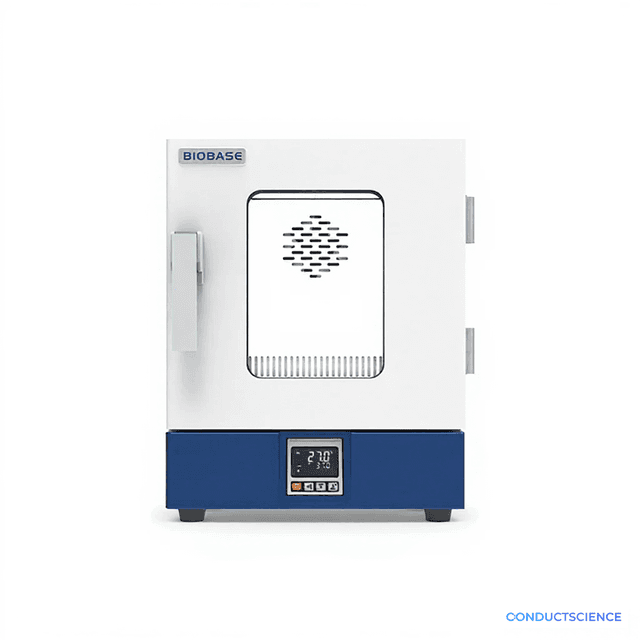
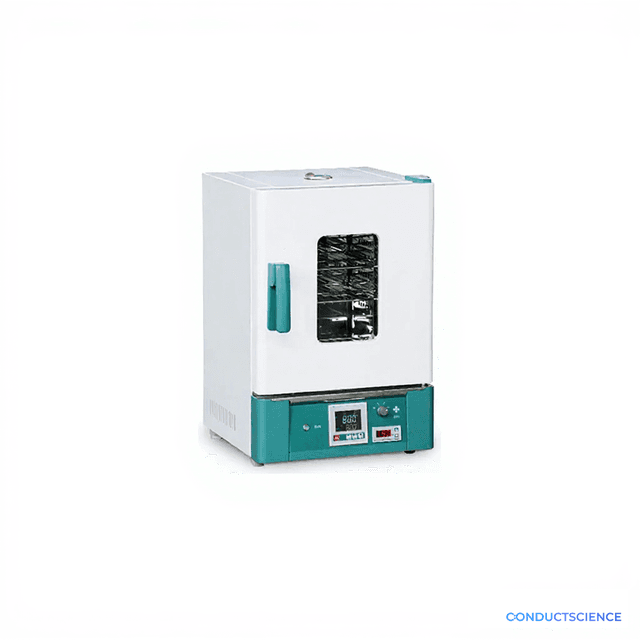
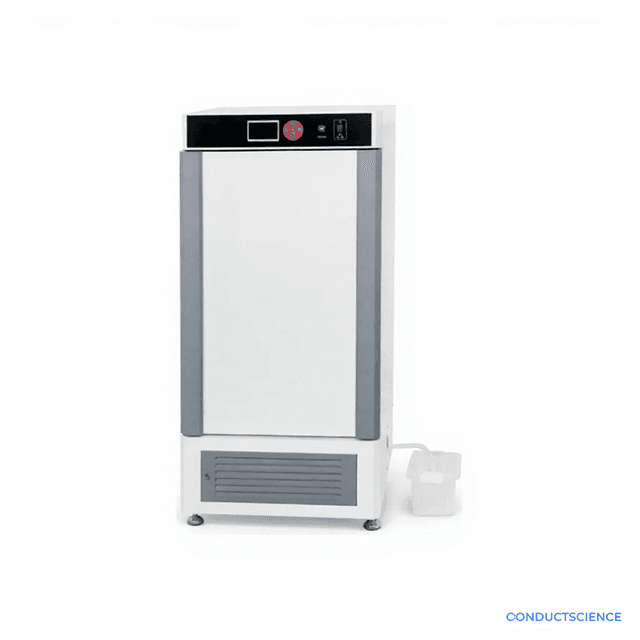
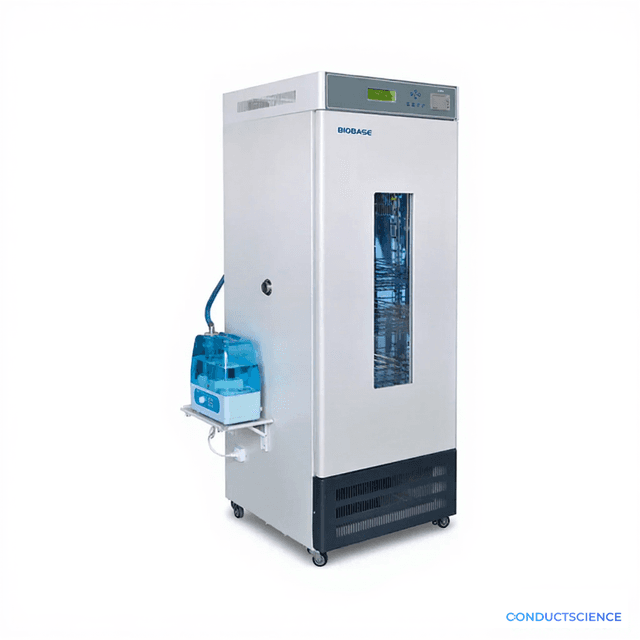
Touch Screen Constant-Temperature Incubator H54BK(D/G) H88BK(D/G) H160BK(D/G) H200BK(G) H270BK(G)
Constant-temperature incubators with PT100 sensing, LCD touch screen control, and five capacity options from 54L to 270L for stable thermal environments.

Louise Corscadden, PhD
Director of Science · ConductScience
Ask Louise about Touch Screen Constant-Temperature Incubator H54BK(D/G) H88BK(D/G) H160BK(D/G) H200BK(G) H270BK(G) fit, setup, configuration, or quote prep.
Already working with us? Sign in to connect this with My Scientist.
Key Specifications
Full details →- Model fit
- 5 selectable configurations
- SKU family
- BIO-0189
- Shipping box
- 39.5 x 39.5 x 36.4 cm
- Ordering
- Online checkout and quote request available
- Category
- Laboratory Incubators
- Build notes
- Confirm accessories, station layout, and support needs before purchase
The Touch Screen Constant-Temperature Incubator series provides precise thermal control for laboratory applications requiring stable environmental conditions. These units feature five capacity options (54L, 88L, 160L, 200L, 270L) with PT100 temperature sensing and LCD touch screen operation for reliable temperature maintenance across the range of RT+5°C to 85°C.
The incubators deliver ±1°C temperature fluctuation and ±2°C uniformity at 37°C, supporting applications in microbiology, cell culture, and analytical chemistry where consistent thermal conditions are critical. The timing function allows operation from 0-999 hours or continuous running, with 0.1°C temperature precision for demanding protocols.
How It Works
The incubators utilize PT100 platinum resistance temperature detectors for accurate thermal monitoring. These sensors exhibit a linear relationship between temperature and electrical resistance, providing precise feedback to the control system for maintaining stable internal conditions.
Air circulation systems distribute heat uniformly throughout the chamber, while insulated construction minimizes thermal losses. The LCD touch screen interface allows direct temperature setpoint entry and timing parameter adjustment. The control algorithm continuously compares actual temperature readings from the PT100 sensor against the programmed setpoint, adjusting heating elements to maintain the desired thermal environment.
Features & Benefits
Shipping weight
- 26.59 lb
Shipping box
- L: 39.5 cm
- W: 39.5 cm
- H: 36.4 cm
| Feature | This Product | Typical Alternative | Advantage |
|---|---|---|---|
| Temperature Sensor Type | PT100 platinum resistance detector | Basic models often use thermistor sensors with limited accuracy | PT100 sensors provide superior long-term stability and accuracy for critical temperature control applications |
| Temperature Precision | 0.1°C precision | Entry-level units typically offer 1°C precision | Higher precision enables more demanding temperature-sensitive protocols and better experimental reproducibility |
| Control Interface | LCD touch screen display | Basic models use simple LED displays with button controls | Touch screen interface provides intuitive operation and clear real-time parameter monitoring |
| Capacity Range | Five models from 54L to 270L | Limited capacity options in many product lines | Multiple capacity choices allow selection of optimal size for specific throughput requirements and lab space |
| Timing Function | 0-999h or continuous operation | Basic timers often limited to shorter durations | Extended timing capability supports long-term studies and eliminates interruptions for timer resets |
| Temperature Uniformity | ±2°C uniformity at 37°C | Entry models may have wider temperature variations | Better uniformity ensures consistent conditions across all sample positions for reliable results |
This incubator series combines PT100 sensor accuracy with touch screen convenience across multiple capacity options. The 0.1°C precision and ±1°C stability specifications support demanding temperature control requirements in research and quality control applications.
| Model | SKU | Listed price | Status | Shipping box |
|---|---|---|---|---|
| BJPX-H270BK(G) | BJPX-H270BK(G) | $1,690.00 | Available | 39.5 x 39.5 x 36.4 cm |
| BJPX-H200BK(G) | BJPX-H200BK(G) | $1,490.00 | Available | 39.5 x 39.5 x 36.4 cm |
| BJPX-H160BK(D/G) | BJPX-H160BK(D/G) | $1,190.00 | Available | 39.5 x 39.5 x 36.4 cm |
| BJPX-H88BK(D/G) | BJPX-H88BK(D/G) | $1,190.00 | Available | 39.5 x 39.5 x 36.4 cm |
| BJPX-H54BK(D/G) | BJPX-H54BK(D/G) | $1,190.00 | Available | 39.5 x 39.5 x 36.4 cm |
Practical Tips
Perform calibration verification using a NIST-traceable reference thermometer placed in multiple chamber locations.
Why: Multi-point verification ensures accuracy across the entire working volume and identifies any uniformity issues.
Clean internal surfaces monthly with mild detergent and inspect door seals for proper closure.
Why: Regular cleaning prevents contamination while seal inspection maintains temperature stability and energy efficiency.
Allow 30 minutes for temperature equilibration before loading temperature-sensitive samples.
Why: Pre-equilibration ensures samples are immediately exposed to stable conditions rather than temperature ramp periods.
Arrange samples to allow adequate air circulation between containers and avoid blocking internal airflow patterns.
Why: Proper air circulation maintains temperature uniformity throughout the chamber and prevents hot spots.
If temperature overshoots occur, check that the chamber is not overloaded and door seals are intact.
Why: Overloading or poor sealing can disrupt thermal control algorithms and cause temperature instability.
Document ambient room temperature during critical experiments as it affects incubator performance at low setpoints.
Why: Ambient conditions influence heating efficiency and stability, particularly for temperatures close to room temperature.
Ensure adequate ventilation around the unit and avoid placing heat-sensitive materials on top of the incubator.
Why: Proper ventilation prevents overheating while avoiding heat-sensitive storage maintains safety and equipment longevity.
Keep spare fuses available and check power connections periodically for secure attachment.
Why: Electrical maintenance prevents unexpected downtime and ensures consistent power delivery for stable operation.
Setup Guide
What’s in the Box
- Main incubator unit (typical)
- Power cord (typical)
- Internal shelving (typical)
- User manual and documentation (typical)
- Temperature calibration certificate (typical)
Warranty
ConductScience provides standard manufacturer warranty coverage with technical support for operational guidance and troubleshooting assistance.
Compliance
What is the temperature recovery time after door opening?
Recovery time depends on ambient conditions and door-open duration. Typical recovery to ±1°C of setpoint occurs within 10-15 minutes for brief openings, though specific recovery characteristics should be verified for your operating conditions.
How frequently should temperature calibration be performed?
Annual calibration is recommended for most applications, with quarterly verification suggested for critical temperature-dependent protocols. Use NIST-traceable reference standards for calibration verification.
Can the unit operate continuously without timing limitations?
Yes, the incubator supports continuous operation mode beyond the 999-hour timer limit. The continuous setting allows indefinite operation for long-term studies and ongoing sample storage.
What maintenance is required for optimal performance?
Regular cleaning of internal surfaces, periodic inspection of door seals, and annual temperature calibration verification. The PT100 sensor should be checked for accuracy during routine maintenance intervals.
How many samples can be accommodated simultaneously?
Sample capacity depends on container size and required air circulation space. Consult product datasheet for shelf configurations and loading recommendations for your specific containers and applications.
Is external temperature monitoring possible?
The unit features built-in PT100 sensing with LCD display. For external monitoring or data logging capabilities, consult product specifications for available communication interfaces or data output options.
What power supply options are available?
Standard units operate on 220V 50/60Hz, with 110V 50/60Hz available as an option. G-type models require an external transformer for power conditioning.
Have a question about this product?
Have a question? Just ask.
Send it over and we'll email you a personalized answer — no call, no scheduling.
Prefer to talk it through?
Accessories
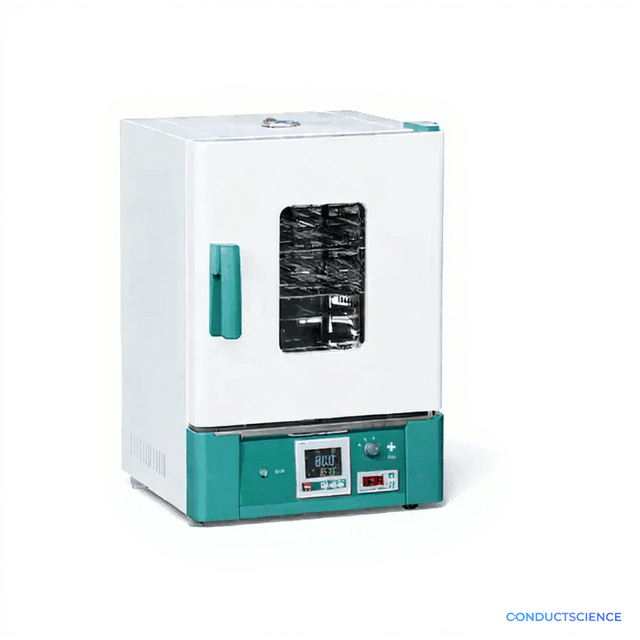
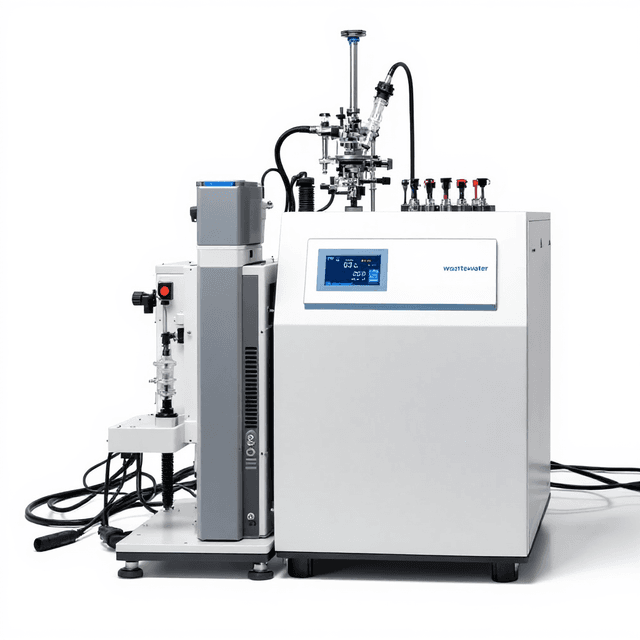
Enhance your setup with compatible accessories
Upgrade Options