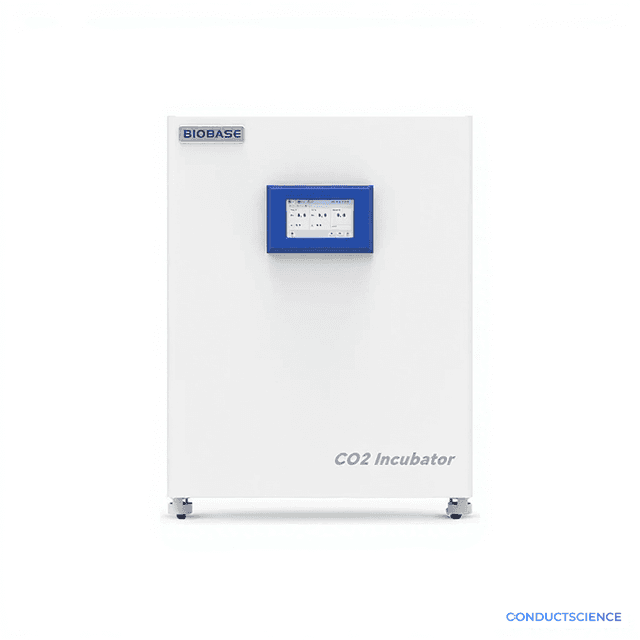
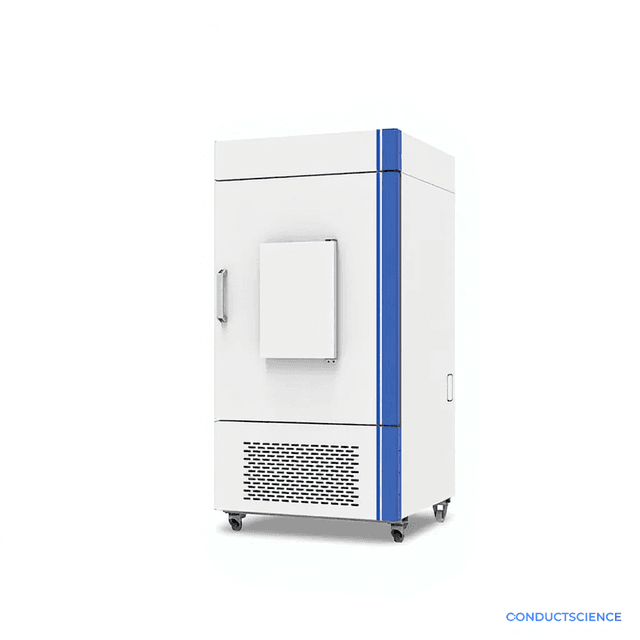
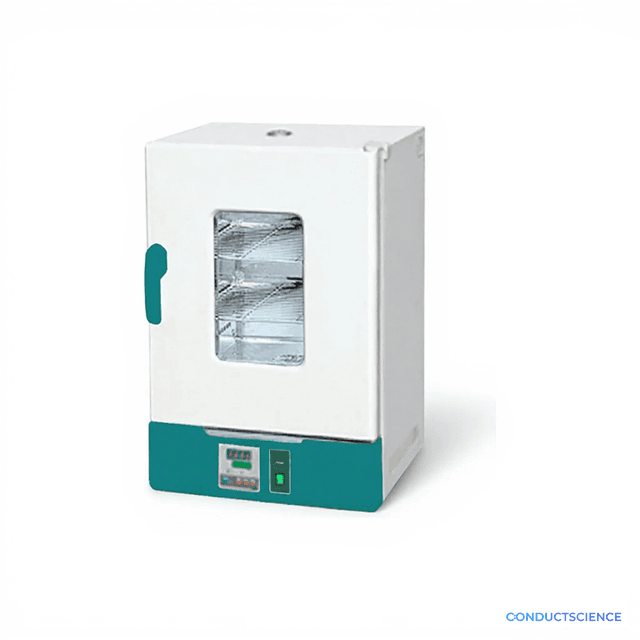
Biochemistry Incubator 80L 100L 150L 200L 250L 300L 400L
Temperature-controlled incubator series (80L-400L capacity) with dual heating/cooling capability, PT100 sensor control, and 0-65°C operating range for biological specimen cultivation and biochemical sample storage.

Louise Corscadden, PhD
Director of Science · ConductScience
Ask Louise about Biochemistry Incubator 80L 100L 150L 200L 250L 300L 400L fit, setup, configuration, or quote prep.
Already working with us? Sign in to connect this with My Scientist.
Key Specifications
Full details →- Model fit
- 2 selectable configurations
- SKU family
- Assigned during quote
- Shipping box
- 56.0 x 40.0 x 37.0 cm
- Ordering
- Online checkout and quote request available
- Category
- Laboratory Incubators
- Build notes
- Confirm accessories, station layout, and support needs before purchase
The Biochemistry Incubator series provides precise temperature-controlled environments for biological specimens, cell cultures, and biochemical samples across research and clinical applications. These units feature dual heating and refrigeration capabilities with PT100 sensor-based temperature control, offering operational ranges from 0°C to 65°C with ±0.5°C heating stability and ±1°C cooling stability.
Available in six capacity configurations (80L, 100L, 150L, 200L, 250L, 300L, 400L), the incubators utilize PID adjustment algorithms for consistent temperature maintenance with ±2°C uniformity throughout the chamber. The integrated timing system supports extended protocols up to 9999 minutes or hours, while R134a refrigerant enables reliable cooling performance for temperature-sensitive applications.
How It Works
The incubator operates through a dual-mode temperature control system combining heating elements and refrigeration circuits. The PT100 platinum resistance temperature sensor provides high-accuracy temperature measurement with 0.1°C resolution, feeding data to a PID (Proportional-Integral-Derivative) controller that maintains precise thermal conditions.
During heating operations, electric heating elements warm the chamber air while internal circulation fans distribute heat uniformly. For cooling applications, the R134a refrigeration system removes heat from the chamber, with the PID controller modulating both heating and cooling inputs to achieve target temperatures. The system continuously monitors chamber conditions and adjusts output to compensate for thermal loads from samples or door openings.
Temperature uniformity is maintained through engineered airflow patterns that minimize thermal gradients across the chamber volume. The timing system allows for automated operation cycles, enabling unattended incubation protocols while maintaining consistent environmental conditions throughout the programmed duration.
Features & Benefits
Shipping weight
- 65.0 lb
Shipping box
- L: 56.0 cm
- W: 40.0 cm
- H: 37.0 cm
| Feature | This Product | Typical Alternative | Advantage |
|---|---|---|---|
| Temperature Range | 0-65°C dual heating/cooling | Many basic incubators offer heating only above ambient temperature | Enables protocols requiring both refrigerated storage and moderate heating without equipment changes |
| Temperature Control | PT100 sensor with PID adjustment | Entry-level units often use basic thermostat control | Provides more precise temperature regulation and faster response to thermal disturbances |
| Temperature Stability | ±0.5°C heating, ±1°C cooling | Basic models typically offer ±2-3°C stability | Ensures more consistent conditions for temperature-sensitive biological specimens |
| Capacity Range | Six sizes from 80L to 400L | Limited size options in most product lines | Allows precise matching of chamber size to experimental throughput and space requirements |
| Timer Range | 0-9999 minutes/hours programmable | Basic timers often limited to 24-48 hours | Supports extended protocols and automated operation for long-term studies |
| Temperature Display | 0.1°C resolution | Many units display in 1°C increments | Enables precise monitoring and documentation of experimental conditions |
This incubator series combines dual heating/cooling capability with precision PT100 sensor control across multiple capacity options. The wide temperature range and programmable timing system provide operational flexibility for diverse biological applications requiring consistent environmental conditions.
| Model | SKU | Listed price | Status | Shipping box |
|---|---|---|---|---|
| 100L-250L (Standard) | BIO-0194 | $2,490.00 | Available | 56.0 x 40.0 x 37.0 cm |
| 80L-400L (Full Range) | BIO-0193 | $2,490.00 | Available | 56.0 x 40.0 x 37.0 cm |
Practical Tips
Place calibration thermometers at multiple positions throughout the chamber to verify temperature uniformity across the entire volume.
Why: Temperature gradients can exist in any chamber, and uniform conditions are critical for reproducible results.
Clean the chamber interior monthly with mild detergent and inspect door seals for proper closure to maintain thermal efficiency.
Why: Contamination and air leaks can affect both sample integrity and temperature control performance.
Allow adequate spacing between samples and avoid overloading to maintain proper air circulation throughout the chamber.
Why: Air circulation is essential for maintaining temperature uniformity and preventing localized hot or cold spots.
If temperature stability is compromised, check for proper door closure and verify that ventilation areas around the unit are unobstructed.
Why: Most temperature control issues result from heat load changes or inadequate unit ventilation.
Record chamber temperature at multiple time points during critical incubations to document environmental conditions.
Why: Temperature logs provide essential documentation for protocol validation and regulatory compliance.
Ensure proper electrical grounding and avoid using extension cords for high-power heating and cooling operations.
Why: Dual-mode operation requires stable power supply to prevent equipment damage and maintain safe operation.
Pre-equilibrate the chamber to target temperature before loading temperature-sensitive samples.
Why: Thermal shock from rapid temperature changes can affect sample viability and experimental outcomes.
Schedule regular refrigeration system maintenance including refrigerant level checks and condenser coil cleaning.
Why: Proper refrigeration maintenance ensures reliable cooling performance and extends equipment lifespan.
Setup Guide
What’s in the Box
- Biochemistry incubator main unit
- Power cord
- User manual and documentation
- Temperature probe (typical)
- Internal shelving system (typical)
- Calibration certificate (typical)
Warranty
ConductScience provides a standard one-year manufacturer warranty covering parts and labor for defects in materials and workmanship. Technical support is available for installation, calibration, and operational guidance throughout the warranty period.
Compliance
What is the temperature recovery time after door opening?
Recovery time depends on ambient conditions and door opening duration. The PID control system typically restores set point temperature within 10-15 minutes after brief door openings, though extended access periods will require longer recovery times.
Can the unit maintain stable temperatures below 4°C?
Yes, the refrigeration system can maintain temperatures down to 0°C with ±1°C stability. For applications requiring temperatures below 4°C, monitor performance under actual load conditions to verify stability requirements are met.
What type of shelving system is compatible?
Consult product datasheet for specific shelf configurations and loading capacities. Standard laboratory shelving should be selected based on sample container dimensions and weight distribution requirements.
How often should temperature calibration be performed?
Calibration frequency depends on usage intensity and regulatory requirements. For critical applications, monthly verification with certified reference thermometers is recommended, with annual calibration by qualified service personnel.
Is the unit suitable for volatile organic compounds?
The standard unit is designed for aqueous biological samples. For volatile compounds or organic solvents, consult product specifications for materials compatibility and consider specialized ventilation requirements.
What power requirements are needed?
Consult product datasheet for specific electrical specifications including voltage, current, and power consumption ratings for proper electrical installation and circuit protection.
Can multiple units be networked for monitoring?
Networking capabilities depend on available communication interfaces. Consult product specifications for data output options and compatibility with laboratory information management systems.
What is the maximum sample load capacity?
Load capacity varies by chamber size and must account for air circulation requirements. Avoid overloading to maintain temperature uniformity and allow adequate airflow around samples.
Have a question about this product?
Have a question? Just ask.
Send it over and we'll email you a personalized answer — no call, no scheduling.
Prefer to talk it through?
Accessories
Enhance your setup with compatible accessories