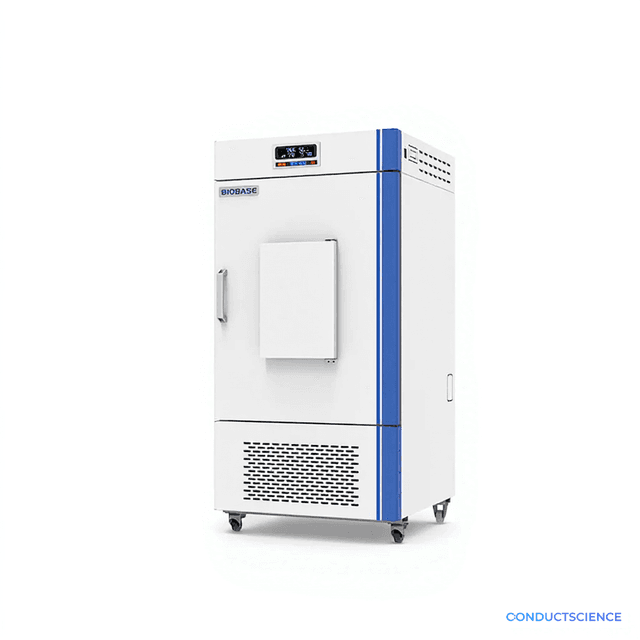
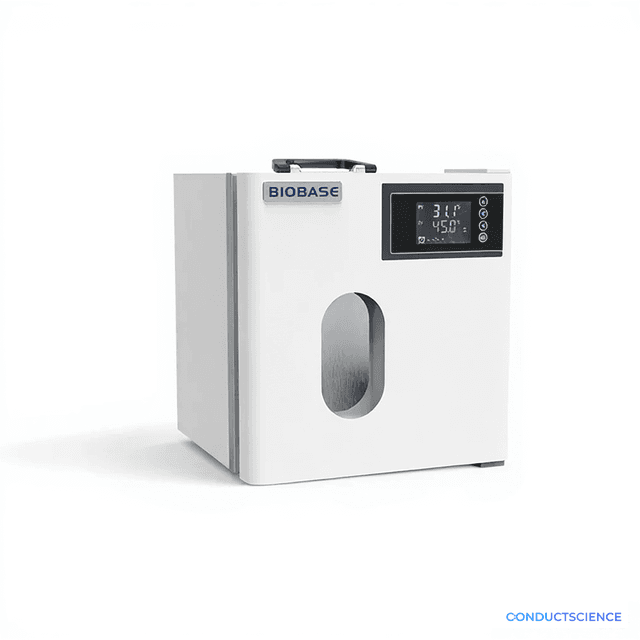
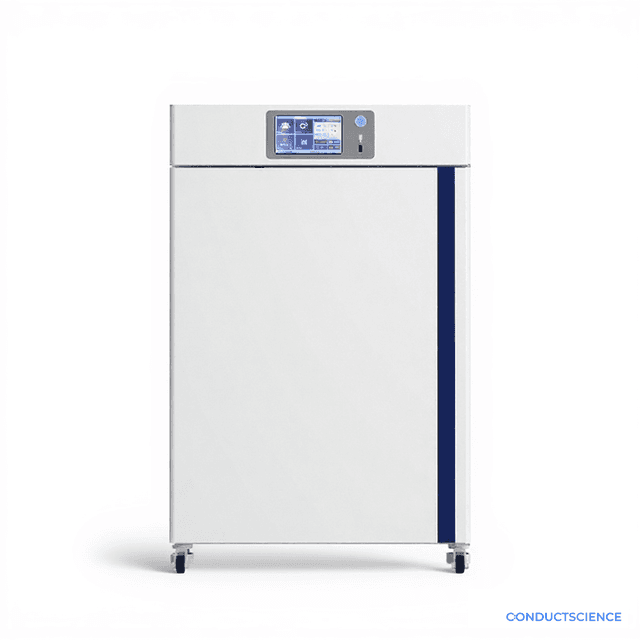
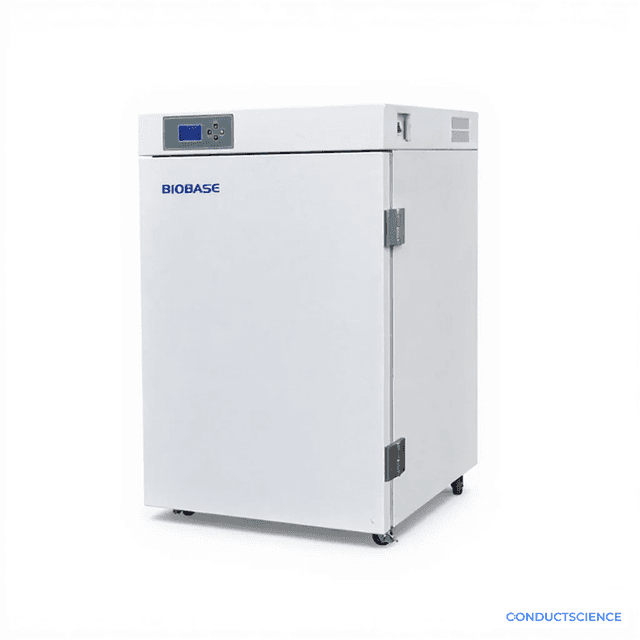
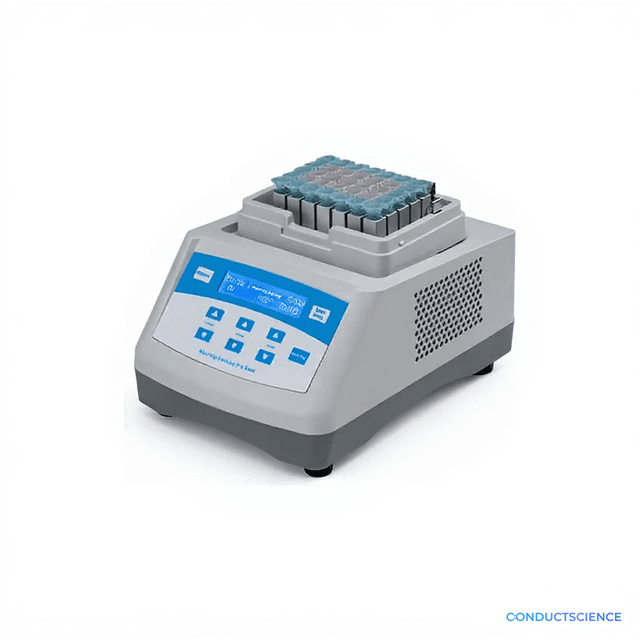
Large Capacity Vertical Type Shaking Incubator BJPX-SL220-LI
Variable-capacity laboratory lighting incubators for plant growth, photobiology, tissue culture, algae, and stability workflows that require controlled temperature and programmable illumination.

Louise Corscadden, PhD
Director of Science · ConductScience
Ask Louise about Large Capacity Vertical Type Shaking Incubator BJPX-SL220-LI fit, setup, configuration, or quote prep.
Already working with us? Sign in to connect this with My Scientist.
Key Specifications
Full details →- Model fit
- Configured during quote
- SKU family
- Assigned during quote
- Shipping box
- 42.0 x 43.6 x 38.0 cm
- Ordering
- Online checkout and quote request available
- Category
- Laboratory Incubators
- Build notes
- Confirm accessories, station layout, and support needs before purchase
Large Capacity Vertical Type Shaking Incubator
Reliable vertical type shaking incubator for large-scale laboratory applications.
Features
- Large capacity design
- Precise temperature and speed control
- Durable construction
- Easy to operate and maintain
How It Works
The BJPX-L series operates through a dual-zone environmental control system that independently manages temperature and illumination parameters. The forced convection circulation mode employs strategic air movement to maintain temperature uniformity within ±2°C throughout the chamber volume. The refrigeration system uses R134a refrigerant for efficient cooling, while integrated heating elements provide precise temperature control across the specified range.
The illumination system operates independently from the thermal control, allowing researchers to create specific photoperiod protocols. Temperature control accuracy is maintained at ±0.1°C through continuous monitoring and feedback systems, with display resolution of 0.1°C for precise experimental documentation. The timing function enables automated protocol execution for experiments requiring specific duration parameters.
Features & Benefits
Shipping weight
- 29.98 lb
Shipping box
- L: 42.0 cm
- W: 43.6 cm
- H: 38.0 cm
| Feature | This Product | Typical Alternative | Advantage |
|---|---|---|---|
| Temperature Control Range | 5-50°C (without illumination), 10-50°C (with illumination) | Many basic incubators offer 5-60°C without illumination capability | Dual-mode operation allows researchers to optimize temperature range based on whether illumination is required for their specific protocol. |
| Temperature Control Accuracy | ±0.1°C accuracy with ±0.5°C fluctuation | Entry-level units often provide ±1°C accuracy with higher fluctuation | Precise control enables temperature-sensitive biological processes and meets stringent experimental reproducibility requirements. |
| Temperature Uniformity | ±2°C uniformity with forced convection | Passive circulation models typically show ±3-5°C variation | Uniform conditions across chamber volume ensure consistent treatment of all samples regardless of position. |
| Capacity Options | Four sizes: 159L, 248L, 290L, 400L | Limited size selection in specialized lighting incubators | Multiple capacity options accommodate varying experimental scales from pilot studies to production research. |
| Display System | LED display (BJPX-L) or LCD display (BJPX-LII series) | Basic digital or analog displays without series differentiation | Clear visual feedback enables accurate parameter monitoring and documentation for experimental records. |
| Timing Function | 0-99 hour programmable timing | Manual operation or limited timer functions | Extended timing capability supports long-term experimental protocols and automated cycling requirements. |
The BJPX-L series provides dual-mode temperature operation with integrated illumination control and precise environmental management. The forced convection system ensures uniform conditions across multiple capacity options, while accurate temperature control and extended timing functions support demanding photobiological research protocols.
Practical Tips
Verify temperature accuracy using a calibrated reference thermometer at multiple setpoints across your operating range before critical experiments.
Why: Ensures measurement traceability and validates the ±0.1°C accuracy specification for your specific protocols.
Clean the internal chamber and circulation components monthly to prevent contamination and maintain optimal airflow patterns.
Why: Proper airflow is essential for the ±2°C uniformity specification and prevents cross-contamination between experiments.
Allow at least 2 hours stabilization time after changing temperature setpoints before loading critical samples.
Why: Ensures the chamber has reached thermal equilibrium and the control system has stabilized at the new conditions.
Position samples to allow air circulation around all containers and avoid blocking ventilation areas.
Why: Proper air circulation is critical for maintaining temperature uniformity and achieving the forced convection benefits.
Document illumination schedules and temperature profiles for each experiment to ensure reproducible conditions.
Why: Environmental parameters significantly affect biological responses and must be recorded for valid experimental interpretation.
If temperature alarms activate, check door seal integrity and verify that sample load hasn't exceeded recommended capacity.
Why: Overloading or air leaks can compromise temperature control and trigger the over-temperature alarm system.
Ensure proper electrical grounding and avoid opening the door frequently during critical temperature-sensitive procedures.
Why: Electrical safety prevents equipment damage, while minimizing door openings maintains stable environmental conditions.
Check refrigerant system for unusual noises or vibrations during routine operation and schedule professional service if detected.
Why: Early detection of refrigeration issues prevents system failure and protects valuable samples during long-term experiments.
Setup Guide
What’s in the Box
- Lighting incubator main unit
- Power cord
- Temperature probe and sensors
- Sample shelving system (typical)
- User manual and operating instructions
- Warranty documentation
- Basic calibration certificate (typical)
Warranty
ConductScience provides a standard one-year manufacturer warranty covering defects in materials and workmanship. Technical support includes operational guidance, calibration assistance, and troubleshooting resources.
Compliance
What is the maximum temperature differential I can expect across the chamber volume?
Temperature uniformity is maintained within ±2°C throughout the chamber volume using the forced convection circulation system.
Can I program complex photoperiod cycles with varying light intensities?
The unit provides illumination control and 99-hour timing capability; consult product datasheet for specific photoperiod programming options and light intensity specifications.
How quickly does the unit recover temperature after door opening?
Temperature recovery time depends on chamber size and ambient conditions; the forced convection system and ±0.5°C fluctuation specification indicate rapid stabilization capability.
What type of temperature sensor is used and how often should it be calibrated?
The unit includes temperature probe damage alarm functionality; consult product datasheet for sensor specifications and follow institutional calibration protocols, typically annually.
Is the illumination system LED-based and what is the spectral output?
The product includes integrated illumination systems; consult product datasheet for specific light source technology, spectral characteristics, and intensity specifications.
What are the power requirements and heat generation for each model size?
Power consumption varies by model capacity and refrigerant charge (300-400g R134a); consult product specifications for electrical requirements and heat dissipation data.
Can I connect the incubator to data logging systems for remote monitoring?
The LED/LCD display provides local monitoring; consult product datasheet for data output capabilities and compatibility with laboratory information management systems.
How does this compare to other environmental chambers for photobiological research?
This unit offers dual-mode temperature operation and integrated illumination with precise control accuracy; evaluate specific photoperiod programming and light intensity requirements against your experimental protocols.
Have a question about this product?
Have a question? Just ask.
Send it over and we'll email you a personalized answer — no call, no scheduling.
Prefer to talk it through?
Accessories
Enhance your setup with compatible accessories