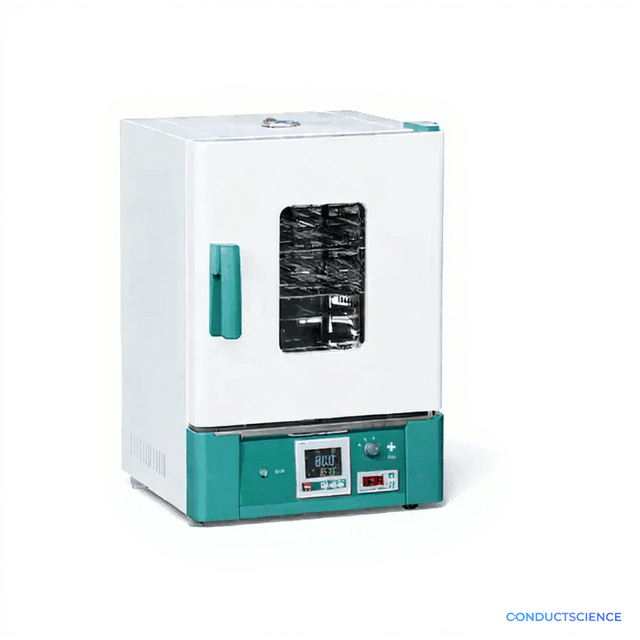
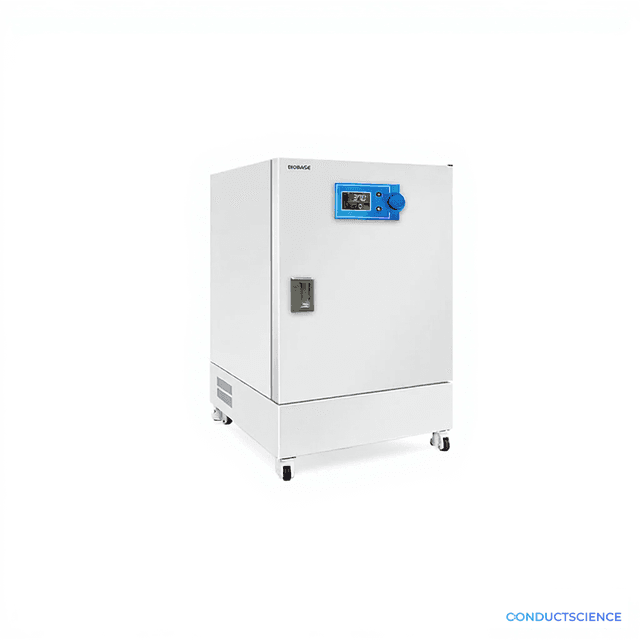
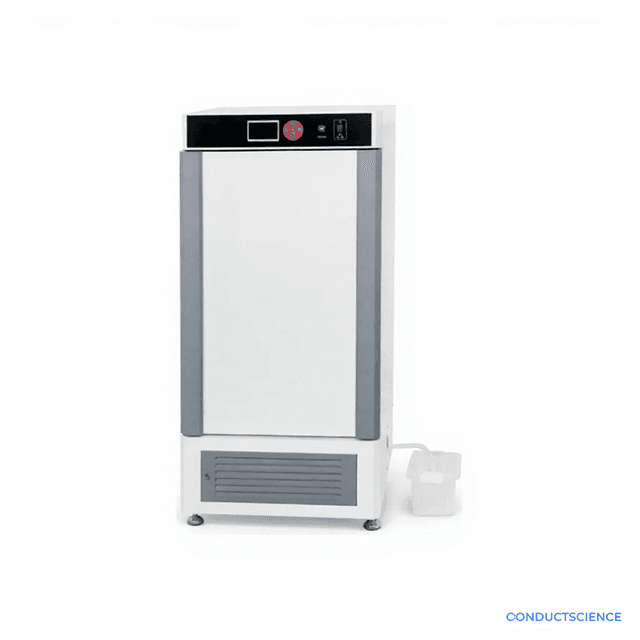
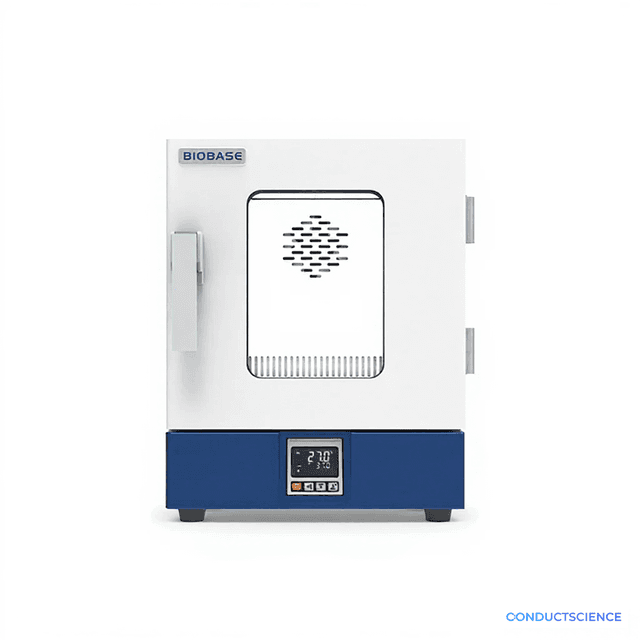
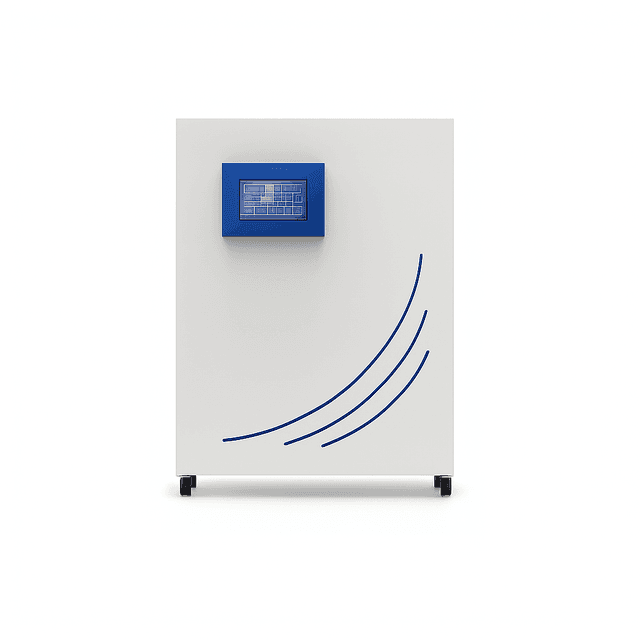
160l 270l Constant Temperature Incubator Laboratory Medical
Precision laboratory incubators available in 160L and 270L capacities for temperature-controlled cultivation, sample storage, and cell culture applications.

Louise Corscadden, PhD
Director of Science · ConductScience
Ask Louise about 160l 270l Constant Temperature Incubator Laboratory Medical fit, setup, configuration, or quote prep.
Already working with us? Sign in to connect this with My Scientist.
Key Specifications
Full details →- Model fit
- 2 selectable configurations
- SKU family
- BIO-0192
- Shipping box
- 42.0 x 43.6 x 38.0 cm
- Ordering
- Online checkout and quote request available
- Category
- Laboratory Incubators
- Build notes
- Confirm accessories, station layout, and support needs before purchase
BJPX-H Series Constant Temperature Incubator
Professional-grade constant temperature incubator designed for laboratory and medical applications. The BJPX-H series provides precise temperature control and uniform thermal distribution for reliable sample incubation across various scientific research and clinical settings.
Available in two capacity options (160L and 270L) to accommodate different workflow requirements and sample volumes.
Key Features
- Constant temperature control with precision regulation
- Large internal chamber capacity (160L or 270L)
- Uniform temperature distribution throughout chamber
- Reliable and stable temperature maintenance
- Suitable for laboratory and medical applications
- Professional-grade construction and performance
- Easy-to-use control interface
- Durable and corrosion-resistant materials
- Multiple accessory options available
- Energy-efficient thermal management
Applications
- Microbiology and culture incubation
- Biological sample preservation
- Laboratory research and testing
- Medical and clinical applications
- Quality control and verification
- Drug and pharmaceutical testing
- Environmental and industrial testing
- Educational laboratory use
How It Works
Constant temperature incubators operate through precise thermal regulation using electrical heating elements controlled by digital temperature controllers. The heating system maintains uniform temperature distribution throughout the chamber via forced air circulation or natural convection, depending on the model design. Temperature sensors continuously monitor chamber conditions and provide feedback to the control system to maintain setpoint accuracy.
The insulated chamber walls minimize heat transfer to the external environment, while internal air circulation systems ensure temperature uniformity across all shelf positions. Digital controllers typically offer temperature ramping capabilities, programmable cycles, and alarm functions for temperature deviations. The chamber construction materials resist corrosion from humidity and cleaning agents commonly used in laboratory environments.
Features & Benefits
Capacity
- 160L
- 270L
Shipping weight
- 29.98 lb
Shipping box
- L: 42.0 cm
- W: 43.6 cm
- H: 38.0 cm
| Feature | This Product | Typical Alternative | Advantage |
|---|---|---|---|
| Chamber Capacity Options | Available in both 160L and 270L capacities | Most manufacturers offer single capacity models requiring separate purchases for different throughput needs | Allows laboratories to select appropriate capacity based on current requirements while maintaining consistent operational characteristics. |
| Temperature Control System | Digital temperature control with monitoring capabilities | Entry-level models may use analog controls with limited precision | Provides more precise temperature regulation and documentation capabilities for quality assurance protocols. |
| Construction Materials | Corrosion-resistant chamber construction | Basic models may use standard steel construction | Extends operational life in humid laboratory environments and withstands routine cleaning protocols. |
| Shelf Configuration | Multiple adjustable shelf positions | Fixed shelf configurations limit flexibility | Accommodates varying sample container sizes and maximizes chamber utilization efficiency. |
These incubators provide dual capacity options with digital temperature control and corrosion-resistant construction. The flexible shelf configuration and precise temperature regulation support diverse laboratory incubation requirements from microbiology to cell culture applications.
| Model | SKU | Listed price | Status | Shipping box |
|---|---|---|---|---|
| BJPX-H270II | BJPX-H270II | $1,899.00 | Available | 42.0 x 43.6 x 38.0 cm |
| BJPX-H160II | BJPX-H160II | $1,599.00 | Available | 42.0 x 43.6 x 38.0 cm |
Practical Tips
Use multiple calibrated thermometers placed at different shelf positions to verify temperature uniformity across the chamber.
Why: Temperature gradients can develop due to air circulation patterns or loading configurations.
Clean chamber surfaces monthly with laboratory-grade disinfectants and inspect door seals for proper closure.
Why: Regular cleaning prevents contamination buildup and maintains temperature stability.
Allow adequate spacing between containers and avoid overloading shelves to maintain proper air circulation.
Why: Restricted airflow creates temperature gradients and reduces incubation uniformity.
If temperature fluctuations occur, check door seal integrity and verify ambient room temperature stability.
Why: Environmental factors significantly impact incubator temperature control performance.
Document temperature readings at the beginning and end of each incubation period for protocol validation.
Why: Temperature records support experimental reproducibility and regulatory compliance requirements.
Never use the incubator for flammable solvents or materials that could create explosive atmospheres.
Why: Standard incubators lack explosion-proof features and ventilation systems for hazardous materials.
Pre-warm chambers to target temperature before loading time-sensitive samples to minimize thermal shock.
Why: Gradual temperature transitions preserve sample viability and experimental integrity.
Setup Guide
What’s in the Box
- Main incubator unit
- Adjustable shelves (typical)
- Temperature probe (typical)
- Power cable
- User manual and documentation
- Calibration certificate (typical)
Warranty
ConductScience provides a standard one-year manufacturer warranty covering defects in materials and workmanship. Technical support and service documentation are available throughout the warranty period.
Compliance
What is the typical temperature uniformity across the chamber?
Temperature uniformity specifications vary by model and should be confirmed from the product datasheet. Proper air circulation and appropriate loading density are essential for maintaining uniformity.
How frequently should temperature calibration be performed?
Annual calibration is typically recommended, with quarterly verification checks using certified reference thermometers. More frequent calibration may be required for critical applications or regulatory compliance.
Can these incubators accommodate CO2 supplementation for cell culture?
These are constant temperature incubators without CO2 control. For cell culture requiring CO2 atmosphere, consider dedicated CO2 incubators with gas regulation capabilities.
What is the maximum shelf loading capacity?
Loading capacity depends on shelf configuration and must not obstruct air circulation. Consult product specifications for maximum load per shelf and total chamber capacity.
How long does temperature stabilization take after door opening?
Recovery time varies with ambient conditions and door opening duration. Typical stabilization occurs within 15-30 minutes after brief door openings, longer for extended access.
Are these incubators suitable for volatile solvents or flammable materials?
Standard laboratory incubators are not designed for flammable or volatile materials. Specialized explosion-proof or ventilated incubators are required for such applications.
What data logging capabilities are available?
Data logging features vary by model. Consult product specifications for available monitoring, recording, and alarm functions for temperature documentation requirements.
Have a question about this product?
Have a question? Just ask.
Send it over and we'll email you a personalized answer — no call, no scheduling.
Prefer to talk it through?
Accessories
Enhance your setup with compatible accessories