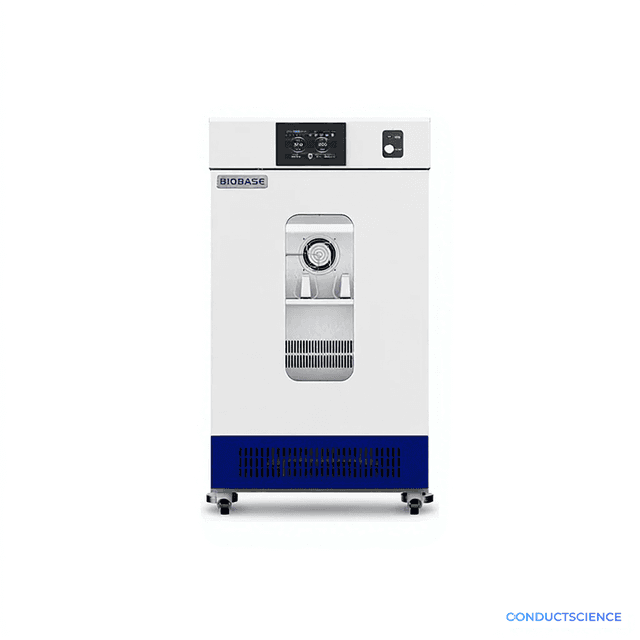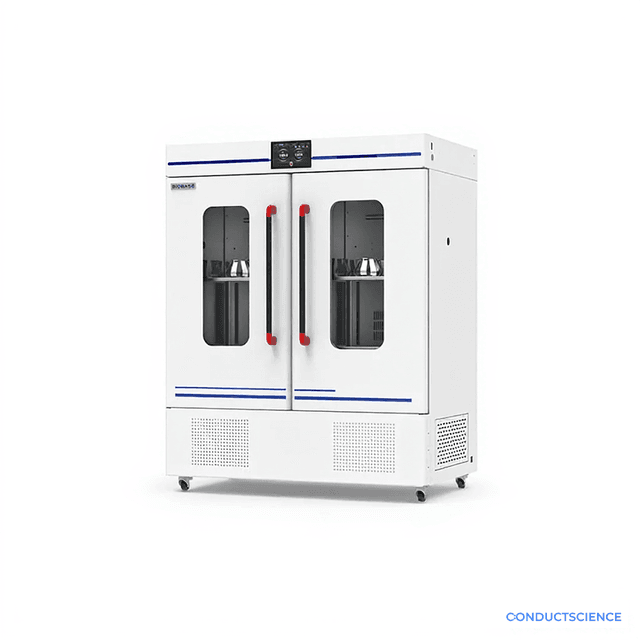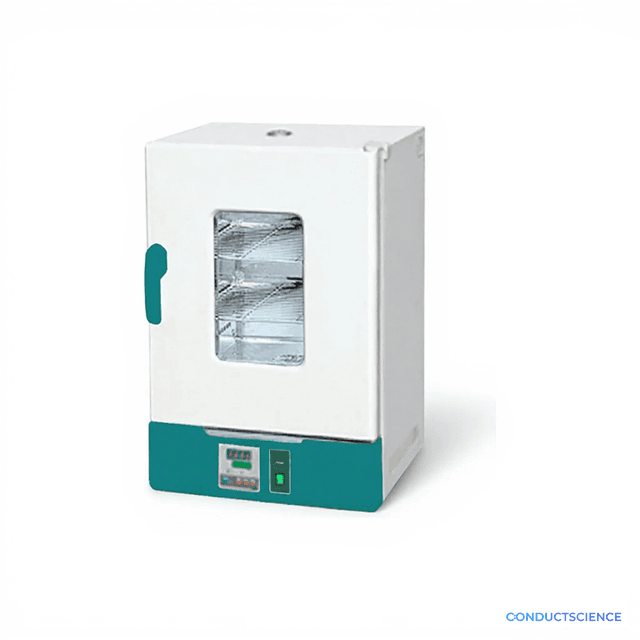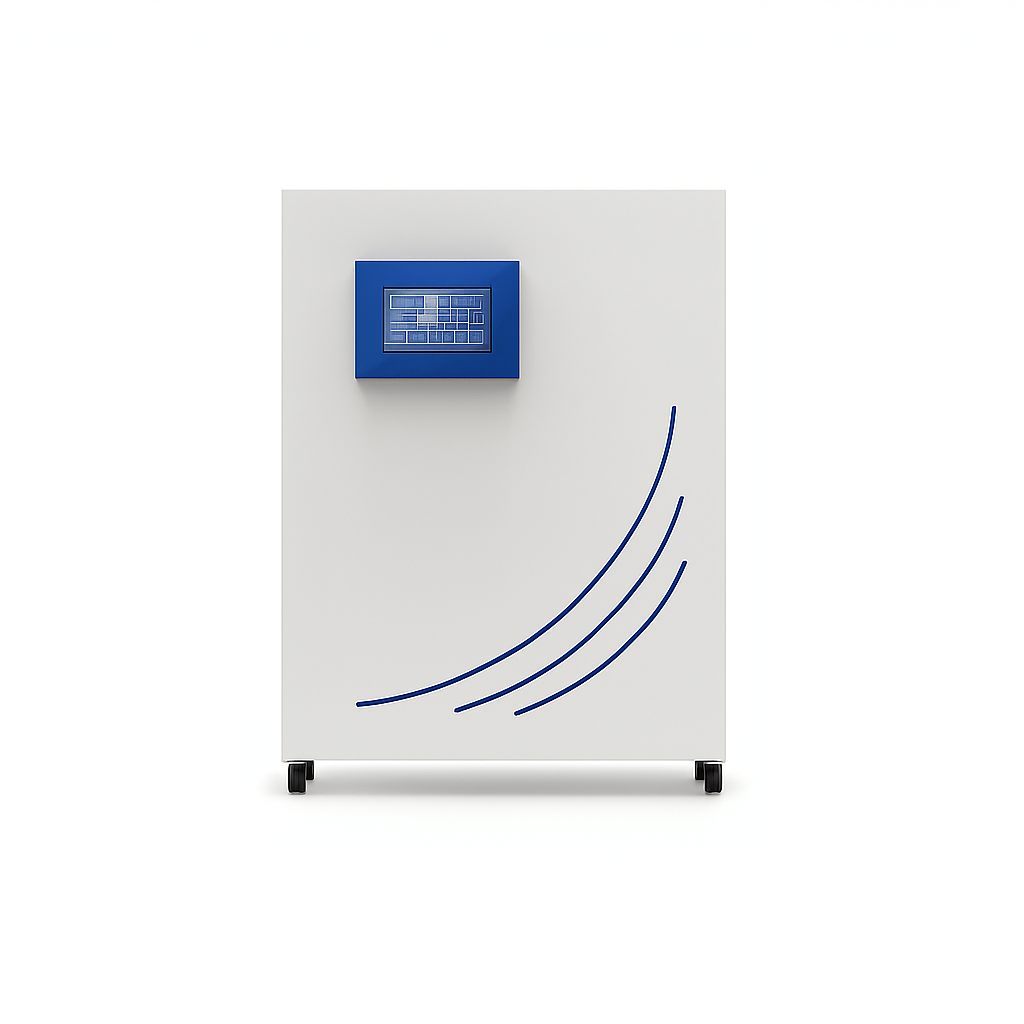
Tri-Gas CO2 Incubator — 80L / 160L
Advanced tri-gas CO2 incubator with precision temperature and humidity control.

Louise Corscadden, PhD
Director of Science · ConductScience
Ask Louise about Tri-Gas CO2 Incubator — 80L / 160L fit, setup, configuration, or quote prep.
Already working with us? Sign in to connect this with My Scientist.
Key Specifications
Full details →- Model fit
- 2 selectable configurations
- SKU family
- BIO-0183
- Shipping box
- 50.5 x 41.0 x 38.7 cm
- Ordering
- Online checkout and quote request available
- Category
- Laboratory Incubators
- Build notes
- Confirm accessories, station layout, and support needs before purchase
Tri-gas CO2 incubator designed for precise cell culture and tissue engineering applications. Features advanced temperature control, tri-gas mixing system (CO2, N2, O2), and precise humidity management for optimal culture conditions.
How It Works
The incubator maintains environmental control through three primary systems: temperature regulation via air-jacket heating with PT100 sensor feedback, CO2 concentration control using infrared absorption spectroscopy, and tri-gas mixing capability for specialized atmospheric compositions. The air-jacket design provides uniform heat distribution around the chamber walls, minimizing temperature gradients that could affect culture growth.
CO2 sensing operates on the principle of infrared absorption at 4.26 μm wavelength, where CO2 molecules exhibit characteristic absorption. The infrared sensor continuously monitors gas concentration and adjusts CO2 injection to maintain setpoint levels with 0.1vol% resolution. The tri-gas system allows introduction of nitrogen or other gases to create controlled atmospheric conditions beyond standard air/CO2 mixtures.
Sterilization utilizes moist heat at 90°C, which denatures proteins and destroys vegetative microorganisms while maintaining chamber integrity. This temperature-based sterilization eliminates the need for chemical agents that might leave residues affecting sensitive cell cultures.
Features & Benefits
Shipping weight
- 65.0 lb
Shipping box
- L: 50.5 cm
- W: 41.0 cm
- H: 38.7 cm
| Model | SKU | Listed price | Status | Shipping box |
|---|---|---|---|---|
| 160 L | BIO-0183-160L | $13,990.00 | Quote-reviewed | 50.5 x 41.0 x 38.7 cm |
| 80 L | BIO-0183-80L | $9,990.00 | Quote-reviewed | 50.5 x 41.0 x 38.7 cm |
Practical Tips
Perform CO2 sensor calibration verification monthly using certified gas standards and document results for regulatory compliance.
Why: Regular verification ensures measurement accuracy and maintains traceability to national standards.
Replace humidity water pan contents weekly with sterile distilled water to prevent mineral buildup and contamination.
Why: Fresh water maintains proper humidity levels and reduces risk of introducing contaminants to culture environment.
Allow 2-hour equilibration time after parameter changes before introducing cultures to ensure stable conditions.
Why: Thermal and atmospheric equilibration prevents culture shock from environmental fluctuations during setup.
If CO2 levels drift, check gas supply pressure and connections before assuming sensor malfunction.
Why: Supply line issues are more common than sensor failure and can be quickly resolved without service calls.
Record ambient laboratory temperature and humidity when documenting incubator performance for complete environmental context.
Why: Ambient conditions affect incubator performance and provide valuable troubleshooting information if issues arise.
Install CO2 monitors in laboratory areas when using high-concentration CO2 applications to detect potential leaks.
Why: CO2 accumulation in enclosed spaces presents asphyxiation risks requiring environmental monitoring for personnel safety.
Arrange culture vessels to allow air circulation around containers and avoid blocking temperature sensors.
Why: Proper air circulation maintains temperature uniformity and prevents localized heating that could affect culture growth.
Schedule monthly sterilization cycles during low-usage periods to maintain chamber cleanliness without disrupting ongoing experiments.
Why: Regular sterilization prevents contamination buildup while timing minimizes impact on research schedules.
Setup Guide
Complete installation support and operator training included. System includes tri-gas mixing regulators, stainless steel shelving, and connections for CO2, N2, and O2 gas supplies. Setup requires gas cylinder connections.What’s in the Box
- Tri-Gas CO2 Incubator main unit (typical)
- Power cord (typical)
- Water pan for humidity control (typical)
- CO2 sensor calibration certificate
- User manual and documentation (typical)
- Shelf supports and culture shelves (typical)
Warranty
ConductScience provides a standard one-year manufacturer warranty covering parts and labor, with technical support available for setup, calibration, and troubleshooting assistance.
Compliance
Comprehensive operation manuals, gas connection procedures, maintenance schedules, calibration protocols, and safety documentation included. Technical support available for troubleshooting.Have a question about this product?
Have a question? Just ask.
Send it over and we'll email you a personalized answer — no call, no scheduling.
Prefer to talk it through?
Accessories
Enhance your setup with compatible accessories