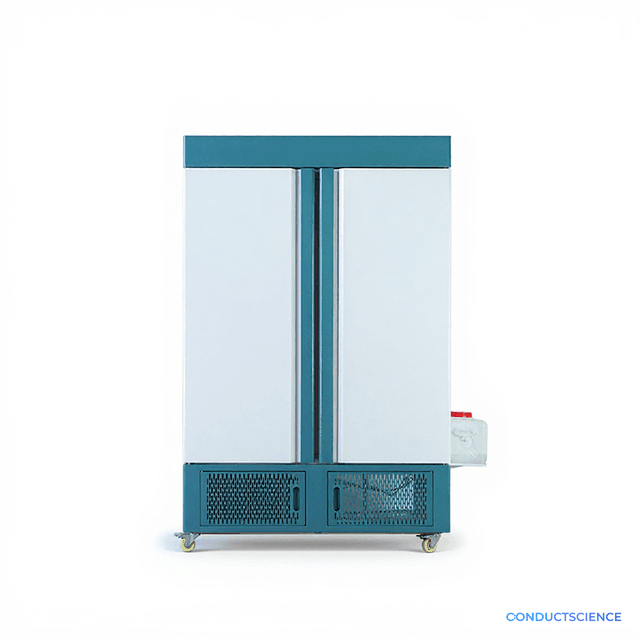
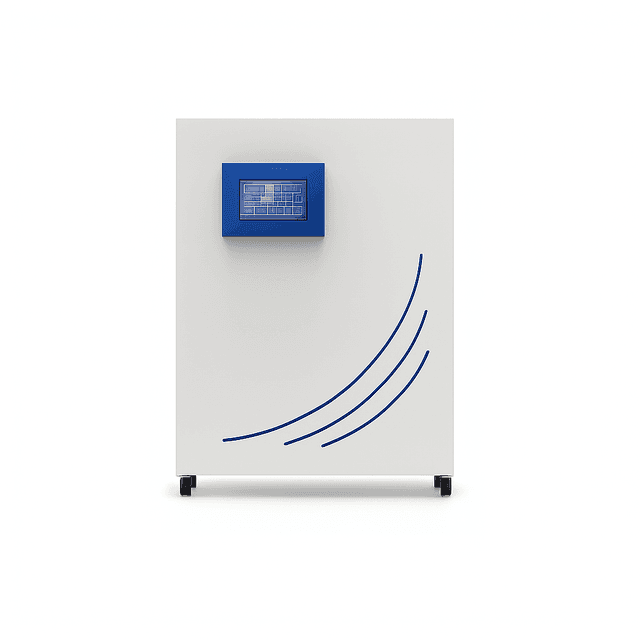
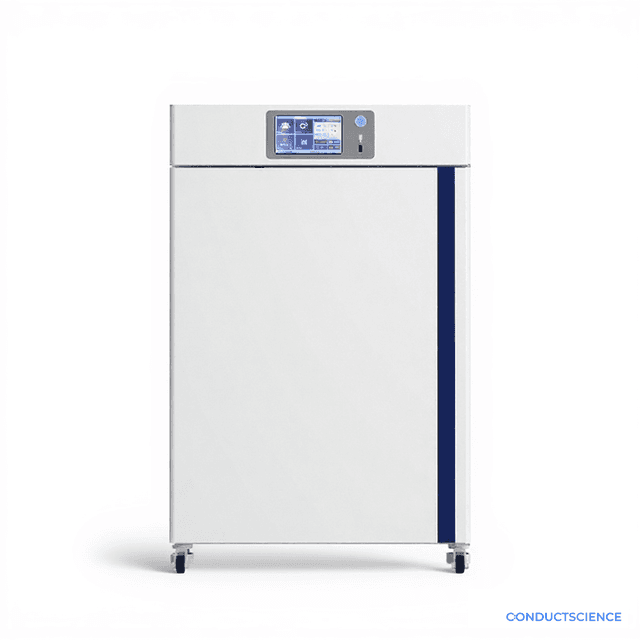
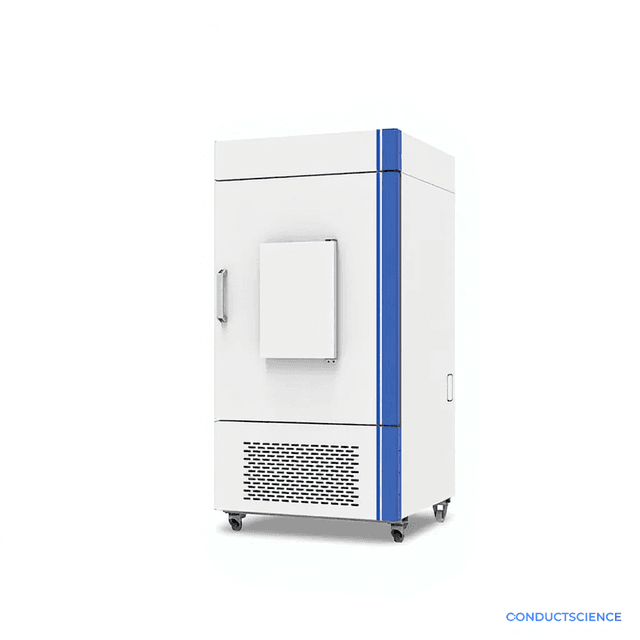
Artificial Climate Incubator
Multi-capacity artificial climate incubator with precise temperature (0-65°C), humidity (45-95%RH), and light control (0-10,000 LX) for plant growth and environmental studies.

Louise Corscadden, PhD
Director of Science · ConductScience
Ask Louise about Artificial Climate Incubator fit, setup, configuration, or quote prep.
Already working with us? Sign in to connect this with My Scientist.
Key Specifications
Full details →- Model fit
- 4 selectable configurations
- SKU family
- Assigned during quote
- Shipping box
- 46.5 x 44.0 x 35.5 cm
- Ordering
- Online checkout and quote request available
- Category
- Laboratory Incubators
- Build notes
- Confirm accessories, station layout, and support needs before purchase
The Artificial Climate Incubator provides precise environmental control for plant growth studies, seed germination experiments, and other research requiring controlled temperature, humidity, and lighting conditions. This multi-capacity system offers temperature control from 0-65°C (without light) or 10-65°C (with light), humidity regulation from 45-95%RH, and adjustable illumination up to 10,000 LX. Available in five capacity configurations (80L, 150L, 250L, 350L, 450L), the incubator accommodates diverse experimental scales from small-scale screening to larger cultivation studies.
Temperature stability is maintained within ±1°C with humidity fluctuation controlled to ±3%RH, providing the environmental consistency required for reproducible biological research. The integrated lighting system enables photoperiod studies and supports photosynthetic processes in plant research applications. Power requirements range from 600W to 1400W depending on capacity, with 220V 50Hz operation for laboratory integration.
How It Works
The artificial climate incubator operates through integrated environmental control systems that independently regulate temperature, humidity, and lighting parameters. Temperature control utilizes heating and cooling elements with precision sensors that maintain setpoints within ±1°C through continuous feedback monitoring. The system employs forced air circulation to ensure uniform temperature distribution throughout the chamber volume.
Humidity regulation is achieved through water vapor injection and extraction systems that respond to capacitive humidity sensors, maintaining relative humidity levels within ±3%RH of the setpoint. The lighting system incorporates adjustable illumination sources providing 0-10,000 LX intensity range, enabling precise photoperiod control for photosynthetic research applications.
All environmental parameters are monitored continuously through digital sensors with real-time feedback to control systems, ensuring stable conditions for extended experimental periods. The chamber construction provides thermal insulation and environmental isolation while allowing for sample access and observation during experiments.
Features & Benefits
Shipping weight
- 29.98 lb
Shipping box
- L: 46.5 cm
- W: 44.0 cm
- H: 35.5 cm
| Feature | This Product | Typical Alternative | Advantage |
|---|---|---|---|
| Temperature Range | 0-65°C without light, 10-65°C with light | Many entry-level models offer narrower ranges or lack lighting integration | Broader experimental scope including both cool and warm temperature studies with optional illumination |
| Humidity Control Range | 45-95%RH with ±3%RH stability | Basic models often provide limited humidity ranges or larger fluctuations | Enables studies across diverse moisture conditions with tight control tolerances |
| Lighting Integration | 0-10,000 LX adjustable illumination | Separate lighting systems require external coordination | Integrated photoperiod control eliminates need for separate lighting equipment and coordination |
| Capacity Options | Five capacity configurations from 80L to 450L | Fixed capacity models require purchasing different units for scale changes | Single product line accommodates diverse experimental scales from screening to production |
| Temperature Stability | ±1°C fluctuation control | Entry-level systems often have ±2-3°C stability | Tighter temperature control improves experimental reproducibility and reduces variability |
This artificial climate incubator provides integrated environmental control across temperature, humidity, and lighting parameters in multiple capacity configurations. The system offers precise parameter stability and broad operating ranges suitable for diverse research applications requiring controlled environmental conditions.
| Model | SKU | Listed price | Status | Shipping box |
|---|---|---|---|---|
| A250/II | BIO-0200 | $3,650.00 | Available | 46.5 x 44.0 x 35.5 cm |
| AB/E Series | BIO-0203 | $3,650.00 | Available | 46.5 x 44.0 x 35.5 cm |
| A Series | BIO-0204 | $3,650.00 | Available | 46.5 x 44.0 x 35.5 cm |
| Standard | BIO-0201 | $3,650.00 | Available | 46.5 x 44.0 x 35.5 cm |
Practical Tips
Verify temperature and humidity accuracy using NIST-traceable reference instruments at multiple points throughout the chamber volume.
Why: Ensures measurement accuracy and identifies any spatial variations in environmental control.
Replace humidity reservoir water with distilled water weekly and clean the water system monthly to prevent mineral buildup.
Why: Maintains humidity control accuracy and prevents system contamination or blockages.
Allow 30-60 minutes stabilization time after parameter changes before introducing samples or taking measurements.
Why: Ensures environmental parameters have reached steady state for consistent experimental conditions.
If temperature overshoots setpoint, check for adequate clearance around the unit and verify ambient room temperature is within specifications.
Why: Heat dissipation issues can compromise temperature control performance and parameter stability.
Record environmental parameters at regular intervals throughout experiments using the system's monitoring capabilities or external loggers.
Why: Documents actual experimental conditions and enables identification of any parameter drift during long-term studies.
Ensure proper ventilation around the unit and never operate with blocked air vents or in enclosed spaces.
Why: Prevents overheating and ensures safe operation of electrical components and temperature control systems.
Position sample containers to allow adequate air circulation and avoid overcrowding the chamber volume.
Why: Maintains uniform environmental conditions throughout the chamber and prevents localized microclimate formation.
Setup Guide
What’s in the Box
- Artificial Climate Incubator main unit
- Power cord for 220V connection (typical)
- Sample shelves and holders (typical)
- Water reservoir and humidity components
- User manual and operation guide (typical)
- Calibration certificate (typical)
Warranty
ConductScience provides a one-year manufacturer warranty covering defects in materials and workmanship. Technical support is available for setup assistance, calibration guidance, and troubleshooting throughout the warranty period.
Compliance
What is the temperature uniformity throughout the chamber?
Temperature fluctuation is maintained within ±1°C throughout the chamber volume through forced air circulation and precision sensor feedback control.
Can I run continuous light cycles for extended experiments?
Yes, the lighting system operates continuously with adjustable intensity from 0-10,000 LX, though note that illumination limits the lower temperature range to 10°C due to heat generation.
How often does the humidity system require water refilling?
Refilling frequency depends on setpoint humidity levels and chamber capacity; consult the operation manual for specific maintenance schedules based on your experimental conditions.
What sample containers are compatible with the shelving system?
Standard laboratory containers, petri dishes, and culture flasks are typically accommodated; consult product datasheet for specific shelf dimensions and weight limits.
Can multiple units be synchronized for large-scale studies?
Each unit operates independently with its own environmental controls; synchronization would require external control systems not included with the standard unit.
What calibration standards should I use for verification?
Use NIST-traceable temperature and humidity standards appropriate for your required accuracy levels; calibration intervals depend on your quality system requirements.
How does ambient room temperature affect operation?
The unit should be operated in temperature-controlled laboratory environments; extreme ambient conditions may affect the ability to reach specified parameter ranges.
Have a question about this product?
Have a question? Just ask.
Send it over and we'll email you a personalized answer — no call, no scheduling.
Prefer to talk it through?
Accessories
Enhance your setup with compatible accessories