Metabolic Measurement System
Portable indirect calorimetry system measuring oxygen consumption, CO2 production, and metabolic rates with integrated touchscreen control and field operation capability.
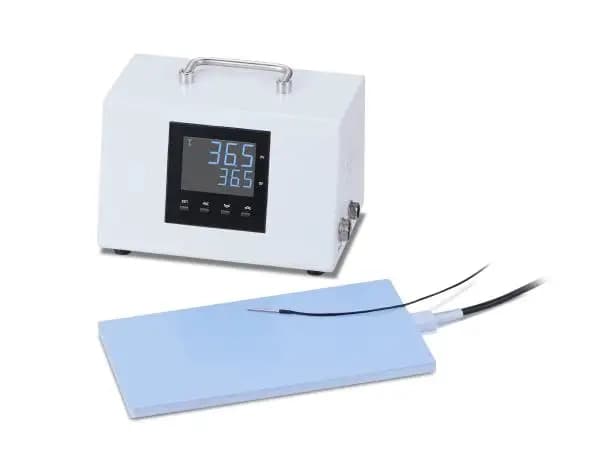
| portability | Small portable unit with solid case and handle |
| real_time_measurements | Oxygen, carbon dioxide, water vapor pressure, atmospheric pressure, and humidity |
| measured_parameters | O2 consumption per unit time, CO2 production per unit time, Respiratory entropy (RQ), Respiratory exchange rate (RER), Energy consumption, Metabolic rate (MR), Temperature, Humidity, Air pressure |
| operational_modes | Real-time protocol execution and result exportation |
| data_export | USB drive integration |
| integration_compatibility | Maze Engineers Metabolic Treadmill, cages, and metabolic cages |
The Metabolic Measurement System provides real-time indirect calorimetry measurements for comprehensive bioenergetics research. This portable system measures oxygen consumption, carbon dioxide production, and calculates respiratory exchange ratios (RER), metabolic rates, and energy expenditure in laboratory and field settings. The integrated touchscreen control unit enables protocol execution with direct data export capabilities.
Designed for integration with metabolic cages, treadmills, and behavioral apparatus, the system supports simultaneous monitoring of environmental parameters including temperature, humidity, and atmospheric pressure. The rechargeable battery pack enables field studies with at least 8 hours of continuous operation, while the adjustable pump flow (1-1000 ml/min) accommodates diverse experimental protocols across species and study designs.
How It Works
Indirect calorimetry operates on the principle that energy expenditure can be calculated from oxygen consumption and carbon dioxide production rates. The system draws air samples through calibrated flow paths and analyzes gas concentrations using electrochemical or infrared sensors. Oxygen consumption (VO2) reflects cellular respiration, while CO2 production (VCO2) indicates metabolic byproduct generation.
The respiratory exchange ratio (RER = VCO2/VO2) provides insight into substrate utilization, with values near 0.7 indicating fat oxidation and values approaching 1.0 suggesting carbohydrate metabolism. Energy expenditure is calculated using the Weir equation, incorporating both VO2 and VCO2 measurements. The system simultaneously monitors environmental parameters to account for temperature and humidity effects on gas measurements.
Real-time data processing enables immediate calculation of metabolic parameters including metabolic rate, respiratory entropy, and energy consumption. The adjustable pump flow allows optimization for different chamber volumes and species requirements while maintaining measurement accuracy within specified tolerances.
Features & Benefits
portability
- Small portable unit with solid case and handle
real_time_measurements
- Oxygen, carbon dioxide, water vapor pressure, atmospheric pressure, and humidity
measured_parameters
- O2 consumption per unit time, CO2 production per unit time, Respiratory entropy (RQ), Respiratory exchange rate (RER), Energy consumption, Metabolic rate (MR), Temperature, Humidity, Air pressure
operational_modes
- Real-time protocol execution and result exportation
data_export
- USB drive integration
integration_compatibility
- Maze Engineers Metabolic Treadmill, cages, and metabolic cages
video_tracking_compatibility
- Noldus EthoVision, ANY-Maze
field_conditions
- Various complex field environmental conditions
Automation Level
- semi-automated
Accuracy
- O2 consumption: 1ml, CO2 production: 1ml, Temperature: 0.1°C, Humidity: ±1% RH, Air pressure: 0.075%
Display Type
- Touchscreen
Research Domain
- Aging Research
- Behavioral Pharmacology
- Cardiovascular
- Environmental Monitoring
- Metabolic Research
- Motor Function
Species
- Gerbil
- Hamster
- Rabbit
- Mouse
- Rat
- Guinea pig
Weight
- 21.0 kg
Dimensions
- L: 43.2 mm
- W: 38.0 mm
- H: 27.9 mm
Comparison Guide
| Feature | This Product | Typical Alternative | Advantage |
|---|---|---|---|
| Portability and Field Operation | Portable unit with carrying case, handle, and 8+ hour battery operation | Many systems require permanent installation or AC power | Enables metabolic measurements in field conditions and circadian studies without power constraints. |
| Flow Rate Adjustability | 1-1000 ml/min adjustable pump flow | Fixed flow systems often limited to narrow ranges | Accommodates diverse chamber sizes and species requirements within a single system. |
| Integrated Control Interface | Built-in touchscreen GUI with protocol programming | Many systems require external computer control | Reduces setup complexity and enables standalone operation in field or isolated settings. |
| Multi-parameter Monitoring | Real-time O2, CO2, temperature, humidity, and pressure measurements | Basic systems may monitor only primary gases | Provides comprehensive environmental context for metabolic measurements and data quality assessment. |
| System Integration | Compatible with metabolic cages, treadmills, and video tracking software | Limited integration options with behavioral equipment | Enables combined physiological and behavioral assessment protocols in existing laboratory setups. |
This system combines portable operation with comprehensive measurement capabilities, featuring adjustable flow rates from 1-1000 ml/min and integrated touchscreen control. The 8+ hour battery operation and environmental parameter monitoring distinguish it from fixed laboratory systems, while software compatibility supports integration with existing behavioral research workflows.
Practical Tips
Perform calibration at the same temperature as your experimental environment to minimize thermal effects on sensor accuracy.
Why: Temperature variations can introduce measurement drift that calibration compensation helps eliminate.
Allow 15-30 minutes for system warm-up and stabilization before beginning measurements, especially after transport.
Why: Sensor stability improves measurement precision and reduces baseline drift during data collection.
Clean gas sampling lines weekly and inspect for condensation buildup that could affect flow dynamics.
Why: Contaminated tubing can introduce measurement artifacts and alter system response characteristics.
Monitor environmental parameters (temperature, humidity, pressure) throughout experiments to identify potential confounding factors.
Why: Environmental variations can affect both animal physiology and measurement system performance.
Check for air leaks in the chamber system if metabolic measurements appear unexpectedly low or variable.
Why: Air leaks dilute gas concentrations and introduce measurement errors that compromise data validity.
Match pump flow rate to chamber volume (typically 3-5 air changes per hour) to balance response time with animal comfort.
Why: Optimal flow rates ensure adequate gas exchange while minimizing air currents that could affect behavior.
Ensure adequate ventilation in the experimental area when using the system with metabolic chambers containing animals.
Why: Proper ventilation prevents CO2 buildup in the laboratory environment and maintains animal welfare standards.
Record system settings and calibration data with each experiment for complete methodological documentation.
Why: Detailed system logs enable troubleshooting, method validation, and reproducibility across experimental sessions.
Setup Guide
What’s in the Box
- Metabolic measurement system main unit
- 24V 10AH lithium-ion battery pack
- AC power adapter and charging cable
- Gas sampling tubing kit (typical)
- USB cable for data export
- Calibration gas connections (typical)
- User manual and software documentation
- Carrying case with foam inserts
Warranty
ConductScience provides a standard one-year manufacturer warranty covering defects in materials and workmanship, with technical support for system operation and troubleshooting. Extended warranty and calibration service plans are available for long-term research projects.
Compliance
References
Background reading relevant to this product:
What is the measurement lag time between the chamber and gas analysis?
Lag time depends on tubing length and flow rate settings. Higher flow rates (500-1000 ml/min) reduce response time but may create air currents affecting small animal behavior. Consult product datasheet for specific response time calculations based on your setup configuration.
How frequently does the system require calibration for accurate measurements?
Daily zero-point calibration with room air is recommended, with span calibration using reference gases weekly or before critical experiments. The system includes automated calibration prompts and maintains calibration history for quality control documentation.
Can the system integrate with video tracking software for behavioral correlation?
Yes, the system is compatible with Noldus EthoVision and ANY-Maze software platforms, enabling synchronized metabolic and behavioral data collection for comprehensive physiological assessment.
What is the minimum detectable change in metabolic rate?
With 1ml accuracy for O2 and CO2 measurements, the system can detect metabolic rate changes corresponding to the measurement resolution. Actual detection limits depend on baseline metabolic rate and measurement duration for statistical significance.
How does ambient humidity affect measurement accuracy?
The system operates across 0-95% humidity with integrated humidity monitoring for measurement correction. Water vapor pressure measurements enable compensation for humidity effects on gas concentration calculations.
What data formats are supported for export and analysis?
The system supports USB drive export with real-time protocol execution. Specific file formats and data structure details should be confirmed in the product datasheet for compatibility with your analysis software.
Can multiple chambers be monitored simultaneously?
The current system configuration supports single-chamber monitoring. Multiple unit operation would require separate systems, though data synchronization may be possible through external software integration.
What maintenance procedures are required for long-term accuracy?
Regular sensor cleaning, calibration verification, and pump maintenance are essential. The portable design facilitates service access, and the system includes diagnostic functions for monitoring sensor performance and identifying maintenance needs.
Have a question about this product?