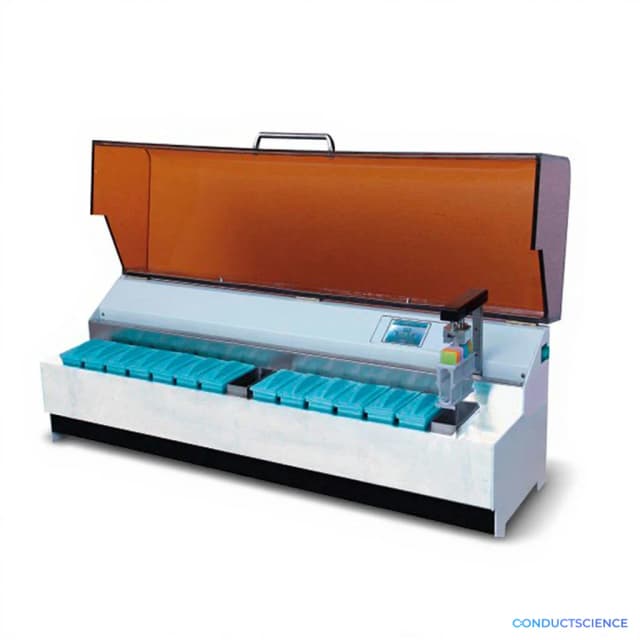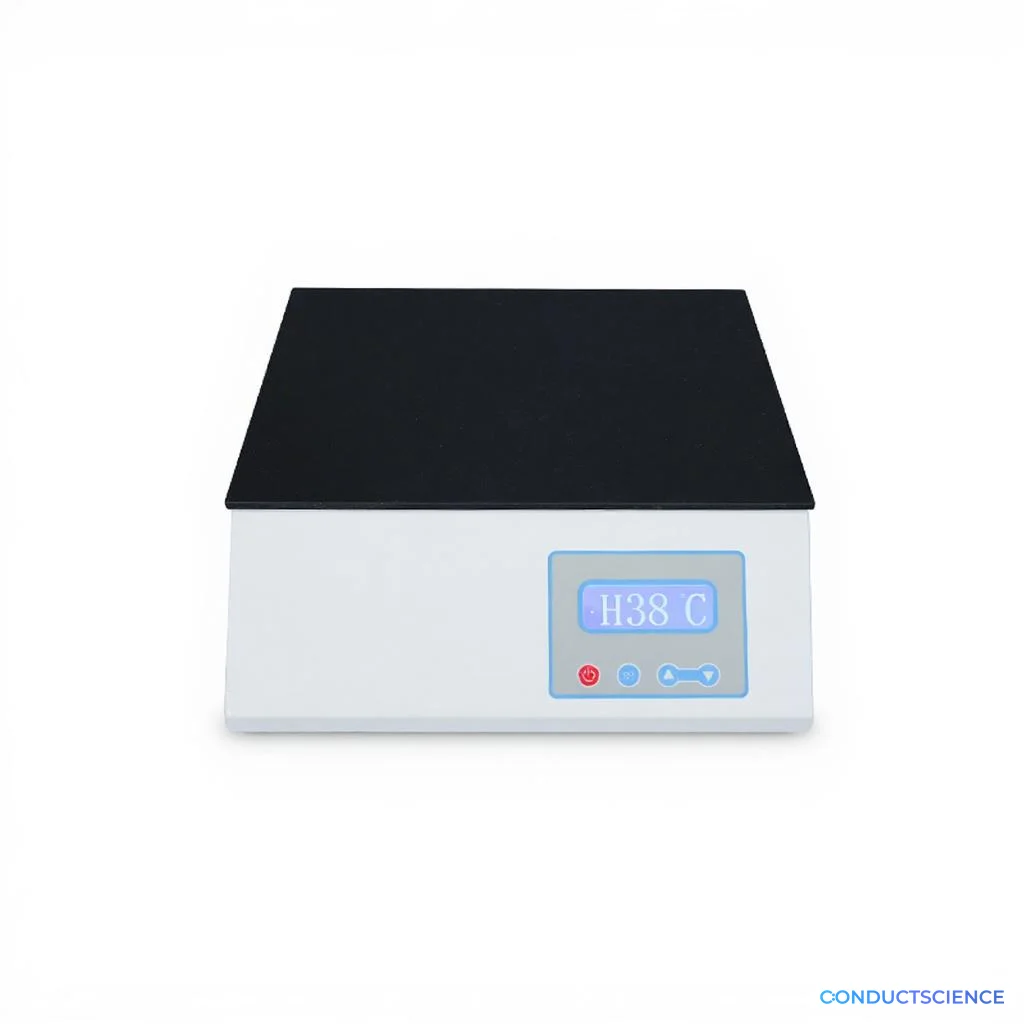
Slide Dryer(Hot Plate)
Precision heating platform for controlled drying of up to 40 microscopy slides with programmable temperature control from room temperature to 99°C and ±1°C precision.
| Automation Level | semi-automated |
| Temp. Range | RT~99℃ |
| Temp. Precision | ±1℃ |
| Environmental Temp. Range | 0~40℃ |
| Over-temp. Alarm Range | 1~5℃ |
| Drying Area | 345*260mm |
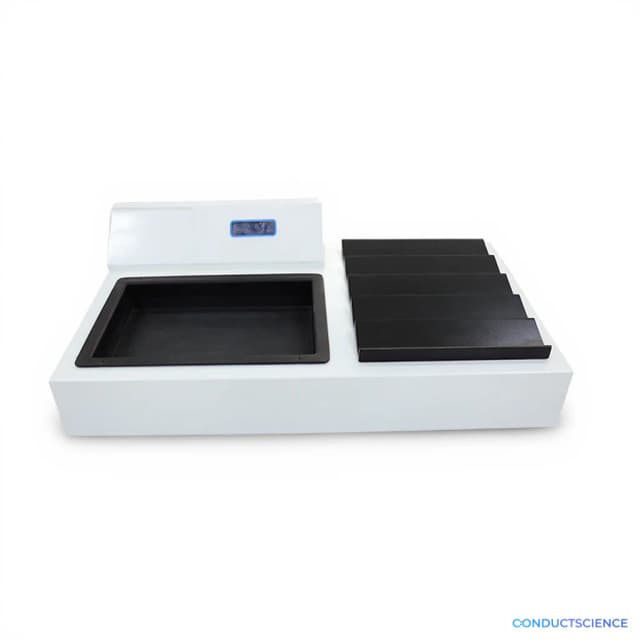
The ConductScience Slide Dryer (Hot Plate) is a precision heating platform designed for controlled drying of histological specimens and microscopy slides. This laboratory instrument provides uniform heat distribution across a 345×260mm drying surface, accommodating up to 40 standard microscopy slides simultaneously. The unit features programmable temperature control from room temperature to 99°C with ±1°C precision, making it suitable for critical slide preparation protocols that require consistent thermal conditions.
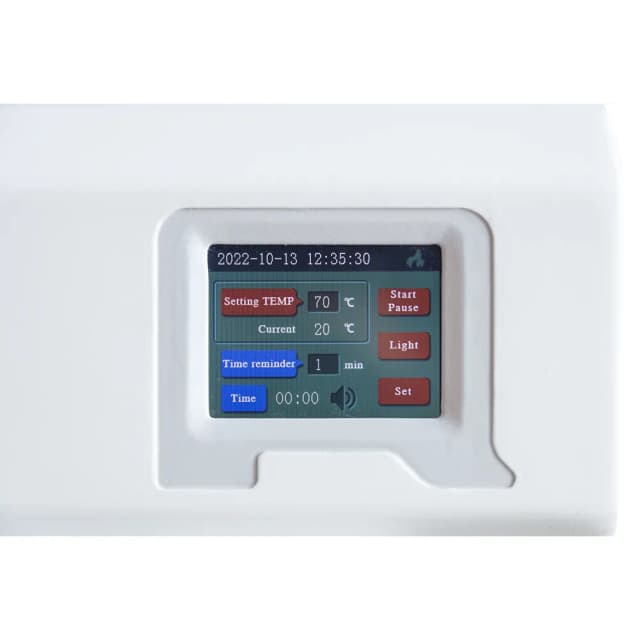
The instrument incorporates an LCD display for real-time temperature monitoring and includes over-temperature alarm protection with adjustable thresholds. The compact benchtop design integrates into existing laboratory workflows while providing reliable thermal performance for routine histopathology, cytology, and research microscopy applications where controlled slide drying is essential for specimen quality and staining consistency.
How It Works
The slide dryer operates through controlled resistive heating elements embedded beneath the aluminum drying surface. The heating elements generate uniform thermal distribution across the 345×260mm platform through conductive heat transfer from the metal surface to the glass slides. Temperature regulation is achieved via integrated thermostatic control with real-time feedback from temperature sensors positioned within the heating block.
The LCD display provides continuous temperature monitoring while the microprocessor-controlled system maintains the set temperature within ±1°C precision. Over-temperature protection is implemented through independent thermal sensors that trigger audible alarms when temperatures exceed the programmed threshold by 1-5°C. The heating system responds to ambient temperature variations from 0-40°C while maintaining stable platform temperatures, ensuring consistent thermal conditions regardless of laboratory environmental fluctuations.
Heat transfer to the slides occurs primarily through direct conduction from the aluminum surface, with minimal convective heating to prevent air currents that could disturb delicate specimens. The thermal mass of the platform provides temperature stability during slide loading and unloading operations, maintaining consistent conditions throughout extended drying protocols.
Features & Benefits
Automation Level
- semi-automated
Temp. Range
- RT~99℃
Temp. Precision
- ±1℃
Environmental Temp. Range
- 0~40℃
Over-temp. Alarm Range
- 1~5℃
Drying Area
- 345*260mm
Number of Slides
- 40
Weight
- 7.5kg
Consumption
- 200W
External Size(W*D*H)
- 345*340*130mm
Package Size(W*D*H)
- 410*410*200mm
Brand
- ConductScience
Research Domain
- Analytical Chemistry
- Cell Biology
- Clinical Diagnostics
- Histopathology
- Materials Science
- Microbiology
Display Type
- LCD
Power/Voltage
- AC220V±10%, 50/60Hz(Standard); AC110V±10%, 60Hz(Optional)
Weight
- 6.0 lbs
Dimensions
- L: 13.0 in
- W: 34.5 in
- H: 34.0 in
Comparison Guide
| Feature | This Product | Typical Alternative | Advantage |
|---|---|---|---|
| Slide Capacity | 40 slides on 345×260mm surface | Entry-level models often accommodate 10-20 slides | Higher throughput reduces processing bottlenecks in high-volume laboratories and enables batch processing of specimen sets. |
| Temperature Precision | ±1°C accuracy with microprocessor control | Basic hot plates may offer ±3-5°C accuracy | Tighter temperature control ensures reproducible results in temperature-sensitive staining and drying protocols. |
| Safety Features | Over-temperature alarm with 1-5°C adjustable threshold | Limited safety features in basic heating platforms | Prevents specimen damage and provides audible warning system for unattended operation compliance with laboratory safety protocols. |
| Temperature Range | Room temperature to 99°C continuous range | Many units require minimum temperature offsets above ambient | Accommodates protocols requiring gentle warming just above room temperature as well as accelerated drying procedures. |
| Power Flexibility | Dual voltage compatibility (110V/220V) | Single voltage operation in most models | Simplifies international laboratory installations and equipment transfers without voltage conversion requirements. |
| Display Interface | LCD display with real-time temperature readout | Analog dials or basic LED indicators | Precise temperature monitoring supports quality control documentation and protocol standardization requirements. |
This slide dryer combines high specimen capacity with precise temperature control and comprehensive safety features. The 40-slide capacity and ±1°C precision make it suitable for high-volume laboratories requiring standardized thermal processing protocols.
Practical Tips
Perform multi-point temperature verification using traceable thermometers placed at corners and center of the heating surface.
Why: Ensures uniform heat distribution and validates temperature accuracy across the entire slide drying area.
Clean the aluminum surface daily with appropriate laboratory solvents and inspect for residue buildup that could affect heat transfer.
Why: Maintains optimal thermal contact between slides and heating surface while preventing contamination carryover between specimen batches.
Allow the unit to reach temperature equilibrium for 5-10 minutes before placing slides to ensure stable thermal conditions.
Why: Prevents temperature overshoot during initial heating and ensures consistent drying conditions from the first specimens processed.
Distribute slides evenly across the heating surface and avoid overlapping specimens during drying protocols.
Why: Maximizes heat transfer efficiency and prevents uneven drying that could compromise staining quality or morphological preservation.
If temperature readings appear erratic, check for proper slide contact with the heating surface and verify ambient temperature stability.
Why: Poor thermal contact or drafts can cause temperature fluctuations that affect both measurement accuracy and drying consistency.
Document temperature set points, actual readings, and alarm thresholds for each drying protocol as part of quality control records.
Why: Provides traceability for temperature-sensitive procedures and supports laboratory accreditation requirements for process validation.
Set over-temperature alarms 2-3°C above your target temperature to provide adequate protection margin without false alarms.
Why: Prevents specimen damage from temperature excursions while maintaining reliable operation during normal temperature fluctuations.
Establish calibration intervals based on usage frequency and critical temperature requirements, typically every 6-12 months for routine applications.
Why: Regular calibration verification ensures continued measurement accuracy and compliance with laboratory quality management systems.
Setup Guide
What’s in the Box
- Slide dryer main unit
- Power cord (voltage-specific)
- User manual and operation guide
- Temperature calibration certificate (typical)
- Warranty documentation (typical)
Warranty
ConductScience provides a standard one-year manufacturer warranty covering defects in materials and workmanship, with technical support available for installation guidance and operational troubleshooting throughout the warranty period.
Compliance
What is the temperature uniformity across the heating surface?
The aluminum heating platform provides conductive heat distribution across the 345×260mm surface. Temperature uniformity specifications should be verified through multi-point calibration - consult product datasheet for specific uniformity tolerances.
How long does it take to reach target temperature from room temperature?
Heat-up time depends on ambient conditions and target temperature. The 200W heating element and thermal mass of the aluminum platform typically require 10-15 minutes for stabilization, though exact times should be determined during installation validation.
Can the unit accommodate slides of different thicknesses?
The flat heating surface accepts standard 1mm microscopy slides and can accommodate slight thickness variations. Ensure uniform contact between slide and surface for consistent heat transfer across specimens.
What calibration procedures are recommended?
Perform temperature calibration using traceable thermometers placed on the heating surface at multiple points. Document readings at your typical operating temperatures and establish calibration intervals based on laboratory quality requirements.
Is the heating surface chemically resistant?
The aluminum surface tolerates routine laboratory cleaning solvents. Avoid aggressive acids or bases that could compromise surface integrity or temperature sensor function. Consult product datasheet for specific chemical compatibility information.
How does this compare to forced-air slide dryers?
This conductive heating approach provides gentle, uniform drying without air currents that could disturb delicate specimens. Forced-air systems may dry faster but risk specimen displacement or uneven heating patterns.
Can multiple temperature zones be set simultaneously?
This model provides uniform heating across the entire surface with single temperature control. Multiple temperature zones would require partitioned heating elements not present in this design.
What maintenance is required for optimal performance?
Regular cleaning of the heating surface, periodic temperature calibration verification, and inspection of electrical connections. The heating elements are sealed and require no user maintenance beyond external cleaning and calibration checks.
Have a question about this product?