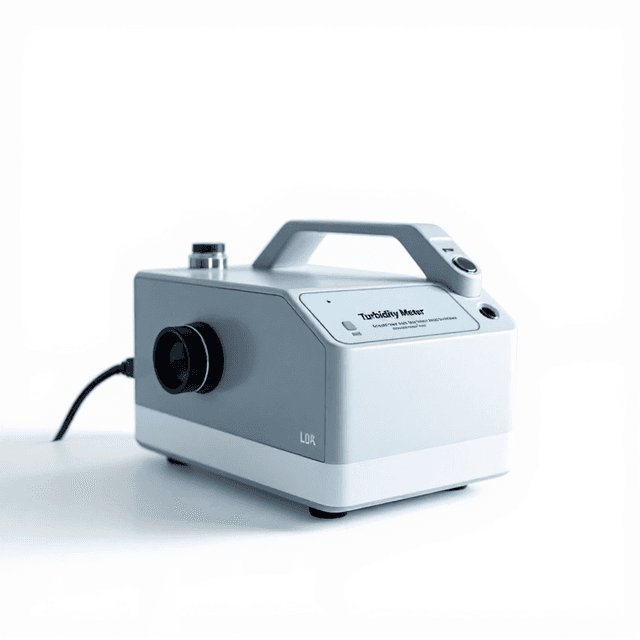
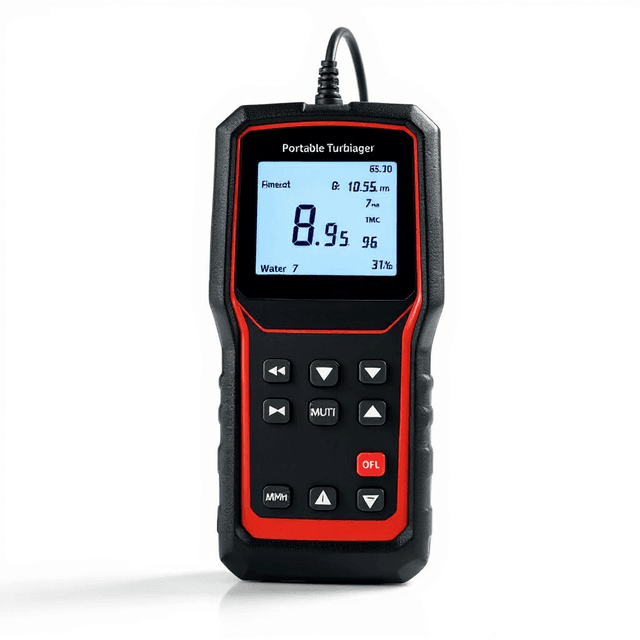
Total Suspended Solids Meter
Portable dual-detector turbidity and suspended solids analyzer using near-infrared nephelometry with 0-1000 NTU range and IP65 field protection.
| Item | Turbidity |
| Measuring range | 0~1000NTU |
| Indicated error | ±0.3NTU or ±8% |
| Repeatability | <10NTU,â¦Â±0.1NTU;>10NTU,â¦Â±1% |
| Calibration | Up to 8 points calibration( Optional calibration solution) |
| Zero drift | â¦Â±0.3%FS/30min |
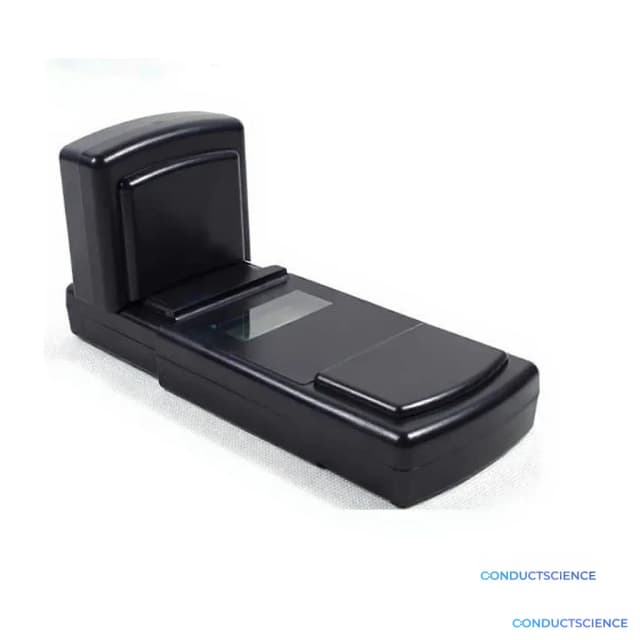
The Total Suspended Solids Meter employs dual-detector nephelometric analysis with near-infrared LED illumination to quantify turbidity and suspended particulate matter in aqueous samples. The instrument integrates scattered light detection at 90° with transmitted light measurement at 180°, calculating the ratio between scattered and transmitted light intensities to determine both turbidity and total suspended solids concentrations. With a measurement range of 0-1000 NTU and indicated error of ±0.3 NTU or ±8%, this portable analyzer provides field-ready water quality assessment capabilities.
The device features IP65 waterproof protection and lithium battery power for field deployment, while supporting up to 8-point calibration for enhanced measurement accuracy across the full measurement range. The near-infrared light source at 860 nm wavelength minimizes chromatic interference from dissolved organic compounds, conforming to ISO 7027 measurement principles for nephelometric turbidity determination.
How It Works
The instrument operates on the principle of nephelometric light scattering combined with transmitted light attenuation measurement. A near-infrared LED light source at 860 nm wavelength illuminates the sample, minimizing interference from chromatic absorption by dissolved organic compounds. Two photodetectors positioned at 90° and 180° relative to the incident light beam simultaneously measure scattered and transmitted light intensities.
The 90° detector captures light scattered by suspended particles according to Rayleigh and Mie scattering principles, where scattering intensity correlates with particle concentration and size distribution. The 180° detector measures transmitted light attenuation, providing complementary information about total suspended matter. The instrument calculates the ratio between scattered and transmitted light signals, applying calibration algorithms to convert optical measurements into turbidity (NTU) and suspended solids concentration values.
The near-infrared wavelength selection ensures minimal spectral interference from dissolved chromophores while maintaining sensitivity to particle scattering. Temperature compensation algorithms account for thermal effects on optical components and sample properties, while the dual-detector configuration extends the dynamic measurement range and improves accuracy across varying particle size distributions.
Features & Benefits
Item
- Turbidity
Measuring range
- 0~1000NTU
Indicated error
- ±0.3NTU or ±8%
Repeatability
- <10NTU,â¦Â±0.1NTU;>10NTU,â¦Â±1%
Calibration
- Up to 8 points calibration( Optional calibration solution)
Zero drift
- â¦Â±0.3%FS/30min
Working temperature
- 5~40â
Storage temperature
- -10~55â
Humidity
- 0~80%RH
IP grade
- IP65
Research Domain
- Analytical Chemistry
- Environmental Monitoring
- Food Science
- Industrial Hygiene
- Microbiology
- Pharmaceutical QC
Automation Level
- semi-automated
Brand
- ConductScience
Power/Voltage
- lithium battery
Size
- 170*72*44mm
Weight
- 290g
Weight
- 0.24 lbs
Dimensions
- L: 6.69 in
- W: 2.83 in
- H: 1.73 in
Comparison Guide
| Feature | This Product | Typical Alternative | Advantage |
|---|---|---|---|
| Light Source Wavelength | Near-infrared LED at 860 nm | Many portable models use visible light (400-700 nm) sources | Reduces interference from dissolved organic compounds and chromophores for more accurate measurements in colored water samples. |
| Detector Configuration | Dual detectors at 90° and 180° | Entry-level models typically feature single 90° detector | Provides complementary scattered and transmitted light measurements for improved accuracy across varying particle size distributions. |
| Measurement Range | 0-1000 NTU | Basic models often limited to 0-100 or 0-200 NTU | Accommodates both environmental monitoring and industrial process applications without requiring multiple instruments. |
| Calibration Points | Up to 8-point calibration | Standard models offer 2-3 point calibration | Enables comprehensive linearity correction across the full measurement range for enhanced accuracy in diverse applications. |
| Environmental Protection | IP65 waterproof rating | Many portable instruments offer IP54 or lower protection | Allows reliable operation in harsh field conditions with superior protection against dust and water ingress. |
| Display Technology | OLED full-color display | LCD displays with limited contrast | Provides superior visibility in bright outdoor conditions and low-light environments for field applications. |
This instrument combines laboratory-grade measurement principles with field-portable design, featuring dual-detector nephelometry and near-infrared illumination for accurate turbidity determination. The comprehensive calibration capability and environmental protection make it suitable for both research applications and routine monitoring programs.
Practical Tips
Perform multi-point calibration using standards that bracket your expected sample range, with at least one standard near your typical measurement values.
Why: Interpolation accuracy is highest when calibration points surround the measurement range of interest.
Clean the optical measurement chamber weekly with distilled water and lint-free wipes, avoiding harsh solvents that might damage optical coatings.
Why: Optical surface contamination directly affects light transmission and scattering measurements, leading to systematic errors.
Allow samples to reach ambient temperature before measurement and gently invert sample containers to ensure homogeneous particle distribution.
Why: Temperature gradients and particle settling can create measurement inconsistencies that affect reproducibility.
If readings appear unstable, check for air bubbles in the sample cell and verify that the optical path is completely filled with sample.
Why: Air bubbles scatter light unpredictably and create measurement artifacts that compromise data quality.
Record multiple readings per sample and calculate the average, particularly for samples with rapidly settling particles.
Why: Statistical averaging reduces random measurement error and provides more reliable turbidity values for reporting.
Handle turbidity standards and samples with appropriate PPE, and dispose of calibration solutions according to laboratory safety protocols.
Why: Some turbidity standards contain chemical preservatives or formaldehyde that require proper handling and disposal procedures.
Store turbidity standards in dark, cool conditions and check expiration dates before use, as degraded standards compromise measurement accuracy.
Why: Turbidity standards can change over time due to particle aggregation or chemical degradation, affecting calibration validity.
Document environmental conditions during field measurements, including temperature, wind, and lighting conditions that might affect readings.
Why: Environmental factors provide context for data interpretation and help identify potential sources of measurement variability.
Setup Guide
What’s in the Box
- Total Suspended Solids Meter main unit
- USB data/charging cable
- User manual and quick start guide
- Calibration certificate (typical)
- Sample measurement vials (typical)
- Protective carrying case (typical)
Warranty
ConductScience provides a standard one-year manufacturer warranty covering defects in materials and workmanship, with technical support for calibration procedures and troubleshooting assistance.
Compliance
References
Background reading relevant to this product:
What calibration standards are compatible with this instrument for multi-point calibration?
The instrument supports up to 8-point calibration using certified turbidity standards such as StablCal stabilized formazin, AMCO-AEPA-1 standards, or equivalent NTU reference materials. Standards should span your expected measurement range for optimal accuracy.
How does the near-infrared light source minimize interference compared to visible light turbidimeters?
The 860 nm near-infrared LED reduces spectral interference from dissolved chromophores and organic compounds that absorb visible light, providing more accurate turbidity measurements in colored or organic-rich water samples according to ISO 7027 principles.
What is the recommended sample volume and measurement procedure for consistent results?
Fill the sample cell completely to eliminate air bubbles, rinse three times with sample water before measurement, and allow reading stabilization (typically 30-60 seconds) before recording values to ensure reproducible results.
Can this instrument differentiate between organic and inorganic suspended particles?
The dual-detector nephelometric approach measures total suspended solids based on light scattering properties. While it cannot chemically differentiate particle composition, the near-infrared wavelength reduces organic chromophore interference compared to visible light methods.
What maintenance procedures are required for long-term measurement accuracy?
Regular calibration verification using certified standards, cleaning of optical surfaces with appropriate solvents, and periodic zero-point calibration with turbidity-free water. The instrument should be stored in a clean, dry environment when not in use.
How does temperature affect measurement accuracy and what compensation is provided?
The instrument operates reliably from 5-40°C with built-in temperature compensation algorithms. Extreme temperatures can affect both optical components and sample properties, so measurements outside the specified range may require temperature correction.
What data output formats are available for integration with laboratory information systems?
Data transfer via USB connection enables integration with computer systems for record keeping. Consult product datasheet for specific file formats and software compatibility options.
How does this compare to laboratory-grade benchtop turbidimeters in terms of accuracy?
This portable instrument provides field-suitable accuracy with ±0.3 NTU or ±8% error specifications. Laboratory benchtop instruments may offer slightly higher precision but lack the portability and weatherproofing for field applications.
Have a question about this product?
Accessories
Enhance your setup with compatible accessories
Upgrade Options