Water Analysis Equipment
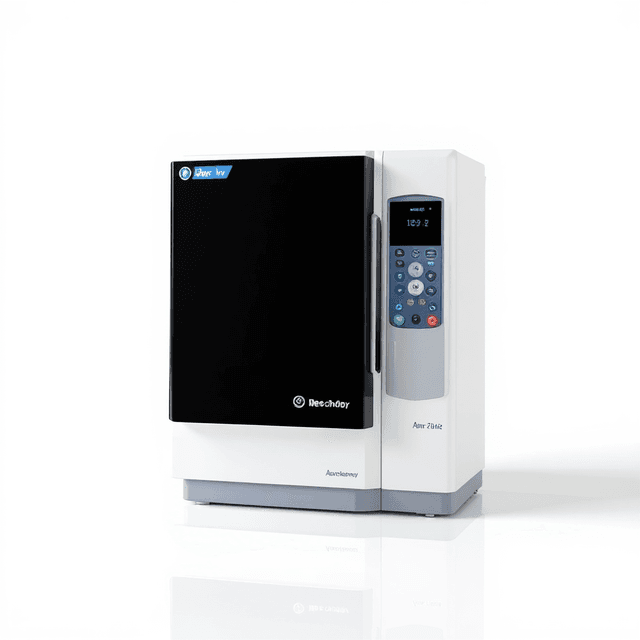
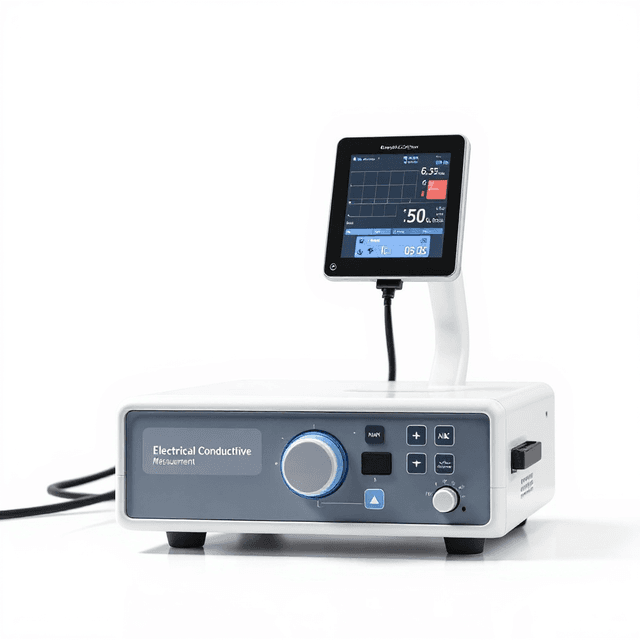
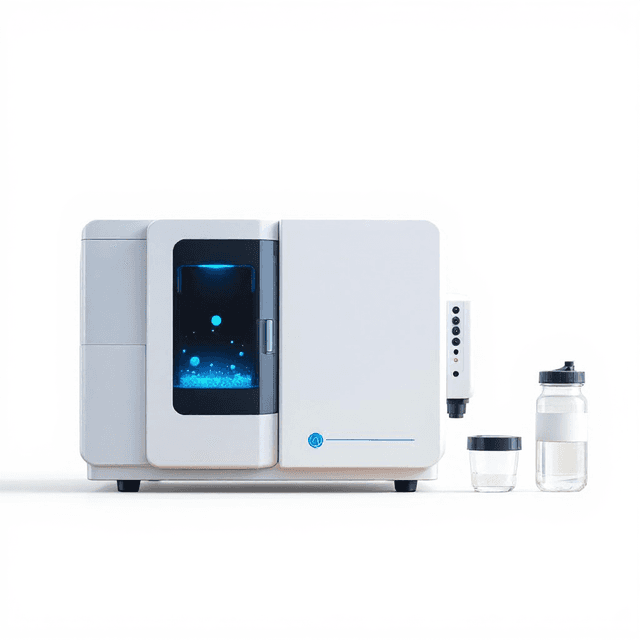
Portable spectrophotometric colorimeter for rapid nitrite nitrogen analysis in water samples, operating on N-naphthyl-ethanediamine chemistry with 0.00-0.30 mg/L range and ±5% accuracy.

Louise Corscadden, PhD
Director of Science · ConductScience
Ask Louise about Water Analysis Equipment fit, setup, configuration, or quote prep.
Already working with us? Sign in to connect this with My Scientist.
Key Specifications
Full details →- Model fit
- Configured during quote
- SKU family
- CS-LH-A015
- Shipping box
- 7.09 x 2.68 x 1.02 cm
- Ordering
- Online checkout and quote request available
- Category
- Benchtop Analyzers
- Build notes
- Confirm accessories, station layout, and support needs before purchase
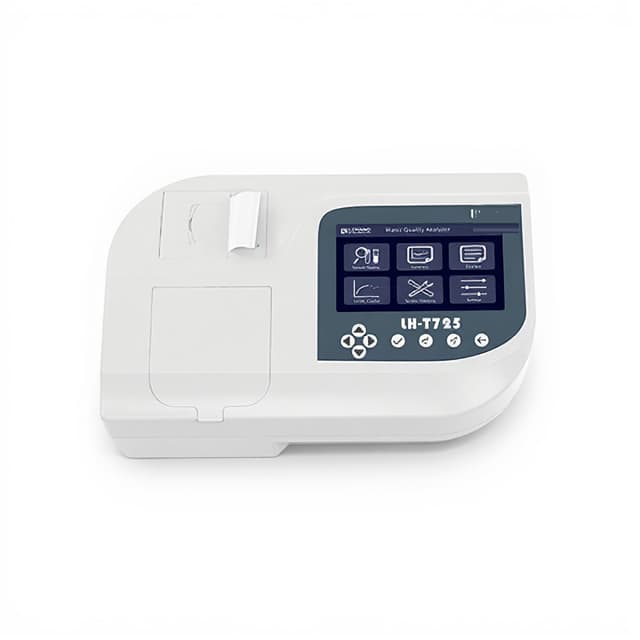
The ConductScience LH-A015 portable nitrite nitrogen colorimeter is a field-portable spectrophotometric instrument designed for rapid quantitative analysis of nitrite nitrogen concentrations in aqueous samples. The instrument operates on N-naphthyl-ethanediamine spectrophotometry principles, where nitrite ions react with reagent to produce a characteristic red coloration measured at 520-525nm wavelength.
This compact colorimeter provides a measurement range of 0.00-0.30 mg/L with ±5% accuracy, making it suitable for environmental monitoring, water treatment verification, and quality control applications where rapid nitrite assessment is required. The instrument's portable design (180×68×26mm, 220g) enables field deployment while maintaining laboratory-grade analytical performance.
How It Works
The LH-A015 colorimeter operates on the established N-naphthyl-ethanediamine spectrophotometric method for nitrite determination. When nitrite ions (NO2-) are present in the sample, they react with sulfanilamide in acidic conditions to form a diazonium salt intermediate. This intermediate subsequently couples with N-naphthyl-ethanediamine dihydrochloride to produce an intensely colored azo dye with characteristic red coloration.
The instrument's optical system employs an LCD light source operating at 520-525nm wavelength, which corresponds to the maximum absorbance of the nitrite-reagent complex. The colorimeter measures light transmission through the sample-reagent mixture and applies Beer-Lambert law principles to calculate nitrite concentration. A conversion coefficient of 3.2857 is applied to relate absorbance values to mg/L nitrite nitrogen concentrations within the 0.00-0.30 mg/L analytical range.
The spectrophotometric measurement occurs in a temperature-controlled optical cell, with the instrument designed to operate reliably under field conditions (0-40°C, 0-90% RH). The compact optical design ensures measurement reproducibility while maintaining the portability required for field deployment.
Features & Benefits
Model
- LH-A015
Product nam
- water analysis equipment
Test item
- Nitrite nitogen
Measuring range
- 0.00~0.30mg/l
Conversion coefficient
- 3.2857
Light source
- LCD
Wavelength
- 520-525mm
Test method
- N-naphthyl-ethanediamine spectrophotometry
Working condition
- 0~40âï¼Rh:0-90%
Automation Level
- manual
Brand
- ConductScience
Accuracy
- 5%
Dimensions
- 180mm*68mm*26mm
Weight
- 220g
Research Domain
- Analytical Chemistry
- Environmental Monitoring
- Food Science
- Industrial Hygiene
- Microbiology
- Pharmaceutical QC
Shipping weight
- 0.15 lb
Shipping box
- L: 7.09 cm
- W: 2.68 cm
- H: 1.02 cm
| Feature | This Product | Typical Alternative | Advantage |
|---|---|---|---|
| Measurement Range | 0.00-0.30 mg/L nitrite nitrogen | Entry-level models often cover 0-1.0 mg/L with lower resolution | Optimized range provides enhanced precision for typical environmental monitoring applications |
| Measurement Accuracy | ±5% accuracy | Basic colorimeters may offer ±10% or unspecified accuracy | Defined accuracy specification enables reliable quantitative analysis for regulatory compliance |
| Operating Wavelength | 520-525nm optimized for N-naphthyl-ethanediamine | Generic colorimeters may use broader wavelength ranges | Narrow wavelength optimization maximizes sensitivity for nitrite-specific colorimetric chemistry |
| Portability | 180×68×26mm, 220g compact design | Laboratory instruments typically larger and heavier | True field portability enables on-site analysis without laboratory infrastructure requirements |
| Environmental Tolerance | 0-40°C, 0-90% RH operation | Laboratory instruments often require controlled conditions | Wide operating range supports field deployment across diverse environmental monitoring scenarios |
The LH-A015 combines field portability with laboratory-grade analytical performance for nitrite nitrogen determination. The instrument's optimized wavelength, defined accuracy specification, and environmental tolerance provide reliable quantitative results for regulatory monitoring and quality control applications requiring portable analytical capability.
Practical Tips
Prepare calibration standards fresh daily using certified nitrite nitrogen reference materials and perform multi-point calibration across the full 0.00-0.30 mg/L range.
Why: Fresh standards ensure accuracy and multi-point calibration verifies linearity across the analytical range.
Clean the optical measurement cell with deionized water after each use and store the instrument in a dry environment when not in operation.
Why: Residual sample or reagent deposits can cause optical interference and affect measurement accuracy.
Allow samples and reagents to equilibrate to ambient temperature before analysis and maintain consistent reaction timing between samples.
Why: Temperature variations affect both colorimetric reaction kinetics and optical measurement precision.
If readings appear unstable, check for air bubbles in the measurement cell and verify reagent preparation followed the protocol exactly.
Why: Air bubbles cause optical scattering while incorrect reagent preparation affects color development kinetics.
Run duplicate analyses on 10% of samples and include blank determinations with each batch to monitor analytical precision and contamination.
Why: Quality control measures identify systematic errors and ensure analytical reliability for quantitative results.
Handle N-naphthyl-ethanediamine reagents in well-ventilated areas and wear appropriate personal protective equipment during reagent preparation.
Why: Colorimetric reagents may pose health hazards and require proper handling procedures for laboratory safety.
Filter turbid samples through 0.45μm filters before analysis to remove particulates that could interfere with optical measurement.
Why: Particulate matter causes light scattering that interferes with accurate absorbance measurement.
Store the instrument away from direct sunlight and temperature extremes to maintain optical system stability between uses.
Why: Temperature cycling and UV exposure can affect optical component alignment and measurement reproducibility.
Setup Guide
What’s in the Box
- LH-A015 colorimeter main unit
- LCD light source assembly
- Sample measurement cell
- Power adapter (typical)
- User manual and analytical protocols
- Carrying case (typical)
- Reagent preparation guide (typical)
Warranty
ConductScience provides a standard one-year manufacturer warranty covering defects in materials and workmanship, with technical support for analytical method optimization and troubleshooting.
Compliance
References
Background reading relevant to this product:
What is the detection limit for nitrite nitrogen with this colorimeter?
The instrument measures nitrite nitrogen from 0.00-0.30 mg/L with ±5% accuracy. The practical detection limit depends on reagent quality and sample matrix, consult product datasheet for detailed analytical performance specifications.
How does temperature affect measurement accuracy?
The colorimeter operates reliably from 0-40°C. Temperature affects both reagent reaction kinetics and optical measurement, so maintain consistent temperature during calibration and sample analysis for optimal accuracy.
What sample volume is required for analysis?
Sample volume requirements depend on the measurement cell design and reagent addition protocol. Consult the analytical procedure manual for specific sample volume and reagent ratio specifications.
Can this instrument analyze nitrite in complex matrices like wastewater?
The N-naphthyl-ethanediamine method works with various water matrices, but turbidity, color, and interfering ions may affect results. Sample filtration or dilution may be necessary for complex matrices.
How often does the instrument require calibration?
Calibration frequency depends on usage intensity and accuracy requirements. Daily calibration with standards is recommended for quantitative work, with periodic verification using certified reference materials.
What reagent shelf life should be expected?
N-naphthyl-ethanediamine reagents are light-sensitive and should be prepared fresh or stored in dark, cool conditions. Follow reagent preparation protocols and expiration guidelines for optimal analytical performance.
Is data logging or connectivity available?
Data output capabilities are not specified in the provided specifications. Consult product datasheet for information about data storage, transfer options, or computer connectivity features.
How does this compare to ion chromatography for nitrite analysis?
This colorimeter provides rapid field analysis with simpler operation than ion chromatography, though IC offers better separation of nitrite from nitrate and other anions. Choose based on required selectivity, throughput, and field portability needs.
Have a question about this product?
Have a question? Just ask.
Send it over and we'll email you a personalized answer — no call, no scheduling.
Prefer to talk it through?
Accessories
Enhance your setup with compatible accessories