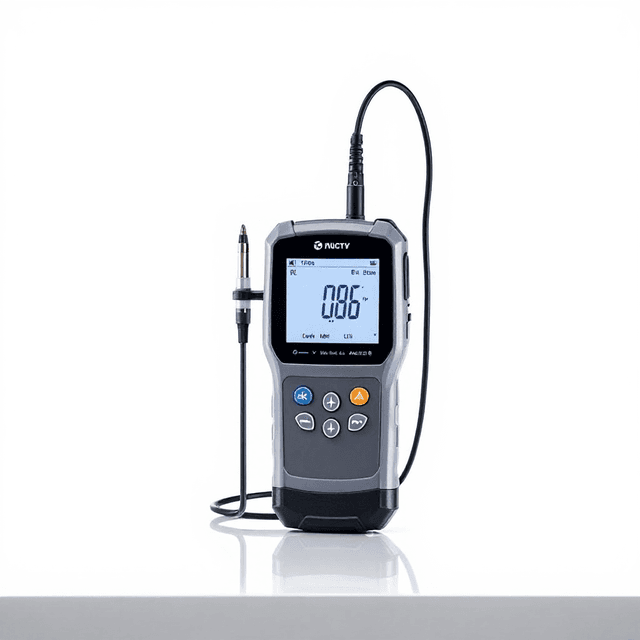
Hand Hold Salinity Meter
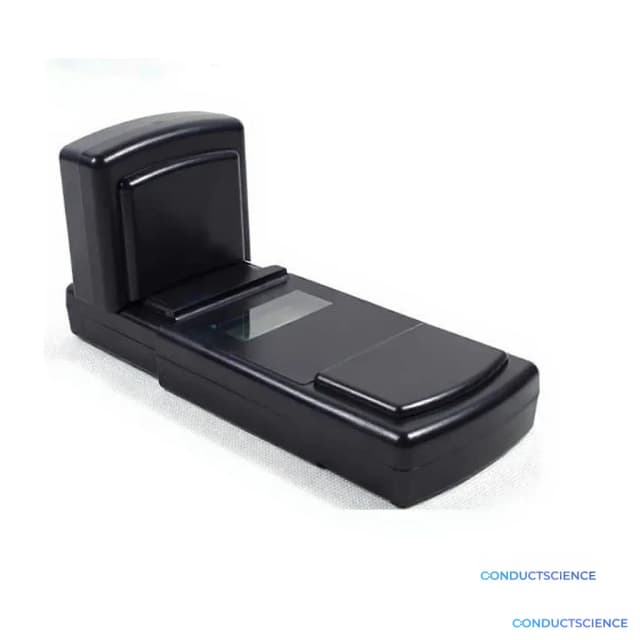
Portable conductometric salinity meter with automatic temperature compensation, measuring 0.1-3.0% salt content with IP65 waterproof protection for field monitoring applications.

Louise Corscadden, PhD
Director of Science · ConductScience
Ask Louise about Hand Hold Salinity Meter fit, setup, configuration, or quote prep.
Already working with us? Sign in to connect this with My Scientist.
Key Specifications
Full details →- Model fit
- Configured during quote
- SKU family
- CS-LH-2032
- Shipping box
- 7.4 x 1.38 x 0.71 cm
- Ordering
- Online checkout and quote request available
- Category
- Portable Analyzers
- Build notes
- Confirm accessories, station layout, and support needs before purchase
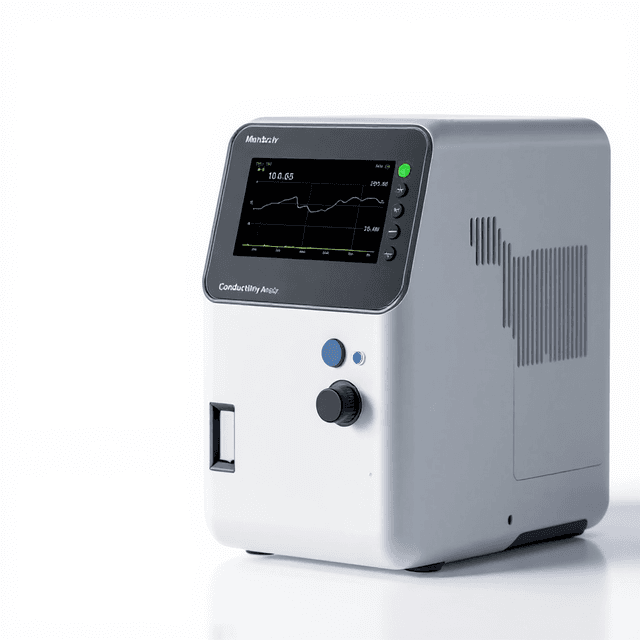
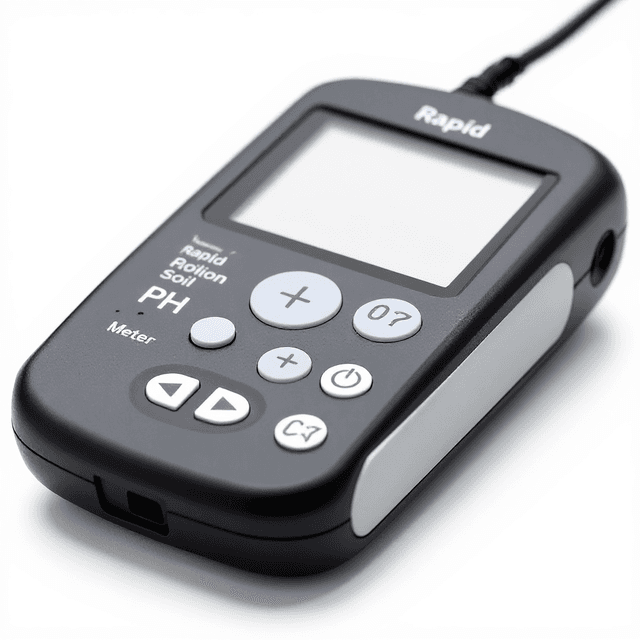
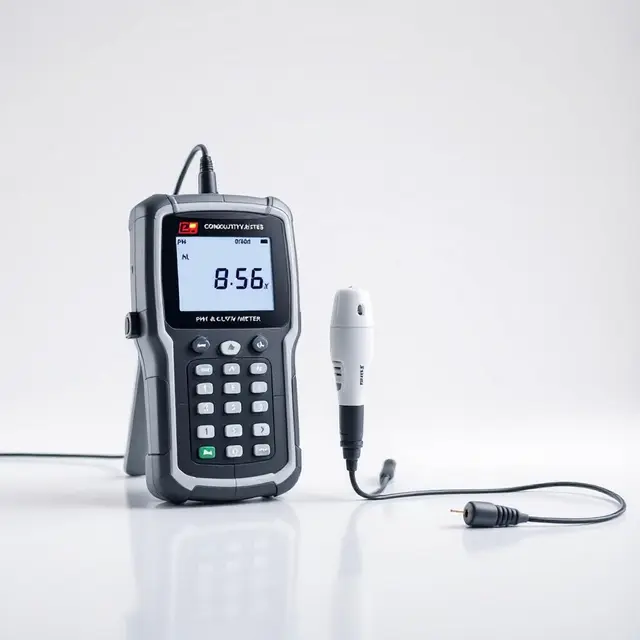
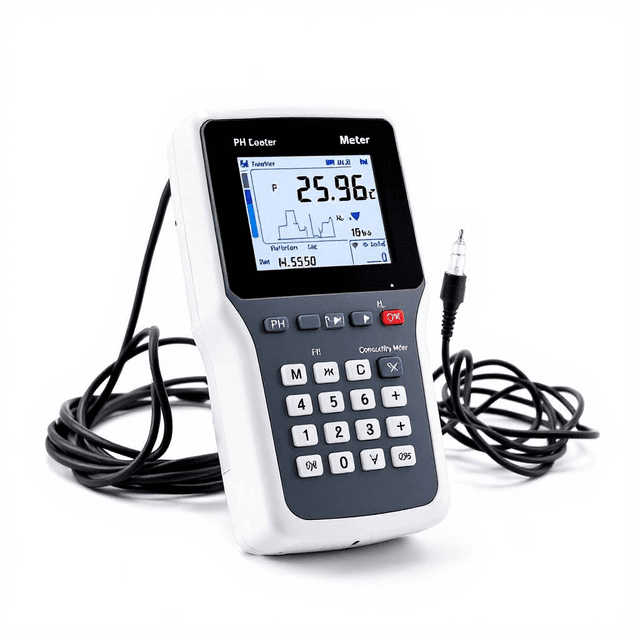
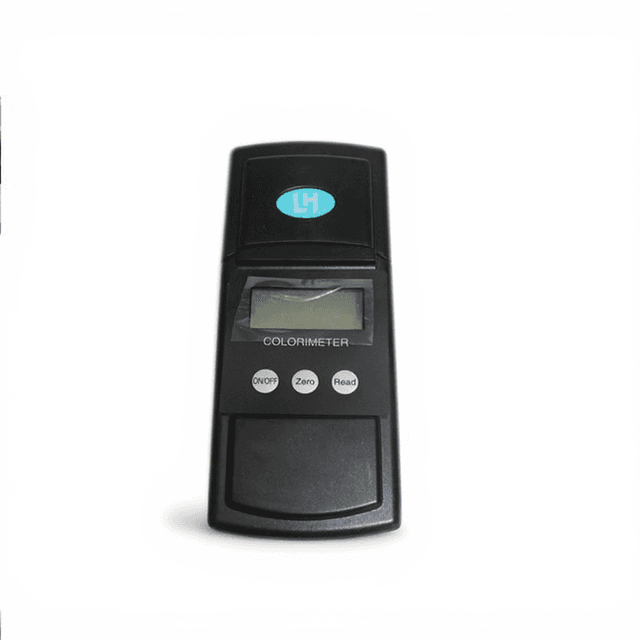
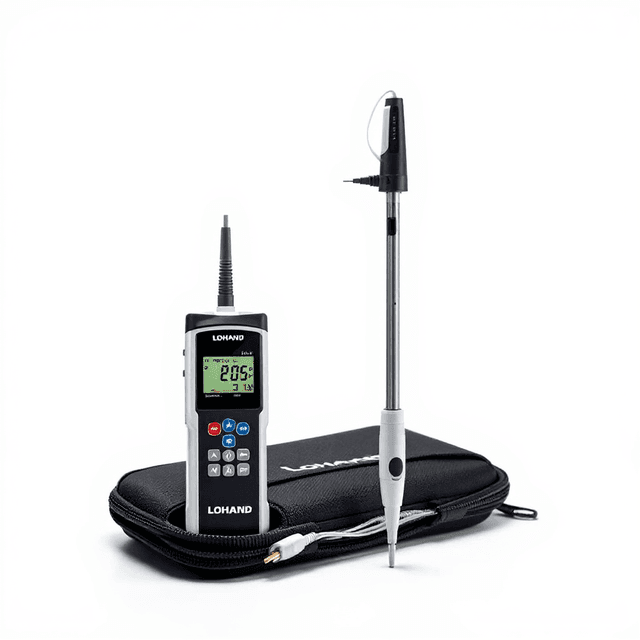
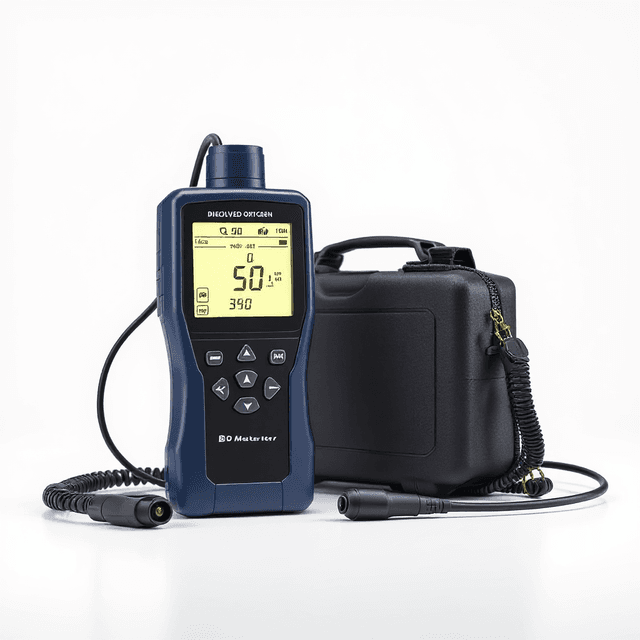
The Hand Hold Salinity Meter (CS-LH-2032) is a portable conductometric instrument designed for rapid assessment of salt content in aqueous solutions. The device employs a four-electrode system with automatic temperature compensation across a 0-60°C range, enabling accurate measurements from 0.1% to 3.0% salinity. The instrument features an IP65 waterproof rating and automatic power management, shutting down within 2 minutes to conserve the 3V lithium battery.
This handheld meter provides field-portable salinity analysis with measurement accuracy of ±0.1% for concentrations from 0.01% to 1.99% and ±0.2% for concentrations from 2.00% to 3.00%. The compact 188×35×18mm form factor and 43g weight enable single-handed operation for in-situ monitoring applications where laboratory analysis is impractical.
How It Works
The salinity meter operates on the principle of electrical conductivity measurement, where dissolved ionic species in solution facilitate current flow between electrodes. As salt concentration increases, the number of charge carriers (Na+, Cl-, and other ions) increases proportionally, resulting in higher solution conductivity. The instrument applies a controlled voltage across the electrode system and measures the resulting current to determine conductance.
The four-electrode configuration separates current injection and voltage measurement functions, eliminating electrode polarization effects that compromise accuracy in two-electrode systems. Two outer electrodes apply the excitation current while two inner electrodes measure the potential drop, providing a more stable and accurate conductivity measurement. Automatic temperature compensation corrects for the temperature dependence of ionic mobility, as conductivity typically increases 2-3% per °C in typical salt solutions.
The measured conductivity is converted to salinity percentage using calibrated conversion algorithms that account for the predominant ionic species in typical salt solutions. The waterproof electrode housing enables direct immersion measurements while the low-power electronics provide extended battery life for field operations.
Features & Benefits
Model
- 2032
Measuring range
- 0.1%-3.0%
Low power consumption
- Shut down automatically within 2 minutes
Waterproof
- IP65
Temperature compensation range
- 0~60â
Battery specification
- 3V(Model:2032)
Working current
- 2.5mA
Button capacity
- 210mAh
Error range
- 0.01%-1.99% ±0.1% 2.00%-3.00% ±0.2%
Weigh
- 43g
Automation Level
- manual
Brand
- ConductScience
Dimensions
- 188x35x18mm
Research Domain
- Environmental Monitoring
- Food Science
- Materials Science
Shipping weight
- 0.09 lb
Shipping box
- L: 7.4 cm
- W: 1.38 cm
- H: 0.71 cm
| Feature | This Product | Typical Alternative | Advantage |
|---|---|---|---|
| Measurement Range | 0.1% to 3.0% salinity | Entry-level models often limited to 0-2% range | Extended upper range accommodates high-salinity brines and concentrated salt solutions. |
| Temperature Compensation | Automatic compensation 0-60°C | Manual correction or limited temperature range | Eliminates calculation errors and enables accurate measurement across typical field temperature conditions. |
| Accuracy Specification | ±0.1% (low range) / ±0.2% (high range) | Single accuracy specification across full range | Optimized accuracy at different concentration levels improves measurement reliability for diverse applications. |
| Waterproof Protection | IP65 rated housing | Basic splash protection or separate probe designs | Enables direct immersion measurements and operation in challenging field environments. |
| Power Management | Automatic 2-minute shutdown, 210mAh battery | Manual power control with shorter battery life | Extended field operation time with reduced risk of battery drain from accidental activation. |
| Form Factor | 43g weight, 188×35×18mm dimensions | Heavier instruments with larger probe assemblies | Single-handed operation reduces operator fatigue during extended field measurement sessions. |
The CS-LH-2032 combines an extended 3.0% measurement range with automatic temperature compensation and waterproof design in a lightweight 43g package. The dual accuracy specifications and automatic power management optimize performance for both laboratory and field applications requiring reliable salinity monitoring.
Practical Tips
Store calibration standards in sealed containers and verify their concentration periodically using a reference method.
Why: Standard degradation or evaporation can introduce systematic errors that compromise measurement accuracy.
Perform calibration at temperatures close to your sample conditions within the compensation range.
Why: Minimizes residual temperature effects and maximizes the effectiveness of automatic temperature compensation.
Rinse the electrode with distilled water immediately after measuring high-salinity samples.
Why: Prevents salt crystallization on electrode surfaces that can affect response time and accuracy.
Replace the 3V lithium battery when response becomes sluggish or display dims.
Why: Low battery voltage can affect measurement stability and temperature compensation accuracy.
Allow 30-60 seconds for thermal equilibration between instrument and sample before recording measurements.
Why: Temperature differences create measurement drift that automatic compensation cannot instantly correct.
Gently agitate the sample around the electrode to eliminate air bubbles and ensure representative measurement.
Why: Air bubbles on electrode surfaces create high-resistance barriers that reduce apparent conductivity.
If readings drift or fluctuate, clean the electrode with mild detergent and rinse thoroughly with distilled water.
Why: Organic films or mineral deposits on electrode surfaces can cause unstable electrical contact.
Record temperature along with salinity measurements for quality assurance and method validation.
Why: Temperature data enables verification of automatic compensation performance and supports measurement traceability.
Setup Guide
What’s in the Box
- Hand Hold Salinity Meter (Model CS-LH-2032)
- 3V Lithium Battery (Model 2032) - installed
- Protective electrode cap (typical)
- User manual with calibration procedures (typical)
- Calibration certificate (typical)
Warranty
ConductScience provides a standard one-year manufacturer warranty covering defects in materials and workmanship. Technical support is available for calibration procedures, measurement protocols, and troubleshooting assistance.
Compliance
References
Background reading relevant to this product:
What calibration standards are recommended for this salinity range?
Use certified reference standards at 0.5%, 1.0%, and 2.0% NaCl solutions to span the measurement range. Calibrate at the temperature closest to your sample conditions within the 0-60°C compensation range.
How does temperature affect measurement accuracy?
The instrument automatically compensates for temperature effects from 0-60°C. Manual correction is unnecessary within this range, but thermal equilibration between instrument and sample is required for optimal accuracy.
What is the minimum sample volume required?
The electrode requires sufficient depth for complete immersion of the sensing elements. Typically 50-100mL minimum volume is needed to avoid meniscus effects and ensure representative measurement.
Can this instrument measure other electrolytes besides NaCl?
The meter measures total ionic conductivity and will respond to any dissolved salts. However, calibration and accuracy specifications are based on NaCl equivalents. Different salt compositions may require specific calibration factors.
How often should calibration be performed?
Calibrate daily for critical measurements, weekly for routine monitoring, or whenever accuracy verification is required. More frequent calibration may be needed in harsh field conditions or with contaminated samples.
What maintenance is required for the electrode?
Rinse with distilled water after each use and store dry in the protective cap. Avoid abrasive cleaning materials on the electrode surfaces. Replace the electrode if response becomes sluggish or unstable.
How does this compare to laboratory-based conductivity measurements?
Provides field-portable convenience with good accuracy for most applications. Laboratory instruments may offer higher precision and broader ranges, but require sample transport and longer analysis time.
What factors can interfere with salinity measurements?
Air bubbles on electrodes, temperature gradients, sample contamination, and electrode fouling can affect accuracy. Ensure complete electrode immersion and thermal equilibration for reliable results.
Have a question about this product?
Have a question? Just ask.
Send it over and we'll email you a personalized answer — no call, no scheduling.
Prefer to talk it through?
Accessories
Enhance your setup with compatible accessories