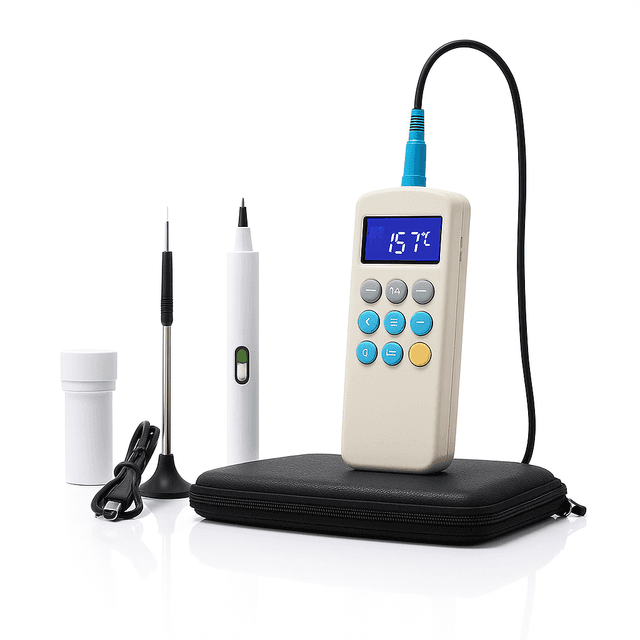
Residual Chlorine Meter
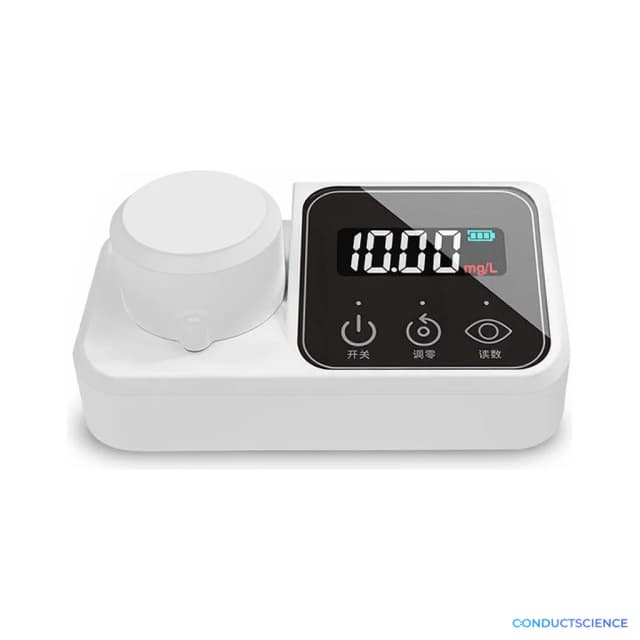
Portable DPD colorimeter for quantitative measurement of residual chlorine in water samples, measuring 0.00-10.00 mg/L with ±5% accuracy using single-wavelength photometry.

Louise Corscadden, PhD
Director of Science · ConductScience
Ask Louise about Residual Chlorine Meter fit, setup, configuration, or quote prep.
Already working with us? Sign in to connect this with My Scientist.
Key Specifications
Full details →- Model fit
- Configured during quote
- SKU family
- CS-LH-C10
- Shipping box
- 7.09 x 2.68 x 1.02 cm
- Ordering
- Online checkout and quote request available
- Category
- Portable Analyzers
- Build notes
- Confirm accessories, station layout, and support needs before purchase
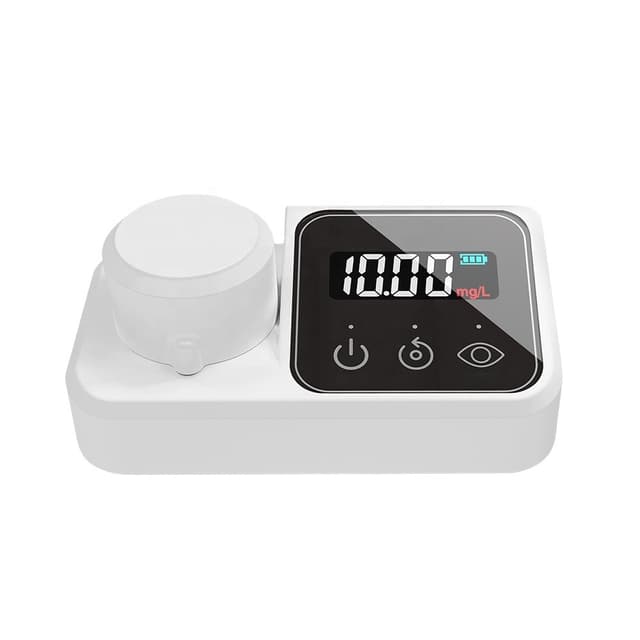
The Residual Chlorine Meter (Model LH-C10) is a portable pocket colorimeter designed for quantitative analysis of free chlorine in water samples. Operating at a single wavelength of 520-525nm, this instrument employs the DPD (N,N-diethyl-p-phenylenediamine) colorimetric method to measure chlorine concentrations from 0.00 to 10.00 mg/L with ±5% accuracy.
The compact design (180×68×26mm, 220g) enables field deployment for water quality monitoring applications. The LCD display provides direct digital readouts, eliminating subjective color interpretation inherent in visual comparison methods. The instrument operates in ambient conditions from 0-40°C with relative humidity up to 90%, making it suitable for diverse sampling environments.
How It Works
The instrument utilizes the DPD (N,N-diethyl-p-phenylenediamine) colorimetric method, the standard analytical technique for free chlorine determination. When DPD reagent is added to a water sample containing free chlorine, an immediate pink coloration develops with intensity proportional to chlorine concentration. The reaction mechanism involves chlorine oxidation of the DPD compound to form a colored quinoid structure.
The colorimeter measures light absorption at 520-525nm wavelength, corresponding to the maximum absorption peak of the DPD-chlorine complex. A photodetector quantifies transmitted light intensity, which is inversely related to chlorine concentration according to Beer-Lambert law. The LCD display converts optical measurements to direct concentration readouts in mg/L, eliminating subjective visual interpretation required with color wheel comparisons.
Features & Benefits
Model
- LH-C10
Product name
- Residual Chlorine Meter colorimeter
Test item
- Residual chlorine
Measuring range
- 0.00~10.00mg/l
Light source
- LCD
Wavelength
- 520-525mm
Test method
- DPD method
Working condition
- 0~40âï¼Rh:0-90%
Automation Level
- manual
Brand
- ConductScience
Accuracy
- 5%
Dimensions
- 180mm*68mm*26mm
Weight
- 220g
Research Domain
- Clinical Diagnostics
- Environmental Monitoring
- Food Science
- Industrial Hygiene
- Microbiology
- Pharmaceutical QC
Shipping weight
- 0.49 lb
Shipping box
- L: 7.09 cm
- W: 2.68 cm
- H: 1.02 cm
| Feature | This Product | Typical Alternative | Advantage |
|---|---|---|---|
| Measurement Range | 0.00-10.00 mg/L | Entry-level models may offer narrower ranges | Broad range covers both trace residual monitoring and high-dose disinfection applications |
| Accuracy Specification | ±5% | Basic instruments may provide qualitative results only | Quantitative precision suitable for regulatory compliance and process control |
| Detection Method | DPD colorimetric with single wavelength photometry | Visual color comparison methods vary in reliability | Eliminates subjective interpretation errors in color matching |
| Display Technology | LCD digital readout | Color wheels require visual interpretation | Direct numerical results reduce operator variability and interpretation errors |
| Portability | 220g weight, 180×68×26mm | Benchtop models require laboratory setting | Field deployment reduces sample transport time and preserves sample integrity |
| Operating Range | 0-40°C, 90% RH | Laboratory instruments may have narrower environmental specifications | Functions reliably across diverse field sampling conditions |
The LH-C10 combines standardized DPD analytical chemistry with portable digital photometry, providing quantitative chlorine measurement suitable for field deployment. The 0.00-10.00 mg/L range and ±5% accuracy specifications address both residual monitoring and disinfection verification requirements.
Practical Tips
Verify zero calibration with distilled water before each measurement session and use certified chlorine reference standards monthly.
Why: Optical drift and reagent aging can introduce systematic errors affecting measurement accuracy.
Perform calibration verification at multiple concentrations across the measurement range to confirm linearity.
Why: Single-point calibration may miss non-linear response that affects accuracy at different concentration levels.
Clean sample chamber with dilute acid solution weekly to remove chlorine oxidation deposits and mineral buildup.
Why: Residue accumulation on optical surfaces reduces light transmission and affects measurement precision.
Test samples immediately after collection or add preservative according to Standard Methods protocols.
Why: Free chlorine degrades rapidly in sample containers, leading to underestimation of actual concentrations.
Store DPD reagents in dark, cool conditions and replace according to expiration dates or color change indicators.
Why: Reagent degradation reduces color development intensity and compromises measurement accuracy.
Record sample temperature and pH alongside chlorine measurements for comprehensive water quality documentation.
Why: Both parameters affect chlorine stability and disinfection efficacy interpretation.
If readings appear consistently high or low, check for interfering substances like iron or nitrite using specific test methods.
Why: Chemical interferents can produce false-positive results that compromise water quality assessment.
Handle DPD reagent solutions with appropriate personal protective equipment and avoid prolonged skin contact.
Why: DPD compounds can cause skin sensitization with repeated exposure.
Setup Guide
What’s in the Box
- LH-C10 Residual Chlorine Meter (typical)
- DPD reagent starter kit (typical)
- Sample cuvettes (typical)
- Battery or power adapter (typical)
- User manual and calibration certificate (typical)
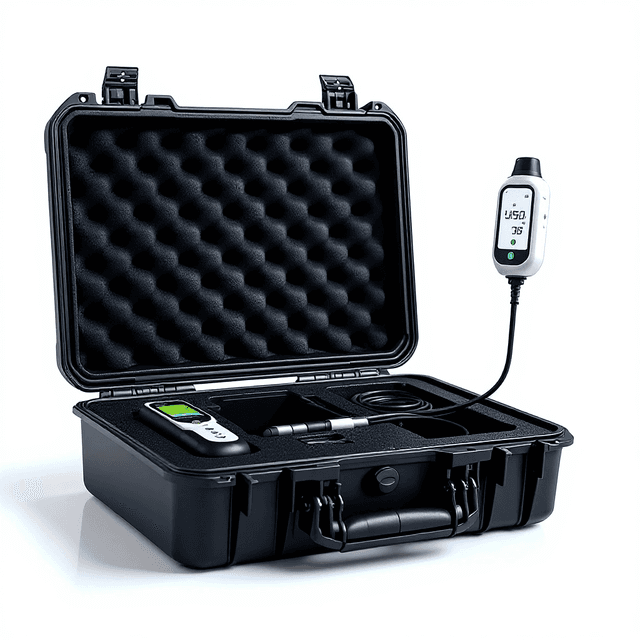
- Protective carrying case (typical)
Warranty
ConductScience provides standard one-year manufacturer warranty covering defects in materials and workmanship, with technical support for calibration and operational guidance.
Compliance
References
Background reading relevant to this product:
What is the detection limit and linear range for this colorimeter?
The instrument measures 0.00-10.00 mg/L with ±5% accuracy. The lower detection limit and linearity characteristics should be verified in the calibration documentation, as these depend on reagent quality and optical path length.
How does temperature affect measurement accuracy?
The instrument operates from 0-40°C, but DPD reaction kinetics are temperature-dependent. Calibration should account for expected sample temperatures, and standard practice includes temperature compensation or controlled measurement conditions.
Can this instrument differentiate between free and total chlorine?
The standard DPD method measures free chlorine. Total chlorine requires modified reagent chemistry with potassium iodide addition to convert combined chlorine species. Verify if the instrument includes protocols for both measurements.
What interfering substances affect chlorine measurements?
Common interferents include iron, manganese, nitrite, and organic chloramines. The DPD method shows good selectivity for free chlorine, but high levels of these substances may require sample pretreatment or correction factors.
How frequently does the instrument require calibration?
Calibration frequency depends on usage intensity and accuracy requirements. Monthly verification with certified reference standards is typical for routine use, with more frequent checks for critical applications or after reagent lot changes.
What sample volume is required for measurement?
Sample volume depends on cuvette design and optical path length. Typical colorimeters require 5-25 mL samples, but specific requirements should be confirmed in the instrument specifications.
Can measurements be logged or exported for documentation?
Data logging capabilities vary by model. The basic LCD display provides direct readout, but data storage and export features would depend on additional instrument specifications not detailed in the basic attribute list.
How does this compare to titration methods for chlorine analysis?
Colorimetric measurement is faster and requires smaller sample volumes than titration, with comparable accuracy for most applications. Titration provides higher precision for research applications but is more time-consuming for routine monitoring.
Have a question about this product?
Have a question? Just ask.
Send it over and we'll email you a personalized answer — no call, no scheduling.
Prefer to talk it through?