Handheld Digital Chlorine Dioxide Meter
Portable LED photometer for quantitative chlorine dioxide measurement in water samples, featuring 0.05-10.00 mg/L range and DPD spectrophotometric method compliance.

Louise Corscadden, PhD
Director of Science · ConductScience
Ask Louise about Handheld Digital Chlorine Dioxide Meter fit, setup, configuration, or quote prep.
Already working with us? Sign in to connect this with My Scientist.
Key Specifications
Full details →- Model fit
- Configured during quote
- SKU family
- CS-LH-C03F
- Shipping box
- 12.8 x 7 x 4.8 cm
- Ordering
- Online checkout and quote request available
- Category
- Portable Analyzers
- Build notes
- Confirm accessories, station layout, and support needs before purchase
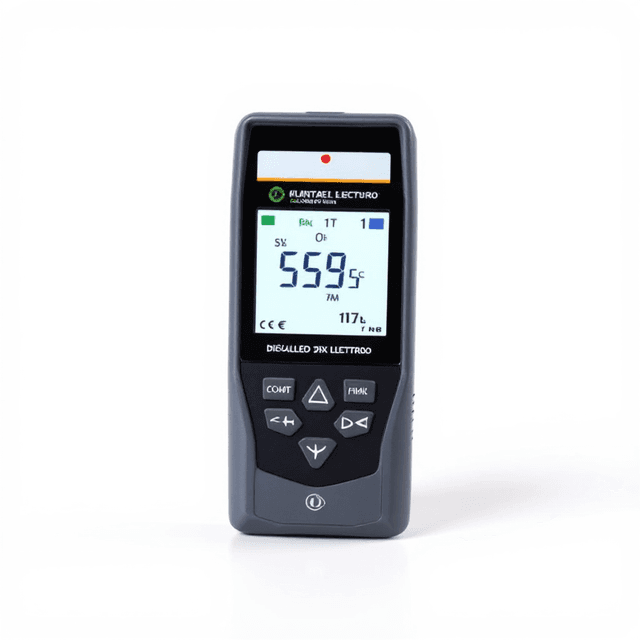
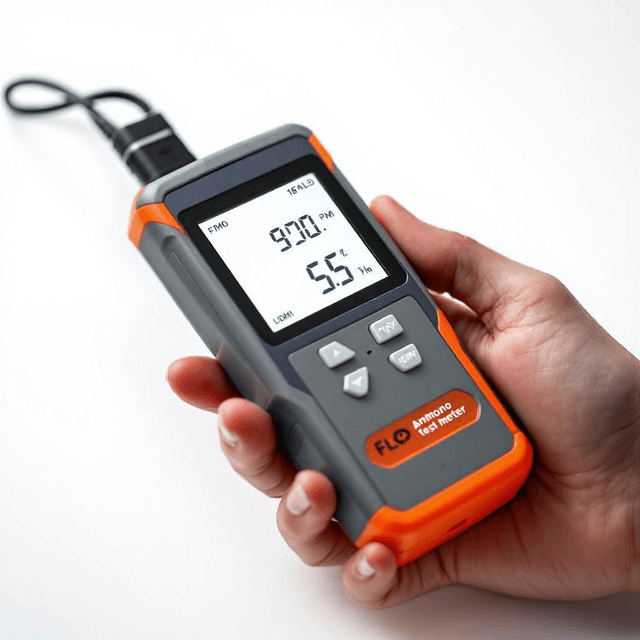
The Handheld Digital Chlorine Dioxide Meter (Model LH-C03F) is a portable spectrophotometric analyzer designed for quantitative determination of residual chlorine in aqueous samples. The instrument employs LED-based photometry at 520nm wavelength, following the N,N-diethyl-1,4-phenylenediamine (DPD) spectrophotometric method referenced in HJ586-2010 National Environmental Protection Standard for water quality determination of free chlorine and total chlorine.
The meter provides a measurement range of 0.05-10.00 mg/L with specified accuracy of ±0.05 mg/L for concentrations below 1.0 mg/L and ±5% for concentrations above 1.0 mg/L. The compact design (128×70×48mm, 188g including battery) and extended battery life (>24 hours continuous operation) enable field deployment for on-site water quality assessment in municipal, industrial, and environmental monitoring applications.
How It Works
The instrument operates on the principle of visible light spectrophotometry using the DPD (N,N-diethyl-1,4-phenylenediamine) colorimetric method. When chlorine dioxide reacts with DPD reagent in the sample, it forms a magenta-colored complex whose absorbance intensity is directly proportional to the chlorine concentration. The LED light source emits monochromatic light at 520nm, which corresponds to the maximum absorption wavelength of the DPD-chlorine complex.
A photodetector measures the transmitted light intensity through the sample, and the instrument's microprocessor calculates the concentration based on Beer-Lambert law principles. The method follows HJ586-2010 national environmental protection standard protocols, ensuring standardized measurement procedures. The digital display presents results in mg/L units with automatic temperature compensation and calibration drift correction.
The portable design incorporates sample cell holders, optical components, and signal processing electronics in a handheld form factor suitable for field deployment and laboratory bench use.
Features & Benefits
Model
- LH-C03F
Test Item
- Residual Chlorine
Measuring range
- 0.05-10.00mg/L
Wavelength
- 520nm
Principle
- Reference to HJ586-2010 National Environmental protection standard"Water Quality Determination of Free Chlorine and Total ChlorineN,N-diethyl-1,4-phenylenediamine Spectrophotometric Method"
Light source
- LED light emitting diode
Battery life
- More than 24hours(without shutdown)
Automation Level
- manual
Brand
- ConductScience
Size
- 128*70*48mm
Weight
- 188g(including battery)
Research Domain
- Clinical Diagnostics
- Environmental Monitoring
- Food Science
- Industrial Hygiene
- Microbiology
- Pharmaceutical QC
Shipping weight
- 0.2 lb
Shipping box
- L: 12.8 cm
- W: 7 cm
- H: 4.8 cm
| Feature | This Product | Typical Alternative | Advantage |
|---|---|---|---|
| Measurement Range | 0.05-10.00 mg/L | Entry-level models often provide narrower ranges or higher detection limits | Wide range covers both trace-level detection and high-concentration industrial applications with single instrument. |
| Optical System | LED light source at 520nm | Some instruments use tungsten lamps or broader spectrum sources | LED technology provides stable illumination with extended lifetime and reduced drift compared to conventional sources. |
| Battery Performance | More than 24 hours continuous operation | Field instruments typically offer 8-16 hours of operation | Extended battery life supports full-day field campaigns without recharging interruptions. |
| Method Compliance | HJ586-2010 National Environmental Protection Standard | Various instruments reference different national or international methods | Standardized methodology ensures measurement traceability and regulatory compliance in environmental monitoring. |
| Portability | 128×70×48mm, 188g including battery | Handheld instruments vary in size and weight specifications | Compact dimensions and lightweight design facilitate field deployment and one-handed operation. |
The LH-C03F combines wide measurement range, standardized methodology, and extended battery performance in a compact handheld format. The LED-based optical system provides measurement stability while maintaining portability for field applications.
Practical Tips
Perform zero calibration with fresh distilled water before each measurement session.
Why: Eliminates baseline drift and ensures accurate low-level measurements.
Verify calibration using certified chlorine standards when available.
Why: Confirms measurement accuracy and identifies systematic errors in the analytical system.
Clean optical surfaces and sample chambers with distilled water between measurements.
Why: Prevents cross-contamination and maintains optical clarity for consistent readings.
Allow samples to reach ambient temperature before measurement.
Why: Temperature variations affect both reaction kinetics and optical properties, impacting measurement accuracy.
Record measurement conditions including temperature, pH, and sample source.
Why: Documentation supports data interpretation and quality assurance for regulatory reporting.
If readings appear unstable, check battery voltage and recalibrate the instrument.
Why: Low battery conditions can affect electronic stability and optical performance.
Perform duplicate measurements on representative samples to assess precision.
Why: Duplicate analysis identifies measurement variability and validates analytical performance.
Handle DPD reagents according to safety data sheets and use appropriate personal protective equipment.
Why: Chemical reagents may present health hazards requiring proper handling procedures.
Setup Guide
What’s in the Box
- Handheld chlorine dioxide meter (main unit)
- Battery pack
- Sample measurement cells (typical)
- DPD reagent kit (typical)
- Calibration standards (typical)
- USB cable for data transfer (typical)
- Carrying case (typical)
- User manual and quick reference guide (typical)
Warranty
ConductScience provides a standard one-year manufacturer warranty covering defects in materials and workmanship. Technical support includes calibration guidance and method troubleshooting assistance.
Compliance
What is the detection limit for chlorine dioxide measurement?
The instrument provides a lower measurement range of 0.05 mg/L. For specific detection limits and method sensitivity, consult the product datasheet and analytical method validation documentation.
How frequently does the instrument require calibration?
Calibration frequency depends on usage intensity and analytical requirements. Typical practice includes daily zero calibration and weekly or monthly standard verification. Follow your laboratory's quality assurance protocols.
Can the meter differentiate between free chlorine and chlorine dioxide?
The instrument measures total oxidizing species responding to DPD reagent. Specific differentiation between chlorine species requires sequential measurement protocols with appropriate reagent masking agents.
What sample volume is required for measurement?
Sample volume requirements depend on the measurement cell design. Consult the technical specifications for specific volumetric requirements and sampling protocols.
Is the instrument suitable for turbid water samples?
High turbidity can interfere with spectrophotometric measurements. Sample clarification or filtration may be required for turbid waters. Verify method applicability for specific sample matrices.
What data output formats are available?
The digital display provides immediate readouts. For data logging and transfer capabilities, consult the product specifications regarding connectivity options and data management features.
How does temperature affect measurement accuracy?
Temperature can influence both the colorimetric reaction kinetics and optical properties. Follow temperature compensation procedures specified in the analytical method and user manual.
Have a question about this product?
Have a question? Just ask.
Send it over and we'll email you a personalized answer — no call, no scheduling.
Prefer to talk it through?