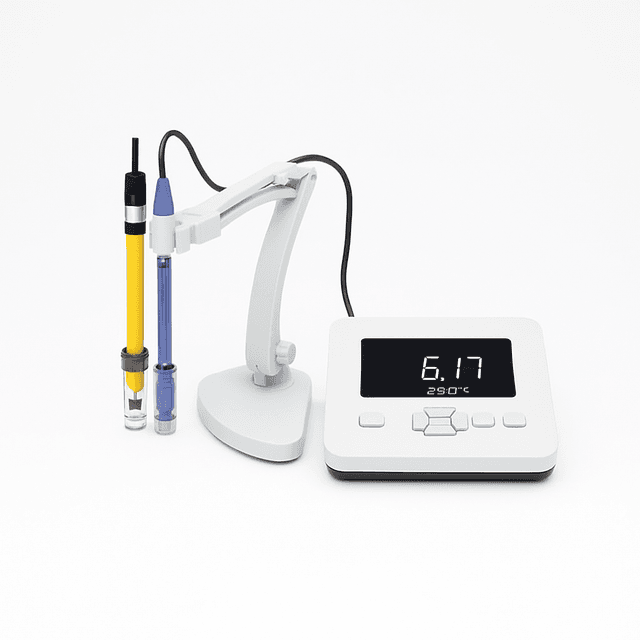
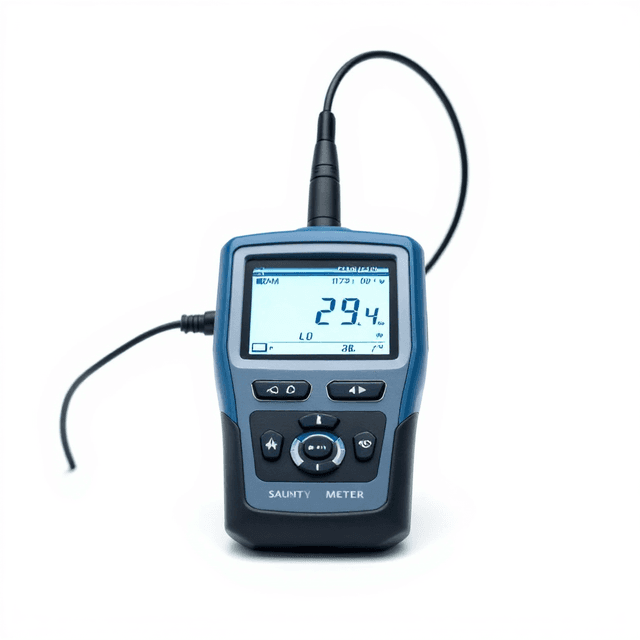
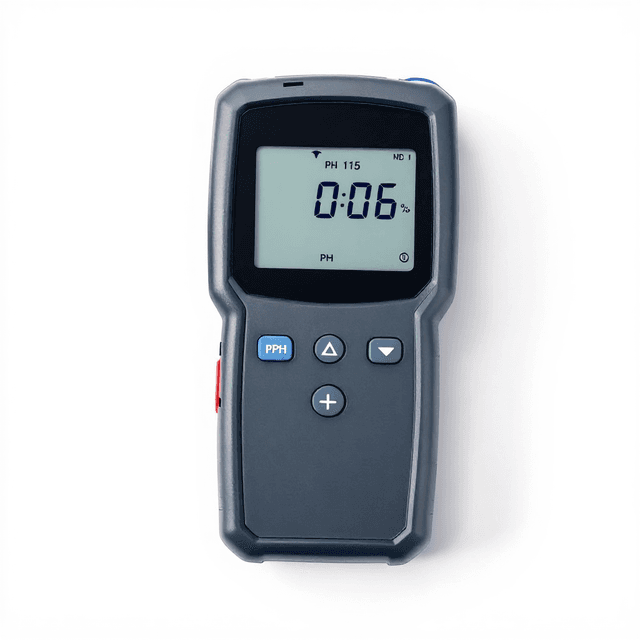
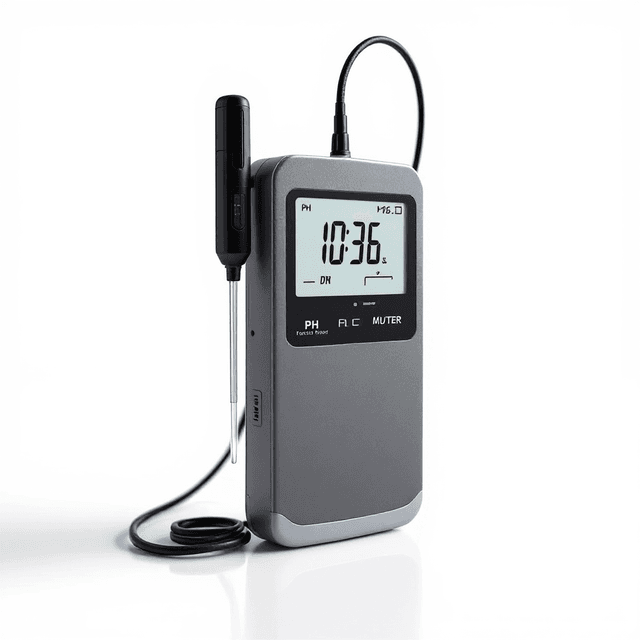
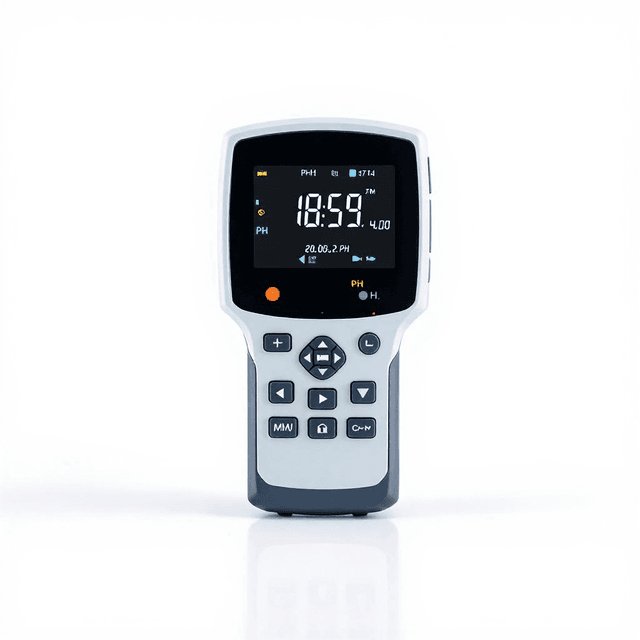
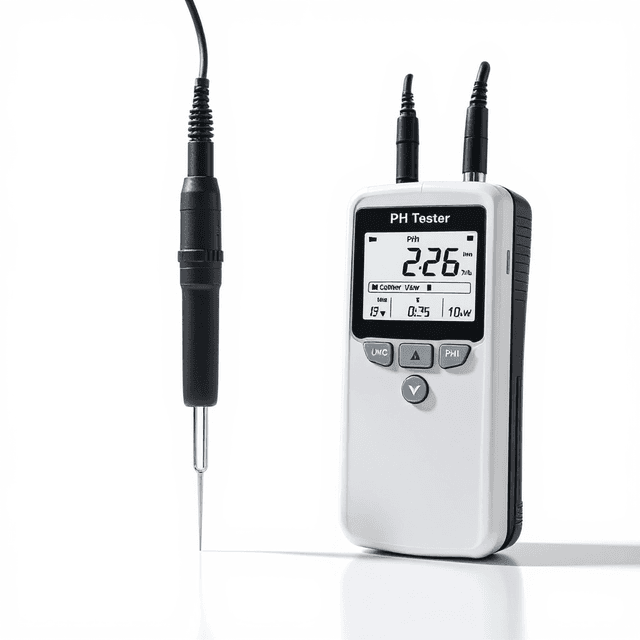
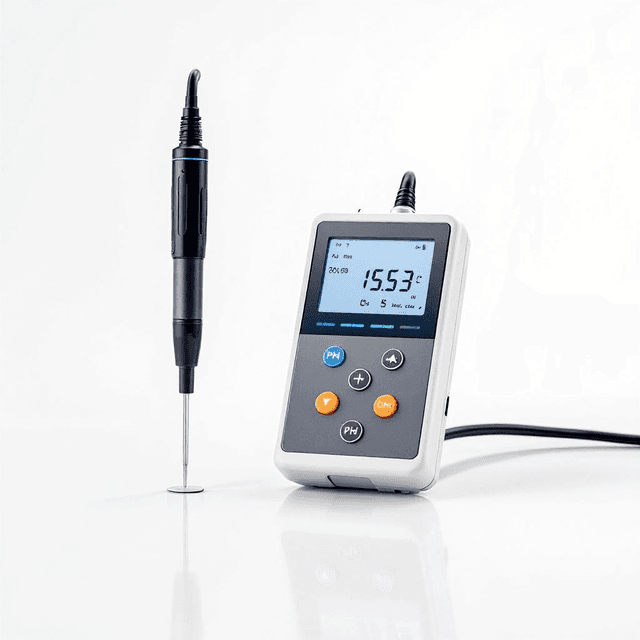
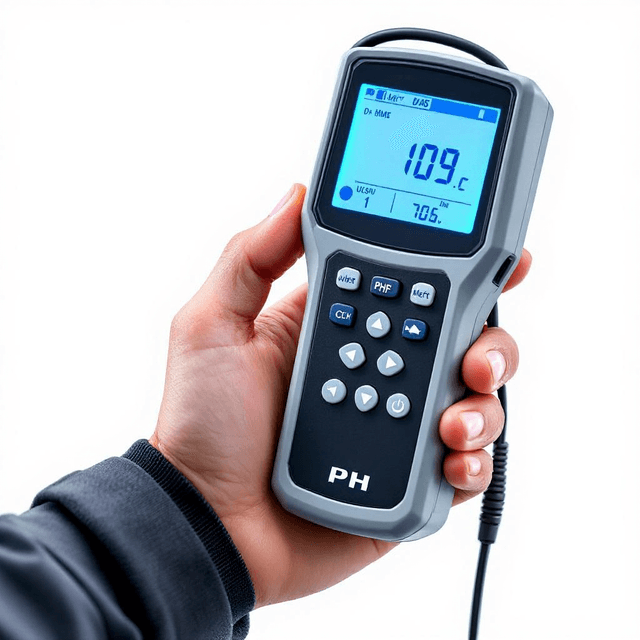
Benchtop Conductivity/TDS/Salinity/Resistivity Meter
Benchtop multi-parameter meter for simultaneous conductivity, TDS, salinity, and resistivity measurements with 1-5 point calibration and automatic temperature compensation.

Louise Corscadden, PhD
Director of Science · ConductScience
Ask Louise about Benchtop Conductivity/TDS/Salinity/Resistivity Meter fit, setup, configuration, or quote prep.
Already working with us? Sign in to connect this with My Scientist.
Key Specifications
Full details →- Model fit
- Configured during quote
- SKU family
- BIO-0384
- Shipping box
- 6.0 x 21.0 x 18.8 cm
- Ordering
- Online checkout and quote request available
- Category
- pH Meters
- Build notes
- Confirm accessories, station layout, and support needs before purchase
This benchtop multi-parameter meter provides comprehensive water quality analysis through simultaneous measurement of conductivity, total dissolved solids (TDS), salinity, and resistivity. The instrument features a wide conductivity measurement range from 2μS/cm to 20,000μS/cm with temperature compensation capabilities from 0-100°C, supporting both manual and automatic temperature adjustment modes.
The meter incorporates a flexible 1-5 point calibration system using standard reference solutions (10μS/cm, 84μS/cm, 1413μS/cm, 12.88mS/cm, 111.8mS/cm) to ensure measurement accuracy across the full operational range. Temperature measurements are provided with ±0.5°C accuracy and 0.1°C resolution over a 0-105°C range, with offset calibration capability within ±10°C for enhanced precision in critical applications.
How It Works
Conductivity measurement operates on the principle that dissolved ionic species in solution facilitate electrical current flow between electrodes. The instrument applies a known voltage across electrode pairs and measures the resulting current, calculating conductivity from the relationship between applied voltage, measured current, and electrode geometry. The wide measurement range from 2μS/cm to 20,000μS/cm accommodates solutions from ultrapure water to moderately concentrated electrolytes.
Total dissolved solids (TDS) values are derived from conductivity measurements using conversion factors that account for the relationship between ionic content and electrical conductivity. Salinity calculations incorporate temperature-dependent algorithms that relate conductivity to salt content based on standard seawater references. Resistivity measurements represent the inverse of conductivity, providing direct assessment of solution purity particularly relevant for pharmaceutical and electronic manufacturing applications.
Temperature compensation functionality corrects conductivity readings for thermal effects on ionic mobility and solution properties. The system supports both manual temperature entry and automatic compensation using integrated temperature sensors, with linear and non-linear correction algorithms including specialized pure water compensation for high-purity applications.
Features & Benefits
Automation Level
- semi-automated
Conductivity
- Range
Standard
- CON-1: 2μs/cm~20000μs/cm
Calibration Points
- 1 to 5 points
Calibration Solutions
- 10μS/cm, 84μS/cm, 1413μS/cm, 12.88mS/cm, 111.8mS/cm
TDS
- Range
Salinity
- TDS Factor
Range
- 0~105°C/32~221°F
Resistivity
- Resolution
Offset Calibration
- 1 point, reading ±10°C
Temperature Compensation
- 0~100°C, manual or automatic
Temperature Coefficient
- Linear(0.0~10.0%/°C), non-linear, pure water
Brand
- ConductScience
Research Domain
- Analytical Chemistry
- Environmental Monitoring
- Food Science
- Industrial Hygiene
- Materials Science
- Pharmaceutical QC
Accuracy
- 0.1°C/0.1°F
Temperature Range
- Resolution
Shipping weight
- 1.5 lb
Shipping box
- L: 6.0 cm
- W: 21.0 cm
- H: 18.8 cm
| Feature | This Product | Typical Alternative | Advantage |
|---|---|---|---|
| Conductivity Measurement Range | 2μS/cm to 20,000μS/cm | Entry-level models often provide narrower ranges or require range switching | Wide continuous range eliminates need for multiple instruments or manual range changes during analysis |
| Calibration Flexibility | 1-5 calibration points with standard solutions | Many instruments offer fixed 2-3 point calibration only | Customizable calibration points allow optimization for specific application ranges and improved accuracy |
| Temperature Compensation Range | 0-100°C automatic or manual compensation | Basic models often limited to narrower temperature ranges | Extended compensation range supports diverse sample types and environmental conditions |
| Multi-Parameter Display | Simultaneous conductivity, TDS, salinity, and resistivity | Single-parameter instruments require separate measurements | Comprehensive water quality assessment from single measurement reduces analysis time and sample volume requirements |
| Temperature Accuracy | ±0.5°C accuracy with 0.1°C resolution | Basic models may offer ±1°C accuracy or lower resolution | Higher temperature precision improves compensation accuracy and supports temperature-sensitive applications |
| Temperature Coefficient Options | Linear, non-linear, and pure water algorithms (0.0-10.0%/°C) | Standard models typically offer linear compensation only | Specialized algorithms optimize accuracy for pure water and complex solution applications |
This multi-parameter meter combines wide-range conductivity measurement with comprehensive calibration flexibility and specialized temperature compensation algorithms. The instrument's ability to simultaneously display conductivity, TDS, salinity, and resistivity from single measurements streamlines water quality analysis workflows while maintaining high accuracy across diverse sample types.
Practical Tips
Perform multi-point calibration using standards that bracket your typical measurement range, avoiding extrapolation beyond calibrated ranges.
Why: Interpolation between calibration points provides higher accuracy than extrapolation beyond the calibrated range.
Store calibration solutions at stable temperatures and replace according to expiration dates or when drift is observed.
Why: Degraded calibration standards introduce systematic errors that affect all subsequent measurements.
Rinse electrodes with deionized water between measurements and store in appropriate storage solution when not in use.
Why: Proper electrode maintenance prevents contamination and extends electrode life while maintaining measurement stability.
Allow samples to equilibrate to measurement temperature before readings, especially when using automatic temperature compensation.
Why: Temperature gradients within samples can cause measurement instability and compensation errors.
Verify TDS conversion factors match your specific solution composition, particularly for complex or non-standard matrices.
Why: Generic conversion factors may not accurately reflect the relationship between conductivity and dissolved solids in specialized solutions.
If measurements drift or show poor repeatability, check electrode condition and verify calibration solution integrity.
Why: Electrode fouling or degraded calibration standards are common causes of measurement instability.
Record measurement temperature and compensation mode with results to ensure proper data interpretation and method reproducibility.
Why: Temperature effects on conductivity are significant, and compensation method affects the relationship between raw and reported values.
Ensure proper grounding when measuring samples that may carry electrical charge or contain conductive contaminants.
Why: Electrical safety protects both operator and instrument while preventing interference with sensitive conductivity measurements.
Setup Guide
What’s in the Box
- Conductivity/TDS/Salinity/Resistivity Meter
- Conductivity electrode (typical)
- Temperature probe (typical)
- Power adapter (typical)
- Calibration solution set (typical)
- USB cable (typical)
- User manual and quick start guide (typical)
- Calibration certificate (typical)
Warranty
ConductScience provides a standard one-year manufacturer warranty covering defects in materials and workmanship, with comprehensive technical support for calibration procedures and measurement troubleshooting.
Compliance
What is the measurement accuracy across the full conductivity range?
Temperature accuracy is specified as ±0.5°C with 0.1°C resolution. Conductivity accuracy specifications should be confirmed from the product datasheet as they may vary across the 2μS/cm to 20,000μS/cm measurement range.
How many calibration points are recommended for pharmaceutical water applications?
The system supports 1-5 calibration points. For pharmaceutical applications requiring high accuracy across multiple ranges, use 3-5 points spanning your typical measurement range, including the 10μS/cm and 84μS/cm standards.
Can the instrument measure ultrapure water with specialized temperature compensation?
Yes, the meter includes pure water temperature compensation algorithms in addition to linear and non-linear correction modes, specifically designed for high-purity water applications.
What data output formats are available for laboratory data management systems?
Data output capabilities should be confirmed from the product specifications, as interface options vary by model and may include USB, RS-232, or other digital communication protocols.
How does the TDS conversion factor affect measurement accuracy?
TDS values are calculated from conductivity using conversion factors. The accuracy depends on how well the selected factor matches your specific solution composition, particularly for complex mixtures where standard factors may not apply.
What maintenance schedule is recommended for optimal performance?
Regular electrode cleaning and conditioning, periodic calibration verification using certified reference standards, and annual professional calibration service are recommended to maintain measurement accuracy.
Can the meter handle high-temperature samples directly?
The instrument measures temperatures up to 105°C, but electrode compatibility with high-temperature samples should be verified from electrode specifications to prevent damage or measurement drift.
Have a question about this product?
Have a question? Just ask.
Send it over and we'll email you a personalized answer — no call, no scheduling.
Prefer to talk it through?
Accessories
Enhance your setup with compatible accessories
Frequently Bought Together