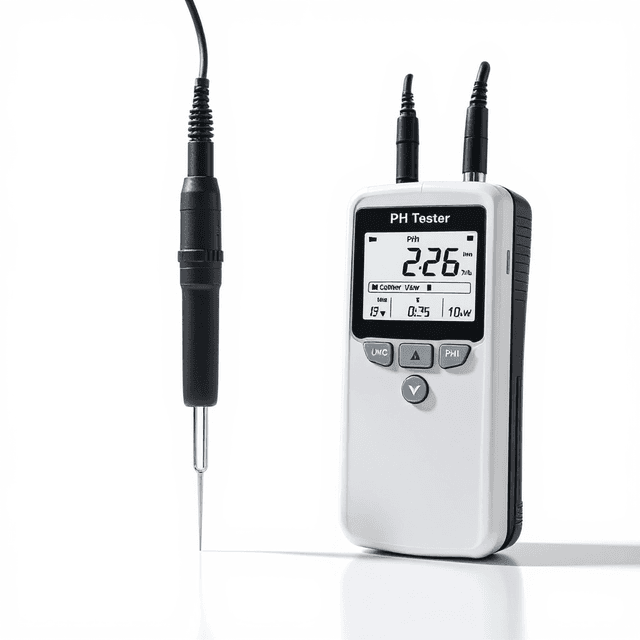
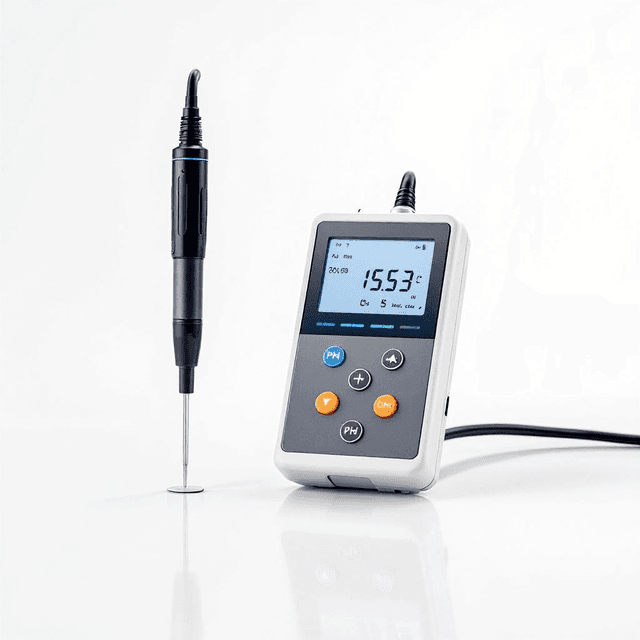
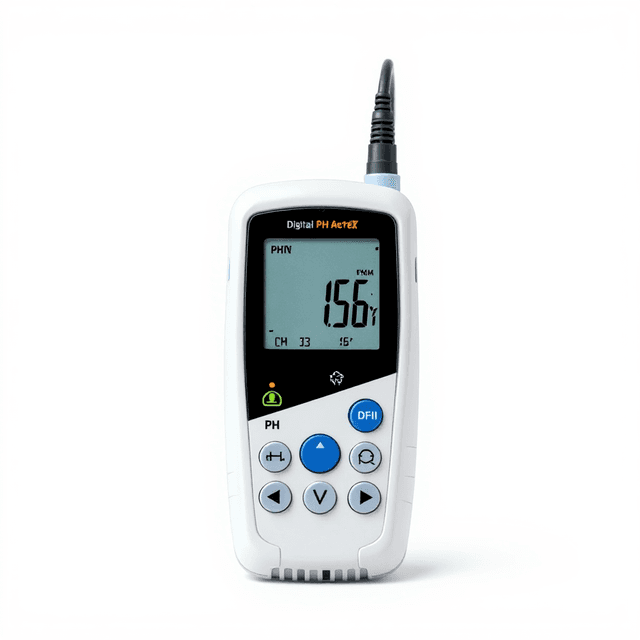
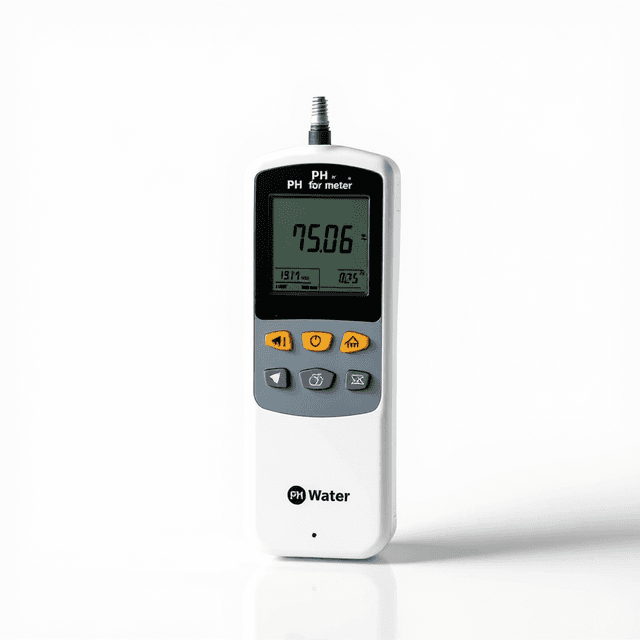
General Digital pH Meter
Portable digital pH meter with 0.1 pH resolution, automatic temperature compensation, and large LCD display for laboratory and field pH measurements from 0.00-14.00 pH.

Louise Corscadden, PhD
Director of Science · ConductScience
Ask Louise about General Digital pH Meter fit, setup, configuration, or quote prep.
Already working with us? Sign in to connect this with My Scientist.
Key Specifications
Full details →- Model fit
- Configured during quote
- SKU family
- CS-LH-PH-108Â
- Shipping box
- 7.09 x 2.56 x 1.3 cm
- Ordering
- Online checkout and quote request available
- Category
- pH Meters
- Build notes
- Confirm accessories, station layout, and support needs before purchase
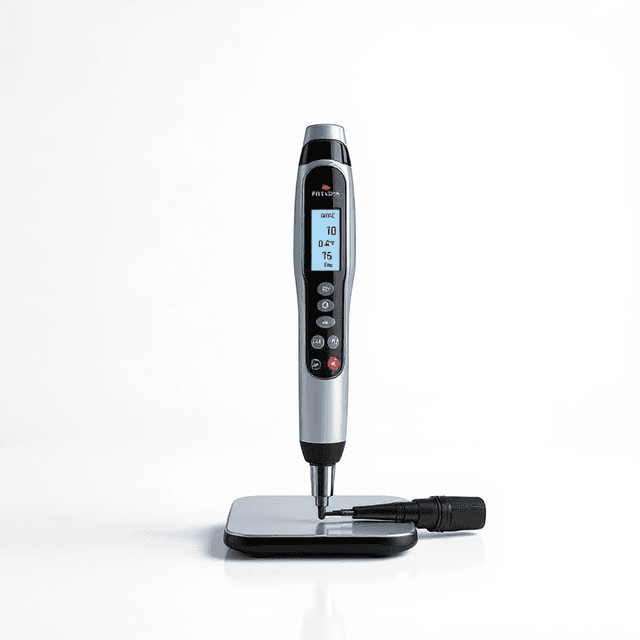
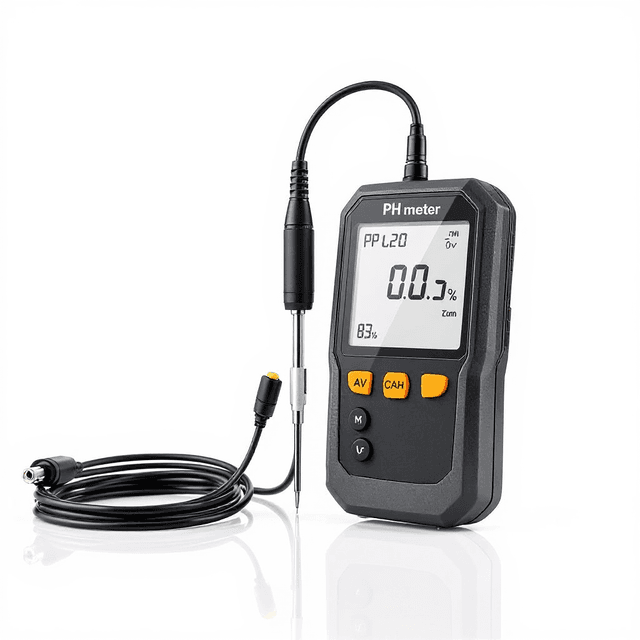
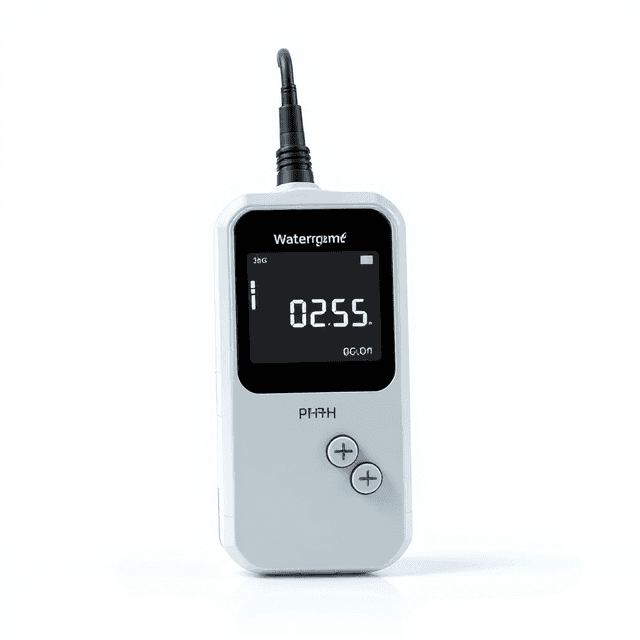
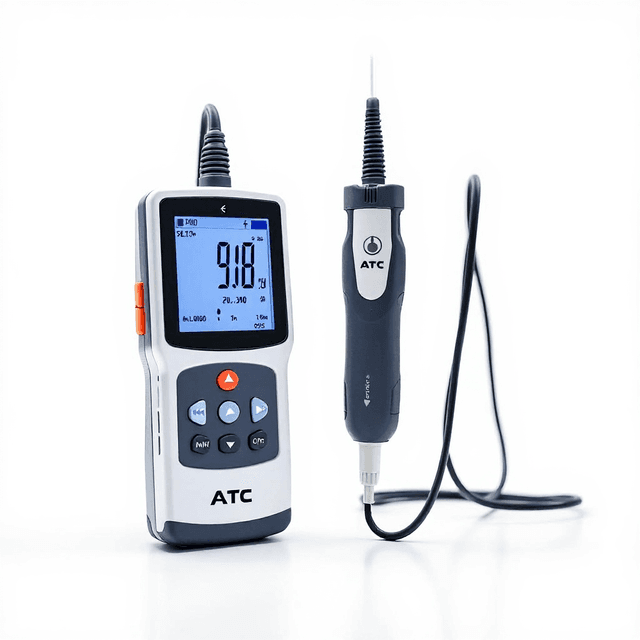
The General Digital pH Meter (Model pH-108) is a portable potentiometric pH measurement instrument designed for laboratory and industrial applications. This pen-style meter employs a glass electrode system with automatic temperature compensation (ATC) to provide pH measurements across the full 0.00-14.00 pH range with 0.1 pH resolution and ±0.1 pH accuracy. The instrument features a large LCD display for clear readout and operates on replaceable alkaline batteries, making it suitable for both benchtop and field measurements.
The compact form factor (180×65×33mm, 50g) and single-point calibration system enable rapid pH assessment in diverse research environments. The integrated temperature compensation function (0-50°C) ensures measurement reliability across typical laboratory temperature ranges, while the digital readout eliminates subjective interpretation errors associated with colorimetric pH indicators.
How It Works
The pH meter operates on potentiometric principles, measuring the electrical potential difference between a glass electrode and a reference electrode when immersed in solution. The glass electrode contains a pH-sensitive membrane that develops a voltage proportional to the hydrogen ion activity in the test solution, following the Nernst equation relationship of approximately 59.2 mV per pH unit at 25°C.
The integrated automatic temperature compensation (ATC) system uses a temperature sensor to correct for the temperature-dependent changes in electrode response and solution properties. The microprocessor calculates the temperature-corrected pH value and displays the result on the LCD screen with 0.1 pH resolution. Single-point calibration using standard buffer solutions establishes the electrode response characteristics before measurement.
Features & Benefits
Product name
- Ph pen tester
Measuring range
- 0.00~14.00pH
Research Domain
- Analytical Chemistry
- Environmental Monitoring
- Food Science
- Industrial Hygiene
- Microbiology
- Pharmaceutical QC
Calibration
- 1point
Working temperature
- 0~50°C, Râ¤H95%
Feature
- Small size;Portable;Economical ;With ATC
Model
- pH-108Â
ATC
- 0-50â
Working voltage
- 3*1.5V(AG-13 type button cell battery)
Automation Level
- manual
Brand
- ConductScience
Accuracy
- ±0.1pH
Power/Voltage
- 4Ã1.5v alkaline
Dimensions
- 180*65*33mm
Weight
- 50g
Shipping weight
- 0.11 lb
Shipping box
- L: 7.09 cm
- W: 2.56 cm
- H: 1.3 cm
| Feature | This Product | Typical Alternative | Advantage |
|---|---|---|---|
| pH Measurement Range | 0.00-14.00 pH (complete scale) | Many portable meters offer similar full-scale range | Covers all pH values encountered in research applications without range limitations. |
| Measurement Accuracy | ±0.1 pH | Entry-level models often provide ±0.2 pH accuracy | Improved precision for quality control and analytical applications requiring better than ±0.2 pH specification. |
| Temperature Compensation | Automatic ATC (0-50°C) | Basic models may lack ATC or have manual compensation | Eliminates user error in temperature corrections and speeds measurement workflow. |
| Calibration System | Single-point calibration | Some meters require multi-point calibration procedures | Simplifies setup for routine measurements while maintaining traceability to standards. |
| Display System | Large LCD digital readout | Basic models may have smaller displays or analog scales | Reduces reading errors and enables clear measurement documentation in various lighting conditions. |
| Physical Design | Pen-style form factor (50g, 180×65×33mm) | Varies by model - some bulkier or heavier designs | Enables single-handed operation and measurements in confined spaces or small sample volumes. |
This pH meter combines full-scale measurement capability with automatic temperature compensation in a compact, portable design. The ±0.1 pH accuracy and single-point calibration system provide sufficient precision for routine laboratory and field applications while maintaining ease of use.
Practical Tips
Verify calibration daily or after extended storage using fresh pH 7.00 buffer solution.
Why: Electrode drift over time can compromise measurement accuracy.
Store the electrode with the protective cap in place and avoid allowing the electrode to dry completely.
Why: Electrode dehydration reduces sensitivity and can cause permanent damage to the glass membrane.
Allow the electrode to equilibrate in sample for 30-60 seconds before recording the pH reading.
Why: Electrode response time varies with temperature and ionic strength, requiring stabilization for accurate measurements.
If readings appear sluggish or unstable, clean the electrode with dilute HCl followed by distilled water rinse.
Why: Protein deposits or coating on the electrode surface can slow response time and reduce accuracy.
Record sample temperature along with pH readings for documentation and quality control purposes.
Why: Temperature affects solution pH independently of electrode compensation, providing important analytical context.
Avoid immersing the entire meter body in solution - only the electrode tip should contact samples.
Why: Liquid ingress into the electronics compartment can damage the instrument and create electrical hazards.
Use separate beakers for calibration and sample measurements to prevent cross-contamination.
Why: Buffer contamination can shift calibration points and compromise subsequent measurement accuracy.
Replace batteries when display becomes dim or readings become erratic.
Why: Low battery voltage affects analog-to-digital conversion accuracy and electrode amplifier performance.
Setup Guide
What’s in the Box
- pH-108 digital pH meter (typical)
- Protective electrode cap (typical)
- AG-13 button cell batteries (3 units) (typical)
- User manual and calibration instructions (typical)
- pH 7.00 calibration buffer solution (typical)
Warranty
ConductScience provides a standard one-year manufacturer warranty covering defects in materials and workmanship, with technical support for calibration and operation questions.
Compliance
References
Background reading relevant to this product:
What calibration procedure is required before measurements?
Single-point calibration using pH 7.00 buffer solution. Immerse the electrode in buffer, adjust the calibration control until display reads 7.00 pH, then proceed with sample measurements.
How does the automatic temperature compensation function?
The ATC system operates from 0-50°C, automatically correcting pH readings for temperature-dependent electrode response and solution property changes without manual temperature input.
What is the expected electrode lifespan and maintenance?
Glass electrode lifespan depends on usage and storage conditions. Regular calibration verification, proper storage with electrode cap, and avoiding extreme pH solutions will maximize electrode life.
Can this meter be used for continuous monitoring applications?
This is a handheld measurement device designed for spot measurements rather than continuous monitoring. Battery life and manual operation make it unsuitable for unattended logging applications.
What sample volume is required for accurate measurements?
The electrode must be completely immersed in sample. Minimum volume depends on container geometry but typically requires 5-10 mL to ensure electrode junction is submerged.
How does measurement accuracy compare to laboratory-grade pH meters?
±0.1 pH accuracy is suitable for routine measurements but may be insufficient for precise analytical work requiring ±0.01 pH or better accuracy available from benchtop laboratory pH meters.
Are there any sample types that could damage the electrode?
Avoid samples containing hydrofluoric acid (attacks glass), strong alkalis >pH 12 (prolonged exposure), or viscous samples that could clog the reference junction.
What data output or recording capabilities are available?
This meter provides LCD display readout only. Data recording requires manual transcription as no digital output ports or data logging functions are specified.
Have a question about this product?
Have a question? Just ask.
Send it over and we'll email you a personalized answer — no call, no scheduling.
Prefer to talk it through?