Portable Digital pH Test Meter
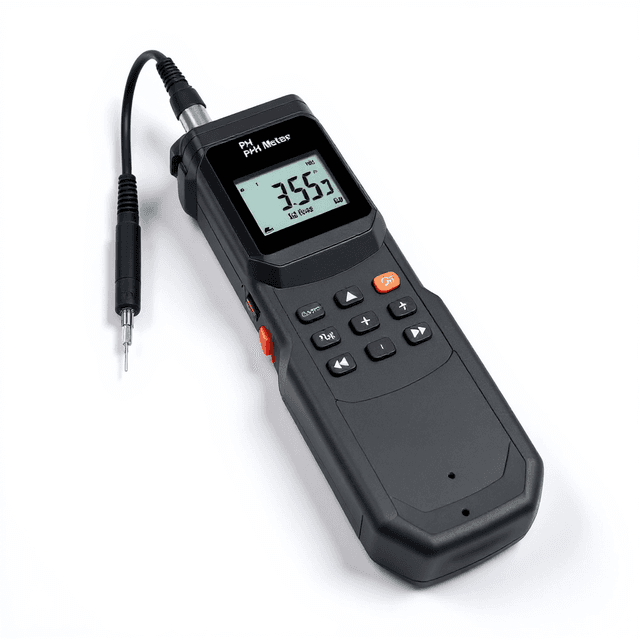
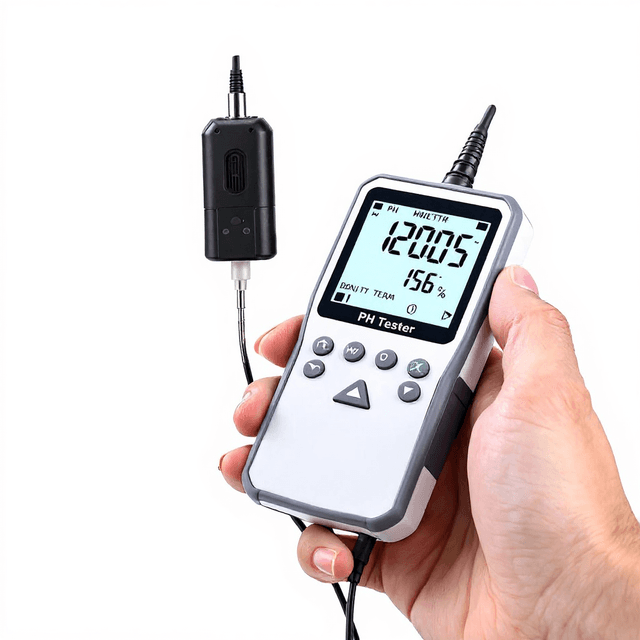
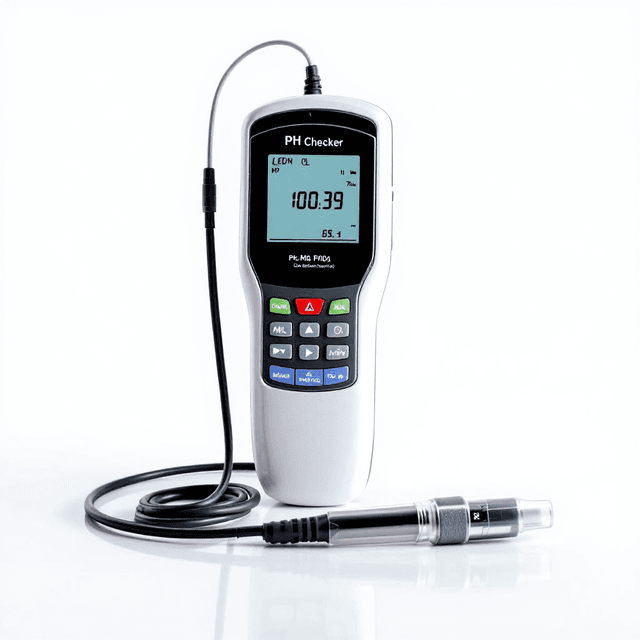
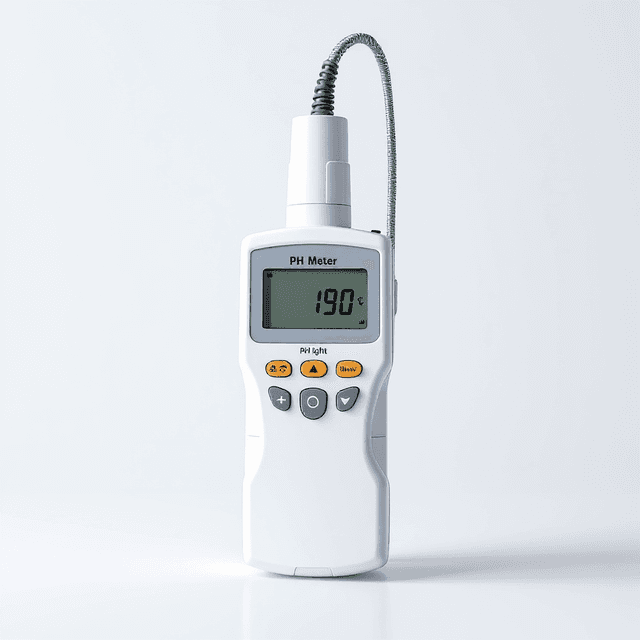
Portable potentiometric pH meter with 32-bit microprocessor, automatic temperature compensation (0-60°C), and IP65 protection rating for field and laboratory applications.

Louise Corscadden, PhD
Director of Science · ConductScience
Ask Louise about Portable Digital pH Test Meter fit, setup, configuration, or quote prep.
Already working with us? Sign in to connect this with My Scientist.
Key Specifications
Full details →- Model fit
- Configured during quote
- SKU family
- CS-LH-PH025
- Shipping box
- 16.5 x 7.5 x 5.1 cm
- Ordering
- Online checkout and quote request available
- Category
- pH Meters
- Build notes
- Confirm accessories, station layout, and support needs before purchase
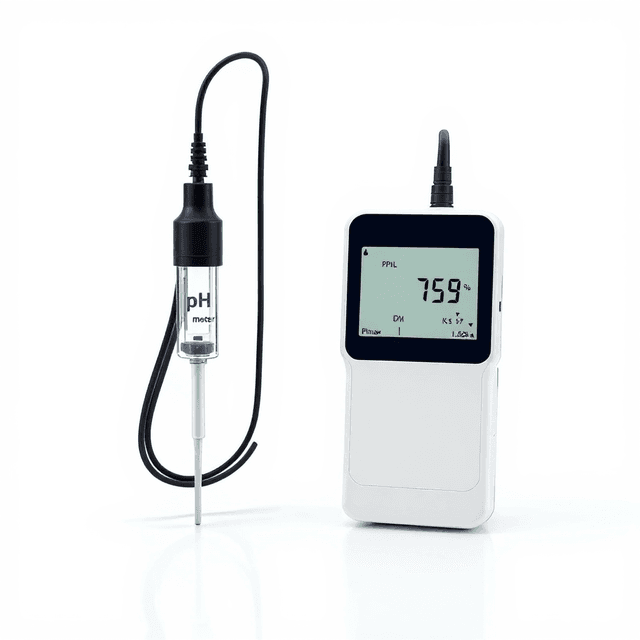
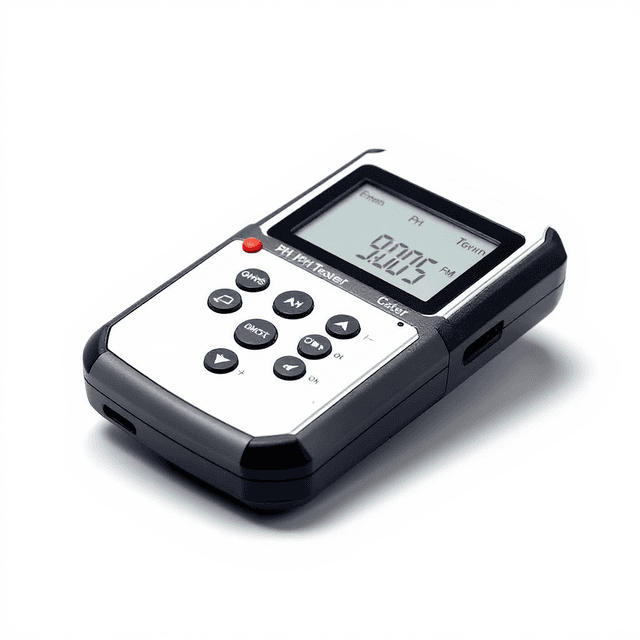
The Portable Digital pH Test Meter CS-LH-PH025 is a compact potentiometric instrument designed for pH measurement in aqueous solutions across laboratory, field, and industrial applications. The meter employs a 32-bit microprocessor with automatic temperature compensation across the range of 0.0-60.0°C (32-140°F), ensuring measurement accuracy across varying environmental conditions.
The instrument features a wide-screen LCD display with operation prompts, polymer lithium battery power supply with charging and power failure protection, and IP65 protection rating for use in demanding environments. The compact form factor (165 x 75 x 51mm, 270g without electrodes) facilitates portable measurements while maintaining laboratory-grade functionality for pH analysis workflows.
How It Works
The pH meter operates on potentiometric principles, measuring the electrical potential difference between a pH-sensitive glass electrode and a reference electrode when immersed in solution. The glass electrode develops a potential proportional to the hydrogen ion activity in the sample, following the Nernst equation relationship of approximately 59.16 mV per pH unit at 25°C.
The integrated 32-bit microprocessor continuously processes electrode signals and applies automatic temperature compensation algorithms to correct for the temperature dependence of both the Nernst slope and electrode response. The system calculates pH values in real-time and displays results on the LCD screen with operational prompts to guide measurement procedures.
Temperature compensation utilizes a built-in temperature sensor that monitors solution temperature across the 0.0-60.0°C range, automatically adjusting pH calculations to provide accurate readings regardless of sample temperature variations during field or laboratory measurements.
Features & Benefits
mV
- â¤Â±0.1%F.S
Temp
- â¤Â±0.5°C
Research Domain
- Analytical Chemistry
- Environmental Monitoring
- Food Science
- Industrial Hygiene
- Microbiology
- Pharmaceutical QC
Measuring range
- pH
pH temperature automatic compensation range
- 0.0-60.0âï¼32-140âï¼
Protection grade
- IP65
Automation Level
- manual
Brand
- ConductScience
Accuracy
- pH
Power/Voltage
- Polymer lithium battery
Size
- 165 x75x51mm
Weight
- 270g(without electrodes)
Shipping weight
- 0.29 lb
Shipping box
- L: 16.5 cm
- W: 7.5 cm
- H: 5.1 cm
| Feature | This Product | Typical Alternative | Advantage |
|---|---|---|---|
| Temperature Compensation Range | 0.0-60.0°C (32-140°F) | Basic portable meters often provide 0-50°C compensation | Extended temperature range accommodates field measurements in diverse environmental conditions and heated laboratory applications. |
| Processor Technology | 32-bit microprocessor | Entry-level models use simpler processing circuits | Enhanced signal processing provides more stable readings and sophisticated temperature compensation algorithms. |
| Protection Rating | IP65 | Many portable units offer IP54 or lower protection | Superior dust and water protection enables use in challenging field environments and wet laboratory conditions. |
| Display Interface | Wide-screen LCD with operation prompts | Basic models have simple numeric displays | Guided operation reduces measurement errors and improves workflow efficiency for operators at all experience levels. |
| Power Management | Polymer lithium battery with charging protection | Standard alkaline or basic rechargeable systems | Advanced battery technology provides longer field operation time with protection against overcharging and power interruption. |
The meter combines laboratory-grade measurement capabilities with field-portable design, featuring extended temperature compensation, IP65 protection, and advanced microprocessor technology. The instrument bridges the gap between basic portable testers and benchtop laboratory systems.
Practical Tips
Perform two-point calibration using pH 7.0 and either pH 4.0 or pH 10.0 buffers depending on expected sample range.
Why: Two-point calibration provides optimal accuracy across the measurement range while minimizing calibration time.
Store electrode in pH 4.0 buffer solution or 3M KCl when not in use, never in distilled water.
Why: Proper storage solution maintains electrode hydration and prevents reference junction clogging that degrades response time.
Allow electrode to equilibrate in sample for 30-60 seconds before recording readings, especially with temperature changes.
Why: Thermal equilibration ensures accurate temperature compensation and stable electrode potential development.
If readings drift or respond slowly, clean electrode with mild detergent solution and condition in fresh buffer.
Why: Electrode fouling from proteins or organic compounds creates measurement instability that cleaning resolves.
Record temperature alongside pH measurements for documentation and verification of compensation accuracy.
Why: Temperature data provides quality assurance for automatic compensation and enables manual verification if needed.
Rinse electrode thoroughly when moving between hazardous and non-hazardous samples to prevent cross-contamination.
Why: Proper rinsing protocols prevent chemical carryover that could affect subsequent measurements or create safety hazards.
Replace calibration buffers monthly or when contamination is suspected to maintain calibration accuracy.
Why: Fresh buffer solutions ensure calibration standards remain within specification limits for accurate instrument setup.
Avoid air bubbles around the electrode tip by gentle agitation or tapping the electrode against the container wall.
Why: Air bubbles create measurement artifacts by interrupting electrical contact between electrode and sample solution.
Setup Guide
What’s in the Box
- Portable pH meter main unit (typical)
- pH electrode with protective cap (typical)
- Temperature probe or integrated sensor (typical)
- USB charging cable (typical)
- Calibration buffer solutions (typical)
- Protective carrying case (typical)
- User manual and calibration certificate (typical)
Warranty
ConductScience provides a standard one-year manufacturer warranty covering defects in materials and workmanship, with technical support for calibration procedures and troubleshooting assistance.
Compliance
References
Background reading relevant to this product:
What calibration frequency is recommended for maintaining measurement accuracy?
Daily calibration is recommended for critical measurements, with weekly calibration acceptable for routine applications. Always recalibrate after electrode maintenance or when shifting between sample types with significantly different pH ranges.
How does temperature compensation affect measurement accuracy across the specified range?
The automatic temperature compensation system operates across 0.0-60.0°C, applying Nernst equation corrections for temperature-dependent electrode response. Accuracy specifications should be verified from the product datasheet for specific temperature conditions.
What electrode maintenance procedures are required for optimal performance?
Rinse electrode with distilled water between measurements, store in appropriate pH 4 buffer or 3M KCl solution, and avoid prolonged exposure to extreme pH solutions or organic solvents that may damage the glass membrane.
Can the meter interface with laboratory data management systems?
Data connectivity options should be confirmed from the product specifications. The instrument may include USB or wireless connectivity for data transfer to laboratory information management systems.
What is the expected electrode lifespan under typical laboratory use?
pH electrode lifetime typically ranges from 6-18 months depending on sample types, storage conditions, and maintenance practices. Monitor electrode response time and calibration drift as indicators for replacement.
How does this compare to benchtop pH meters for accuracy and functionality?
Portable meters prioritize convenience and field use over the precision of laboratory benchtop systems. This unit offers laboratory-grade automatic temperature compensation in a compact form suitable for both field and benchtop applications.
Have a question about this product?
Have a question? Just ask.
Send it over and we'll email you a personalized answer — no call, no scheduling.
Prefer to talk it through?
Accessories
Enhance your setup with compatible accessories
Frequently Bought Together