Fisher pH Meter
Portable digital pH meter with 0.01 pH resolution, automatic temperature compensation, and backlit display for laboratory and field pH measurements from 0.00-14.00.

Louise Corscadden, PhD
Director of Science · ConductScience
Ask Louise about Fisher pH Meter fit, setup, configuration, or quote prep.
Already working with us? Sign in to connect this with My Scientist.
Key Specifications
Full details →- Model fit
- Configured during quote
- SKU family
- CS-LH-PH-2011
- Shipping box
- 5.98 x 1.14 x 0.59 cm
- Ordering
- Online checkout and quote request available
- Category
- pH Meters
- Build notes
- Confirm accessories, station layout, and support needs before purchase
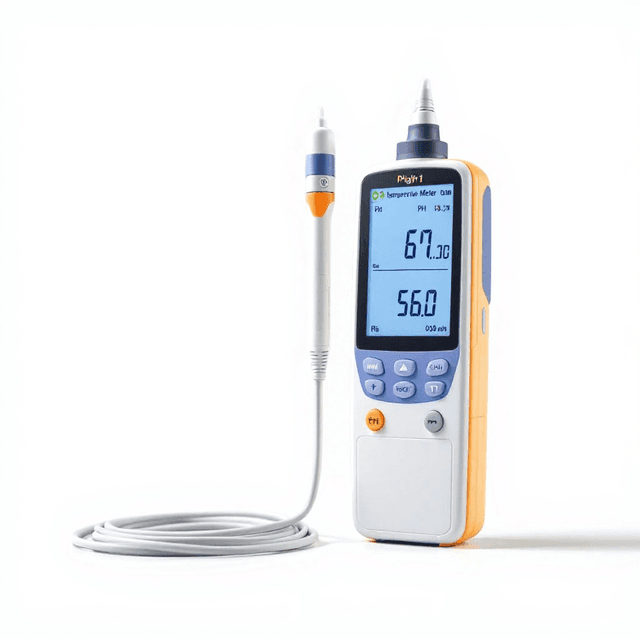
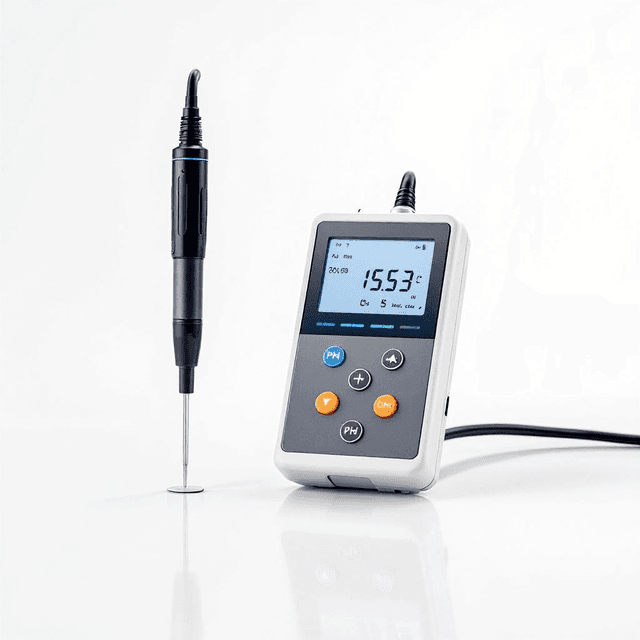
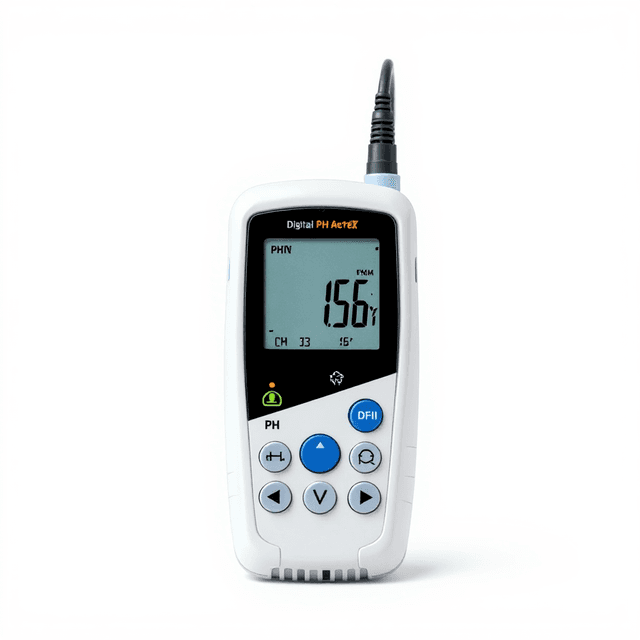
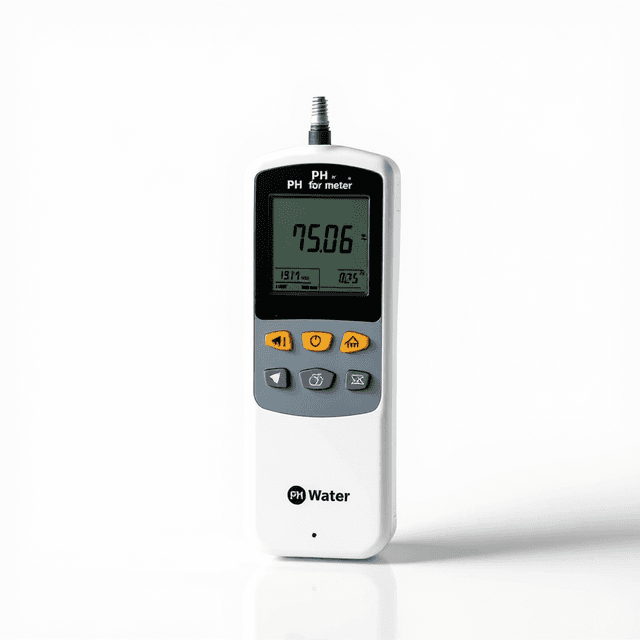
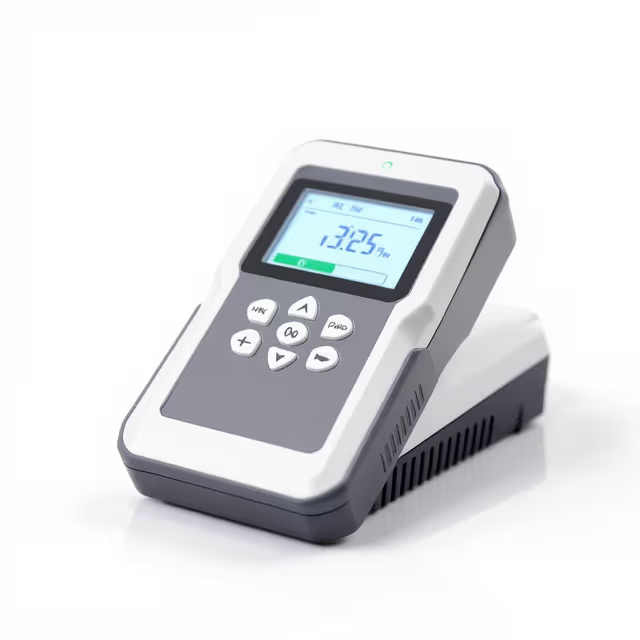
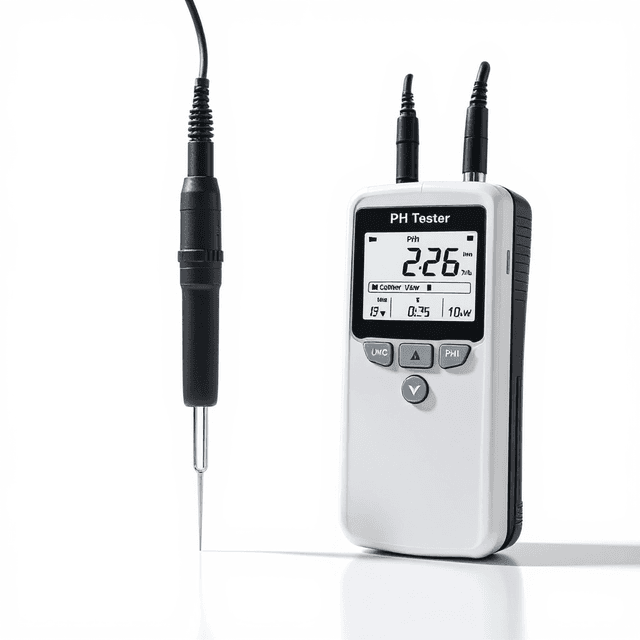
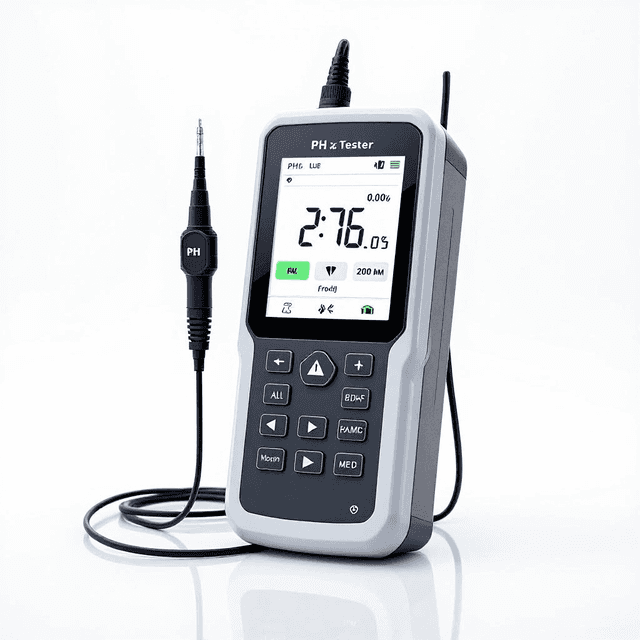
The Fisher pH Meter (Model pH-2011) is a portable digital pH measurement instrument designed for laboratory and field applications requiring accurate pH determination. This handheld meter provides pH measurements across the full 0.00-14.00 range with 0.01 pH resolution and ±0.1 pH accuracy, incorporating automatic temperature compensation (ATC) for reliable readings. The compact design (152×29×15mm, 50g) features a backlit screen for visibility in various lighting conditions and operates on standard alkaline batteries for extended field use.
The instrument employs potentiometric measurement principles using a glass electrode system for direct pH determination in aqueous solutions. Single-point calibration simplifies setup procedures while maintaining measurement reliability for routine analytical work. The meter's portable configuration makes it suitable for applications ranging from environmental water quality assessment to laboratory sample analysis where immediate pH determination is required.
How It Works
The pH meter operates on potentiometric principles, measuring the electrical potential difference between a glass electrode and a reference electrode when immersed in solution. The glass electrode contains a pH-sensitive glass membrane that develops a voltage proportional to the hydrogen ion activity in the sample. This potential difference, typically following the Nernst equation relationship, is converted to pH units through internal calibration algorithms.
The automatic temperature compensation (ATC) feature adjusts readings for temperature-dependent changes in electrode response and solution properties. The single-point calibration system allows users to standardize the meter using a known buffer solution, establishing the reference point for subsequent measurements. The digital display converts the analog voltage signals to pH values with 0.01 resolution across the full measurement range.
Features & Benefits
Model
- pH-2011
Product name
- PH Meter
Measuring range
- 0.00~14.00pH
Calibration
- 1point
Feature
- Backlit screen;Small size;Portable ;Economical ;High accuracy ;With ATC
1
- 0.1 N HCl, hydrochloric acid (1.1)
2
- Lemon juice. Vinegar (2.4-3.4)
3
- wine (3.5-3.7)
4
- Orange juice. Apple juice (3.8). Beer. Tomatoes.
Automation Level
- manual
Brand
- ConductScience
Accuracy
- ±0.1pH
Power/Voltage
- 4Ã1.5v alkaline
Dimensions
- 152Ã29Ã15mm
Weight
- 50g
Research Domain
- Analytical Chemistry
- Environmental Monitoring
- Food Science
- Industrial Hygiene
- Microbiology
- Pharmaceutical QC
Shipping weight
- 0.07 lb
Shipping box
- L: 5.98 cm
- W: 1.14 cm
- H: 0.59 cm
| Feature | This Product | Typical Alternative | Advantage |
|---|---|---|---|
| pH Resolution | 0.01 pH | Entry-level models often provide 0.1 pH resolution | Higher resolution enables detection of small pH changes critical for precise analytical work and quality control applications. |
| Measurement Range | 0.00-14.00 pH | Basic meters may have limited ranges | Full pH scale coverage eliminates range limitations when measuring diverse sample types from acidic to basic solutions. |
| Accuracy Specification | ±0.1 pH | Lower-cost models typically offer ±0.2 pH accuracy | Higher accuracy specification supports applications with strict measurement requirements and quality standards. |
| Temperature Compensation | Automatic temperature compensation included | Manual compensation or no compensation on basic models | Automatic adjustment reduces measurement errors from temperature variations, improving data quality without additional user steps. |
| Display Features | Backlit screen for visibility | Standard displays without backlighting | Enhanced visibility enables accurate reading in field conditions and laboratory environments with variable lighting. |
| Portability | 50g weight, 152×29×15mm dimensions | Larger handheld meters or bench units | Compact design facilitates transport for field measurements while maintaining full functionality for laboratory use. |
The Fisher pH Meter provides laboratory-grade accuracy in a compact, field-portable design with automatic temperature compensation and high-resolution measurement capability. The combination of ±0.1 pH accuracy, 0.01 resolution, and backlit display addresses requirements for both laboratory and field pH determination applications.
Practical Tips
Calibrate the meter with a buffer solution close to your expected sample pH range for optimal measurement accuracy.
Why: Calibration near the measurement range minimizes interpolation errors and improves overall accuracy.
Store the electrode in appropriate storage solution when not in use and replace when response becomes sluggish.
Why: Proper storage maintains electrode hydration and extends functional lifetime.
Allow readings to stabilize for 30-60 seconds before recording, especially with temperature compensation active.
Why: Stabilization time ensures accurate temperature compensation and eliminates transient electrode responses.
Rinse electrode thoroughly with distilled water between samples and gently dry with filter paper.
Why: Preventing cross-contamination between samples maintains measurement accuracy and prevents electrode fouling.
If readings drift or become unstable, check electrode condition and recalibrate with fresh buffer solution.
Why: Electrode aging and buffer degradation are common causes of measurement drift and poor stability.
Avoid immersing the meter body in solution and ensure only the electrode contacts the sample.
Why: Water damage to electronic components can cause meter malfunction and safety hazards.
Record sample temperature alongside pH measurements for complete documentation.
Why: Temperature affects solution chemistry and provides context for pH interpretation in analytical reports.
Use fresh buffer solutions and replace regularly to maintain calibration accuracy.
Why: Buffer solutions degrade over time and exposure to air, affecting calibration reliability.
Setup Guide
What’s in the Box
- pH meter main unit
- pH electrode
- Four 1.5V alkaline batteries
- User manual
- Carrying case (typical)
- Calibration certificate (typical)
Warranty
ConductScience provides a standard one-year manufacturer warranty covering defects in materials and workmanship, with technical support available for troubleshooting and application guidance.
Compliance
References
Background reading relevant to this product:
What calibration procedure is required for accurate measurements?
The meter uses single-point calibration with a known buffer solution. Calibrate using a buffer close to your expected measurement range for optimal accuracy.
How does the automatic temperature compensation function?
The ATC feature automatically adjusts pH readings for temperature-dependent changes in electrode response and solution properties, improving measurement accuracy across varying sample temperatures.
What maintenance is required for the pH electrode?
Rinse electrode with distilled water between samples, dry gently with filter paper, and store according to manufacturer recommendations to maintain electrode performance and longevity.
What is the expected battery life for field use?
Battery life depends on usage frequency and backlight usage. The four 1.5V alkaline batteries provide extended operation for typical field measurement applications.
Can this meter be used for continuous monitoring applications?
This is a handheld portable meter designed for spot measurements rather than continuous monitoring. For continuous applications, consider dedicated process pH monitoring systems.
What types of samples are suitable for measurement?
The meter is designed for aqueous solutions across the full pH range. Avoid samples with high ionic strength, extreme temperatures, or aggressive chemicals that may damage the electrode.
How do I verify measurement accuracy over time?
Regularly check readings against certified buffer solutions and recalibrate as needed. Replace electrode when response becomes sluggish or readings drift outside acceptable limits.
Have a question about this product?
Have a question? Just ask.
Send it over and we'll email you a personalized answer — no call, no scheduling.
Prefer to talk it through?
Accessories
Enhance your setup with compatible accessories