Digital pH And Temperature Meter
Handheld waterproof pH and temperature meter with glass electrode potentiometry, automatic temperature compensation (0-50°C), and two-point calibration for field and laboratory applications.

Louise Corscadden, PhD
Director of Science · ConductScience
Ask Louise about Digital pH And Temperature Meter fit, setup, configuration, or quote prep.
Already working with us? Sign in to connect this with My Scientist.
Key Specifications
Full details →- Model fit
- Configured during quote
- SKU family
- CS-LH-PH-618
- Shipping box
- 20.0 x 10.0 x 5.0 cm
- Ordering
- Online checkout and quote request available
- Category
- pH Meters
- Build notes
- Confirm accessories, station layout, and support needs before purchase
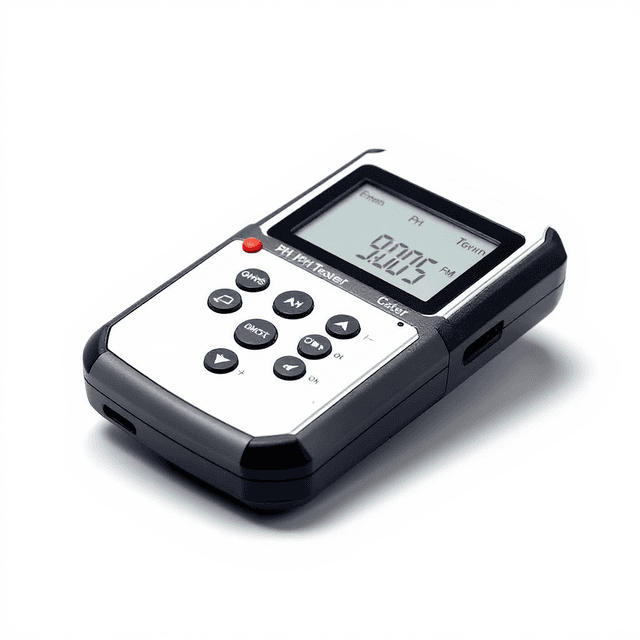
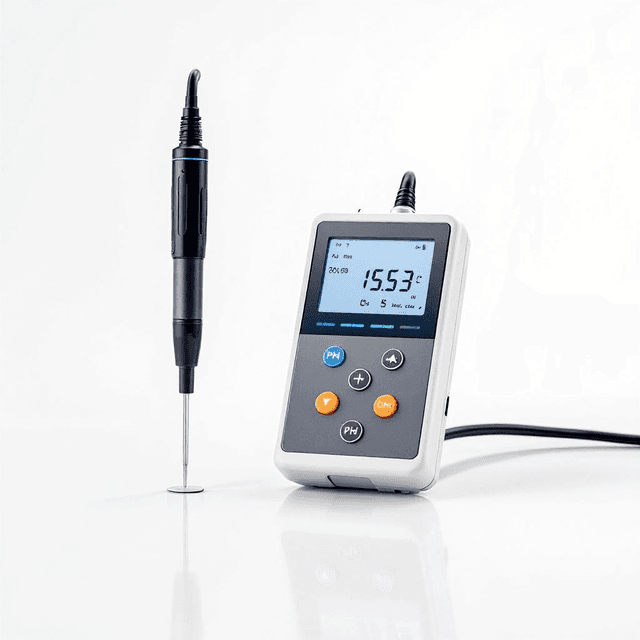
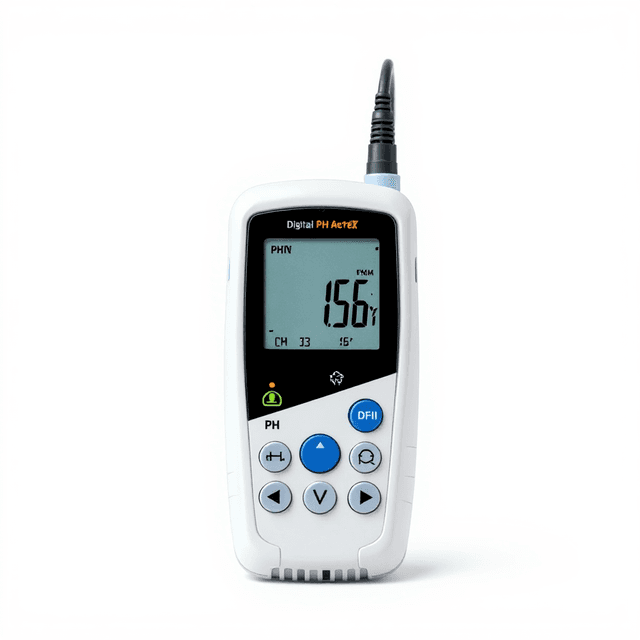
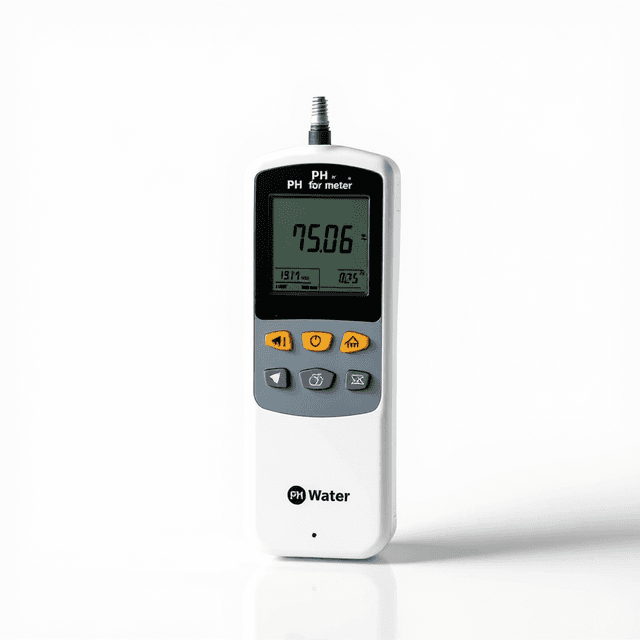
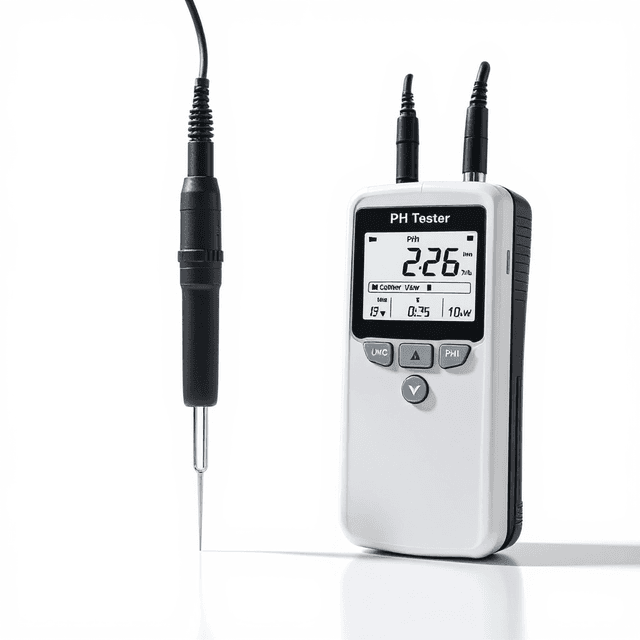
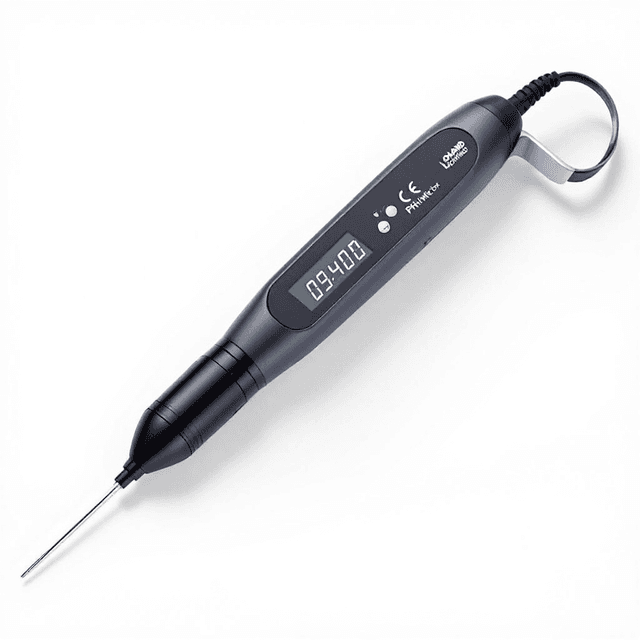
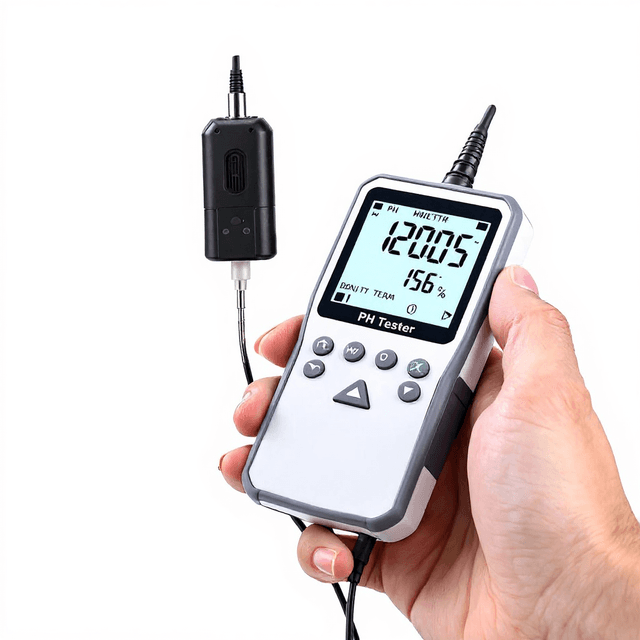
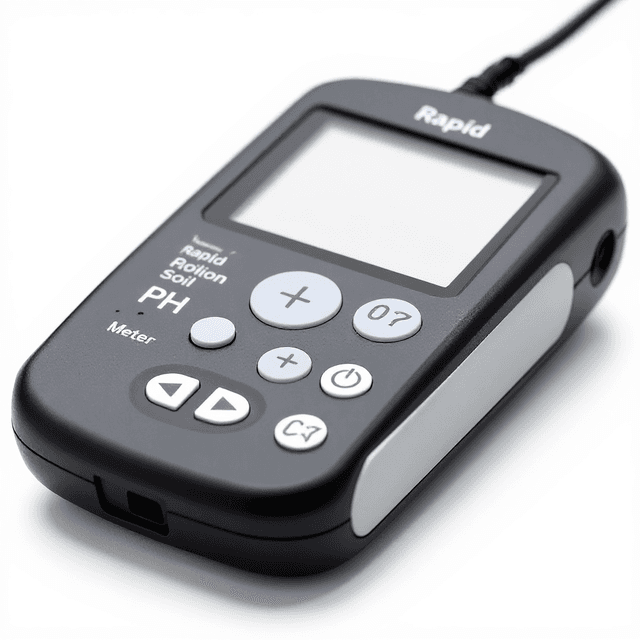
The Digital pH and Temperature Meter (Model pH-618) provides simultaneous pH and temperature measurement for aqueous solutions using glass electrode potentiometry with automatic temperature compensation (ATC). The instrument features a waterproof design with replaceable pH electrode capability, enabling deployment in field environments and wet laboratory conditions. Two-point calibration using standard buffer solutions ensures measurement accuracy across the operational pH range.
The meter incorporates automatic temperature compensation from 0-50°C, correcting for the Nernstian slope variations that occur with temperature changes in glass electrode systems. The compact handheld design operates on 4×1.5V AG-13 button cell batteries and includes automatic shut-off functionality to preserve battery life during extended field deployments.
How It Works
The pH meter operates on the principle of potentiometry using a glass electrode system. The glass electrode contains a pH-sensitive glass membrane that develops an electrical potential proportional to the hydrogen ion activity in the test solution. This potential difference, measured against a reference electrode, follows the Nernst equation relationship where a 59.16 mV change corresponds to one pH unit at 25°C.
The automatic temperature compensation (ATC) system continuously monitors solution temperature and applies mathematical corrections to account for the temperature dependence of both the Nernstian slope and the pH of the internal filling solution. The glass electrode membrane exhibits non-linear temperature characteristics, and the ATC circuitry corrects for these variations to maintain measurement accuracy across the 0-50°C operational range.
Two-point calibration using certified pH buffer solutions (typically pH 4.01 and pH 7.00, or pH 7.00 and pH 10.01) establishes the electrode slope and offset parameters. The microprocessor calculates the electrode response characteristics and applies these parameters to subsequent measurements, displaying both pH value and temperature simultaneously.
Features & Benefits
Model
- pH-618
Model No.
- Test item
hydroponic pH testerPH-618
- pH
Temp
- 0-50ºC(32-122ºF)
Automation Level
- semi-automated
Brand
- ConductScience
Research Domain
- Analytical Chemistry
- Environmental Monitoring
- Food Science
- Industrial Hygiene
- Materials Science
- Microbiology
Shipping weight
- 0.2 lb
Shipping box
- L: 20.0 cm
- W: 10.0 cm
- H: 5.0 cm
| Feature | This Product | Typical Alternative | Advantage |
|---|---|---|---|
| Temperature compensation range | 0-50°C automatic temperature compensation | Basic models often limited to narrower temperature ranges | Enables accurate measurements across wider environmental temperature variations encountered in field sampling. |
| Electrode design | Replaceable pH electrode system | Many portable meters use fixed electrodes | Reduces long-term costs and allows electrode optimization for specific sample types or replacement when damaged. |
| Housing protection | Waterproof construction | Standard models may lack environmental sealing | Permits use in wet laboratory conditions and outdoor sampling without risk of moisture damage to electronics. |
| Calibration system | Two-point calibration capability | Entry-level meters may offer single-point calibration only | Provides more accurate slope determination for improved measurement precision across the full pH range. |
| Power source | Four AG-13 button cell batteries | Some units require larger battery packs or AC adapters | Compact power solution maintains portable form factor while providing sufficient operating time for field measurements. |
| Display information | Simultaneous pH and temperature display | Basic units may show pH only | Allows immediate assessment of both critical parameters without switching display modes or using separate instruments. |
The pH-618 combines waterproof portability with replaceable electrode design and wide-range automatic temperature compensation. The two-point calibration system and simultaneous dual-parameter display provide laboratory-grade functionality in a field-deployable package.
Practical Tips
Always calibrate with buffers at similar temperature to your samples and use fresh buffer solutions replaced monthly.
Why: Temperature differences between calibration and measurement introduce errors that ATC cannot fully correct.
Store the electrode in appropriate storage solution (typically 3M KCl) when not in use for extended periods.
Why: Proper storage maintains electrode responsiveness and prevents glass membrane dehydration.
Rinse the electrode with distilled water and gently blot dry between samples to prevent cross-contamination.
Why: Sample carryover can introduce systematic errors, especially when measuring samples with very different ionic strengths.
If readings are sluggish or unstable, soak the electrode in dilute HCl (0.1M) for 10 minutes followed by buffer soaking.
Why: Protein buildup or precipitates on the glass membrane can slow electrode response and reduce accuracy.
Allow sufficient equilibration time (30-60 seconds) in each sample before recording measurements.
Why: Glass electrodes require time to establish equilibrium potential, and rushed measurements lead to drift and poor reproducibility.
Check waterproof seals before field use and avoid complete submersion beyond the specified depth rating.
Why: Compromised seals can lead to water intrusion and permanent damage to internal electronics.
Perform slope checks using a third buffer solution after two-point calibration to verify electrode performance.
Why: Deteriorating electrodes may calibrate properly at two points but show non-linear response between them.
Record both pH and temperature values for each measurement to document sample conditions.
Why: Temperature data provides context for interpreting pH measurements and enables post-measurement corrections if needed.
Setup Guide
What’s in the Box
- Digital pH and Temperature Meter (Model pH-618)
- Glass pH electrode with cable
- Electrode storage cap
- Four AG-13 button cell batteries
- User manual with calibration procedures
- Carrying case (typical)
- Calibration certificate (typical)
Warranty
ConductScience provides a one-year manufacturer warranty covering defects in materials and workmanship, with technical support for calibration procedures and electrode maintenance.
Compliance
References
Background reading relevant to this product:
What is the accuracy and resolution of pH measurements?
Consult the product datasheet for specific accuracy and resolution specifications. The meter uses two-point calibration with standard buffers to establish measurement parameters.
How often should the pH electrode be replaced?
Electrode lifespan depends on usage frequency and sample types. Glass electrodes typically require replacement when response becomes sluggish, calibration drift increases, or physical damage occurs to the glass membrane.
Can this meter measure pH in non-aqueous solutions?
The glass electrode is designed for aqueous solutions. Measurement in organic solvents or mixed solvent systems may require specialized electrode types and calibration procedures.
What is the temperature coefficient of the electrode system?
The ATC system compensates for temperature effects from 0-50°C. Specific temperature coefficients depend on the electrode filling solution composition and glass membrane characteristics.
How do I maintain calibration accuracy over time?
Perform regular two-point calibration using fresh buffer solutions, store electrode properly in storage solution when not in use, and replace buffers monthly or when contaminated.
What sampling volume is required for accurate measurements?
Ensure both the glass bulb and temperature sensor are fully immersed in the sample. Minimum sample volume should allow complete electrode submersion without contact with container walls.
Can the meter store measurement data?
Consult product specifications for data logging capabilities. Basic models typically provide real-time display without internal data storage.
What maintenance is required for the waterproof housing?
Inspect seals regularly for damage, clean exterior with mild detergent, and ensure battery compartment remains dry. Replace damaged seals to maintain waterproof integrity.
Have a question about this product?
Have a question? Just ask.
Send it over and we'll email you a personalized answer — no call, no scheduling.
Prefer to talk it through?