Digital pH Water Tester
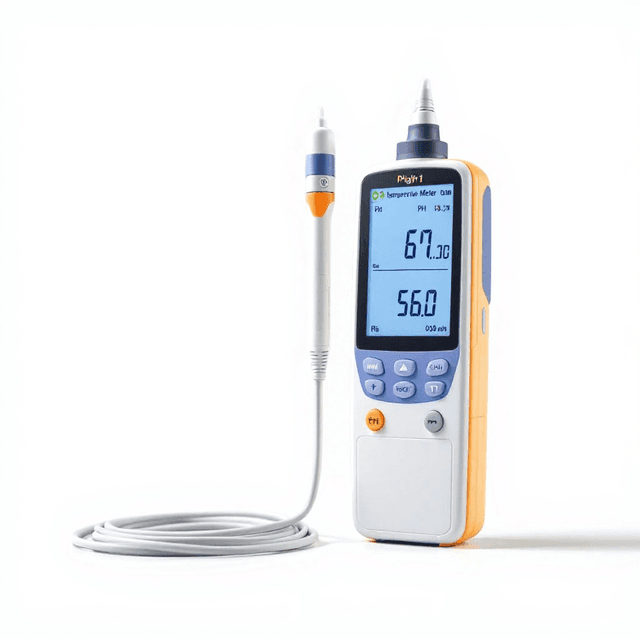
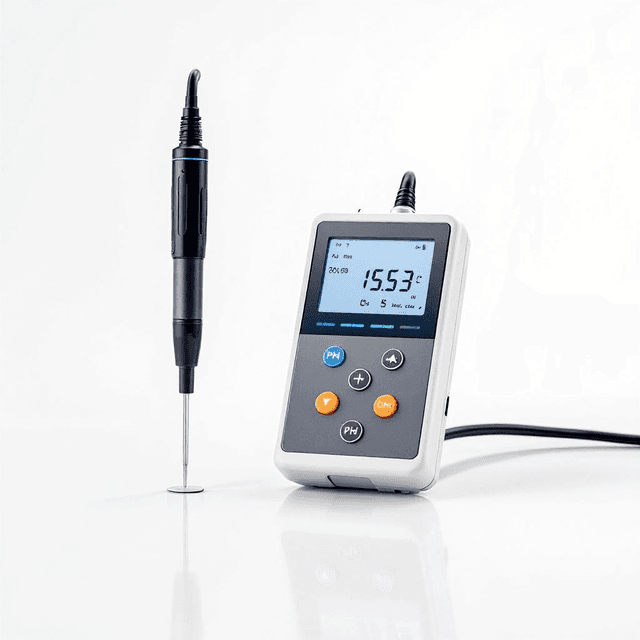
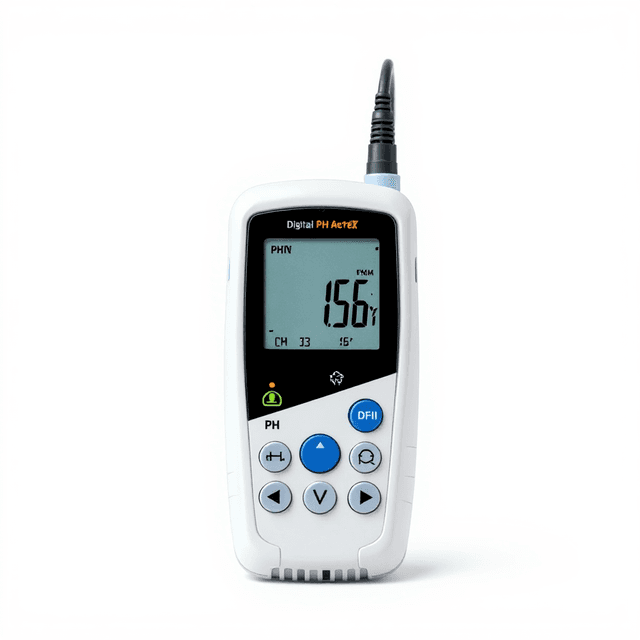
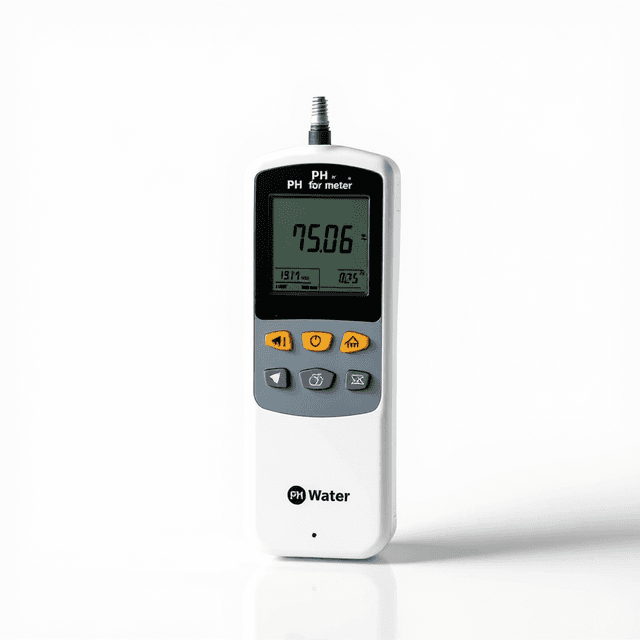
Portable potentiometric pH meter with LCD display, composite E201 electrode, and two-point calibration for field and laboratory water quality measurements.

Louise Corscadden, PhD
Director of Science · ConductScience
Ask Louise about Digital pH Water Tester fit, setup, configuration, or quote prep.
Already working with us? Sign in to connect this with My Scientist.
Key Specifications
Full details →- Model fit
- Configured during quote
- SKU family
- CS-LH-PH-40A
- Shipping box
- 20.0 x 10.0 x 5.0 cm
- Ordering
- Online checkout and quote request available
- Category
- pH Meters
- Build notes
- Confirm accessories, station layout, and support needs before purchase
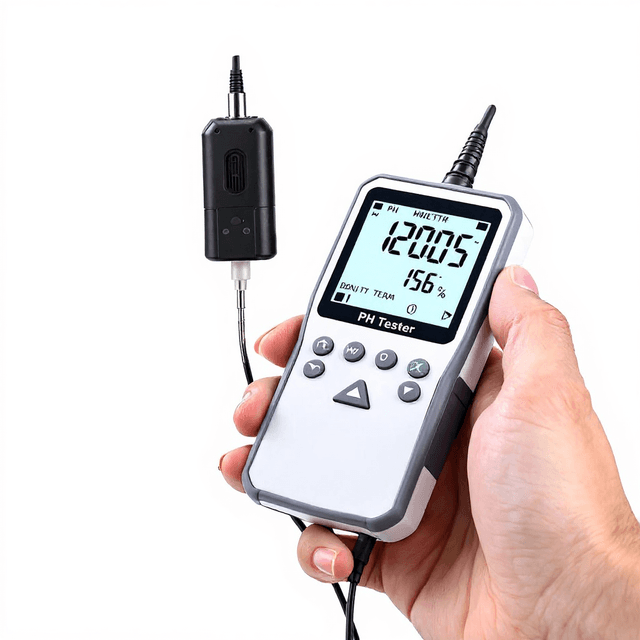
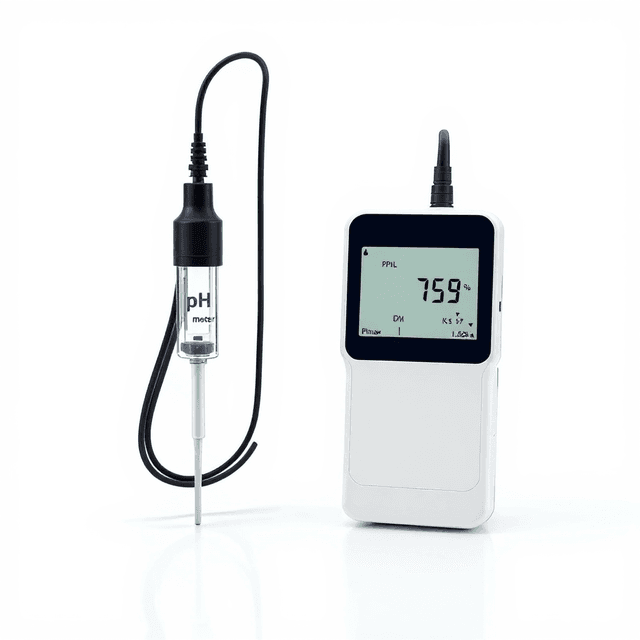
The Digital pH Water Tester (pH-40A) is a portable potentiometric pH meter featuring an LCD display and E201-type composite electrode for field and laboratory pH measurements. The instrument employs a 9V battery power system and operates in ambient conditions from 0-50°C with relative humidity below 85%. Two-point calibration capability ensures measurement accuracy across the operational range.
This handheld instrument combines the sensing and reference electrodes in a single composite design, eliminating the need for separate electrode management. The E201 electrode configuration provides quick response times and good stability for routine pH monitoring applications. The compact form factor and battery operation make it suitable for on-site measurements where portability is required.
How It Works
The pH-40A operates on potentiometric principles, measuring the electrical potential difference between a glass sensing electrode and a reference electrode immersed in the sample solution. The E201 composite electrode incorporates both sensing and reference elements in a single probe design. When placed in solution, hydrogen ions interact with the glass membrane surface through ion exchange processes, creating a voltage proportional to the hydrogen ion activity according to the Nernst equation.
The potential difference is amplified by high-impedance electronics and converted to pH units for LCD display. The instrument measures millivolt signals generated across the glass membrane and applies internal algorithms to calculate pH values. Two-point calibration using standard buffer solutions corrects for electrode asymmetry potentials and drift, ensuring measurement accuracy across the operational range.
The battery-powered electronics provide stable voltage supply for consistent measurements in field conditions. The LCD display presents pH readings in digital format, eliminating parallax errors associated with analog meters.
Features & Benefits
Model
- pH-40A
Product name
- Test item
Digital ph water testerPH-40A
- pH
Automation Level
- manual
Brand
- ConductScience
Research Domain
- Analytical Chemistry
- Environmental Monitoring
- Food Science
- Industrial Hygiene
- Microbiology
- Pharmaceutical QC
Shipping weight
- 0.2 lb
Shipping box
- L: 20.0 cm
- W: 10.0 cm
- H: 5.0 cm
| Feature | This Product | Typical Alternative | Advantage |
|---|---|---|---|
| Electrode Design | E201-type composite electrode integrating sensing and reference elements | Some models use separate glass and reference electrodes requiring dual connections | Simplified electrode handling reduces contamination risk and setup complexity for field measurements. |
| Display Technology | LCD digital display | Basic models may use analog meters or simple LED displays | Digital display eliminates parallax errors and provides precise numerical readout for accurate data recording. |
| Power System | 9V battery operation | Entry-level models may use different battery configurations | Standard 9V battery provides reliable portable operation and easy replacement in field conditions. |
| Calibration Method | Two-point calibration capability | Basic models often offer single-point calibration only | Two-point calibration corrects for electrode slope and offset errors across the measurement range. |
| Operating Temperature | 0-50°C operational range | Limited temperature ranges in budget instruments | Wide temperature range accommodates most laboratory and field measurement conditions without additional temperature control. |
| Form Factor | Compact handheld design | Varies by model from pocket-sized to larger portable units | Compact design facilitates transport and use in confined sampling locations while maintaining full functionality. |
The pH-40A provides a balanced combination of composite electrode design, digital display technology, and battery operation for portable pH measurements. The two-point calibration capability and wide operating temperature range support accurate measurements in diverse field and laboratory applications.
Practical Tips
Use fresh buffer solutions at the same temperature as your samples for calibration.
Why: Temperature differences between buffers and samples introduce measurement errors that cannot be corrected post-measurement.
Store the electrode in storage solution, not distilled water.
Why: Distilled water causes electrolyte leaching from the reference junction, leading to premature electrode failure.
Rinse electrode with distilled water and gently blot dry between different samples.
Why: Cross-contamination between samples can cause measurement drift and inaccurate readings.
Allow readings to stabilize for 30-60 seconds before recording measurements.
Why: Electrode equilibration time ensures accurate measurement and prevents recording of transient values.
If readings drift continuously, check for air bubbles in the electrode or damaged electrode membrane.
Why: Air bubbles or membrane damage disrupt the electrochemical processes required for stable pH measurement.
Never immerse the meter body in sample solutions, only the electrode portion.
Why: Water ingress into the electronics can cause permanent damage and create electrical safety hazards.
Recalibrate if readings differ from expected values by more than 0.1 pH units during buffer checks.
Why: Electrode drift over time requires calibration adjustment to maintain measurement accuracy within acceptable limits.
Replace the electrode when calibration slope falls below manufacturer specifications.
Why: Degraded electrode response cannot be fully corrected by calibration and will compromise measurement reliability.
Setup Guide
What’s in the Box
- Digital pH meter main unit
- E201 composite electrode
- 9V 6F22 battery (typical)
- Electrode storage solution (typical)
- User manual (typical)
- Carrying case (typical)
Warranty
ConductScience provides a one-year manufacturer warranty covering defects in materials and workmanship, with technical support for calibration procedures and electrode maintenance.
Compliance
References
Background reading relevant to this product:
What calibration buffers are recommended for this pH meter?
Two-point calibration using standard buffers is recommended. Typical combinations include pH 4.0 and 7.0 for acidic samples, or pH 7.0 and 10.0 for alkaline samples. Use fresh, temperature-matched buffers for optimal accuracy.
How does the E201 composite electrode compare to separate glass and reference electrodes?
The E201 composite design integrates both sensing and reference elements in a single probe, simplifying handling and reducing contamination risk. While separate electrodes may offer longer life and individual replacement options, the composite design provides convenience for portable applications.
What is the expected battery life during field use?
Battery life depends on usage patterns and environmental conditions. The 9V alkaline battery typically provides several weeks of intermittent use. Carry spare batteries for extended field campaigns and monitor battery status through display indicators.
Can this meter be used for continuous monitoring applications?
This is a handheld instrument designed for spot measurements rather than continuous monitoring. For extended monitoring, consider data logging systems with appropriate electrode maintenance protocols.
What electrode maintenance is required?
Store electrode in storage solution between uses, calibrate regularly, and clean with appropriate cleaning solutions when contaminated. Replace electrode when response becomes sluggish or calibration cannot achieve acceptable accuracy.
How does temperature affect measurements?
The meter operates from 0-50°C. Temperature affects both electrode response and sample pH. For critical applications, use temperature compensation or record sample temperature alongside pH measurements for proper interpretation.
What sample types may interfere with electrode performance?
High ionic strength solutions, organic solvents, strong acids/bases, and samples with heavy metal contamination may affect electrode response. Consider matrix effects and use appropriate calibration strategies for complex samples.
How often should calibration be performed?
Calibrate before each measurement session or daily for routine use. More frequent calibration may be needed for critical measurements or when electrode performance degrades with age or contamination.
Have a question about this product?
Have a question? Just ask.
Send it over and we'll email you a personalized answer — no call, no scheduling.
Prefer to talk it through?
Accessories
Enhance your setup with compatible accessories