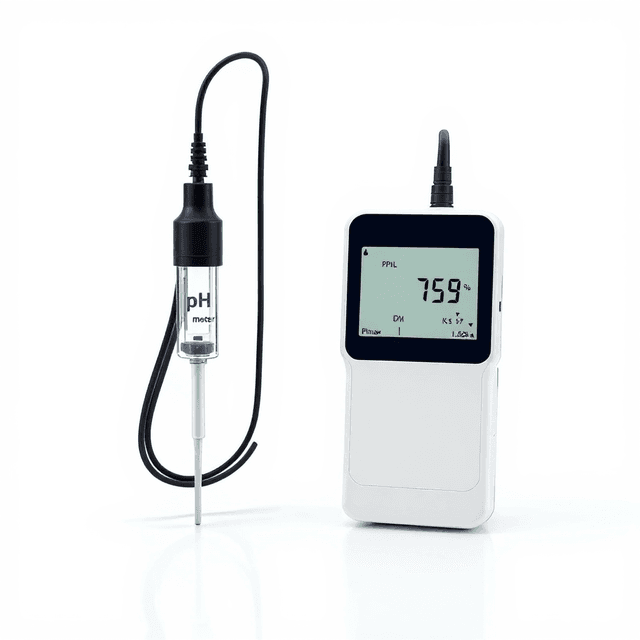
Digital pH Meter For Water
Benchtop digital pH meter with backlit display, automatic temperature compensation, and replaceable electrode for accurate potentiometric pH measurement in laboratory applications.

Louise Corscadden, PhD
Director of Science · ConductScience
Ask Louise about Digital pH Meter For Water fit, setup, configuration, or quote prep.
Already working with us? Sign in to connect this with My Scientist.
Key Specifications
Full details →- Model fit
- Configured during quote
- SKU family
- CS-LH-PH-2601
- Shipping box
- 20.0 x 10.0 x 5.0 cm
- Ordering
- Online checkout and quote request available
- Category
- pH Meters
- Build notes
- Confirm accessories, station layout, and support needs before purchase
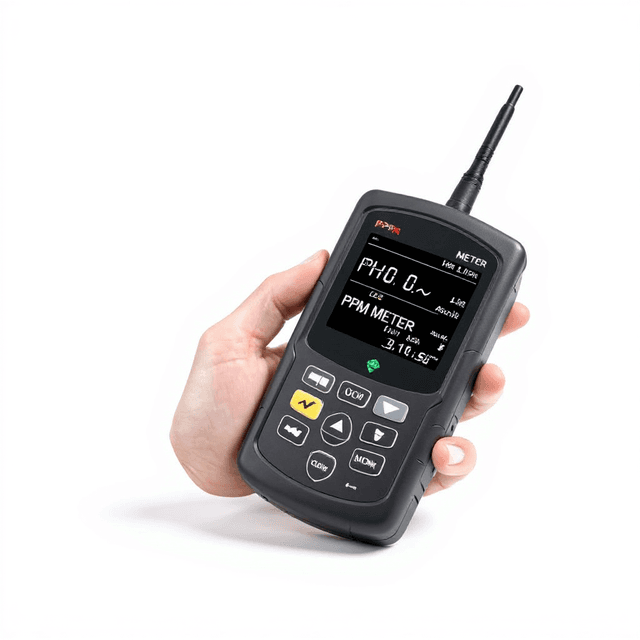
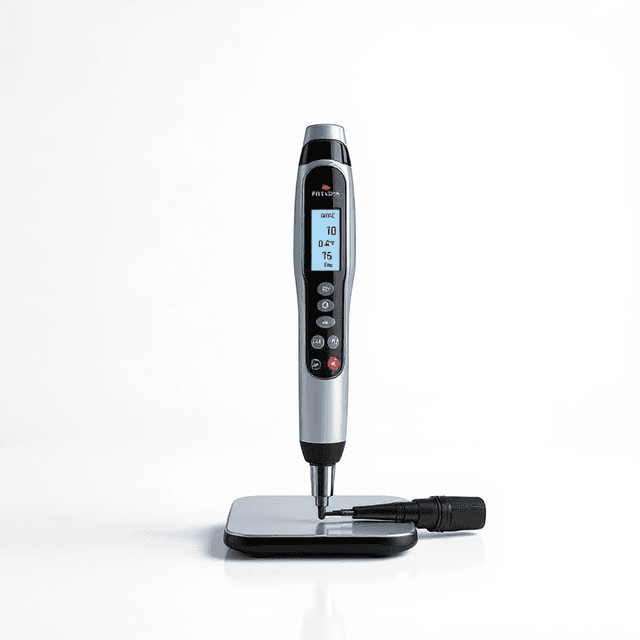
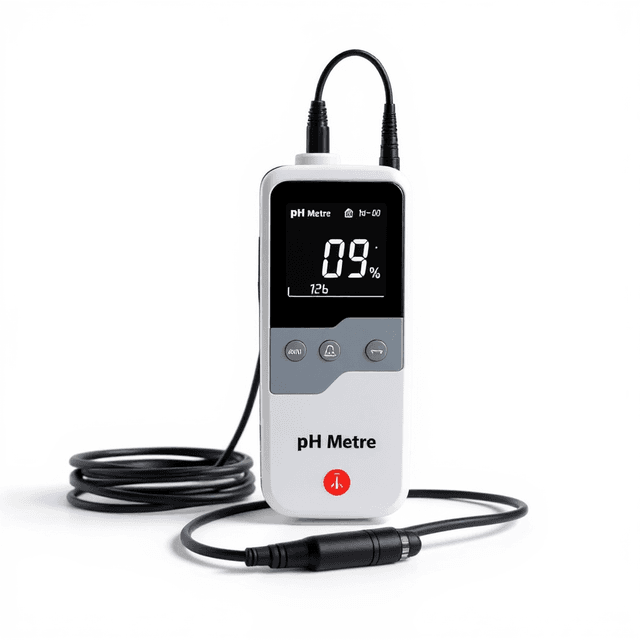
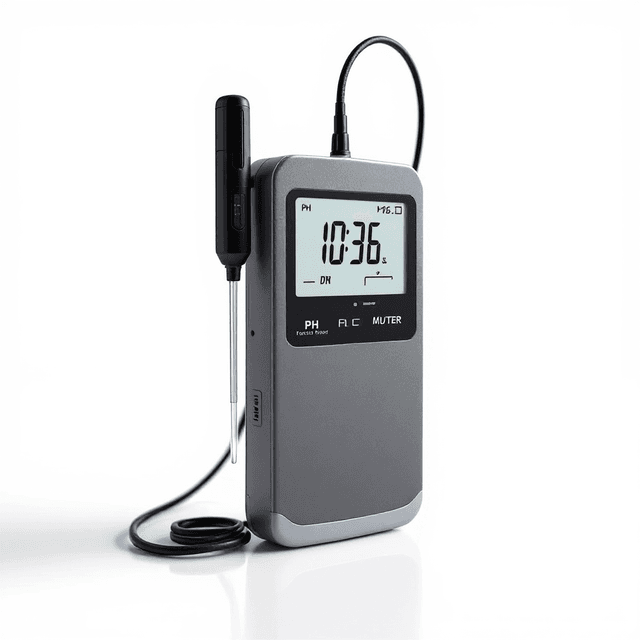
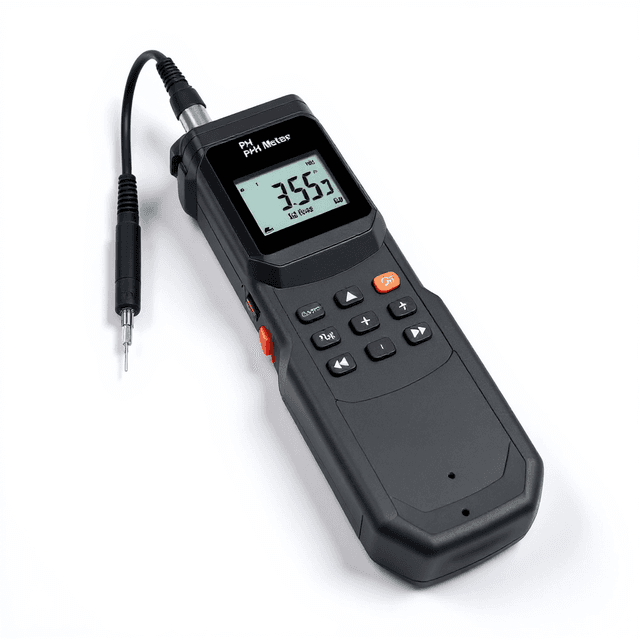
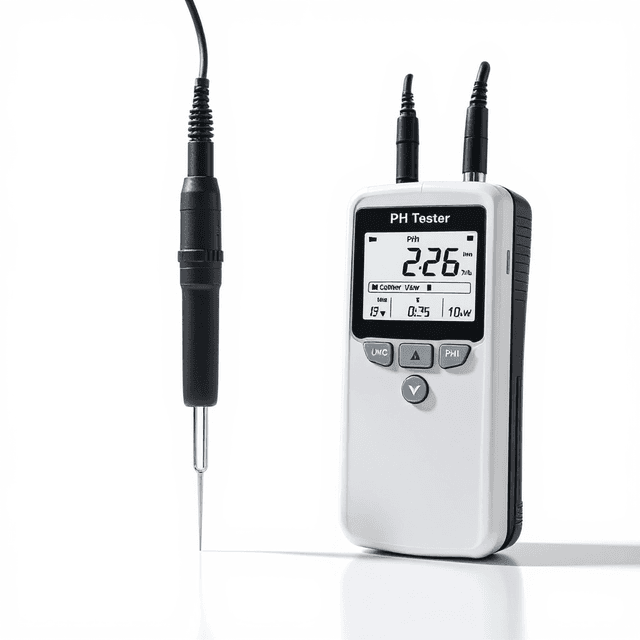
The Digital pH Meter (Model PH-2601) is a benchtop potentiometric instrument designed for accurate pH measurement in aqueous solutions. The instrument features a backlit display showing simultaneous pH and temperature readings, with automatic temperature compensation to correct for thermal effects on electrode response. The replaceable electrode design allows for maintenance and customization based on sample requirements.
This benchtop configuration provides stable measurement conditions for laboratory pH analysis, with the front panel display facilitating easy reading during extended measurement sessions. The automatic temperature compensation function adjusts pH readings based on the Nernst equation temperature dependence, ensuring measurement accuracy across varying sample temperatures typically encountered in laboratory workflows.
How It Works
The pH meter operates on potentiometric principles, measuring the voltage difference between a glass electrode and a reference electrode immersed in the sample solution. The glass electrode contains a thin glass membrane that develops a potential proportional to the hydrogen ion activity in the test solution, following the Nernst equation relationship where a 59.16 mV change occurs per pH unit at 25°C.
The automatic temperature compensation system continuously monitors sample temperature and applies mathematical correction to account for the temperature dependence of the Nernst slope. This ensures accurate pH readings across the typical laboratory temperature range. The digital processing circuitry converts the millivolt signals to pH units and displays both parameters simultaneously on the backlit screen.
The replaceable electrode design allows users to select appropriate electrode types for specific applications - general purpose, low ionic strength, high temperature, or specialized sample matrices - while maintaining measurement accuracy through proper calibration procedures.
Features & Benefits
Model
- PH-2601
Automation Level
- semi-automated
Brand
- ConductScience
Research Domain
- Analytical Chemistry
- Environmental Monitoring
- Food Science
- Industrial Hygiene
- Microbiology
- Pharmaceutical QC
Shipping weight
- 0.2 lb
Shipping box
- L: 20.0 cm
- W: 10.0 cm
- H: 5.0 cm
| Feature | This Product | Typical Alternative | Advantage |
|---|---|---|---|
| Display Type | Backlit LCD showing pH and temperature simultaneously | Basic LED displays often show single parameters without backlighting | Enhanced visibility in various laboratory lighting conditions reduces reading errors during extended measurement sessions. |
| Temperature Compensation | Automatic temperature compensation with real-time correction | Manual temperature compensation or no correction available in entry-level models | Eliminates calculation errors and ensures consistent accuracy across varying sample temperatures. |
| Electrode Configuration | Replaceable electrode system | Fixed electrodes in portable units cannot be replaced or optimized | Allows electrode customization for specific applications and replacement when performance degrades. |
| Platform Design | Stable benchtop configuration | Handheld meters require manual positioning during measurement | Provides consistent measurement geometry and reduces handling variables that affect reading stability. |
| Power Source | AC power adapter for continuous operation | Battery-powered units require periodic charging or replacement | Eliminates measurement interruptions due to battery depletion during extended analytical sessions. |
The PH-2601 offers benchtop stability with automatic temperature compensation and replaceable electrode flexibility. The backlit display and continuous power operation support extended laboratory measurement sessions without the limitations of portable battery-powered alternatives.
Practical Tips
Perform calibration using fresh buffer solutions at room temperature and allow each calibration point to stabilize completely before acceptance.
Why: Aged or contaminated buffers and incomplete equilibration lead to calibration errors that propagate through all subsequent measurements.
Replace the electrode storage solution monthly and inspect the reference junction for salt crystal buildup that can impede electrical contact.
Why: Contaminated storage solution and blocked junctions cause slow electrode response and measurement drift over time.
Rinse electrodes with distilled water between samples and gently blot dry rather than wiping to avoid static charge buildup on glass surfaces.
Why: Cross-contamination between samples and electrostatic interference can cause measurement artifacts and reduced accuracy.
If readings become unstable or drift continuously, check electrode filling solution levels and reference junction condition before assuming electrode failure.
Why: Many apparent electrode problems result from maintenance issues rather than glass membrane degradation, avoiding unnecessary replacement costs.
Record both pH and temperature readings for each measurement to enable later assessment of temperature compensation effectiveness and measurement conditions.
Why: Temperature data helps identify measurement anomalies and provides context for pH values when samples are measured at non-standard temperatures.
Ensure proper electrode disposal following local regulations for glass and electrolyte solutions, as reference electrodes may contain mercury or silver compounds.
Why: Electrode electrolytes can contain hazardous materials requiring appropriate disposal procedures to prevent environmental contamination.
Store calibration buffer solutions in sealed containers and avoid contamination by using separate containers for electrode rinsing and calibration.
Why: Buffer contamination from sample carryover affects calibration accuracy and can lead to systematic measurement errors across all samples.
Allow samples to equilibrate to measurement temperature before pH determination, especially when analyzing heated or chilled solutions.
Why: Temperature gradients within samples can cause measurement instability and affect the accuracy of automatic temperature compensation.
Setup Guide
What’s in the Box
- PH-2601 Digital pH Meter (typical)
- Glass pH electrode (typical)
- Temperature probe (typical)
- Power adapter (typical)
- Electrode storage solution (typical)
- Calibration buffer samples (typical)
- User manual and documentation (typical)
Warranty
ConductScience provides standard manufacturer warranty coverage with technical support for pH meter troubleshooting and electrode replacement guidance. Extended warranty options may be available for high-usage laboratory environments.
Compliance
References
Background reading relevant to this product:
What calibration standards are recommended for accurate pH measurement?
Use certified pH buffer solutions at pH 4.01, 7.00, and 10.01 for three-point calibration, or pH 4.01 and 7.00 for routine two-point calibration covering the typical measurement range.
How does automatic temperature compensation affect measurement accuracy?
The system applies Nernst equation corrections based on measured temperature, compensating for the theoretical 59.16 mV per pH unit change at 25°C and maintaining accuracy across laboratory temperature variations.
What electrode types are compatible with this pH meter?
The replaceable electrode system accepts standard BNC-connected pH electrodes including general purpose, low ionic strength, high temperature, and application-specific designs - consult electrode specifications for compatibility.
How frequently should electrode calibration be performed?
Calibrate daily for critical measurements, weekly for routine analysis, or whenever electrode response appears sluggish or readings drift outside acceptable limits for quality control samples.
What sample volume is required for accurate pH measurement?
Ensure sufficient sample depth to completely immerse the electrode bulb and reference junction, typically requiring 25-50 mL minimum depending on electrode dimensions.
Can this instrument measure pH in non-aqueous or high-temperature samples?
Standard glass electrodes are designed for aqueous solutions at ambient temperatures - specialized electrodes may be required for organic solvents or elevated temperature applications.
How should electrodes be stored between measurements?
Store electrodes in appropriate storage solution (typically 3M KCl) or pH 7 buffer to maintain hydration and prevent reference junction clogging that affects response time and accuracy.
What maintenance procedures are recommended for optimal performance?
Regular electrode cleaning with appropriate solutions, periodic calibration verification, and replacement of aged electrodes showing slow response or poor slope characteristics.
Have a question about this product?
Have a question? Just ask.
Send it over and we'll email you a personalized answer — no call, no scheduling.
Prefer to talk it through?