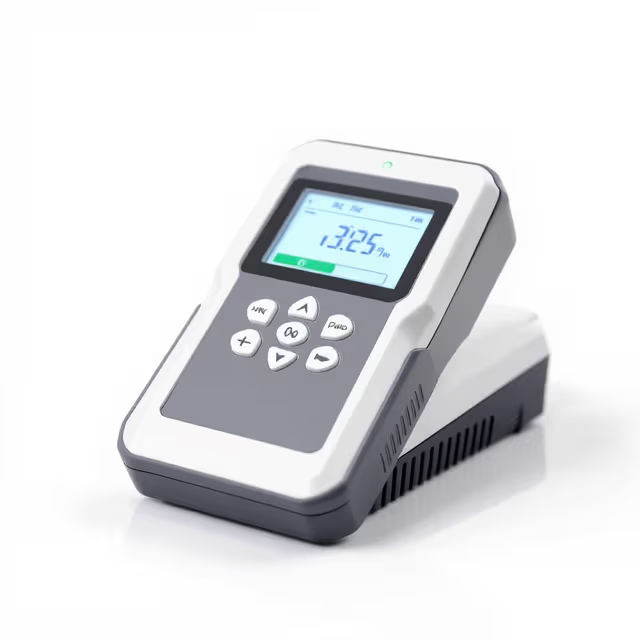
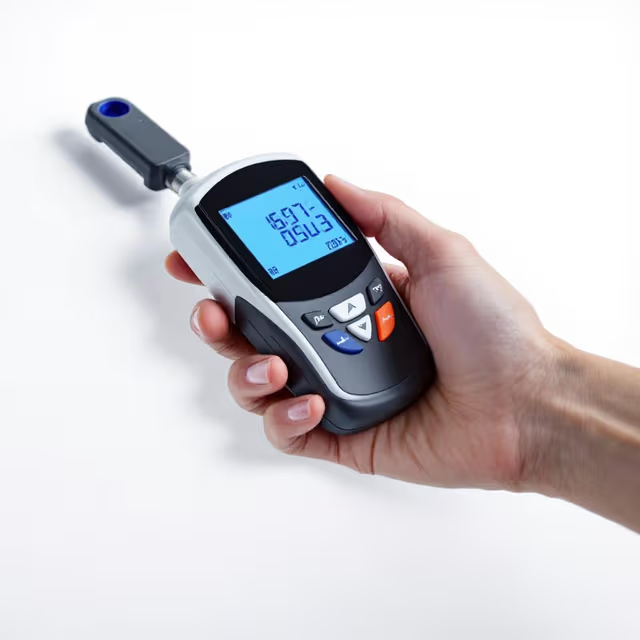
pH Meter Measures
Laboratory pH meter with 0.00-14.00 pH range, ±0.01 pH accuracy, automatic temperature compensation, and replaceable electrode for precise potentiometric measurements in aqueous solutions.

Louise Corscadden, PhD
Director of Science · ConductScience
Ask Louise about pH Meter Measures fit, setup, configuration, or quote prep.
Already working with us? Sign in to connect this with My Scientist.
Key Specifications
Full details →- Model fit
- Configured during quote
- SKU family
- CS-LH-PH027
- Shipping box
- 20.0 x 10.0 x 5.0 cm
- Ordering
- Online checkout and quote request available
- Category
- pH Meters
- Build notes
- Confirm accessories, station layout, and support needs before purchase
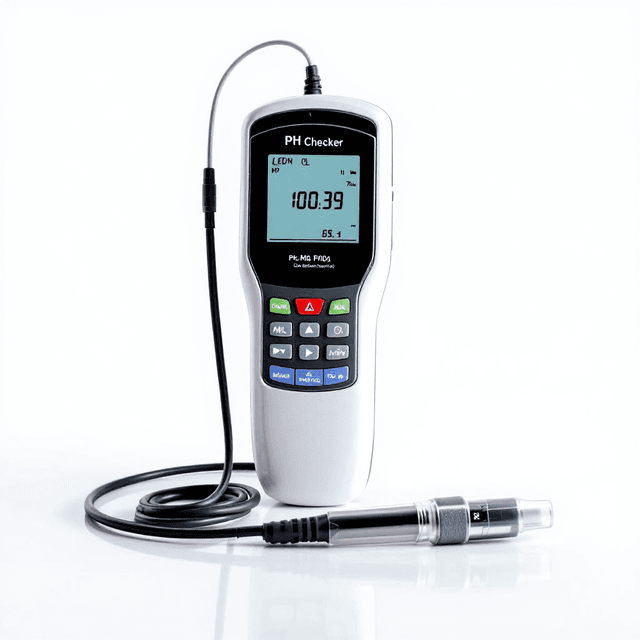
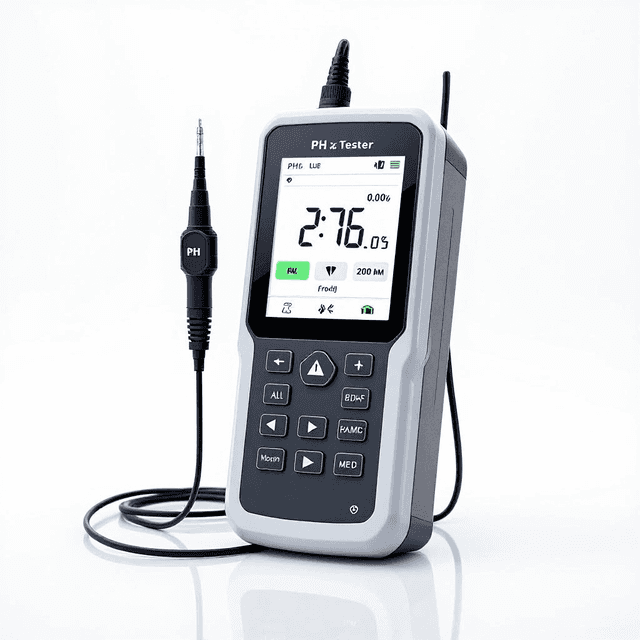
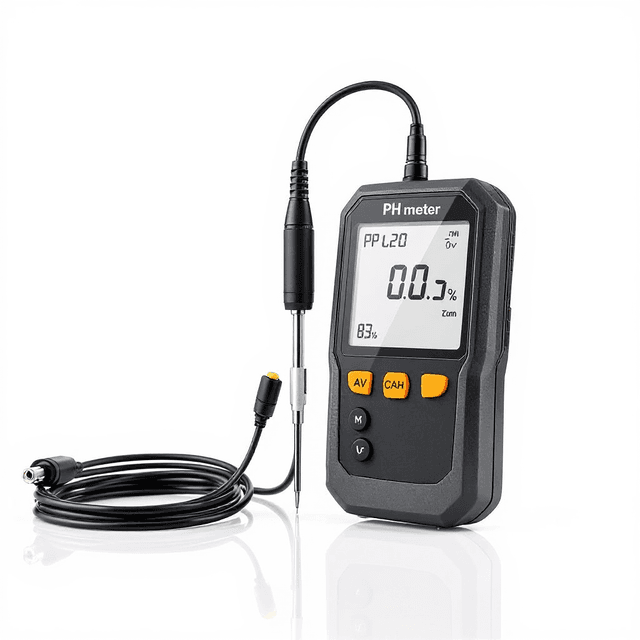
The pH meter measures PHB-4 is a laboratory-grade potentiometric instrument designed for precise pH and millivolt measurements across aqueous solutions. This benchtop meter provides pH measurement from 0.00 to 14.00 with ±0.01 pH accuracy, millivolt measurement from -1999 to 1999 mV with ±1 mV accuracy, and temperature measurement from 0 to 60°C with ±1°C accuracy. The instrument features automatic temperature compensation (ATC) across the 0-60°C range and supports both 1-point and 3-point calibration protocols.
Equipped with a replaceable pH electrode and automatic calibration functionality, this meter operates on 4×1.5V AAA batteries for portable laboratory use. The instrument is designed for environmental monitoring, water quality assessment, and general analytical chemistry applications where accurate pH determination is required. Resolution specifications of 0.01 pH, 1 mV, and 1°C provide sufficient precision for most laboratory protocols requiring potentiometric measurements.
How It Works
The pH meter operates on potentiometric measurement principles using a glass electrode sensitive to hydrogen ion activity. The glass electrode generates a potential difference proportional to the pH of the test solution, following the Nernst equation where a 59.16 mV change corresponds to one pH unit at 25°C. The instrument measures this potential difference against a stable reference electrode to determine pH values.
Automatic temperature compensation adjusts pH readings based on the temperature coefficient of the electrode system and the temperature-dependent dissociation of water. The meter's internal microprocessor applies the appropriate correction factors across the 0-60°C compensation range. Calibration using standard buffer solutions establishes the electrode response characteristics and corrects for electrode drift over time.
Millivolt measurement capability allows direct monitoring of electrode potential for research applications requiring redox potential measurements or custom electrode systems. The instrument's resolution of 0.01 pH and 1 mV provides adequate precision for most analytical protocols requiring potentiometric determination of solution chemistry.
Features & Benefits
Product name
- pH meter measures PHB-4
Measuring range
- pH: 0.00~14.00mV: -1999~1999mV°C: 0~60°C
ATC
- 0-60 °C
Calibration point
- 1 or 3 point
Working temperature
- 0~40°C, RHâ¤85%(Without magnetic interference around the meter)
pH electrode
- replaceable
Calibration
- automatical
Automation Level
- semi-automated
Brand
- ConductScience
Accuracy
- pH: ±0.01pHmV: ±1mV°C: ±1°C
Power/Voltage
- 4X1.5V AAA battery
Research Domain
- Analytical Chemistry
- Environmental Monitoring
- Food Science
- Microbiology
- Pharmaceutical QC
Shipping weight
- 0.26 lb
Shipping box
- L: 20.0 cm
- W: 10.0 cm
- H: 5.0 cm
| Feature | This Product | Typical Alternative | Advantage |
|---|---|---|---|
| pH Measurement Range | 0.00-14.00 pH with 0.01 pH resolution | Entry-level meters often provide 0.00-14.00 range with 0.1 pH resolution | Higher resolution enables more precise measurements for analytical chemistry protocols requiring tight pH control. |
| Measurement Accuracy | ±0.01 pH accuracy | Budget meters typically offer ±0.05 to ±0.1 pH accuracy | Superior accuracy meets requirements for quantitative analysis and quality control applications. |
| Temperature Compensation | Automatic temperature compensation 0-60°C | Manual temperature compensation or limited ATC range on basic models | Eliminates manual correction calculations and reduces measurement errors across wide temperature ranges. |
| Calibration Options | 1-point and 3-point automatic calibration | Single-point calibration only on entry-level instruments | Multi-point calibration improves accuracy across the full pH range and compensates for electrode aging. |
| Electrode Design | Replaceable pH electrode system | Fixed electrodes on disposable meters | Reduces long-term operating costs and allows electrode optimization for specific sample types. |
| Power System | 4×AAA battery operation | Varies by model - some require AC power or use built-in rechargeable batteries | Standard batteries provide reliable portable operation with easy field replacement capability. |
This pH meter provides analytical-grade accuracy with automatic temperature compensation and flexible calibration options. The replaceable electrode design and dual measurement capability (pH/mV) offer advantages for laboratories requiring precise potentiometric measurements across diverse sample types.
Practical Tips
Use fresh buffer solutions and replace them monthly, as degraded buffers affect calibration accuracy.
Why: Buffer contamination and CO2 absorption alter pH values, leading to systematic measurement errors.
Store electrode in proper storage solution (3M KCl) between measurements, never in distilled water.
Why: Proper storage maintains electrode hydration and prevents junction potential drift.
Allow electrode to stabilize for 30-60 seconds in each sample before recording measurements.
Why: Electrode equilibration time ensures accurate readings and prevents drift-related errors.
If readings drift continuously, check electrode condition and perform slope verification with two buffer solutions.
Why: Electrode degradation causes poor response characteristics and unstable measurements.
Record temperature and calibration data with pH measurements for complete documentation.
Why: Temperature affects pH values and calibration verification ensures measurement traceability.
Rinse electrode thoroughly between samples, especially when measuring different sample types.
Why: Cross-contamination can affect subsequent measurements and potentially damage the electrode.
Perform 3-point calibration when maximum accuracy is required across the full pH range.
Why: Multi-point calibration compensates for electrode non-linearity and improves measurement accuracy.
Clean electrode weekly with appropriate cleaning solutions based on sample contamination type.
Why: Protein, oil, or salt deposits on electrode surface interfere with ion exchange and reduce sensitivity.
Setup Guide
What’s in the Box
- pH meter PHB-4 main unit
- Replaceable glass pH electrode (typical)
- Temperature probe (typical)
- Electrode holder and stand (typical)
- Calibration buffer solution set (typical)
- AAA battery set
- User manual and calibration guide (typical)
Warranty
ConductScience provides a standard 1-year manufacturer warranty covering defects in materials and workmanship, with technical support for calibration and measurement troubleshooting.
Compliance
References
Background reading relevant to this product:
What calibration frequency is recommended for maintaining ±0.01 pH accuracy?
Daily calibration is recommended for critical measurements, with weekly calibration acceptable for routine monitoring. 3-point calibration provides best accuracy across the full pH range.
How does the automatic temperature compensation affect measurement accuracy?
ATC corrects for temperature-dependent electrode response across 0-60°C, eliminating the need for manual temperature corrections and improving measurement accuracy by approximately 0.003 pH units per °C.
What is the expected electrode lifetime and replacement indicators?
pH electrodes typically last 6-12 months depending on usage and sample matrix. Replace when calibration slope falls below 90% of theoretical value or response time exceeds 60 seconds.
Can this meter be used for non-aqueous or high ionic strength solutions?
Optimized for aqueous solutions; non-aqueous measurements may require specialized electrodes. High ionic strength solutions (>1M) may affect junction potential and require frequent recalibration.
What maintenance procedures are required for accurate measurements?
Daily electrode rinsing with distilled water, weekly cleaning with appropriate cleaning solutions, monthly calibration verification, and proper electrode storage in storage solution when not in use.
How does this meter compare to pH indicator strips for analytical work?
Provides significantly higher accuracy (±0.01 pH vs ±0.2-0.5 pH for strips), temperature compensation, and digital readout versus visual color matching, making it suitable for quantitative analysis.
Have a question about this product?
Have a question? Just ask.
Send it over and we'll email you a personalized answer — no call, no scheduling.
Prefer to talk it through?