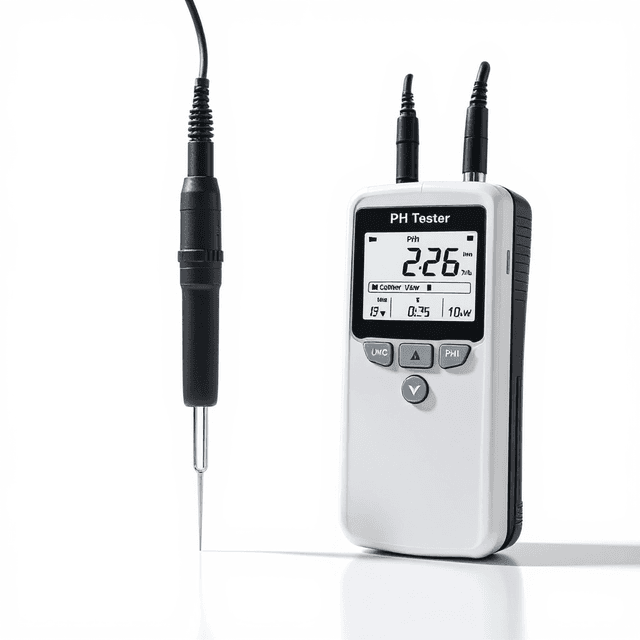
Portable Digital pH Tester
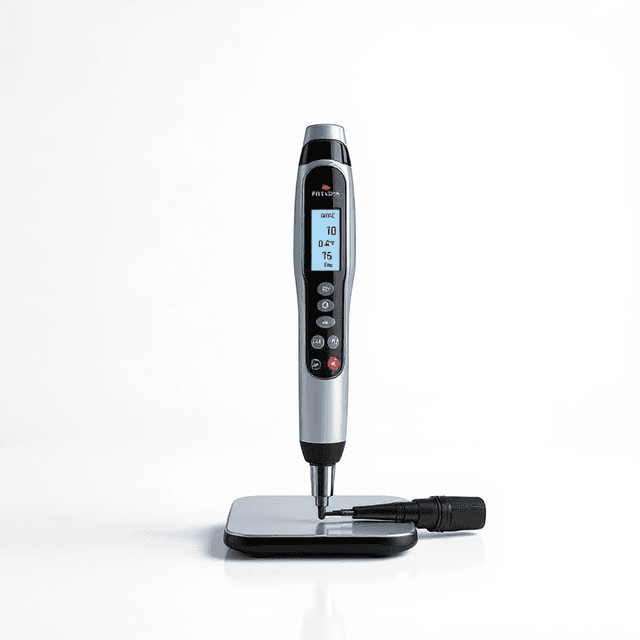
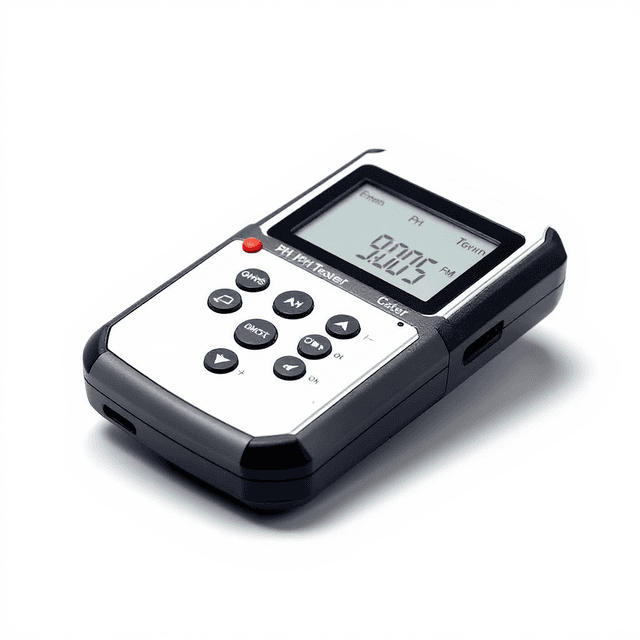
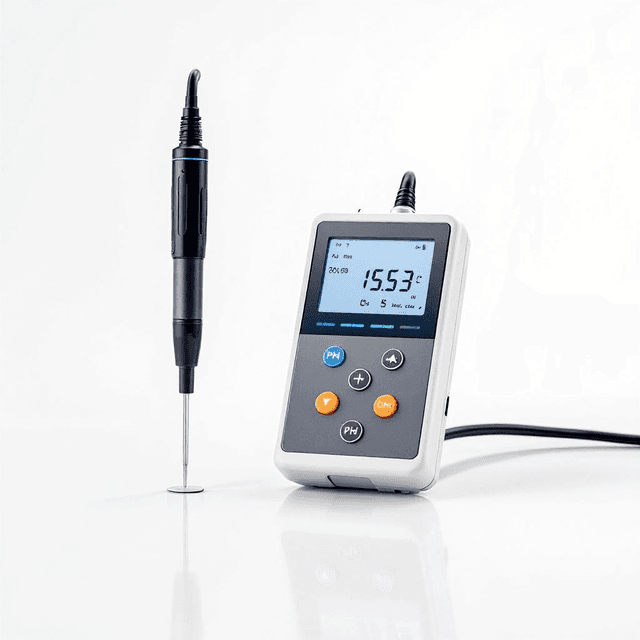
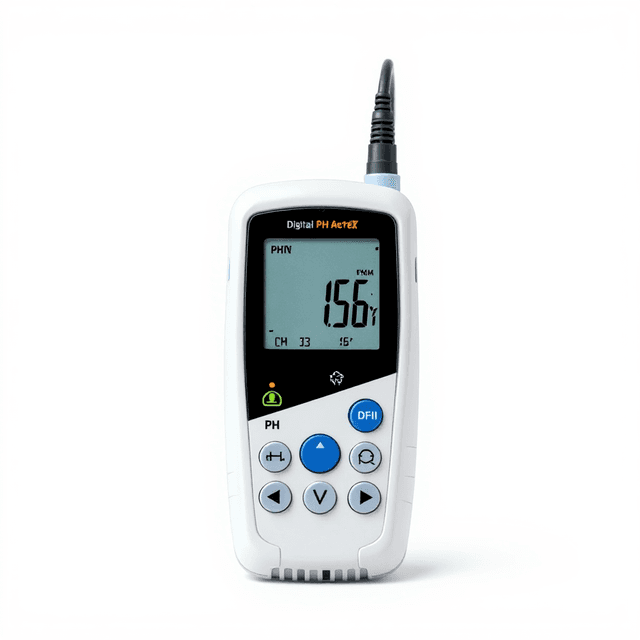
Portable digital pH tester with 0.01 pH resolution, automatic temperature compensation, and simultaneous pH/mV/temperature display for laboratory and field applications.

Louise Corscadden, PhD
Director of Science · ConductScience
Ask Louise about Portable Digital pH Tester fit, setup, configuration, or quote prep.
Already working with us? Sign in to connect this with My Scientist.
Key Specifications
Full details →- Model fit
- Configured during quote
- SKU family
- CS-LH-PH-8414
- Shipping box
- 9.65 x 7.87 x 2.76 cm
- Ordering
- Online checkout and quote request available
- Category
- pH Meters
- Build notes
- Confirm accessories, station layout, and support needs before purchase
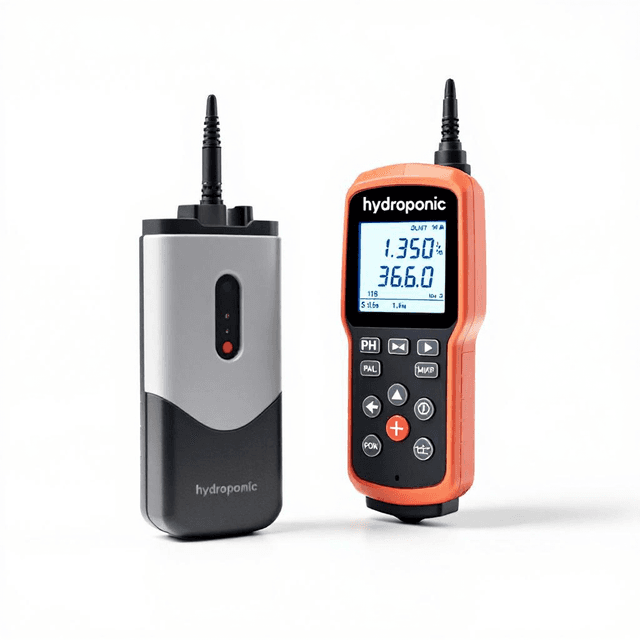
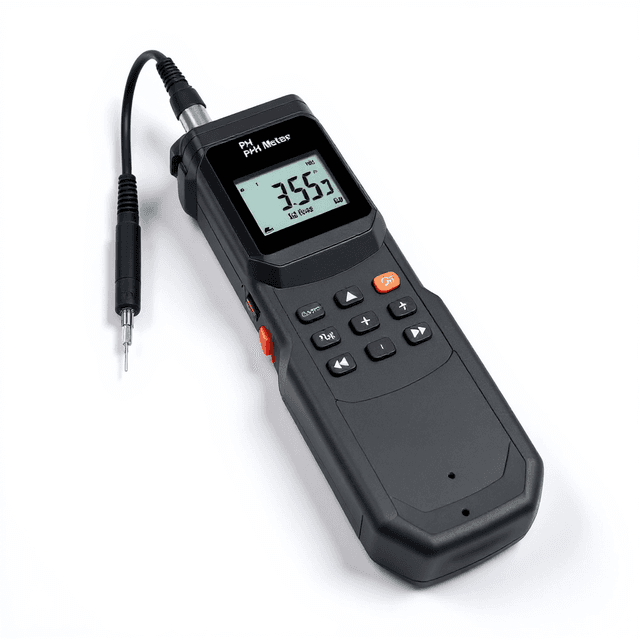
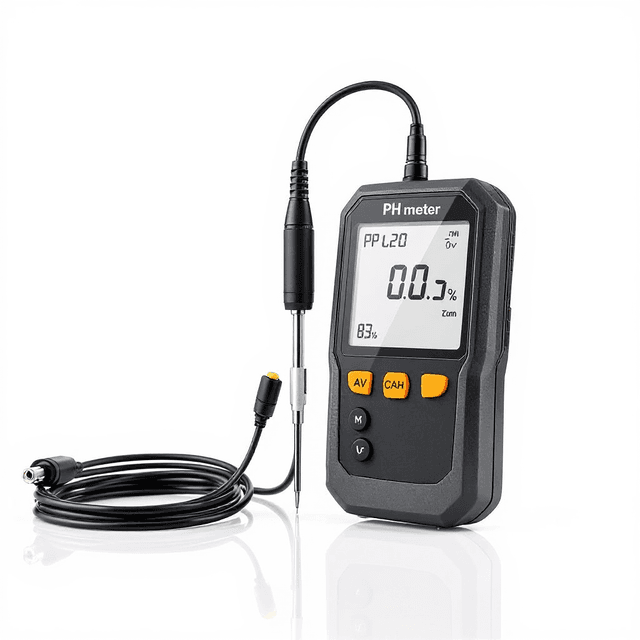
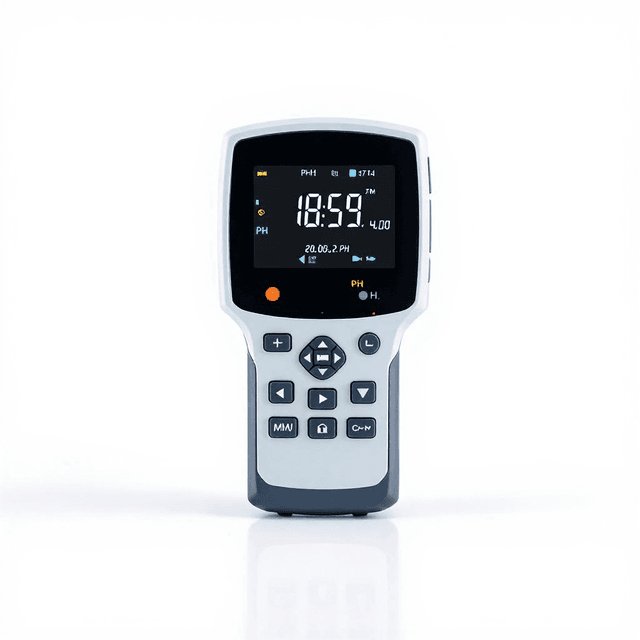
The ConductScience pH-8414 Portable Digital pH Tester is a precision handheld instrument designed for accurate pH and millivolt measurements across laboratory and field applications. This compact unit delivers analytical performance with pH resolution of 0.01 units and accuracy of ±0.01 pH across the full 0.00-14.00 pH range. The instrument features automatic temperature compensation to correct for thermal effects on electrode response, ensuring measurement reliability across the operational temperature range of 0-60°C.
The pH-8414 incorporates a high-impedance input stage (10² Ω) optimized for glass electrode compatibility and offers both 1-point and 2-point calibration capabilities for measurement traceability. The digital display simultaneously shows pH/mV readings and temperature, while the integrated 8-minute auto-shutoff function preserves battery life during extended field use. Complete with pH composite electrode, buffer solutions, and protective carrying case, this system provides immediate measurement capability for water quality assessment, environmental monitoring, and analytical applications.
How It Works
The pH-8414 employs potentiometric measurement principles based on the Nernst equation to determine hydrogen ion activity in solution. The system utilizes a glass electrode containing an internal reference solution separated from the test solution by a pH-sensitive glass membrane. When immersed in the sample, hydrogen ions interact with the glass membrane surface, generating a potential difference proportional to the logarithm of hydrogen ion activity.
The instrument's high-impedance input amplifier (10² Ω) measures the millivolt potential developed between the pH electrode and internal reference, converting this signal to pH units through calibrated algorithms. Automatic temperature compensation adjusts readings based on the Nernst slope temperature coefficient, accounting for the theoretical 59.16 mV/pH/°C relationship at 25°C. The integrated temperature sensor continuously monitors solution temperature, applying real-time corrections to ensure measurement accuracy across the 0-60°C operational range.
Features & Benefits
Model
- pH-8414
Product name
- Portable ph tester PH-8414
Measuring range
- pH: 0.00~14.00mV: -1999~+1999mVâ: 0~100°C
Input impedance
- 102 Ω
Calibration
- 1 or 2point
Working temperature
- 0~60°C, RHâ¤95%(Without magnetic interference around the meterï¼
Auto shut-off
- Approx. 8 minutes
Automation Level
- manual
Brand
- ConductScience
Accuracy
- pH: ±0.01pHmV: ±1mVâ: ±0.4°C
Power/Voltage
- 9V battery
Dimensions
- 245*200*70mm
Weight
- 210g
Research Domain
- Analytical Chemistry
- Environmental Monitoring
- Food Science
- Industrial Hygiene
- Pharmaceutical QC
Shipping weight
- 3.4 lb
Shipping box
- L: 9.65 cm
- W: 7.87 cm
- H: 2.76 cm
| Feature | This Product | Typical Alternative | Advantage |
|---|---|---|---|
| pH Measurement Range | 0.00-14.00 pH with 0.01 pH resolution | Basic models often limited to 0.1 pH resolution | Higher resolution enables detection of small pH changes critical for process monitoring and quality control applications. |
| Measurement Accuracy | ±0.01 pH accuracy across full range | Entry-level units commonly offer ±0.1 pH accuracy | Analytical-grade accuracy supports regulatory compliance and research applications requiring high precision. |
| Temperature Compensation | Automatic compensation from 0-100°C with ±0.4°C accuracy | Manual compensation or limited temperature range | Eliminates operator error and enables accurate measurements across varying environmental conditions. |
| Dual Measurement Capability | pH and mV modes with -1999 to +1999 mV range | pH-only measurement in basic models | Supports advanced applications including redox potential monitoring and electrode diagnostics. |
| Power Management | 8-minute auto-shutoff with low battery indicator | Manual power control without battery monitoring | Extends field operation time and prevents measurement interruption due to unexpected battery depletion. |
The pH-8414 provides analytical-grade measurement performance typically found in benchtop instruments within a portable, battery-operated design. The combination of 0.01 pH resolution, automatic temperature compensation, and dual pH/mV capability delivers comprehensive functionality for demanding field and laboratory applications.
Practical Tips
Calibrate with buffers spanning the expected sample pH range and perform 2-point calibration for maximum accuracy.
Why: Calibration accuracy decreases when extrapolating beyond the calibration range, and 2-point calibration corrects for both offset and slope errors.
Store electrode in pH 4 buffer solution or manufacturer's storage solution, never in distilled water.
Why: Distilled water causes the electrode glass bulb to swell and can permanently damage the electrode's response characteristics.
Allow electrode to equilibrate for 30-60 seconds in each sample before recording the measurement.
Why: Electrode response time depends on solution properties, and premature readings can introduce systematic errors in data collection.
If readings drift or response is slow, clean the electrode junction with distilled water and re-condition in fresh buffer.
Why: Junction fouling from samples can impede ionic flow and create unstable potential measurements.
Record both pH and temperature values for each measurement to enable post-analysis temperature corrections if needed.
Why: Temperature affects both electrode response and chemical equilibria in the sample, providing context for data interpretation.
Rinse electrode thoroughly between measurements to prevent cross-contamination, especially with hazardous or reactive samples.
Why: Sample carryover can affect subsequent measurements and potentially create safety hazards when mixing incompatible chemicals.
Setup Guide
What’s in the Box
- pH-8414 digital pH meter
- E201 pH composite electrode
- 9V battery
- pH buffer solutions
- Protective carrying case
- User manual and documentation
Warranty
ConductScience provides a standard one-year manufacturer warranty covering defects in materials and workmanship, with technical support available for calibration procedures and troubleshooting assistance.
Compliance
References
Background reading relevant to this product:
What calibration standards should be used for optimal accuracy?
Use fresh pH 4.00 and pH 7.00 buffer solutions for 2-point calibration, or pH 7.00 alone for single-point calibration. Buffer solutions should be at measurement temperature and replaced regularly to maintain accuracy.
How does temperature compensation affect measurement accuracy?
Automatic temperature compensation adjusts readings based on the Nernst slope (approximately 59.16 mV/pH unit at 25°C), which varies with temperature. The system compensates across 0-100°C to maintain ±0.01 pH accuracy.
What electrode maintenance is required for consistent performance?
Rinse electrode with distilled water between measurements, store in pH 4 buffer or electrode storage solution, and recalibrate daily for critical applications. Replace electrode when response becomes sluggish or calibration drift exceeds specifications.
Can the meter measure non-aqueous solutions accurately?
The instrument is optimized for aqueous solutions. Non-aqueous measurements may require specialized electrodes and calibration procedures not covered by standard buffer calibration protocols.
What factors affect measurement stability and response time?
Solution temperature, ionic strength, and stirring rate influence electrode response time. Allow 30-60 seconds for stable readings in most aqueous solutions, with longer equilibration times required for low ionic strength samples.
How does this compare to benchtop pH meters for analytical work?
The pH-8414 provides comparable accuracy (±0.01 pH) to basic benchtop models but with enhanced portability. Laboratory benchtop systems may offer additional features like data logging, multiple electrode inputs, and method storage.
Have a question about this product?
Have a question? Just ask.
Send it over and we'll email you a personalized answer — no call, no scheduling.
Prefer to talk it through?
Frequently Bought Together