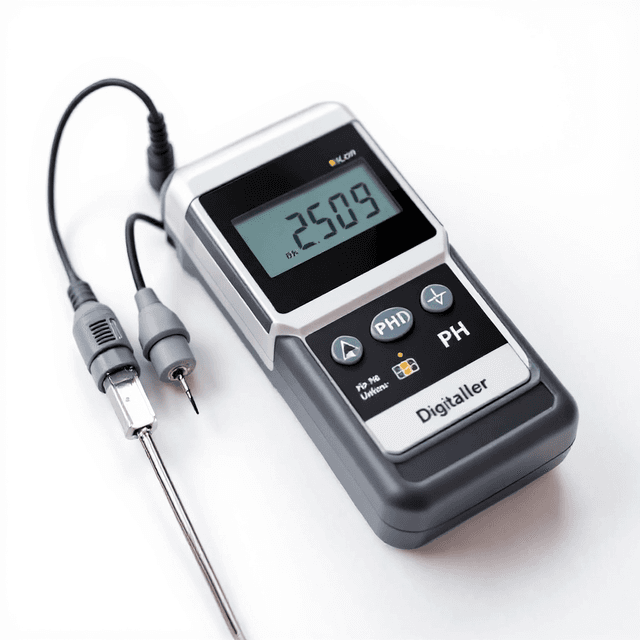
Portable Water Hardness Meter
Portable handheld water hardness meter with multipoint calibration (0.01-100 mmol/L range), temperature compensation, and 500-measurement data logging capability for laboratory and field applications.

Louise Corscadden, PhD
Director of Science · ConductScience
Ask Louise about Portable Water Hardness Meter fit, setup, configuration, or quote prep.
Already working with us? Sign in to connect this with My Scientist.
Key Specifications
Full details →- Model fit
- Configured during quote
- SKU family
- LH-0003
- Shipping box
- 3.0 x 17.0 x 8.5 cm
- Ordering
- Online checkout and quote request available
- Category
- pH Meters
- Build notes
- Confirm accessories, station layout, and support needs before purchase
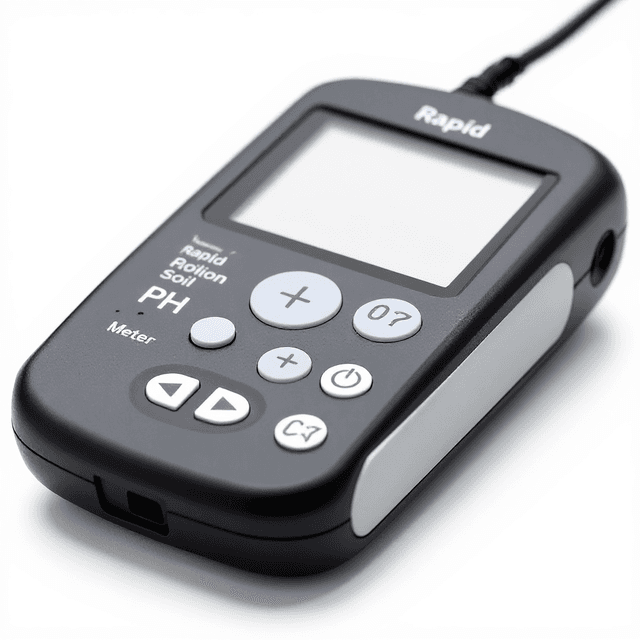
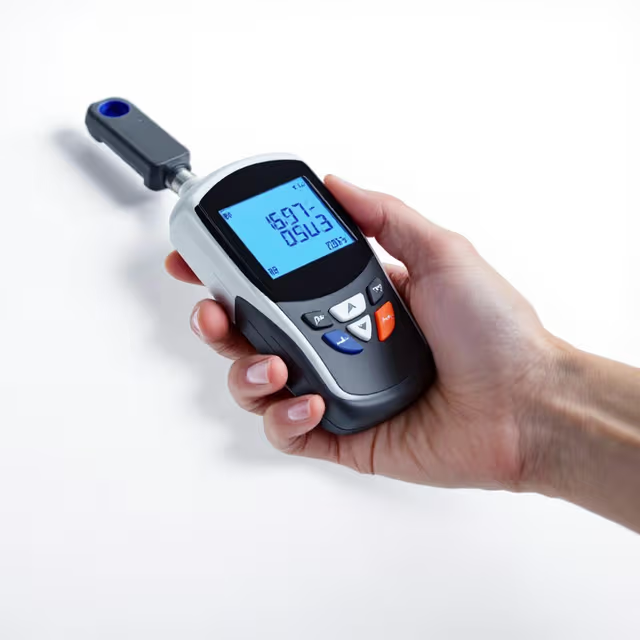
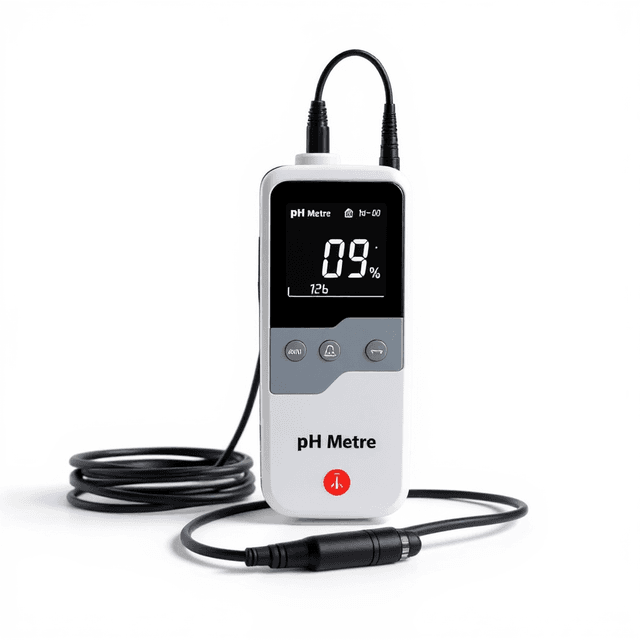
The Portable Water Hardness Meter (BIO-0389) is a precision handheld instrument designed for quantitative measurement of water hardness in laboratory, field, and quality control applications. The device employs ion-selective electrode technology with multipoint calibration capability (2-5 calibration points spanning 0.01 to 100 mmol/L) to ensure accurate hardness determinations across a wide concentration range.
This portable system features dual measurement modes with manual or auto-endpoint detection, comprehensive data logging capacity for 500 measurement sets, and temperature compensation functionality. The custom LCD display (80×60mm) provides clear readout of hardness values with 0.1°C temperature resolution and ±0.5°C accuracy. Power flexibility is achieved through either 3×1.5V AA batteries or DC5V adapter operation, supporting extended field deployment or continuous laboratory use.
How It Works
The water hardness meter operates using ion-selective electrode (ISE) technology specifically designed to respond to divalent cations, primarily calcium (Ca²⁺) and magnesium (Mg²⁺) ions that constitute water hardness. The electrode generates a potential difference proportional to the logarithm of ion activity in solution, following the Nernst equation. This electrochemical response is converted to hardness units through internal calibration algorithms.
Temperature compensation is integral to accurate measurement, as ion activity and electrode response are temperature-dependent. The integrated temperature sensor provides automatic correction with 0.1°C resolution and ±0.5°C accuracy. The multipoint calibration system (2-5 points spanning 0.01 to 100 mmol/L) establishes the electrode response curve across the full measurement range, ensuring linearity and accuracy in both low and high hardness samples.
Data acquisition employs either manual endpoint detection or automatic endpoint determination when measurement stability criteria are met. The BNC connector interface accommodates standard ISE connections, while the 3.5mm jack socket enables temperature probe integration for comprehensive measurement control.
Features & Benefits
Shipping weight
- 2.0 lb
Shipping box
- L: 3.0 cm
- W: 17.0 cm
- H: 8.5 cm
| Feature | This Product | Typical Alternative | Advantage |
|---|---|---|---|
| Calibration Points | 2-5 calibration points (0.01, 0.1, 1, 10, 100 mmol/L) | Basic models often provide 2-3 point calibration with limited range coverage | Extended calibration range ensures accuracy across ultra-pure to high-hardness samples without range switching |
| Data Storage Capacity | 500 measurement datasets | Entry-level instruments typically store 50-200 measurements | Higher storage capacity supports extended field campaigns and batch analysis without data download requirements |
| Temperature Accuracy | ±0.5°C accuracy with 0.1°C resolution | Basic models may offer ±1°C accuracy with 1°C resolution | Enhanced temperature precision improves measurement reliability through more accurate compensation calculations |
| Power Options | 3×1.5V AA batteries or DC5V adapter | Many portable units rely solely on battery power | Dual power capability enables continuous laboratory operation while maintaining field portability |
| Display System | Custom LCD (80×60mm) | Standard LCD displays vary in size and customization | Large custom display enhances readability and data presentation in various lighting conditions |
| Auto-Off Programming | Programmable 10, 20, or 30 minute intervals | Fixed auto-off timing or no programmable options | Customizable power management balances battery conservation with operational requirements |
This meter combines multipoint calibration capability with comprehensive data logging and dual power options in a portable format. The programmable features and large display system provide laboratory-grade functionality for field applications requiring extended operation and high measurement capacity.
Practical Tips
Perform multipoint calibration using fresh standards spanning the expected sample concentration range, allowing electrode equilibration of 2-3 minutes between each calibration point.
Why: Proper equilibration time ensures stable electrode response and accurate calibration slope determination.
Store calibration standards in sealed containers and replace monthly to prevent concentration drift from evaporation or contamination.
Why: Fresh standards maintain calibration accuracy and prevent systematic measurement errors.
Clean the electrode with distilled water between measurements and store in appropriate storage solution when not in use.
Why: Proper electrode maintenance prevents contamination and maintains membrane sensitivity.
Verify temperature probe accuracy monthly using a certified reference thermometer and apply offset correction if deviation exceeds ±0.5°C.
Why: Accurate temperature measurement is essential for proper compensation and measurement reliability.
Allow samples to equilibrate to measurement temperature before analysis to minimize temperature compensation errors.
Why: Temperature equilibration reduces measurement uncertainty and improves reproducibility.
Use adequate sample volume to fully immerse the electrode and minimize edge effects during measurement.
Why: Sufficient sample volume ensures representative measurements and stable electrode response.
If measurements drift or show poor reproducibility, check electrode connections and perform slope verification using known standards.
Why: Connection issues and electrode degradation are common causes of measurement instability.
Record measurement conditions (temperature, sample preparation method) along with hardness values for data traceability.
Why: Complete measurement documentation enables data validation and troubleshooting of anomalous results.
Setup Guide
What’s in the Box
- Portable water hardness meter (main unit)
- Water hardness electrode (typical)
- Temperature probe (typical)
- BNC cable (typical)
- DC5V power adapter
- Carrying case (typical)
- Calibration standards set (typical)
- User manual and quick reference guide (typical)
Warranty
ConductScience provides a standard one-year manufacturer warranty covering defects in materials and workmanship, with technical support available for calibration procedures and troubleshooting assistance.
Compliance
What is the measurement range and accuracy for water hardness determination?
The instrument measures water hardness from 0.01 to 100 mmol/L using 2-5 point calibration. Temperature accuracy is ±0.5°C with 0.1°C resolution. Consult product datasheet for specific hardness measurement accuracy specifications.
How does temperature compensation affect measurement reliability?
Automatic temperature compensation corrects for temperature-dependent electrode response and ion activity effects. The integrated temperature sensor provides ±0.5°C accuracy with offset calibration capability within ±10°C range.
What data storage and export capabilities are available?
The meter stores up to 500 measurement datasets in internal memory. Data management features include manual or auto-endpoint detection modes. Consult product datasheet for specific data export formats and connectivity options.
How frequently should calibration be performed?
Calibration frequency depends on measurement accuracy requirements and electrode condition. The 2-5 point calibration system (0.01-100 mmol/L standards) should be verified regularly, with daily calibration recommended for critical applications.
What sample volume and electrode immersion requirements apply?
Adequate sample volume must accommodate full electrode immersion with sufficient depth for stable readings. Specific volume requirements depend on electrode geometry. Consult electrode documentation for minimum sample volume specifications.
How does this instrument compare to titration-based hardness methods?
Ion-selective electrode measurement provides rapid results without reagent consumption, suitable for continuous monitoring and field applications. Titration methods may offer different selectivity profiles and are often used for reference measurements.
What maintenance procedures are required for optimal performance?
Regular electrode cleaning, calibration verification, and proper storage in appropriate solutions maintain measurement accuracy. Temperature probe accuracy should be verified periodically against certified reference standards.
Can the instrument measure total hardness versus individual Ca²⁺ and Mg²⁺ concentrations?
The electrode responds to combined divalent cation activity, providing total hardness measurement. Individual ion determination requires ion-specific electrodes or alternative analytical methods such as atomic absorption spectroscopy.
Have a question about this product?
Have a question? Just ask.
Send it over and we'll email you a personalized answer — no call, no scheduling.
Prefer to talk it through?
Accessories
Enhance your setup with compatible accessories
Frequently Bought Together