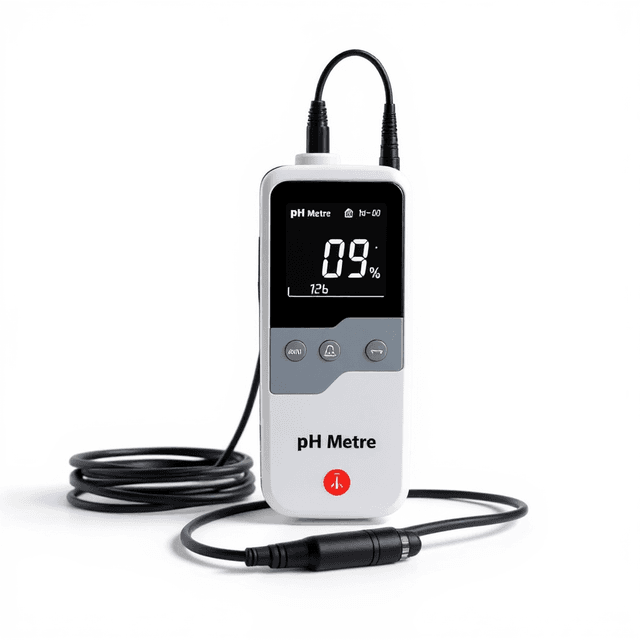
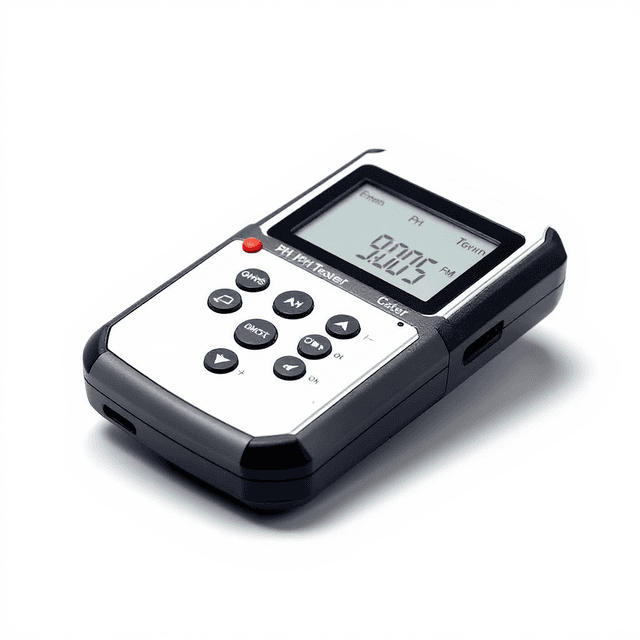
7-Parameter Water Quality Analyzer with Data Logging
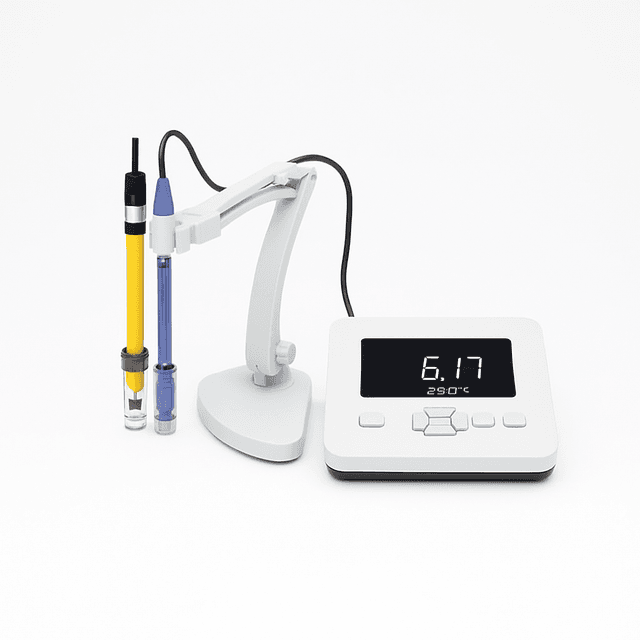
Benchtop multiparameter analyzer for simultaneous pH, conductivity, TDS, and optional ORP/ion measurements with multiple calibration standards and temperature compensation.

Louise Corscadden, PhD
Director of Science · ConductScience
Ask Louise about 7-Parameter Water Quality Analyzer with Data Logging fit, setup, configuration, or quote prep.
Already working with us? Sign in to connect this with My Scientist.
Key Specifications
Full details →- Model fit
- Configured during quote
- SKU family
- BIO-0387
- Shipping box
- 6.0 x 21.0 x 18.8 cm
- Ordering
- Online checkout and quote request available
- Category
- pH Meters
- Build notes
- Confirm accessories, station layout, and support needs before purchase
The Benchtop Multiparameter Water Quality Meter provides comprehensive aqueous solution analysis through simultaneous measurement of pH, conductivity, total dissolved solids (TDS), with optional oxidation-reduction potential (ORP) and ion concentration capabilities. This benchtop instrument features multiple calibration options including USA, NIST, and DIN pH buffer standards, plus two custom buffer configurations for specialized applications.
The system accommodates diverse measurement units (ppm, mg/L, mol/L, mmol/L) and offers flexible conductivity cell constants (K=0.1, 1, 10, or custom) to match specific sample requirements. Temperature compensation utilizes linear coefficients from 0.0-10.0%/°C with reference temperatures of 20°C or 25°C, ensuring accurate measurements across varying thermal conditions.
How It Works
pH measurement operates through potentiometric detection using a glass electrode system that generates voltage proportional to hydrogen ion activity. The meter compares this voltage against a stable reference electrode, with the Nernst equation governing the relationship between pH and measured potential. Multiple buffer calibration points (1 or 2) establish the electrode response curve for accurate sample measurement.
Conductivity measurement employs an alternating current method through conductivity cells with defined cell constants (K=0.1, 1, 10). The instrument applies AC voltage across electrodes and measures resulting current flow, with conductivity calculated from Ohm's law principles. Temperature compensation algorithms adjust readings based on the linear temperature coefficient settings (0.0-10.0%/°C) to account for ionic mobility changes with temperature.
Total dissolved solids calculation derives from conductivity measurements using empirically determined conversion factors, while optional ORP measurement utilizes platinum electrodes to assess oxidation-reduction potential. Ion-selective measurements, when configured, employ specific electrodes that respond selectively to target ions through membrane potential changes.
Features & Benefits
Automation Level
- semi-automated
pH
- Range
Calibration Points
- 1 or 2 points
pH Buffer Options
- USA, NIST, DIN, 2 custom buffers
ORP(Optional)
- Range
lon(Optional)
- Range
Measurement Units
- ppm, mg/L, mol/L, mmol/L
Conductivity
- Range
Calibration Solutions
- 10μS/cm, 84μS/cm, 1413μS/cm, 12.88mS/cm, 111.8mS/cm
Temperature Coefficient
- Linear(0.0~10.0%/°C), pure water
Reference Temperature
- 20/25℃
Cell Constant
- K=0.1, 1, 10 or custom
TDS
- Range
Brand
- ConductScience
Research Domain
- Analytical Chemistry
- Environmental Monitoring
- Food Science
- Materials Science
- Microbiology
- Pharmaceutical QC
Accuracy
- ±0.2mg/L, ±2.0%
Shipping weight
- 1.5 lb
Shipping box
- L: 6.0 cm
- W: 21.0 cm
- H: 18.8 cm
| Feature | This Product | Typical Alternative | Advantage |
|---|---|---|---|
| pH Buffer Standards | USA, NIST, DIN, plus 2 custom buffer options | Entry-level models often provide only 2-3 standard buffer sets | Greater flexibility for international protocols and specialized applications requiring custom buffer systems. |
| Cell Constant Options | K=0.1, 1, 10, or custom cell constants | Basic instruments typically offer 1-2 fixed cell constants | Enables measurement optimization across wider conductivity ranges from ultrapure to concentrated solutions. |
| Temperature Compensation Range | Linear 0.0-10.0%/°C with dual reference temperatures | Standard models often provide fixed temperature coefficients | Customizable compensation matches specific sample characteristics for improved accuracy across temperature variations. |
| Measurement Units | ppm, mg/L, mol/L, mmol/L selectable display | Basic units may offer limited unit conversions | Direct readout in preferred units eliminates manual conversions and reduces calculation errors in protocols. |
| Calibration Flexibility | 1 or 2 point pH calibration selectable | Some models require fixed multi-point calibration procedures | Calibration complexity can match precision requirements, from routine 1-point to enhanced 2-point accuracy. |
This multiparameter meter provides comprehensive buffer standard compatibility, flexible conductivity cell configurations, and customizable temperature compensation. The combination of multiple measurement units and selectable calibration procedures accommodates diverse analytical protocols in research and quality control environments.
Practical Tips
Perform pH calibration with buffers at similar temperature to your samples to minimize thermal equilibration errors.
Why: Temperature differences between calibration buffers and samples introduce measurement errors even with automatic temperature compensation.
Store pH electrodes in appropriate storage solution and replace reference electrolyte regularly according to usage frequency.
Why: Proper electrode maintenance prevents drift and extends electrode lifespan, maintaining measurement accuracy over time.
Select conductivity cell constant based on expected sample range: K=0.1 for ultrapure water, K=1 for drinking water, K=10 for seawater.
Why: Appropriate cell constant selection optimizes measurement precision and minimizes electrode polarization effects.
Allow samples to reach thermal equilibrium before measurement, especially when using temperature compensation.
Why: Rapid temperature changes can cause electrode response delays that temporary compensation cannot fully correct.
If pH readings drift during measurement, check electrode junction condition and reference chamber fill level.
Why: Electrode drift typically indicates reference junction problems or electrolyte depletion affecting stable potential development.
Use fresh calibration buffers and verify buffer pH values before calibration, especially with custom buffer systems.
Why: Buffer degradation over time affects calibration accuracy, particularly important for precision analytical measurements.
Rinse electrodes thoroughly between samples to prevent cross-contamination and chemical interactions.
Why: Sample carryover can affect subsequent measurements and potentially damage electrodes through incompatible chemical exposure.
Setup Guide
What’s in the Box
- Benchtop multiparameter water quality meter
- pH electrode with cable (typical)
- Conductivity cell with cable (typical)
- Temperature probe (typical)
- Power adapter (typical)
- Calibration buffer solutions set (typical)
- Conductivity standard solutions set (typical)
- User manual and calibration certificate (typical)
Warranty
ConductScience provides a standard one-year manufacturer warranty covering defects in materials and workmanship, with technical support for calibration procedures and troubleshooting assistance.
Compliance
What calibration frequency is recommended for accurate pH measurements?
Calibration frequency depends on measurement precision requirements and sample characteristics. For routine work, daily single-point calibration may suffice, while critical measurements require fresh 2-point calibration before each session. Electrode condition and buffer age also influence calibration stability.
Can the instrument measure samples with varying ionic strengths simultaneously?
The meter handles diverse samples through selectable cell constants (K=0.1, 1, 10, custom), allowing optimization for specific conductivity ranges. However, individual measurements should use appropriate cell constant selection based on expected sample conductivity to maintain accuracy.
How does temperature compensation affect measurement accuracy in varying ambient conditions?
Linear temperature compensation (0.0-10.0%/°C) automatically corrects for temperature-dependent changes in ionic mobility and electrode response. Users set compensation coefficients based on sample type, with reference temperatures of 20°C or 25°C matching specific analytical protocols.
What maintenance procedures are required for electrode longevity?
pH electrodes require proper storage in appropriate solutions, regular cleaning with compatible solvents, and periodic reference chamber refilling. Conductivity cells need cleaning between samples and occasional cell constant verification. Consult product datasheet for specific maintenance intervals.
Can custom pH buffers be programmed for specialized applications?
The instrument accommodates two custom buffer configurations beyond standard USA, NIST, and DIN options. This allows calibration with application-specific buffer systems required for specialized analytical protocols or non-standard pH ranges.
How do I select appropriate measurement units for my analytical protocol?
The meter offers ppm, mg/L, mol/L, and mmol/L units for direct compatibility with various analytical methods. Selection depends on your specific protocol requirements, with mass-based units (ppm, mg/L) common for environmental work and molar units preferred for chemical calculations.
What data recording capabilities are available for documentation requirements?
Data recording and export capabilities depend on specific model configuration. Consult product datasheet for information on data logging capacity, export formats, and computer connectivity options required for your documentation protocols.
Have a question about this product?
Have a question? Just ask.
Send it over and we'll email you a personalized answer — no call, no scheduling.
Prefer to talk it through?
Accessories
Enhance your setup with compatible accessories