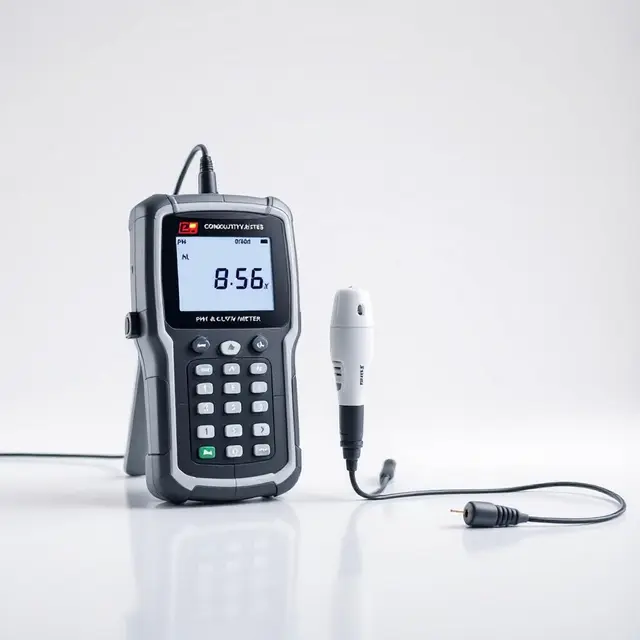
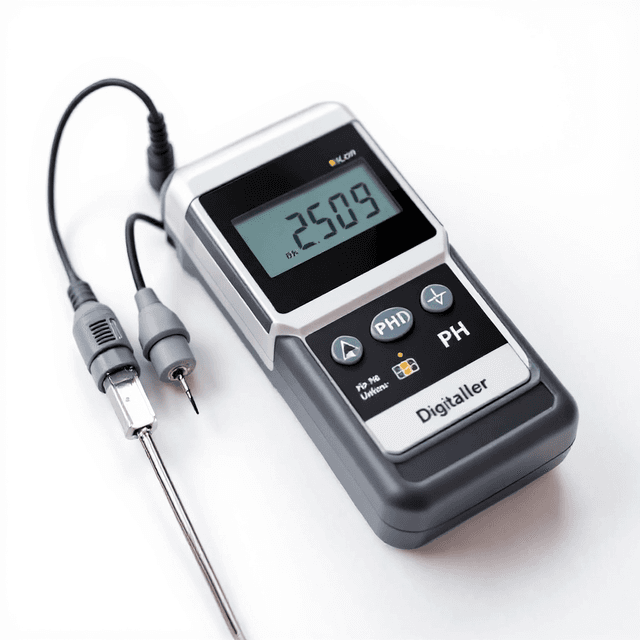
Portable Conductivity/TDS/Salinity Meter
Portable electrochemical meter for simultaneous measurement of conductivity (2-20,000 µS/cm), TDS, and salinity with multi-point calibration capability and automatic temperature compensation.

Louise Corscadden, PhD
Director of Science · ConductScience
Ask Louise about Portable Conductivity/TDS/Salinity Meter fit, setup, configuration, or quote prep.
Already working with us? Sign in to connect this with My Scientist.
Key Specifications
Full details →- Model fit
- 1 selectable configurations
- SKU family
- BIO-0385
- Shipping box
- 42.0 x 43.6 x 38.0 cm
- Ordering
- Online checkout and quote request available
- Category
- pH Meters
- Build notes
- Confirm accessories, station layout, and support needs before purchase
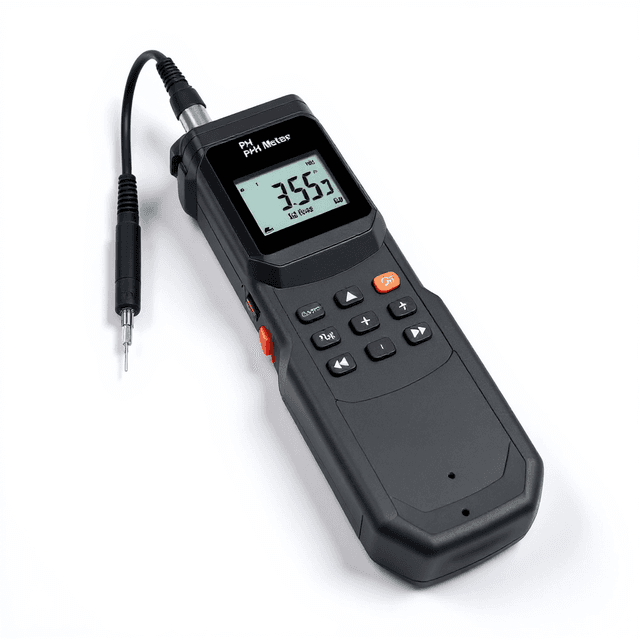
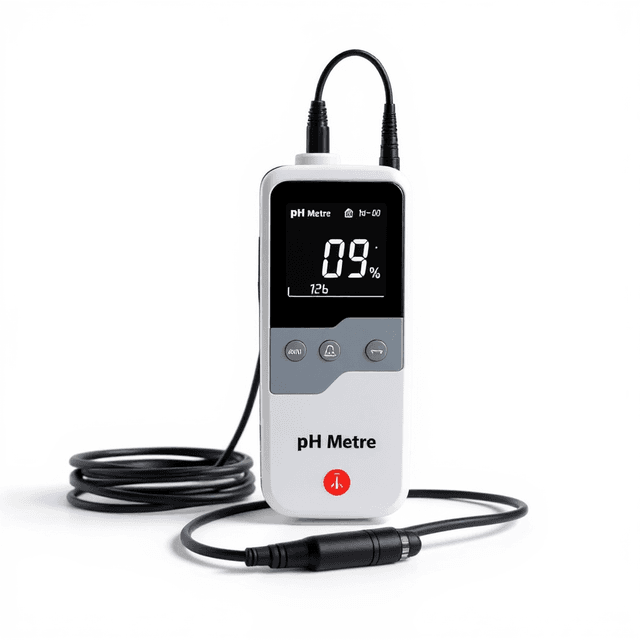
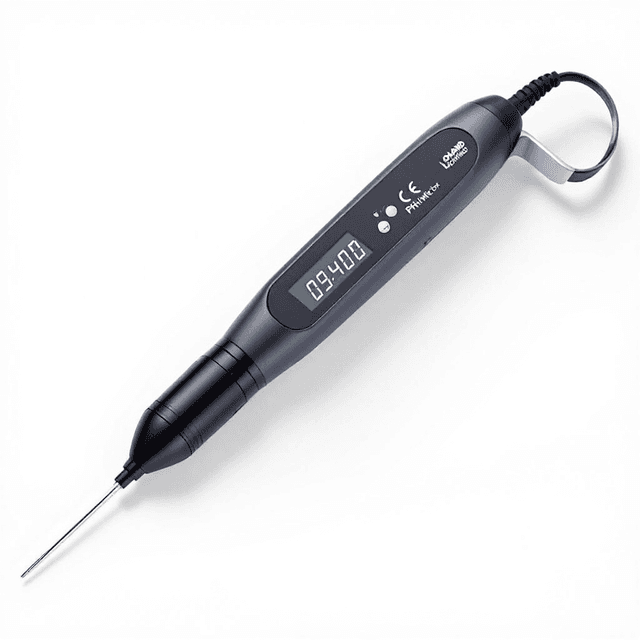
The Portable Conductivity/TDS/Salinity Meter (BIO-0385) is a handheld electrochemical instrument designed for rapid field and laboratory assessment of water quality parameters. This multi-parameter device simultaneously measures electrical conductivity, total dissolved solids (TDS), and salinity using advanced electrode technology and microprocessor-based calculations.
The instrument features a wide conductivity measurement range from 2 µS/cm to 20,000 µS/cm with ±1% full-scale accuracy, making it suitable for diverse aqueous samples from ultrapure water to moderately saline solutions. The device incorporates automatic temperature compensation and supports 1-5 point calibration using standard conductivity solutions (10 µS/cm, 84 µS/cm, 1413 µS/cm, 12.88 mS/cm, 111.8 mS/cm) for enhanced measurement reliability across different sample types.
How It Works
The instrument operates on the principle of electrical conductivity measurement using a four-electrode conductivity cell. When immersed in an aqueous solution, the electrodes apply an alternating current at a fixed frequency, typically 1 kHz, to minimize electrode polarization effects. The resulting voltage drop across the solution is inversely proportional to the solution's conductivity.
Total dissolved solids (TDS) values are calculated from conductivity measurements using a user-adjustable conversion factor (0.1-1.0, default 0.5), which accounts for the relationship between ionic mobility and total dissolved matter. Salinity determination employs standard algorithms that correlate conductivity with salt concentration based on established oceanographic relationships. The microprocessor automatically applies temperature compensation using built-in temperature sensing to provide accurate readings across varying sample temperatures.
Features & Benefits
Shipping weight
- 2.0 lb
Shipping box
- L: 42.0 cm
- W: 43.6 cm
- H: 38.0 cm
| Feature | This Product | Typical Alternative | Advantage |
|---|---|---|---|
| Conductivity Range | 2-20,000 µS/cm | Entry-level models often limited to narrower ranges or require range switching | Single-range operation eliminates range selection errors and covers most routine applications |
| Calibration Points | 1-5 calibration points | Basic models typically offer 1-2 point calibration | Multiple calibration points improve accuracy across the full measurement range |
| Multi-Parameter Measurement | Conductivity, TDS, and salinity from single measurement | Single-parameter instruments require separate measurements | Provides comprehensive water quality assessment with improved workflow efficiency |
| Temperature Compensation | Automatic with ±0.5°C accuracy | Manual compensation or less precise automatic correction | Eliminates user error and provides consistent results across temperature variations |
| TDS Conversion Factor | Adjustable 0.1-1.0 (default 0.5) | Fixed conversion factors in basic models | Customization for different sample matrices improves TDS measurement accuracy |
This instrument combines wide-range conductivity measurement with multi-point calibration and automatic temperature compensation in a portable format. The adjustable TDS conversion factor and simultaneous multi-parameter measurement capability provide analytical flexibility for diverse water quality applications.
Practical Tips
Perform calibration using standards that bracket your expected sample range for optimal accuracy.
Why: Interpolation between calibration points provides better accuracy than extrapolation beyond calibrated ranges.
Allow calibration standards to equilibrate to sample temperature before calibration procedures.
Why: Temperature differences between standards and samples can introduce systematic errors despite automatic compensation.
Replace electrode storage solution monthly and keep the electrode junction moist at all times.
Why: Proper hydration maintains electrode performance and prevents junction blockage that degrades response time.
Gently stir or move the electrode during measurement to eliminate concentration gradients near the sensor.
Why: Static boundary layers can cause reading instability and slow response times in viscous or stratified samples.
Record sample temperature alongside conductivity readings even with automatic compensation enabled.
Why: Temperature data aids in data interpretation and allows detection of compensation system malfunctions.
If readings drift continuously, check for air bubbles trapped in the electrode cell geometry.
Why: Air bubbles reduce the effective electrode area and create unstable electrical contact with the sample.
Verify TDS conversion factor appropriateness by comparing calculated TDS with gravimetric analysis of representative samples.
Why: Different ion types have varying specific conductances, so universal conversion factors may not apply to all matrices.
Avoid measuring samples above 60°C or below 0°C unless electrode specifications explicitly allow extended temperature operation.
Why: Extreme temperatures can damage electrode components and compromise measurement accuracy and instrument longevity.
Setup Guide
What’s in the Box
- Portable conductivity/TDS/salinity meter main unit
- Conductivity electrode with cable
- Calibration solution set (10 µS/cm, 84 µS/cm, 1413 µS/cm, 12.88 mS/cm, 111.8 mS/cm)
- Power adapter or battery compartment (typical)
- Carrying case (typical)
- User manual and calibration certificate
- Electrode storage solution (typical)
Warranty
ConductScience provides a one-year manufacturer warranty covering defects in materials and workmanship. Technical support includes calibration guidance and troubleshooting assistance for optimal instrument performance.
Compliance
What is the optimal calibration frequency for routine water quality monitoring?
Calibrate daily for critical applications or weekly for routine monitoring. Always recalibrate after electrode cleaning, extended storage, or when measurements drift outside acceptable limits.
How does temperature affect conductivity measurements and compensation?
Conductivity typically increases 2-3% per degree Celsius. The instrument's automatic temperature compensation corrects to 25°C reference temperature with ±0.5°C accuracy.
What TDS conversion factor should be used for different sample types?
Use 0.5 (default) for general solutions, 0.7 for NaCl solutions, 0.5-0.6 for natural waters, and consult literature or empirical testing for specific matrix types.
How should the electrode be maintained between measurements?
Rinse with deionized water between samples, store in electrode storage solution when not in use, and avoid air drying which can damage the electrode junction.
What factors can interfere with conductivity measurements?
Air bubbles on electrodes, temperature gradients, electromagnetic interference, and electrode fouling can affect accuracy. Ensure complete electrode immersion and stable temperature.
Can this instrument measure highly pure water with very low conductivity?
The lower detection limit of 2 µS/cm makes it suitable for most laboratory water but may not be sensitive enough for ultrapure water systems requiring sub-1 µS/cm detection.
How does this compare to laboratory bench-top conductivity meters?
Offers comparable accuracy with enhanced portability but may have less sophisticated temperature compensation and data logging compared to high-end bench instruments.
Have a question about this product?
Have a question? Just ask.
Send it over and we'll email you a personalized answer — no call, no scheduling.
Prefer to talk it through?
Accessories
Enhance your setup with compatible accessories
Frequently Bought Together