Portable Colorimetry Equipment
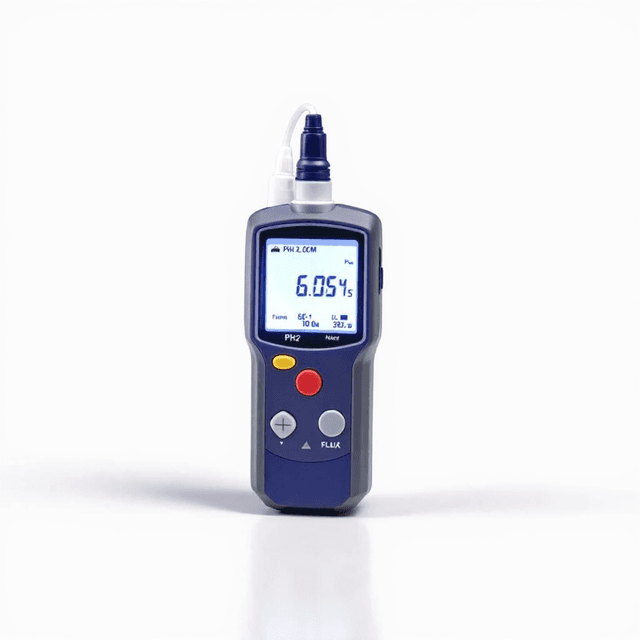
Portable colorimetric analyzer for field measurement of residual chlorine in water samples, measuring 0.00-3.00 mg/L using molybdenum antimony spectrophotometry at 520-525nm wavelength.

Louise Corscadden, PhD
Director of Science · ConductScience
Ask Louise about Portable Colorimetry Equipment fit, setup, configuration, or quote prep.
Already working with us? Sign in to connect this with My Scientist.
Key Specifications
Full details →- Model fit
- Configured during quote
- SKU family
- CS-LH-C01
- Shipping box
- 7.09 x 2.68 x 1.02 cm
- Ordering
- Online checkout and quote request available
- Category
- Portable Analyzers
- Build notes
- Confirm accessories, station layout, and support needs before purchase
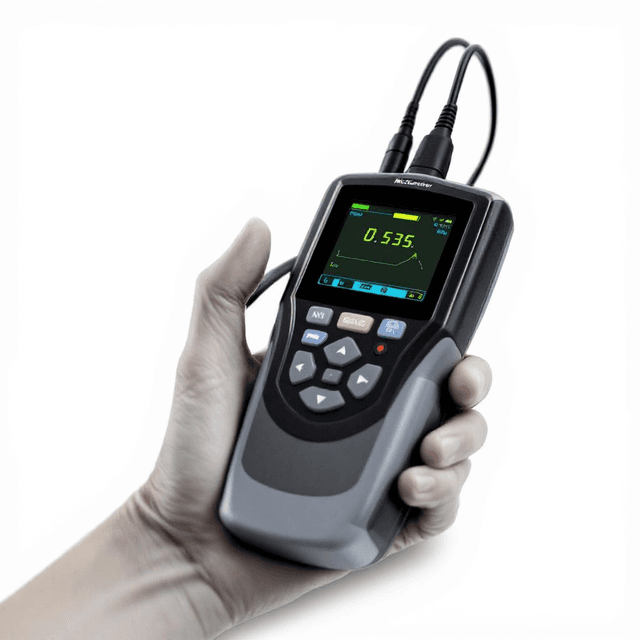
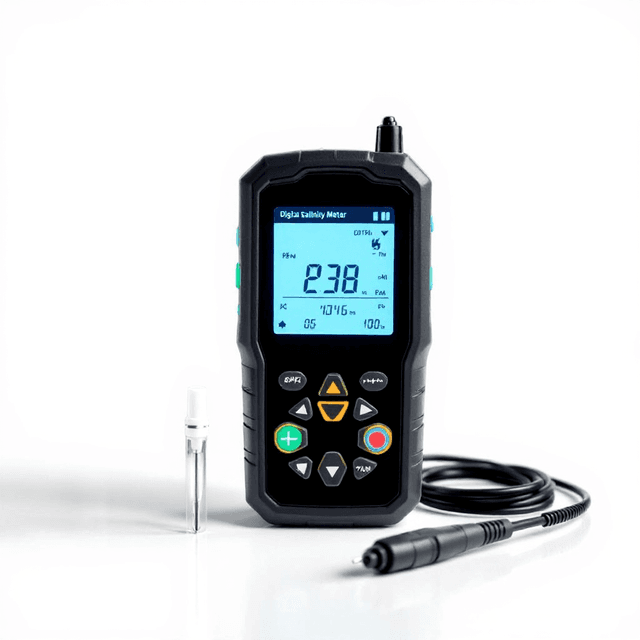
The Portable Colorimetry Equipment LH-C01 is a handheld colorimetric analyzer designed for field measurement of residual chlorine in water samples. Operating at a single wavelength of 520-525nm, this instrument uses molybdenum antimony spectrophotometry to quantify chlorine concentrations from 0.00 to 3.00 mg/L with LCD display readout in mg/L units.
The instrument features a compact form factor (180×68×26mm, 220g) and operates on a 9V battery providing over 40 hours of continuous use in power-saving mode. The device includes automatic zeroing capabilities and over-range detection with prompts for sample dilution when concentrations exceed the measurement range.
How It Works
The LH-C01 employs molybdenum antimony spectrophotometry, a colorimetric method where residual chlorine reacts with specific reagents to form a colored complex. The instrument measures light absorption at 520-525nm, a wavelength selected for optimal sensitivity to the chromophoric species formed during the reaction.
The LCD light source provides stable illumination for photometric measurements, while the single-wavelength design ensures focused detection of the target analyte. Sample measurement involves adding reagents to form the colored complex, then placing the sample in the measurement chamber where transmitted light intensity is converted to concentration values through pre-programmed calibration algorithms.
Automatic zeroing establishes baseline measurements, while over-range detection (indicated by 'HHHH' display) prompts users to dilute samples exceeding 3.00 mg/L. The power-saving mode optimizes battery consumption for extended field use.
Features & Benefits
Model
- LH-C01
Code
- Meanings
0.00
- Portable residual equipment has been zeroed
X.XX
- Show the result
HHHH
- Show the over range, please dilute the sample, repeat the test
00:00
- Show the timing
Product name
- Portable colorimetry equipment
Test item
- Residual chlorine
Measuring range
- 0.00~3.00mg/l
Light source
- LCD
Wavelength
- 520-525nm
Test method
- Molybdenum antimony spectrophotometry
Working condition
- 0~40âï¼Rh:0-90%
Research Domain
- Clinical Diagnostics
- Environmental Monitoring
- Food Science
- Industrial Hygiene
- Microbiology
- Pharmaceutical QC
Automation Level
- manual
Brand
- ConductScience
Accuracy
- Concentration ï¼1.5mg/L;±0.02mg/LConcentration â¥1.5mg/L;±0.05mg/L
Dimensions
- 180mm*68mm*26mm
Weight
- 220g
Shipping weight
- 0.15 lb
Shipping box
- L: 7.09 cm
- W: 2.68 cm
- H: 1.02 cm
| Feature | This Product | Typical Alternative | Advantage |
|---|---|---|---|
| Measurement Range | 0.00-3.00 mg/L | Entry-level colorimeters often provide narrower ranges or require multiple measurement modes | Covers typical drinking water and industrial chlorine residual concentrations in a single measurement range. |
| Operating Wavelength | Single wavelength 520-525nm | Some instruments use broader wavelength ranges or multiple wavelengths | Focused wavelength selection provides optimal sensitivity for molybdenum antimony method while simplifying optical design. |
| Battery Life | 40+ hours continuous operation | Portable analyzers typically offer shorter battery life or require frequent charging | Extended operation time supports multi-day field campaigns without battery replacement interruptions. |
| Display Type | LCD with direct mg/L readout | Basic models may use LED displays or require calculation steps | Direct concentration display eliminates manual calculations and reduces transcription errors in field conditions. |
| Detection Method | Molybdenum antimony spectrophotometry | Many portable units use DPD colorimetric methods | Provides alternative analytical approach with different selectivity characteristics for specific applications. |
| Operating Temperature Range | 0-40°C, 0-90% RH | Environmental tolerance varies by model and manufacturer | Wide environmental operating range supports field use across diverse climate conditions and seasonal variations. |
The LH-C01 offers dedicated chlorine analysis with molybdenum antimony spectrophotometry in a compact, long-battery-life package. The single-wavelength design focuses on chlorine-specific detection while the extended 40+ hour operation supports demanding field measurement campaigns.
Practical Tips
Verify zero reading with reagent blank before each measurement session and check with known chlorine standards periodically.
Why: Ensures baseline accuracy and detects any instrument drift that could affect measurement precision.
Clean the sample chamber and optical surfaces with lint-free cloths after each use to prevent sample carryover.
Why: Maintains optical clarity and prevents interference from residual sample contamination between measurements.
Allow samples and reagents to equilibrate to ambient temperature before measurement, especially in varying field conditions.
Why: Temperature differences can affect reaction kinetics and optical properties, potentially introducing measurement errors.
If 'HHHH' over-range display appears, dilute sample 1:1 with distilled water and multiply result by dilution factor.
Why: Brings high-concentration samples within the instrument's linear measurement range while maintaining quantitative accuracy.
Record measurement conditions including temperature, sample source, and reagent lot numbers for quality assurance documentation.
Why: Provides traceability for results and enables identification of systematic errors or trends in measurement data.
Handle molybdenum antimony reagents according to safety data sheets and dispose of waste solutions per local regulations.
Why: Reagents may contain hazardous chemicals requiring proper handling procedures and waste disposal protocols.
Use consistent reaction timing between reagent addition and measurement to ensure reproducible color development.
Why: Colorimetric reactions are time-dependent, and timing variations can introduce systematic measurement bias.
Store the instrument in dry conditions and remove batteries during extended storage periods to prevent corrosion.
Why: Moisture and battery leakage can damage electronic components and affect long-term instrument reliability.
Setup Guide
What’s in the Box
- LH-C01 Colorimeter main unit
- 9V battery
- Sample cuvettes (typical)
- User manual and operation guide
- Reagent preparation instructions (typical)
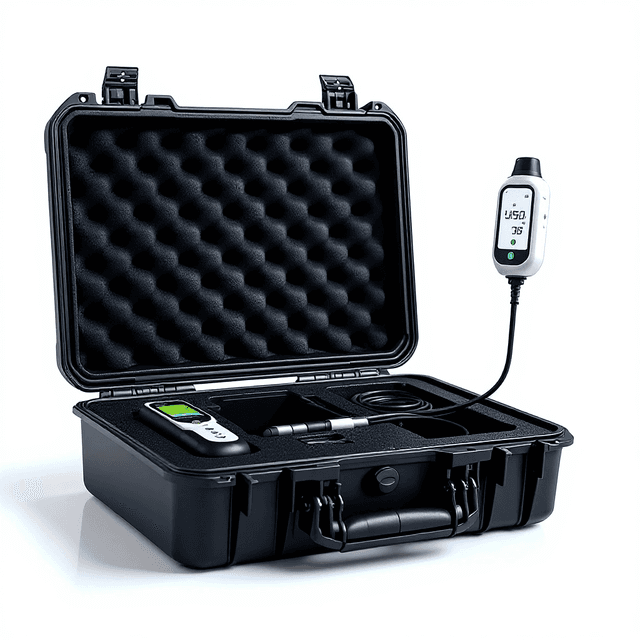
- Carrying case (typical)
Warranty
ConductScience provides a standard 1-year manufacturer warranty covering defects in materials and workmanship, along with technical support for operational and calibration questions.
Compliance
What is the detection limit and linear range for chlorine measurements?
The instrument measures chlorine from 0.00-3.00 mg/L with accuracy of ±0.02 mg/L below 1.5 mg/L and ±0.05 mg/L above 1.5 mg/L. Consult product datasheet for specific detection limit specifications.
How does temperature affect measurement accuracy?
The instrument operates from 0-40°C with up to 90% relative humidity. For optimal accuracy, maintain samples and reagents within this temperature range and allow thermal equilibration before measurement.
What sample volume is required for each measurement?
Consult product datasheet for specific sample volume requirements. The instrument uses standard spectrophotometric principles requiring sufficient volume for complete optical path measurement.
How often does the instrument require calibration?
The device includes automatic zeroing capabilities. Verification with chlorine standards should follow your laboratory's quality assurance protocols, typically involving regular calibration checks.
Can this instrument measure both free and total chlorine?
The molybdenum antimony method can be adapted for different chlorine species depending on reagent preparation and sample pretreatment protocols used.
What interfering substances affect chlorine measurements?
Common interferents in colorimetric chlorine analysis include pH extremes, turbidity, and competing oxidants. Follow standard sample preparation protocols to minimize matrix effects.
How does this compare to DPD colorimetric methods?
Molybdenum antimony spectrophotometry provides an alternative to DPD methods with different selectivity characteristics. Both are accepted analytical approaches for chlorine residual determination.
Have a question about this product?
Have a question? Just ask.
Send it over and we'll email you a personalized answer — no call, no scheduling.
Prefer to talk it through?