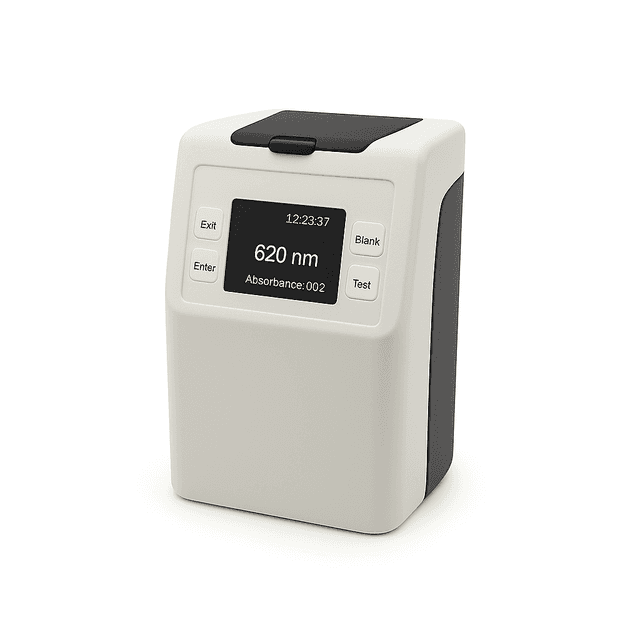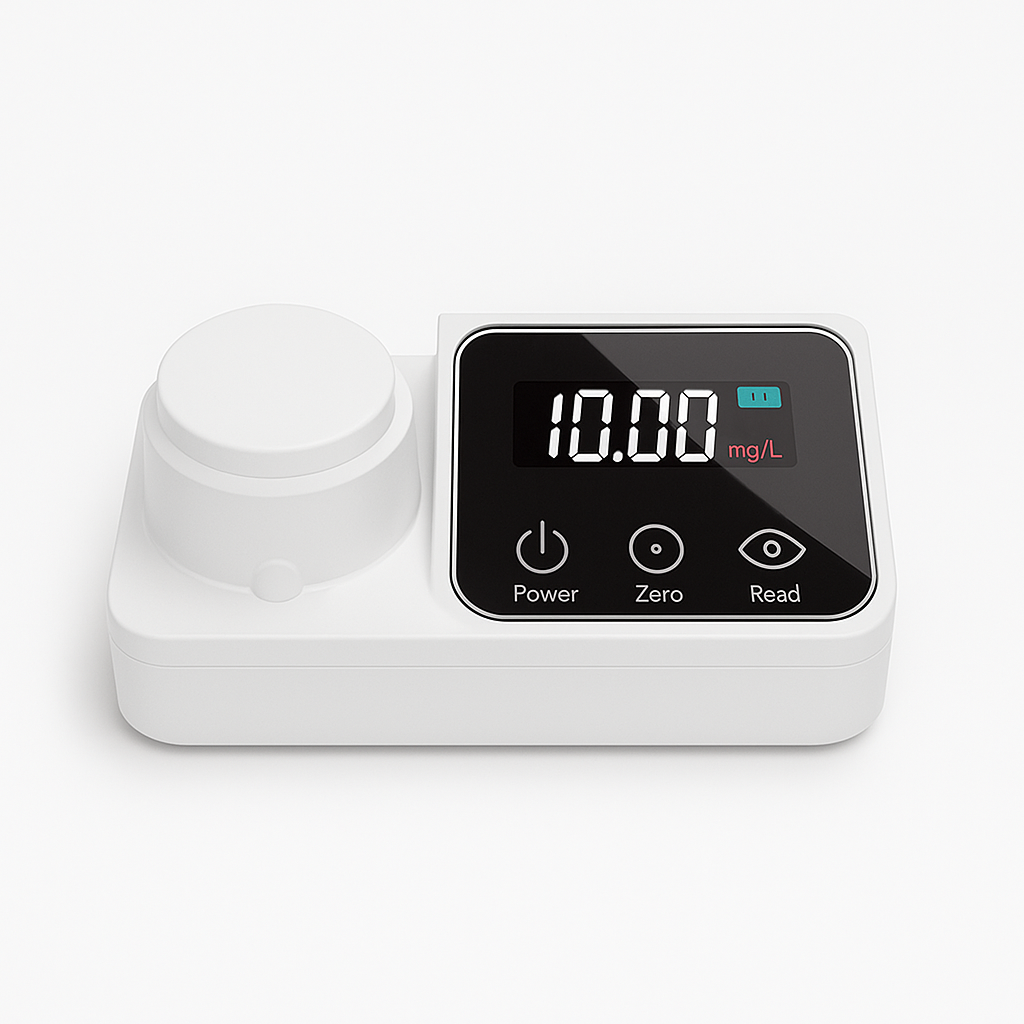
Portable Residual Chlorine Meter
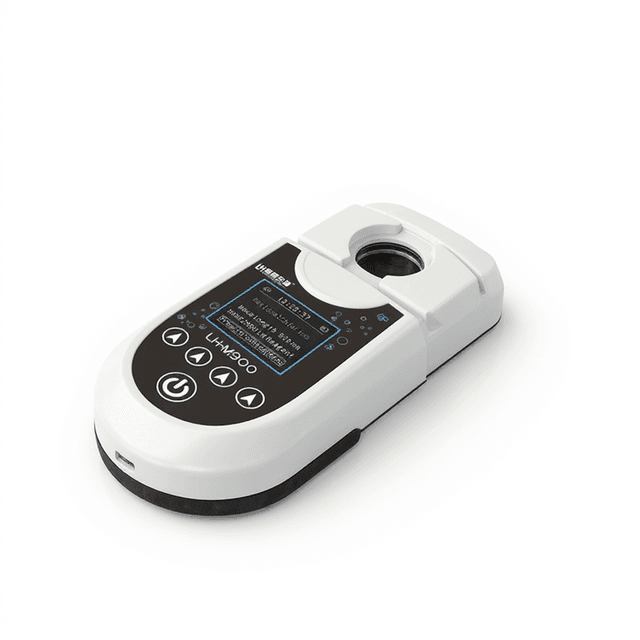
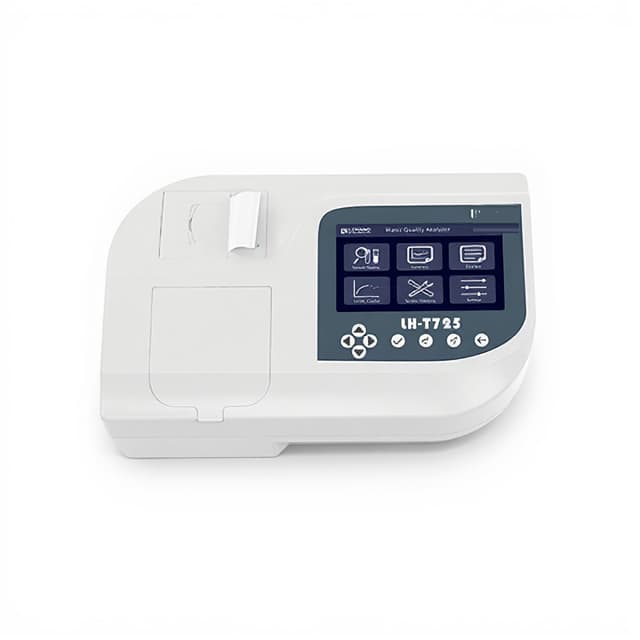
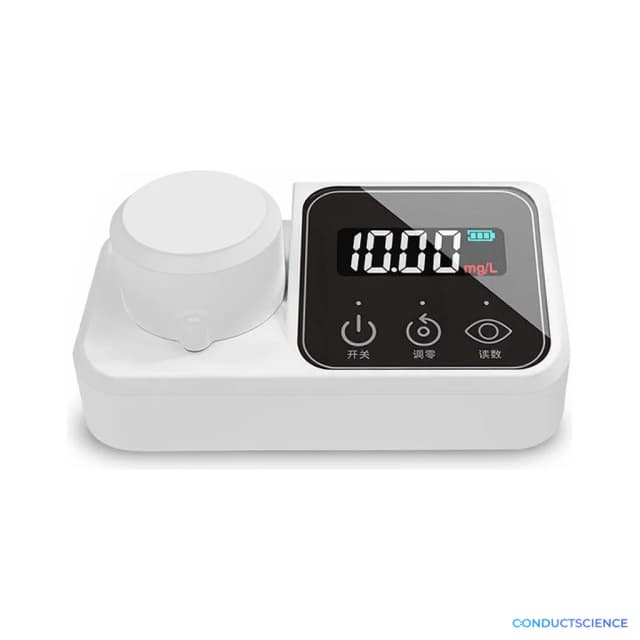
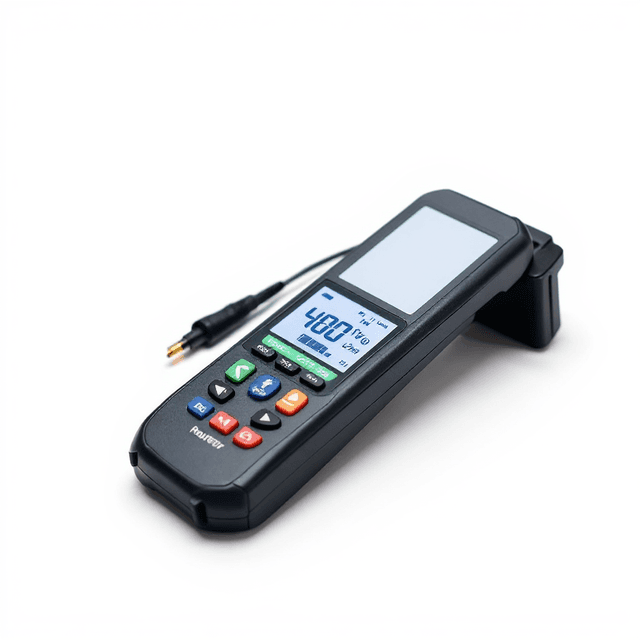
Portable DPD photometric analyzer for residual chlorine measurement in water samples, featuring 0.10-10.00 mg/L range with ±5% repeatability and IP65 protection for field applications.

Louise Corscadden, PhD
Director of Science · ConductScience
Ask Louise about Portable Residual Chlorine Meter fit, setup, configuration, or quote prep.
Already working with us? Sign in to connect this with My Scientist.
Key Specifications
Full details →- Model fit
- Configured during quote
- SKU family
- LH-WQ-0004
- Shipping box
- 128.0 x 70.0 x 48.0 cm
- Ordering
- Online checkout and quote request available
- Category
- Portable Analyzers
- Build notes
- Confirm accessories, station layout, and support needs before purchase
The Portable Residual Chlorine Meter employs DPD photometric methodology at 520nm wavelength to quantify free and total chlorine concentrations in aqueous samples. The instrument measures chlorine residuals from 0.10 to 10.00 mg/L with ±5% repeatability for concentrations ≥1.0 mg/L, providing field-portable colorimetric analysis for water quality assessment.
This handheld analyzer features IP65 environmental protection and operates continuously for over 24 hours on battery power, enabling deployment in field conditions and continuous monitoring applications. The DPD (N,N-diethyl-p-phenylenediamine) colorimetric method provides selective detection of chlorine species through formation of colored complexes measured at the characteristic 520nm absorption maximum.
How It Works
The instrument operates on the DPD (N,N-diethyl-p-phenylenediamine) colorimetric principle, where chlorine species oxidize the DPD reagent to form a magenta-colored radical cation. The intensity of color development is directly proportional to chlorine concentration, following Beer-Lambert law relationships. A 520nm LED light source illuminates the sample, and a photodetector measures transmitted light intensity to quantify absorbance.
Free chlorine (hypochlorous acid and hypochlorite ion) reacts immediately with DPD at pH 6.2-6.5, while total chlorine measurement requires addition of potassium iodide to release chlorine from chloramines and other combined forms. The photometric system converts absorbance measurements to concentration values through pre-programmed calibration curves specific to the 520nm wavelength and DPD chemistry.
Temperature compensation algorithms account for thermal effects on reaction kinetics and photodetector response, while the sealed optical system prevents ambient light interference. The IP65-rated housing protects internal components from moisture and particulates during field deployment.
Features & Benefits
Measuring Range
- 0.10-10.00 mg/L
Wavelength
- 520nm
Method
- DPD photometric
Repeatability (>=1.0 mg/L)
- <=+/-5%
Battery Life
- Over 24 hours continuous
IP Rating
- IP65
Automation Level
- manual
Brand
- ConductScience
Research Domain
- Clinical Diagnostics
- Environmental Monitoring
- Food Science
- Industrial Hygiene
- Microbiology
- Pharmaceutical QC
Shipping weight
- 0.19 lb
Shipping box
- L: 128.0 cm
- W: 70.0 cm
- H: 48.0 cm
| Feature | This Product | Typical Alternative | Advantage |
|---|---|---|---|
| Measuring Range | 0.10-10.00 mg/L | Entry-level models often offer narrower ranges or require multiple measurement modes | Single-range operation covers both trace detection and shock chlorination levels without method switching |
| Analytical Precision | ±5% repeatability for concentrations ≥1.0 mg/L | Handheld meters may provide ±10% or greater variability | Enhanced precision supports regulatory compliance monitoring and quality control protocols |
| Environmental Protection | IP65 rating | Basic models may lack environmental sealing | Enables reliable operation in wet field conditions and industrial environments |
| Battery Performance | Over 24 hours continuous operation | Standard instruments typically provide 8-12 hours of operation | Extended field deployment capability without power management concerns |
| Optical Method | DPD photometric at 520nm wavelength | Some units use broader spectrum measurement or different colorimetric approaches | Specific 520nm detection optimizes sensitivity for DPD-chlorine complex measurement |
| Physical Design | 128×70×48mm, 0.188 kg | Comparable instruments may be larger or heavier | Compact form factor facilitates single-handed operation and reduces transport burden |
This analyzer combines precise DPD photometric methodology with robust field-portable design, offering quantitative chlorine measurement from 0.10-10.00 mg/L with ±5% repeatability. The IP65-protected housing and extended 24-hour battery life enable reliable deployment in demanding field conditions while maintaining analytical accuracy for regulatory and research applications.
Practical Tips
Verify calibration using certified chlorine standard solutions that bracket your expected sample concentrations, and perform zero calibration with deionized water before each measurement session.
Why: Regular calibration ensures measurement accuracy within the ±5% repeatability specification and accounts for reagent aging or environmental factors.
Clean the optical measurement chamber with deionized water between samples and store the instrument in a dry location when not in use.
Why: Prevents cross-contamination between samples and maintains optical clarity for accurate photometric measurements at 520nm.
Collect samples in clean glass or plastic containers and analyze immediately after DPD reagent addition to minimize chlorine loss through volatilization or degradation.
Why: Chlorine species are reactive and concentrations can change rapidly, especially in samples with chlorine-demanding materials or elevated temperatures.
If readings appear inconsistent, check reagent freshness and ensure complete mixing of DPD with sample before measurement.
Why: DPD reagent can degrade over time or with light exposure, and incomplete mixing leads to non-uniform color development affecting photometric accuracy.
Record sample temperature, pH, and any pretreatment applied, as these factors can influence DPD reaction kinetics and chlorine speciation.
Why: Environmental conditions affect the chemistry of chlorine species and DPD complex formation, providing context for data interpretation.
Handle DPD reagents according to safety data sheet requirements and avoid skin contact, as DPD can cause staining and potential sensitization.
Why: DPD is a chemical reagent requiring proper handling procedures to prevent exposure and ensure safe analytical operations.
For low-level measurements near 0.10 mg/L, allow extra time for color development and minimize ambient light exposure during reading.
Why: Low chlorine concentrations produce weaker color signals that require optimal reaction conditions for reliable quantification.
Monitor battery status regularly during extended field campaigns and carry spare batteries when operating beyond the 24-hour continuous use period.
Why: Battery depletion can affect optical system stability and measurement accuracy, particularly during extended field deployment scenarios.
Setup Guide
What’s in the Box
- Portable residual chlorine meter
- Battery pack
- Sample cells and covers (typical)
- DPD reagent starter kit (typical)
- Calibration standards (typical)
- Carrying case (typical)
- User manual and calibration certificate (typical)
- USB cable for data transfer (typical)
Warranty
ConductScience provides a standard one-year manufacturer warranty covering defects in materials and workmanship, with technical support for calibration procedures and analytical methodology questions.
Compliance
References
Background reading relevant to this product:
What is the detection limit and linear range for chlorine measurement?
The instrument measures from 0.10 to 10.00 mg/L, with the lower limit of 0.10 mg/L representing the practical detection threshold for the DPD photometric method at 520nm. The linear range spans two orders of magnitude, suitable for most disinfection monitoring applications.
How does temperature affect measurement accuracy?
Temperature influences DPD reaction kinetics and photodetector response. While specific temperature compensation details require consultation with the product datasheet, the ±5% repeatability specification at concentrations ≥1.0 mg/L accounts for normal environmental temperature variations during field use.
Can this meter differentiate between free and total chlorine?
The DPD photometric method at 520nm enables measurement of both free and total chlorine depending on reagent addition protocols. Free chlorine reacts directly with DPD, while total chlorine requires potassium iodide addition to release combined chlorine species for measurement.
What sample volume is required for analysis?
Sample volume requirements depend on the specific measurement cell design and are not specified in the basic product attributes. Consult the product datasheet for exact sample volume specifications and any minimum volume requirements for accurate photometric measurement.
How often should calibration be performed?
Calibration frequency depends on usage intensity and accuracy requirements. The IP65 protection and stable 520nm LED system suggest robust design, but calibration protocols using certified chlorine standards should follow standard analytical practices and regulatory requirements for the specific application.
What interfering substances affect chlorine measurement?
DPD colorimetric methods can experience interference from oxidizing agents, heavy metals, and high turbidity. The 520nm wavelength measurement provides selectivity for the DPD-chlorine complex, but sample pretreatment may be required for heavily contaminated matrices.
Is this meter suitable for continuous monitoring applications?
The over 24-hour battery life enables extended deployment, but this is a handheld portable unit designed for discrete sample analysis rather than continuous flow monitoring. The manual operation and reagent addition requirements make it suitable for periodic grab sampling rather than automated continuous measurement.
What data storage and transfer capabilities are available?
Data storage and transfer specifications are not detailed in the basic product attributes. The compact design suggests potential for internal memory and digital connectivity, but specific capabilities for measurement logging, data export formats, and computer interface options require consultation with the product datasheet.
Have a question about this product?
Have a question? Just ask.
Send it over and we'll email you a personalized answer — no call, no scheduling.
Prefer to talk it through?
Accessories
Enhance your setup with compatible accessories