Portable Conductivity Meter
Waterproof portable conductivity meter with automatic temperature compensation, measuring 0-100.0 mS/cm across five auto-ranging scales for field and laboratory applications.

Louise Corscadden, PhD
Director of Science · ConductScience
Ask Louise about Portable Conductivity Meter fit, setup, configuration, or quote prep.
Already working with us? Sign in to connect this with My Scientist.
Key Specifications
Full details →- Model fit
- Configured during quote
- SKU family
- Assigned during quote
- Shipping box
- 18.3 x 17.3 x 13.9 cm
- Ordering
- Online checkout and quote request available
- Category
- Portable Analyzers
- Build notes
- Confirm accessories, station layout, and support needs before purchase
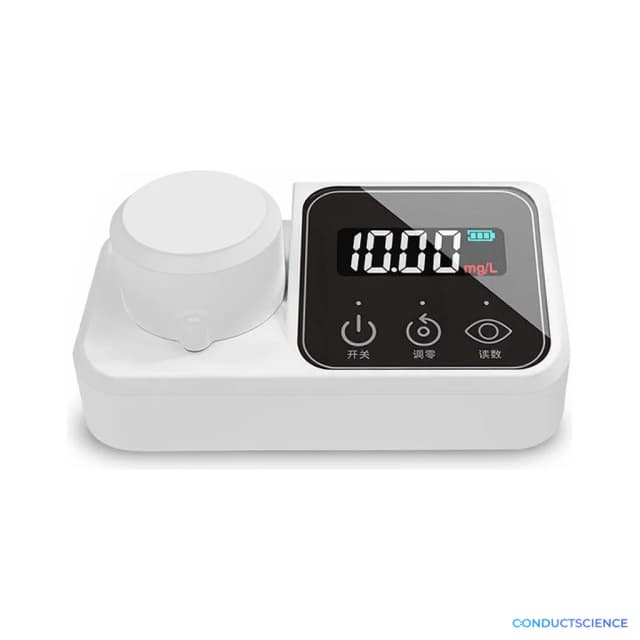
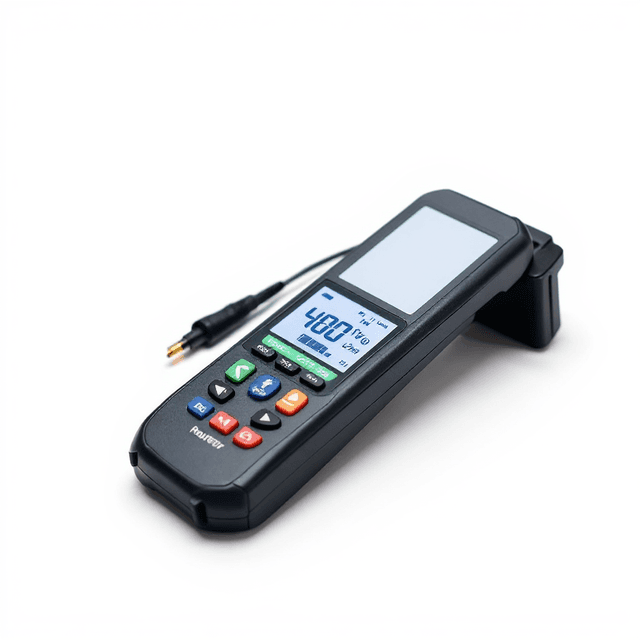
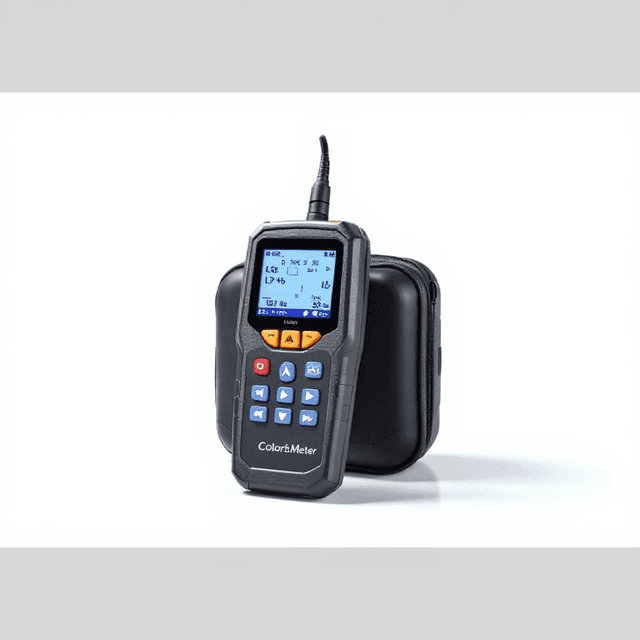
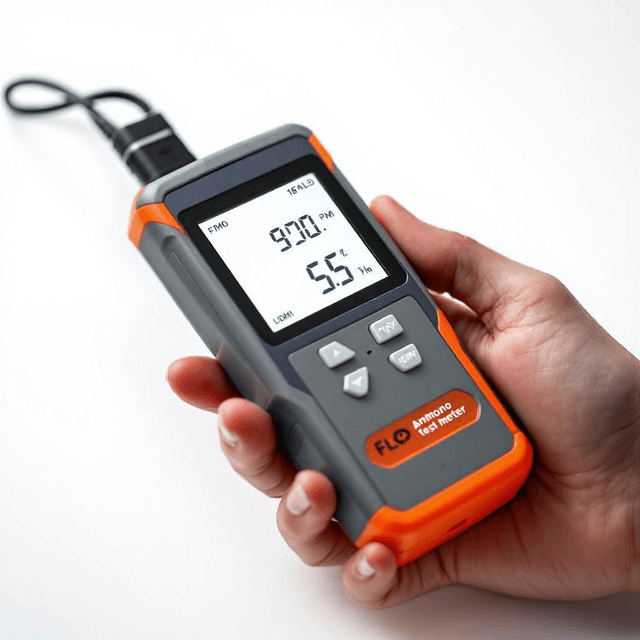
The ConductScience LH-C6 Portable Conductivity Meter is a waterproof handheld instrument designed for field and laboratory conductivity measurements. The meter features a wide measurement range from 0 to 100.0 mS/cm across five auto-ranging scales, with 0.1 resolution and automatic temperature compensation (ATC) for accurate readings across varying environmental conditions. The fully waterproof and shockproof construction enables reliable operation in harsh field environments.
The instrument displays conductivity measurements in multiple units (mS, μS) and includes secondary display capabilities for simultaneous parameter monitoring. Additional features include TDS measurements in ppm/ppt units, percentage unit display, battery indicator, and calibration functionality. The dual-display configuration allows researchers to monitor both primary conductivity readings and secondary parameters such as temperature compensation status during measurement collection.
How It Works
Conductivity measurement operates on the principle that dissolved ions in solution enable electrical current flow between two electrodes. The LH-C6 applies a known alternating voltage across platinum or graphite electrodes immersed in the sample solution. The resulting current flow is directly proportional to the ionic concentration, with higher ion concentrations producing greater conductivity values.
The instrument's automatic temperature compensation feature corrects for temperature-dependent variations in ionic mobility. As temperature increases, ions move more rapidly through solution, artificially elevating conductivity readings. The ATC function applies a temperature coefficient correction to normalize readings to a standard reference temperature, typically 25°C, ensuring accurate measurements across varying environmental conditions.
The five auto-ranging scales (0-19.99 μS, 20.00-199.9 μS, 200.0-1999 μS, 2.00-19.99 mS, 20.0-100.0 mS) automatically select the appropriate measurement range based on sample conductivity, maximizing resolution and accuracy across the full measurement spectrum from ultrapure water to highly ionic solutions.
Features & Benefits
Shipping weight
- 0.26 lb
Shipping box
- L: 18.3 cm
- W: 17.3 cm
- H: 13.9 cm
| Feature | This Product | Typical Alternative | Advantage |
|---|---|---|---|
| Measurement Range | 0 to 100.0 mS/cm across five auto-ranging scales | Basic models often limited to 2-3 measurement ranges | Covers both ultrapure water and highly ionic solutions without manual range switching. |
| Environmental Protection | Waterproof and shockproof construction | Many portable meters offer limited water resistance | Enables reliable operation in harsh field conditions and outdoor sampling environments. |
| Display Configuration | Dual display with multiple unit options (mS, μS, ppm, ppt, %) | Single parameter display common in entry-level instruments | Provides comprehensive measurement information and unit flexibility for different protocols. |
| Temperature Compensation | Automatic temperature compensation (ATC) with display indicator | Manual temperature compensation or no compensation in basic models | Eliminates temperature-related measurement errors without additional calculation steps. |
| Resolution | 0.1 resolution across measurement range | Lower resolution in compact field instruments | Provides precision suitable for quality control and research applications requiring accurate measurements. |
The LH-C6 combines wide measurement range coverage with environmental durability for field applications. The auto-ranging capability and automatic temperature compensation provide measurement convenience while maintaining accuracy across diverse sample types.
Practical Tips
Use at least two conductivity standards spanning your expected measurement range for optimal accuracy.
Why: Multi-point calibration corrects for electrode non-linearity across the measurement range.
Allow conductivity standards to equilibrate to measurement temperature before calibration.
Why: Temperature differences between standards and samples can introduce systematic errors even with ATC.
Clean electrodes with dilute HCl solution weekly to remove mineral deposits and organic films.
Why: Electrode contamination reduces sensitivity and causes measurement drift over time.
Stir samples gently or allow to stabilize after probe insertion before recording readings.
Why: Solution mixing ensures representative measurement of bulk conductivity rather than localized variations.
Rinse probe with sample solution before measurement when switching between different sample types.
Why: Eliminates carryover contamination that can affect conductivity readings in clean samples.
Check for air bubbles on electrode surfaces if readings appear unstable or unusually low.
Why: Air bubbles reduce effective electrode contact area and cause measurement interference.
Record both conductivity and temperature values for each measurement even with ATC enabled.
Why: Temperature data provides quality assurance information and enables post-measurement validation.
Avoid measurements in solutions containing strong acids or bases above pH 12 without consulting compatibility specifications.
Why: Extreme pH conditions can damage electrode materials and affect measurement accuracy.
Setup Guide
What’s in the Box
- LH-C6 conductivity meter (typical)
- Conductivity probe with cable (typical)
- Protective probe cap (typical)
- Calibration solutions (typical)
- Battery (typical)
- User manual (typical)
- Carrying case (typical)
Warranty
ConductScience provides a standard one-year manufacturer warranty covering defects in materials and workmanship, with technical support available for calibration and operational guidance.
Compliance
References
Background reading relevant to this product:
What is the measurement accuracy and drift specification for the LH-C6?
Consult product datasheet for specific accuracy specifications and long-term drift characteristics across the measurement range.
How frequently should calibration be performed for research applications?
Calibration frequency depends on measurement criticality and usage intensity. For research applications, weekly calibration with certified conductivity standards is typically recommended, with daily checks for critical measurements.
What is the temperature coefficient applied during ATC correction?
Consult product datasheet for the specific temperature coefficient value used in automatic temperature compensation calculations.
Can the meter store measurement data or connect to data logging systems?
Consult product datasheet for data storage capabilities and interface options for integration with laboratory information management systems.
What electrode maintenance is required for optimal performance?
Regular cleaning with deionized water between samples and periodic cleaning with dilute acid solution removes deposited materials. Store electrodes in conductivity standard or deionized water to prevent drying.
How does measurement cell constant affect readings?
Cell constant (electrode geometry) determines the relationship between measured conductance and solution conductivity. Consult product specifications for cell constant value and its impact on measurement range and resolution.
What sample volume is required for accurate measurements?
Sample volume must be sufficient to fully immerse the conductivity electrodes with adequate clearance from container walls to prevent interference. Typically requires 50-100 mL minimum sample volume.
Have a question about this product?
Have a question? Just ask.
Send it over and we'll email you a personalized answer — no call, no scheduling.
Prefer to talk it through?