pH Cl2 Tester Colorimeter
Portable colorimeter for quantitative chlorine dioxide measurement in water samples using DPD method, with 0.00-5.00 mg/L range and ±5% accuracy for field and laboratory applications.

Louise Corscadden, PhD
Director of Science · ConductScience
Ask Louise about pH Cl2 Tester Colorimeter fit, setup, configuration, or quote prep.
Already working with us? Sign in to connect this with My Scientist.
Key Specifications
Full details →- Model fit
- Configured during quote
- SKU family
- CS-LH-C03
- Shipping box
- 7.09 x 2.68 x 1.02 cm
- Ordering
- Online checkout and quote request available
- Category
- Portable Analyzers
- Build notes
- Confirm accessories, station layout, and support needs before purchase
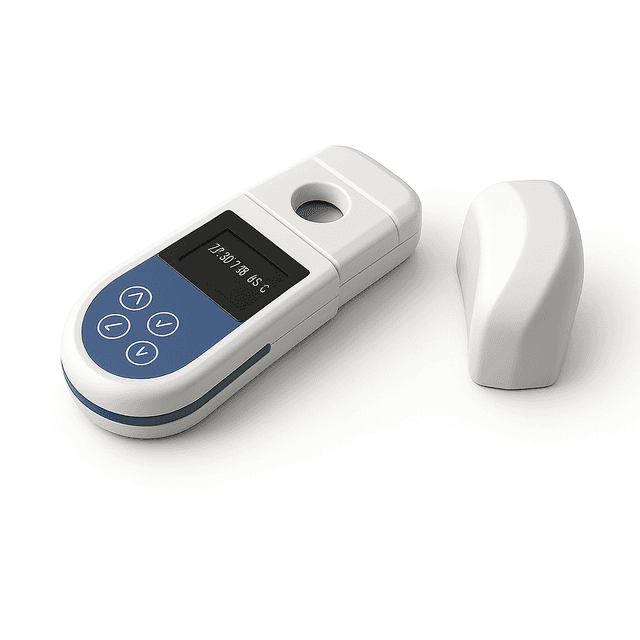
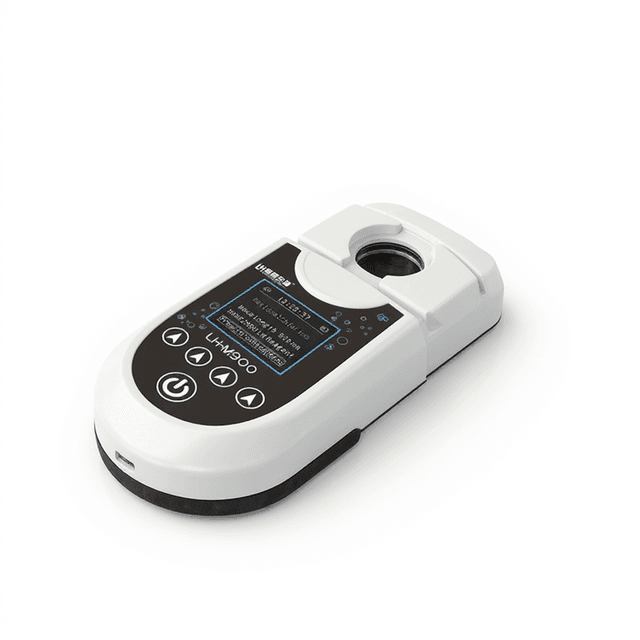
The pH Cl2 Tester Colorimeter (Model LH-C03) is a portable analytical instrument designed for quantitative measurement of chlorine dioxide concentrations in aqueous samples using the DPD (N,N-diethyl-p-phenylenediamine) colorimetric method. Operating at a wavelength of 520-525 nm, this handheld device measures chlorine dioxide levels from 0.00 to 5.00 mg/L with ±5% accuracy, making it suitable for field and laboratory applications requiring precise disinfectant monitoring.
The instrument employs established colorimetric principles where chlorine dioxide oxidizes the DPD reagent to produce a measurable color change proportional to analyte concentration. The compact design (180×68×26 mm, 220g) incorporates an LCD display and operates reliably across environmental conditions from 0-40°C with relative humidity up to 90%. This specification range supports both indoor laboratory work and field monitoring applications in water treatment facilities, environmental monitoring stations, and industrial process control settings.
How It Works
The colorimeter operates on the principle of selective light absorption by colored compounds formed through oxidation reactions. When a water sample containing chlorine dioxide is treated with DPD reagent, the chlorine dioxide oxidizes the N,N-diethyl-p-phenylenediamine to form a pink-colored compound. The intensity of this color development is directly proportional to the chlorine dioxide concentration in the sample, following Beer-Lambert law principles.
The instrument measures light transmission through the colored sample at 520-525 nm wavelength, where the DPD oxidation product exhibits maximum absorption. An internal light source illuminates the sample cell, and a photodetector measures the transmitted light intensity. The microprocessor calculates chlorine dioxide concentration by comparing the measured absorbance to calibration curves stored in memory.
The DPD method provides selectivity for chlorine dioxide measurement by utilizing specific reaction conditions that differentiate chlorine dioxide from other oxidizing species commonly present in water samples, including free chlorine and chloramines. Sample preparation involves mixing the water sample with DPD reagent under controlled pH conditions to ensure optimal color development and measurement accuracy within the instrument's specified range.
Features & Benefits
Model
- LH-C03
Product name
- ph cl2 tester colorimeter
Test item
- Chlorine dioxide
Measuring range
- 0.00~5.00mg/l
Light source
- LCD
Wavelength
- 520-525nm
Test method
- DPD method
Working condition
- 0~40âï¼Rh:0-90%
Automation Level
- semi-automated
Brand
- ConductScience
Accuracy
- ±5%
Dimensions
- 180mm*68mm*26mm
Weight
- 220g
Research Domain
- Analytical Chemistry
- Food Science
- Industrial Hygiene
- Microbiology
- Pharmaceutical QC
- Water Quality & Environmental Monitoring
Shipping weight
- 0.15 lb
Shipping box
- L: 7.09 cm
- W: 2.68 cm
- H: 1.02 cm
| Feature | This Product | Typical Alternative | Advantage |
|---|---|---|---|
| Measurement Range | 0.00-5.00 mg/L for chlorine dioxide | Many portable colorimeters offer narrower ranges or require multiple measurement modes | Single-range operation simplifies field protocols while covering typical water treatment concentrations. |
| Wavelength Specificity | 520-525 nm optimized for DPD method | Some instruments use broader wavelength bands or multiple wavelengths | Narrow wavelength range minimizes interference and maximizes selectivity for chlorine dioxide measurement. |
| Operating Temperature Range | 0-40°C operational range | Entry-level instruments often have more limited temperature ranges | Wide temperature tolerance supports both laboratory and field applications across various climatic conditions. |
| Measurement Accuracy | ±5% across full measurement range | Basic colorimeters may offer ±10% or lower accuracy specifications | Higher accuracy supports regulatory compliance requirements and process optimization applications. |
| Physical Design | 220g weight with 180×68×26 mm dimensions | Portable units vary widely in size and weight | Compact form factor enables single-handed operation while maintaining measurement chamber stability. |
| Humidity Tolerance | 0-90% RH operational capability | Many instruments specify lower humidity limits | High humidity tolerance supports operation in water treatment facilities and humid field environments. |
The LH-C03 combines precise colorimetric measurement capabilities with portable design, offering ±5% accuracy across a 0.00-5.00 mg/L range specifically optimized for chlorine dioxide analysis. The instrument's environmental tolerance and compact design make it suitable for both laboratory verification and field monitoring applications where reliable quantitative results are required.
Practical Tips
Perform zero calibration with distilled water before each measurement session and verify with known standard solutions weekly.
Why: Regular calibration ensures measurement accuracy and compensates for instrument drift or environmental effects.
Take measurements within 2 minutes of reagent addition and avoid exposing prepared samples to direct sunlight.
Why: DPD color development is time-dependent and photosensitive, affecting measurement reproducibility if timing is inconsistent.
Clean sample cells immediately after use with distilled water and inspect optical surfaces regularly for scratches or deposits.
Why: Clean optics are essential for accurate light transmission measurements, and reagent residues can cause measurement bias.
Record sample temperature and pH when possible, as these parameters can affect DPD reaction kinetics and color stability.
Why: Environmental conditions influence colorimetric reactions and help interpret results when measurements fall outside expected ranges.
If readings appear inconsistent, check for air bubbles in the sample cell and ensure complete reagent mixing before measurement.
Why: Air bubbles scatter light and incomplete mixing creates concentration gradients that affect measurement precision.
Handle DPD reagents with appropriate personal protective equipment and store according to manufacturer recommendations.
Why: DPD reagents contain chemicals that may cause skin or eye irritation and can degrade if stored improperly.
Allow the instrument to equilibrate to ambient temperature before use, especially when moving between different environmental conditions.
Why: Temperature equilibration prevents condensation in the optical system and ensures stable measurement performance.
Analyze duplicate samples when possible and document any unusual sample characteristics or measurement conditions.
Why: Duplicate analysis provides quality control information and sample documentation aids in result interpretation and troubleshooting.
Setup Guide
What’s in the Box
- LH-C03 colorimeter main unit
- Sample measurement cells (typical)
- User manual and operation guide
- DPD reagent starter kit (typical)
- Calibration verification solutions (typical)
- Protective carrying case (typical)
- Battery set or power adapter (typical)
Warranty
ConductScience provides a standard one-year manufacturer warranty covering defects in materials and workmanship, with technical support available for calibration procedures and troubleshooting guidance.
Compliance
References
Background reading relevant to this product:
What is the detection limit for chlorine dioxide measurement and how does it compare to other analytical methods?
The instrument measures chlorine dioxide from 0.00-5.00 mg/L with ±5% accuracy using the DPD colorimetric method. This range covers typical water treatment applications where chlorine dioxide is used as a disinfectant. For lower detection limits, ion chromatography or amperometric methods may be more suitable.
How does temperature affect measurement accuracy and what compensation is available?
The device operates reliably from 0-40°C, but like most colorimetric methods, temperature can affect reaction kinetics and color development. Consult the product datasheet for specific temperature compensation features and recommended calibration procedures at different operating temperatures.
What interferences should be considered when measuring chlorine dioxide in complex water matrices?
The DPD method can be affected by high levels of free chlorine, chloramines, and certain metal ions. Sample pretreatment or alternative analytical approaches may be needed for heavily contaminated samples or those with complex chemical compositions.
What is the recommended calibration frequency for maintaining measurement accuracy?
Calibration frequency depends on usage intensity and accuracy requirements. Daily verification with standard solutions is typical for routine monitoring, with full calibration performed weekly or monthly. Consult product documentation for specific calibration protocols and frequency recommendations.
How long is the color development time and what is the measurement stability window?
DPD colorimetric reactions typically develop within 2-5 minutes, with measurement stability varying based on sample matrix and environmental conditions. Take readings within the specified timeframe after reagent addition to ensure accurate results.
What sample volume is required and can the method be used with automated sampling systems?
Sample volume requirements depend on the cell design, typically 10-25 mL for manual colorimeters. The semi-automated operation allows for integration with sampling systems, though consult technical specifications for compatibility with specific automated platforms.
How does this colorimetric method compare to amperometric chlorine dioxide sensors for continuous monitoring?
Colorimetric methods provide discrete sample measurements with good accuracy but require reagent addition and manual operation. Amperometric sensors offer continuous monitoring capability but may require more frequent calibration and maintenance in complex water matrices.
Have a question about this product?
Have a question? Just ask.
Send it over and we'll email you a personalized answer — no call, no scheduling.
Prefer to talk it through?