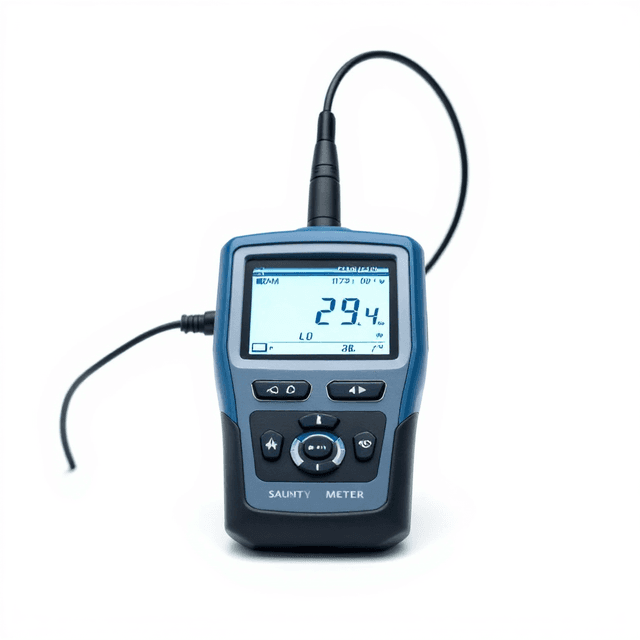
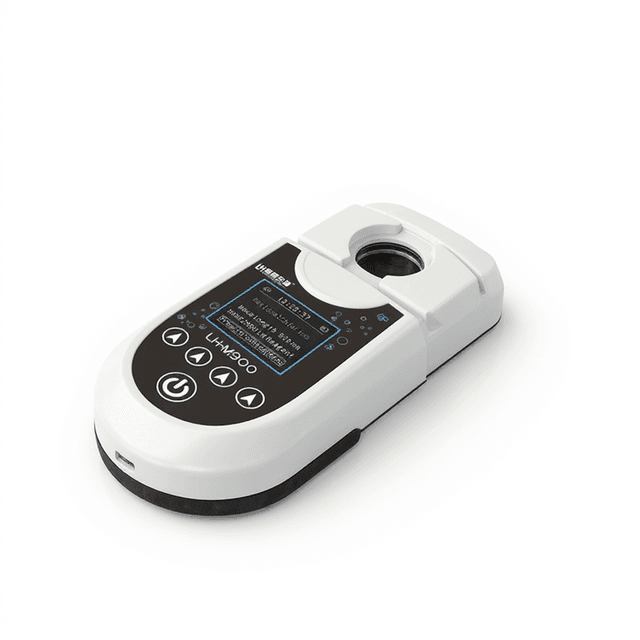
Ammonia Nitrogen Test Meter
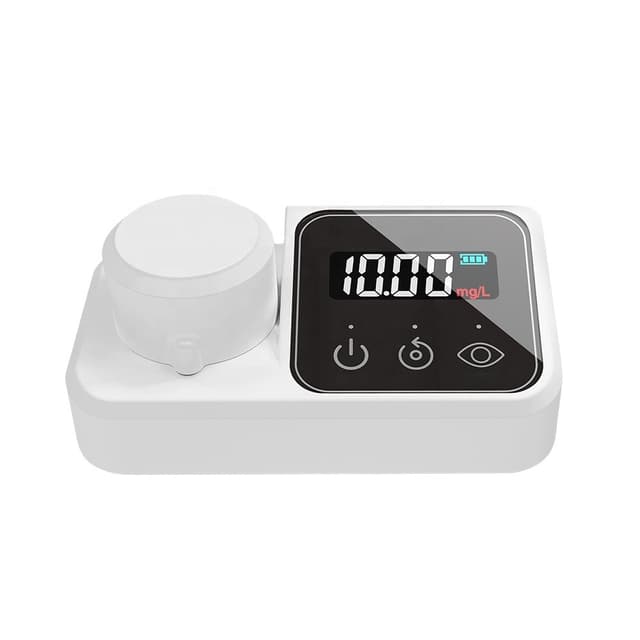
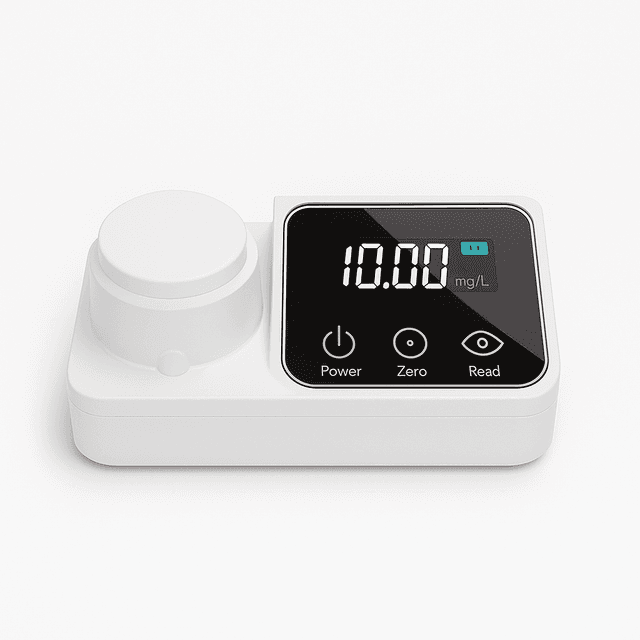
Portable colorimetric analyzer for rapid ammonia nitrogen determination in water samples using the salicylic acid method, with 0.00-2.00 mg/L measurement range and one-minute analysis time.

Louise Corscadden, PhD
Director of Science · ConductScience
Ask Louise about Ammonia Nitrogen Test Meter fit, setup, configuration, or quote prep.
Already working with us? Sign in to connect this with My Scientist.
Key Specifications
Full details →- Model fit
- Configured during quote
- SKU family
- CS-LH-N12
- Shipping box
- 20.0 x 10.0 x 5.0 cm
- Ordering
- Online checkout and quote request available
- Category
- Portable Analyzers
- Build notes
- Confirm accessories, station layout, and support needs before purchase
The ConductScience LH-N12 Ammonia Nitrogen Test Meter is a portable colorimetric analyzer designed for rapid determination of ammonia nitrogen concentrations in aqueous samples. The instrument employs the salicylic acid method, a well-established colorimetric technique that produces reliable, quantitative results consistent with international analytical standards. With a measurement range of 0.00-2.00 mg/L, this meter addresses the critical concentration range for most environmental and water quality applications.
This portable analyzer enables field-deployable ammonia nitrogen analysis with measurement completion within one minute of sample addition. The instrument incorporates sample zeroing capability and simplified reagent addition protocols, making it suitable for routine monitoring applications where rapid, accurate ammonia nitrogen determination is required. The salicylic acid methodology provides stable colorimetric response while avoiding the toxicity concerns associated with alternative reagent systems.
How It Works
The LH-N12 operates on the salicylic acid colorimetric method for ammonia nitrogen determination. In this analytical approach, ammonia present in the sample reacts with hypochlorite to form monochloramine. The monochloramine subsequently reacts with salicylate to produce a blue-green colored complex (5-aminosalicylate) that exhibits maximum absorbance in the 600-700 nm wavelength range.
The instrument measures the optical density of this colored complex, with absorbance directly proportional to ammonia nitrogen concentration in the sample. The salicylic acid method provides advantages over alternative techniques by avoiding toxic mercury-containing reagents while maintaining analytical precision and accuracy. Sample zeroing functionality compensates for background absorbance and matrix effects, ensuring measurement reliability across diverse water types.
Features & Benefits
Model
- LH-N12
Item name
- Range
Ammonia nitrogen test meter
- 0.00ï½2.00mg/L
Automation Level
- semi-automated
Brand
- ConductScience
Research Domain
- Analytical Chemistry
- Environmental Monitoring
- Food Science
- Industrial Hygiene
- Microbiology
- Pharmaceutical QC
Shipping weight
- 0.26 lb
Shipping box
- L: 20.0 cm
- W: 10.0 cm
- H: 5.0 cm
| Feature | This Product | Typical Alternative | Advantage |
|---|---|---|---|
| Measurement Range | 0.00-2.00 mg/L | Entry-level models often offer narrower ranges or require multiple scales | Covers the critical range for most environmental and water quality applications without scale switching. |
| Analysis Method | Salicylic acid colorimetric method | Some alternatives use Nessler reagent or phenate methods | Avoids toxic mercury-containing reagents while maintaining analytical accuracy and precision. |
| Analysis Time | One minute measurement completion | Laboratory instruments may require 15-30 minutes for complete analysis | Enables rapid sample throughput for field monitoring and quality control applications. |
| Sample Zeroing | Integrated sample zeroing capability | Basic colorimeters may lack matrix compensation features | Compensates for background interference and matrix effects to improve measurement reliability. |
| Portability | Portable field-deployable design | Benchtop spectrophotometers require laboratory infrastructure | Allows on-site analysis eliminating sample transport and storage concerns. |
The LH-N12 combines rapid one-minute analysis time with the analytical reliability of the salicylic acid method in a portable format. The 0.00-2.00 mg/L range addresses most environmental monitoring requirements while sample zeroing capability enhances measurement accuracy across diverse sample matrices.
Practical Tips
Perform daily calibration checks using certified ammonia nitrogen standards to ensure measurement accuracy.
Why: Environmental samples can vary significantly in matrix composition affecting colorimetric response.
Clean cuvettes thoroughly between samples using distilled water and lint-free wipes to prevent cross-contamination.
Why: Residual sample or reagent contamination can cause significant measurement errors in colorimetric analysis.
Allow samples to reach room temperature before analysis to ensure consistent reagent reaction kinetics.
Why: Temperature affects both colorimetric reaction rates and optical density measurements.
If readings appear unstable, check for air bubbles in the cuvette and ensure complete reagent mixing.
Why: Air bubbles scatter light leading to erroneous absorbance readings in colorimetric instruments.
Run duplicate analyses on 10% of samples to monitor measurement precision and identify potential issues.
Why: Quality control duplicates help identify instrument drift or procedural inconsistencies.
Handle salicylic acid reagents in well-ventilated areas and avoid skin contact with chemical solutions.
Why: Although less toxic than alternatives, proper chemical handling prevents irritation and contamination.
Store reagents according to manufacturer specifications and check expiration dates before use.
Why: Degraded reagents can lead to poor color development and inaccurate analytical results.
For samples with high turbidity, allow settling time or use filtration to improve optical clarity.
Why: Particulate matter interferes with colorimetric measurements by scattering incident light.
Setup Guide
What’s in the Box
- LH-N12 ammonia nitrogen test meter (typical)
- Sample cuvettes set (typical)
- Salicylic acid reagent kit (typical)
- Power adapter (typical)
- User manual and calibration certificate (typical)
- Carrying case (typical)
Warranty
ConductScience provides a one-year manufacturer warranty covering defects in materials and workmanship, with technical support for calibration and troubleshooting assistance.
Compliance
References
Background reading relevant to this product:
What is the detection limit and precision of the LH-N12 for ammonia nitrogen analysis?
The measurement range is 0.00-2.00 mg/L using the salicylic acid method. For specific detection limits and precision specifications, consult the product datasheet.
How does the salicylic acid method compare to the Nessler reagent method for ammonia nitrogen determination?
The salicylic acid method avoids the toxicity concerns of mercury-containing Nessler reagents while providing comparable analytical accuracy and precision for most applications.
What sample matrix effects might interfere with ammonia nitrogen measurements?
High salinity, turbidity, and certain metal ions can interfere with colorimetric analysis. The sample zeroing function helps compensate for matrix effects, but complex samples may require pretreatment.
Can this meter analyze samples with ammonia nitrogen concentrations above 2.00 mg/L?
Samples exceeding 2.00 mg/L require dilution with distilled water to bring concentrations within the measurement range, then multiply results by the dilution factor.
What calibration frequency is recommended for routine use?
Calibration frequency depends on usage intensity and accuracy requirements. Daily calibration is recommended for routine monitoring applications.
How should samples be preserved if analysis cannot be performed immediately?
Ammonia nitrogen samples should be analyzed immediately when possible. If storage is necessary, acidify to pH <2 and refrigerate at 4°C, though this may affect some sample matrices.
What is the typical reagent consumption per sample analysis?
Reagent consumption per sample depends on the specific protocol volume requirements. Consult the user manual for exact reagent quantities per analysis.
Have a question about this product?
Have a question? Just ask.
Send it over and we'll email you a personalized answer — no call, no scheduling.
Prefer to talk it through?
Accessories
Enhance your setup with compatible accessories