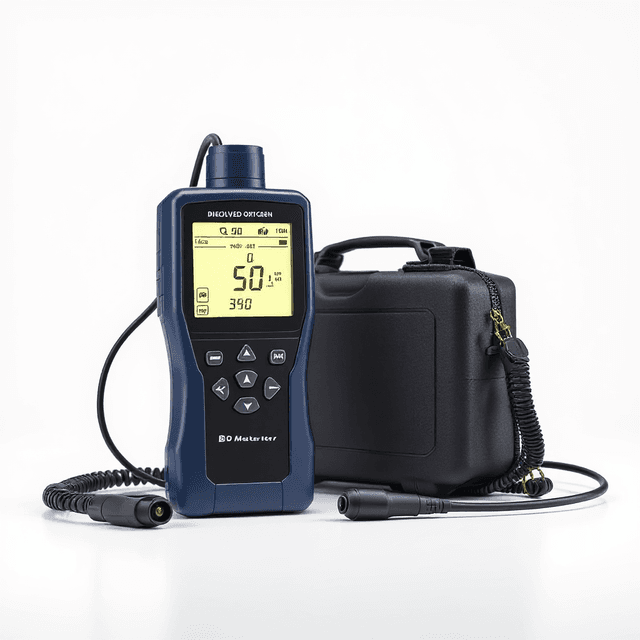
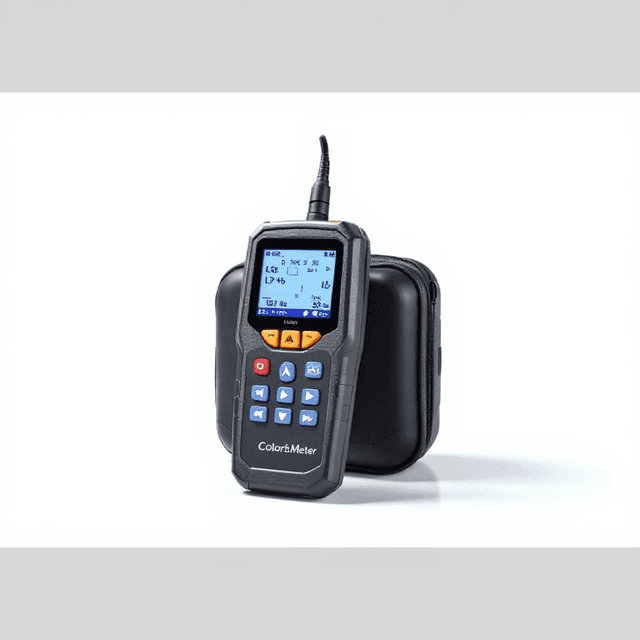
Portable Chromium Vi Colorimeter Tester
Portable spectrophotometric analyzer for quantitative determination of hexavalent chromium in water samples using diphenylcarbazide colorimetry, with 0.00-2.00 mg/L measurement range.

Louise Corscadden, PhD
Director of Science · ConductScience
Ask Louise about Portable Chromium Vi Colorimeter Tester fit, setup, configuration, or quote prep.
Already working with us? Sign in to connect this with My Scientist.
Key Specifications
Full details →- Model fit
- Configured during quote
- SKU family
- CS-LH-CR6
- Shipping box
- 7.09 x 2.68 x 1.02 cm
- Ordering
- Online checkout and quote request available
- Category
- Portable Analyzers
- Build notes
- Confirm accessories, station layout, and support needs before purchase
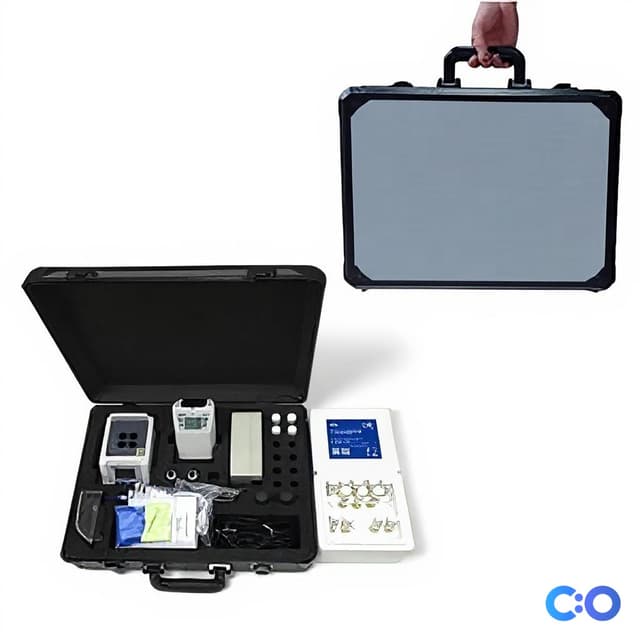
The Portable Chromium VI Colorimeter Tester (Model LH-CR6) is a field-portable spectrophotometric analyzer designed for quantitative determination of hexavalent chromium in aqueous samples. The instrument employs the established diphenylcarbazide spectrophotometry method, measuring the characteristic purple-red complex formed between Cr(VI) and 1,5-diphenylcarbazide reagent at 520-525 nm wavelength.
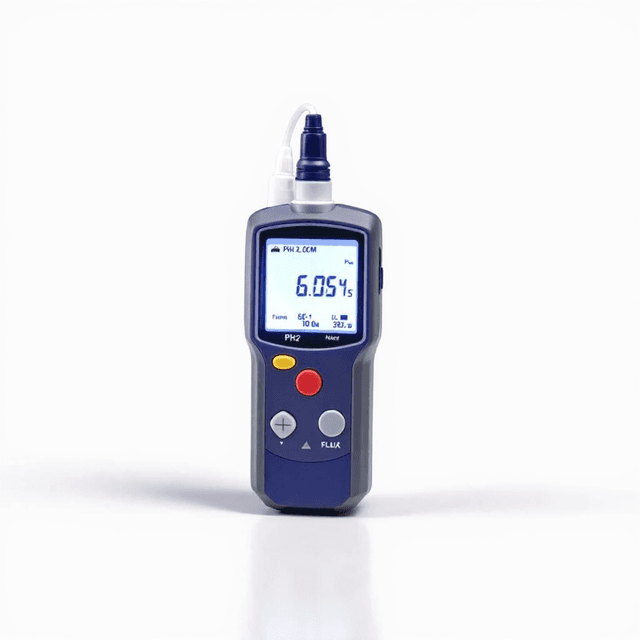
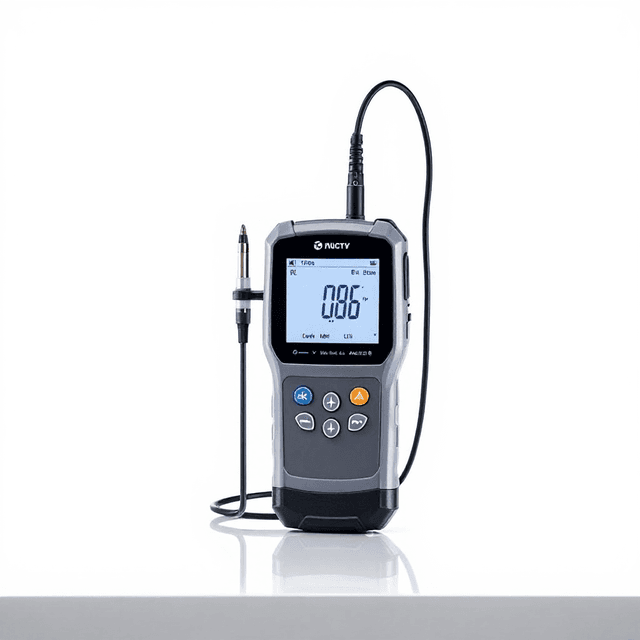
This handheld analyzer provides measurement capability from 0.00 to 2.00 mg/L with accuracy of ±0.02 mg/L for concentrations below 0.5 mg/L and ±5% for higher concentrations. The compact design (180×68×26 mm, 220g) enables on-site chromium VI monitoring in environmental, industrial, and laboratory applications where immediate results are required for water quality assessment and process control.
How It Works
The instrument operates on the principle of diphenylcarbazide spectrophotometry, an established colorimetric method for chromium VI determination. When the sample is mixed with 1,5-diphenylcarbazide reagent under acidic conditions, hexavalent chromium ions form a stable purple-red complex with maximum absorbance at approximately 540 nm. The instrument measures this colored complex at 520-525 nm wavelength using an LCD light source and photodetector system.
The intensity of the colored complex is directly proportional to the chromium VI concentration in the sample, following Beer-Lambert law. The reaction occurs rapidly and remains stable for sufficient time to allow measurement. Trivalent chromium (Cr III) does not interfere with this reaction, providing specificity for the hexavalent oxidation state.
Internal calibration algorithms convert the measured absorbance values to concentration units (mg/L), with the instrument displaying results on the integrated display. The measurement process requires minimal sample preparation and provides results within minutes of sample introduction.
Features & Benefits
Model
- LH-CR6
Product name
- Portable Chromium VI colorimeter meter
Test item
- Chromium VI
Measuring range
- 0.00~2.00mg/l
Light source
- LCD
Wavelength
- 520-525nm
Test method
- Diphenylcarbazide spectrophotometry
Working condition
- 0~40âï¼Rh:0-90%
Automation Level
- manual
Brand
- ConductScience
Accuracy
- ±0.02mg/l(conc.ï¼0.5mg/l)±5%(conc.â¥0.5mg/l)
Dimensions
- 180mm*68mm*26mm
Weight
- 220g
Research Domain
- Analytical Chemistry
- Environmental Monitoring
- Food Science
- Industrial Hygiene
- Materials Science
- Pharmaceutical QC
Shipping weight
- 0.49 lb
Shipping box
- L: 7.09 cm
- W: 2.68 cm
- H: 1.02 cm
| Feature | This Product | Typical Alternative | Advantage |
|---|---|---|---|
| Measurement Range | 0.00-2.00 mg/L | Entry-level colorimeters often offer narrower ranges or require dilution for higher concentrations | Covers most environmental and industrial monitoring needs without sample dilution |
| Accuracy | ±0.02 mg/L (<0.5 mg/L), ±5% (≥0.5 mg/L) | Basic field instruments may have lower accuracy specifications | Provides quantitative results suitable for regulatory compliance monitoring |
| Wavelength | 520-525 nm | Fixed wavelength instruments may not optimize for chromium VI complex | Optimized wavelength range maximizes sensitivity for the diphenylcarbazide method |
| Weight | 220g | Bench-top units typically weigh several kilograms | True portability enables field measurements and mobile monitoring applications |
| Operating Temperature | 0-40°C | Laboratory instruments often have narrower temperature specifications | Functions reliably under field conditions without environmental control requirements |
The LH-CR6 combines field portability with quantitative accuracy for chromium VI determination. Its optimized wavelength range and measurement specifications provide reliable results for environmental and industrial monitoring applications where immediate on-site analysis is required.
Practical Tips
Verify calibration with fresh standards at the beginning of each measurement session, especially when working in field conditions.
Why: Environmental temperature and humidity changes can affect instrument response and reagent performance.
Clean sample cells thoroughly between measurements and inspect for scratches or cloudiness that could affect light transmission.
Why: Optical contamination or damage directly impacts measurement accuracy and reproducibility.
Allow samples and reagents to reach similar temperatures before mixing to ensure consistent reaction kinetics.
Why: Temperature differences can affect color development rate and final absorbance intensity.
Prepare duplicate measurements for critical samples and include blank determinations with each sample batch.
Why: Duplicates assess measurement precision while blanks identify reagent contamination or instrument drift.
If readings appear unstable, check reagent freshness and ensure complete mixing of sample and reagent before measurement.
Why: Degraded reagents or incomplete mixing can cause inconsistent color development and measurement variability.
Handle diphenylcarbazide reagent with appropriate personal protective equipment as it may cause skin sensitization.
Why: Diphenylcarbazide is a potential skin sensitizer requiring proper handling procedures to prevent exposure.
Setup Guide
What’s in the Box
- LH-CR6 Colorimeter main unit
- Sample cuvettes or measurement cells (typical)
- Diphenylcarbazide reagent kit (typical)
- Calibration standards (typical)
- Power adapter or battery pack (typical)
- User manual and operation guide
- Carrying case (typical)
Warranty
ConductScience provides a standard 1-year manufacturer warranty covering defects in materials and workmanship, with technical support for method optimization and troubleshooting.
Compliance
References
Background reading relevant to this product:
What is the detection limit and linear range for chromium VI measurement?
The instrument measures 0.00-2.00 mg/L with accuracy of ±0.02 mg/L below 0.5 mg/L. Consult product datasheet for specific detection limit and linearity parameters.
Does the method distinguish between Cr(III) and Cr(VI)?
Yes, the diphenylcarbazide method is specific for hexavalent chromium. Trivalent chromium does not form the colored complex under the acidic reaction conditions.
What sample preparation is required before measurement?
Samples should be filtered to remove particulates and pH adjusted to acidic conditions. Consult method protocol for specific pH requirements and reagent addition procedures.
How frequently should the instrument be calibrated?
Calibration frequency depends on usage and accuracy requirements. Verify calibration with standards at beginning of each measurement session for critical applications.
What interferences affect chromium VI measurement?
Common interferences include high concentrations of iron, copper, and other transition metals. Matrix effects may require standard addition method for complex samples.
Can this method be used for wastewater samples?
Yes, but complex matrices may require sample pretreatment or standard addition calibration to account for matrix effects that could affect color development.
What is the shelf life of the diphenylcarbazide reagent?
Reagent stability varies with storage conditions. Fresh reagent preparation is recommended for critical measurements. Consult reagent supplier specifications.
Have a question about this product?
Have a question? Just ask.
Send it over and we'll email you a personalized answer — no call, no scheduling.
Prefer to talk it through?
Accessories
Enhance your setup with compatible accessories