COD Tester
Multi-parameter water quality analyzer employing spectrophotometric methods to measure COD, ammonia nitrogen, total nitrogen, and total phosphorus with LED-based optical detection and automated digestion protocols.

Louise Corscadden, PhD
Director of Science · ConductScience
Ask Louise about COD Tester fit, setup, configuration, or quote prep.
Already working with us? Sign in to connect this with My Scientist.
Key Specifications
Full details →- Model fit
- Configured during quote
- SKU family
- CS-LH-C660
- Shipping box
- 8.8 x 7.3 x 5.9 cm
- Ordering
- Online checkout and quote request available
- Category
- COD & BOD Testing
- Build notes
- Confirm accessories, station layout, and support needs before purchase
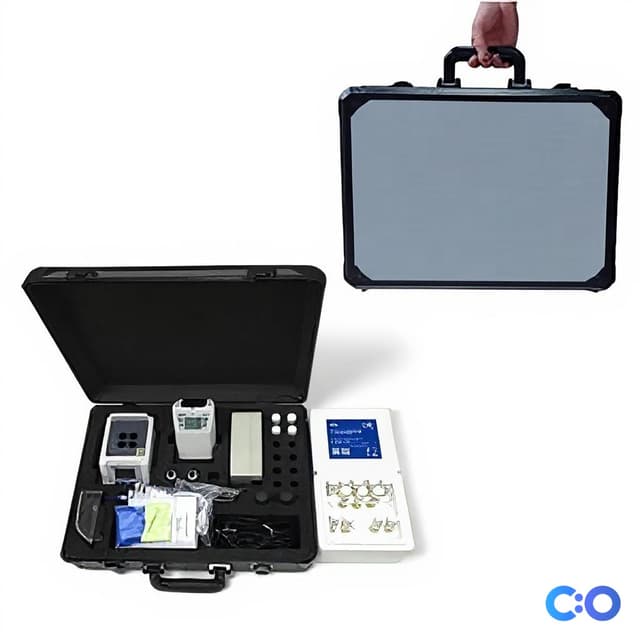
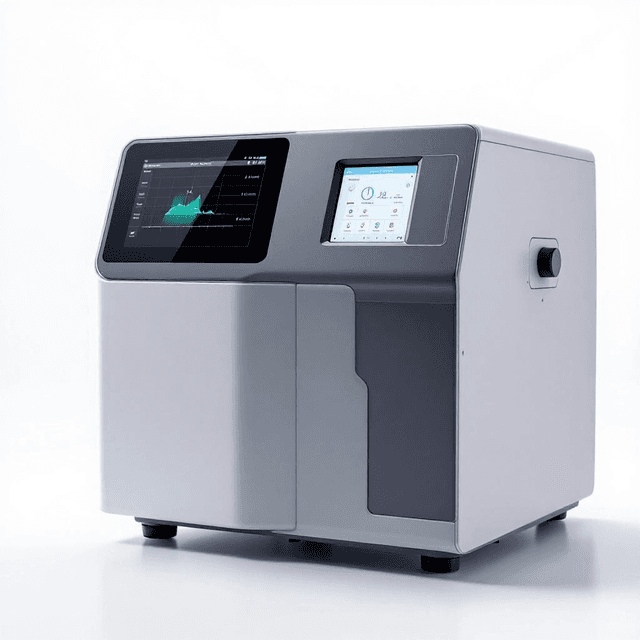
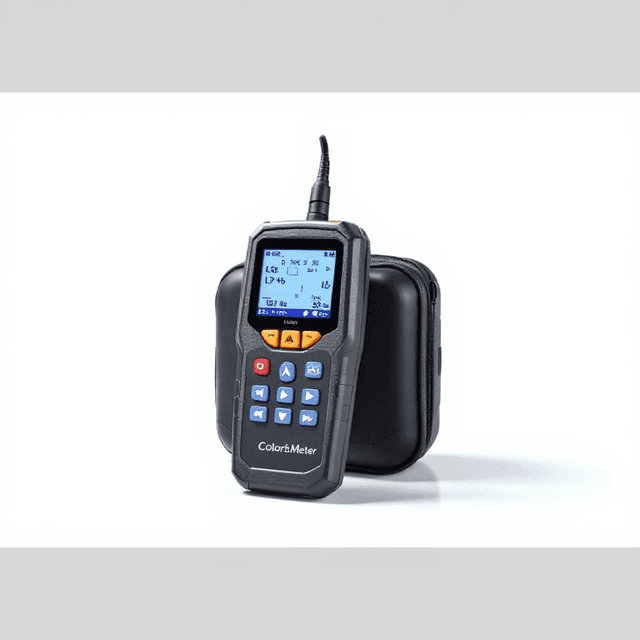
The COD Tester (Model LH-C660) is a multi-parameter water quality analyzer that employs spectrophotometric methods to quantify chemical oxygen demand (COD), ammonia nitrogen, total nitrogen, and total phosphorus in aqueous samples. The instrument utilizes rapid digestion spectrophotometry with Nessler's reagent for ammonia nitrogen analysis and molybdic acid spectrophotometry for phosphorus determination, providing researchers with simultaneous multi-analyte capability in a portable format.
Designed for laboratory and field applications, the instrument features LED light sources operating at specific wavelengths (420 nm and 620 nm) optimized for each analyte, with measurement ranges spanning 10-15000 mg/L for COD and proportionally scaled ranges for nitrogen and phosphorus species. The digestion system operates at controlled temperatures (125°C to 165°C) with automated timing protocols to ensure reproducible sample preparation and analysis.
How It Works
The instrument operates on the principle of spectrophotometric analysis following chemical digestion of water samples. For COD determination, organic compounds are oxidized under acidic conditions at 165°C, with the resulting color change measured at 420 nm and 620 nm wavelengths. The dual-wavelength approach accommodates different concentration ranges and compensates for matrix interferences.
Nitrogen species analysis employs Nessler's reagent spectrophotometry for ammonia nitrogen detection at 420 nm, while total nitrogen requires preliminary digestion at 125°C to convert organic and bound nitrogen forms to measurable species. Total phosphorus determination utilizes molybdic acid chemistry following acid digestion at 150°C, with the resulting molybdenum blue complex measured at 620 nm.
LED light sources provide stable illumination at the required wavelengths, while photodetector arrays capture transmitted light intensity for concentration calculations based on Beer-Lambert law relationships. The integrated digestion system maintains precise temperature control with programmable timing sequences to ensure complete sample conversion before optical measurement.
Features & Benefits
Model
- LH-C660
Test item
- COD,Ammonia nitrogen,Total Nitrogen and Total Phosphorus
Test range
- 10-15000mg/L(COD)0.05-100mg/L(Ammonia nitrogen)0.02-20mg/L(Total Phosphorus)0.5-500mg/L(Total Nitrogen)
Wavelength
- COD 420nm,620nmAmmonia Nitrogen 420nmTotal Nitrogen 420nmTotal Phosphorus 620nm
Indication error
- â¤Â±5%
Digestion temperature
- COD 165â,20minAmmonia Nitrogen N/ATotal Nitrogen 125â,30minTotal Phosphorus 150â,15min
Light source
- LED
Operating conditions
- Humidity:0-50% Relative humidity:0-80%(non-condensing)
Battery life
- Over 30 hours
Automation Level
- semi-automated
Brand
- ConductScience
Research Domain
- Analytical Chemistry
- Environmental Monitoring
- Food Science
- Industrial Hygiene
- Microbiology
- Pharmaceutical QC
Shipping weight
- 0.26 lb
Shipping box
- L: 8.8 cm
- W: 7.3 cm
- H: 5.9 cm
| Feature | This Product | Typical Alternative | Advantage |
|---|---|---|---|
| Multi-parameter capability | Measures COD, ammonia nitrogen, total nitrogen, and total phosphorus in single instrument | Varies by model - many instruments focus on single parameters | Reduces equipment investment and laboratory space requirements for comprehensive water quality assessment. |
| COD measurement range | 10-15000 mg/L | Varies by model in terms of upper and lower detection limits | Wide dynamic range accommodates both clean water monitoring and industrial wastewater analysis without dilution steps. |
| Digestion automation | Automated temperature control at 125-165°C with preset timing | Varies by model - some require manual heating blocks | Consistent digestion conditions improve measurement reproducibility and reduce operator time. |
| Optical system | LED sources at 420nm and 620nm with dual-wavelength capability | Varies by model in wavelength options and light source technology | LED sources provide stable, long-life illumination with lower power consumption than tungsten lamps. |
| Portability | Battery operation >30 hours with IP65 protection | Varies by model - many benchtop instruments require AC power | Extended field operation capability enables on-site water quality assessment without laboratory infrastructure. |
| Measurement precision | ±5% indication error across all parameters | Varies by model and parameter | Consistent precision specification across multiple analytes simplifies quality control protocols and data interpretation. |
This multi-parameter analyzer combines COD, nitrogen, and phosphorus measurement capabilities with automated digestion protocols and portable operation. The LED-based optical system and wide measurement ranges provide versatility for both laboratory and field water quality assessment applications.
Practical Tips
Verify calibration daily using certified reference standards that span your expected sample concentration range for each parameter.
Why: Multi-parameter instruments require verification across all analytes to ensure consistent analytical performance.
Allow complete cooling of digestion vials to room temperature before optical measurement to prevent thermal effects on absorbance readings.
Why: Temperature variations affect solution density and refractive index, introducing measurement errors in spectrophotometric analysis.
Clean sample contact surfaces with deionized water between analyses and inspect digestion vials for etching or contamination that could affect results.
Why: Residual sample matrix or degraded vials can cause carryover effects and optical interferences in subsequent measurements.
Run blank samples using reagent-grade water with each analytical batch to monitor background signal and reagent contamination.
Why: Blank corrections are essential for low-concentration samples and help identify reagent degradation or contamination issues.
If COD results are unexpectedly low, verify digestion temperature and time settings, as incomplete oxidation reduces measured values.
Why: COD analysis requires complete organic matter oxidation, and insufficient digestion conditions lead to systematic low bias.
Handle digestion reagents in a fume hood and wear appropriate PPE, as the protocols involve concentrated acids at elevated temperatures.
Why: Acid digestion generates corrosive vapors and involves burn hazards from hot surfaces and solutions.
For samples with high suspended solids, pre-filter through 0.45 μm membranes or include suspended solids correction in your analytical protocol.
Why: Particulate matter can scatter light and interfere with colorimetric measurements, affecting accuracy of dissolved analyte quantification.
Document sample dilution factors when analyzing high-concentration samples to ensure accurate final concentration calculations.
Why: Multi-parameter water testing often requires different dilution ratios for each analyte based on expected concentration ranges and method detection limits.
Setup Guide
What’s in the Box
- COD Tester main unit
- Power adapter and charging cable
- Sample digestion vials (typical)
- Reagent starter kit (typical)
- User manual and calibration certificate (typical)
- Protective carrying case (typical)
Warranty
ConductScience provides a standard one-year manufacturer warranty covering instrument defects and technical support for calibration and operation procedures.
Compliance
References
Background reading relevant to this product:
What is the minimum sample volume required for multi-parameter analysis?
Consult product datasheet for specific sample volume requirements, as this depends on the digestion vial capacity and reagent protocols for each parameter.
Can the instrument analyze turbid or colored water samples?
The dual-wavelength optical system (420nm and 620nm) provides some compensation for matrix interferences, but highly turbid samples may require filtration or dilution depending on the specific analysis requirements.
How frequently does the instrument require calibration verification?
Calibration verification with certified reference standards should be performed according to your laboratory's quality control protocols, typically daily for routine analysis or before each analytical batch.
What reagents are consumed during analysis and what are their shelf lives?
The instrument uses Nessler's reagent for ammonia nitrogen and molybdic acid for phosphorus determination, along with digestion acids for COD and total nitrogen. Consult reagent manufacturers for specific stability data.
Is the instrument suitable for continuous monitoring applications?
The instrument is designed for discrete sample analysis rather than continuous monitoring, with manual sample introduction and batch-mode operation for each measurement cycle.
What data output formats are available?
Consult product datasheet for available data logging and export capabilities, as these features vary among different instrument configurations.
Can the digestion temperature and time parameters be modified?
The instrument operates with preset digestion protocols optimized for each parameter (165°C/20min for COD, 125°C/30min for total nitrogen, 150°C/15min for total phosphorus) to ensure analytical accuracy.
What is the measurement precision for samples near the detection limits?
Precision varies by parameter and concentration level; the overall indication error specification is ±5%, but consult the calibration documentation for precision data at specific concentration ranges.
Have a question about this product?
Have a question? Just ask.
Send it over and we'll email you a personalized answer — no call, no scheduling.
Prefer to talk it through?
Accessories
Enhance your setup with compatible accessories