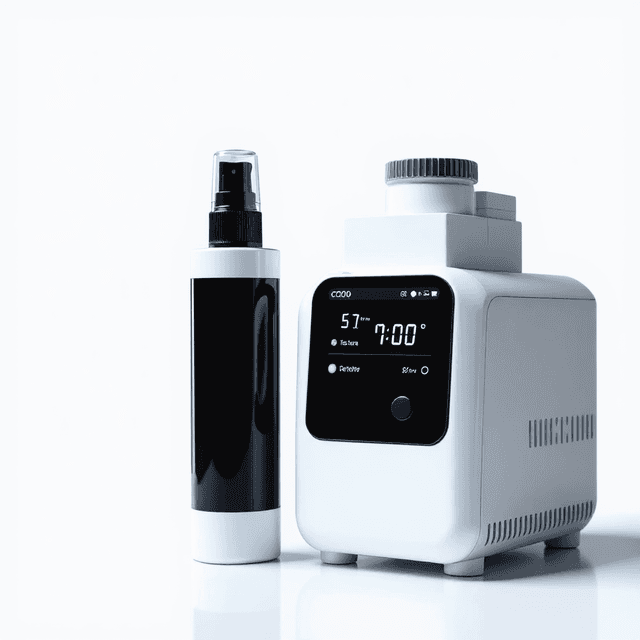
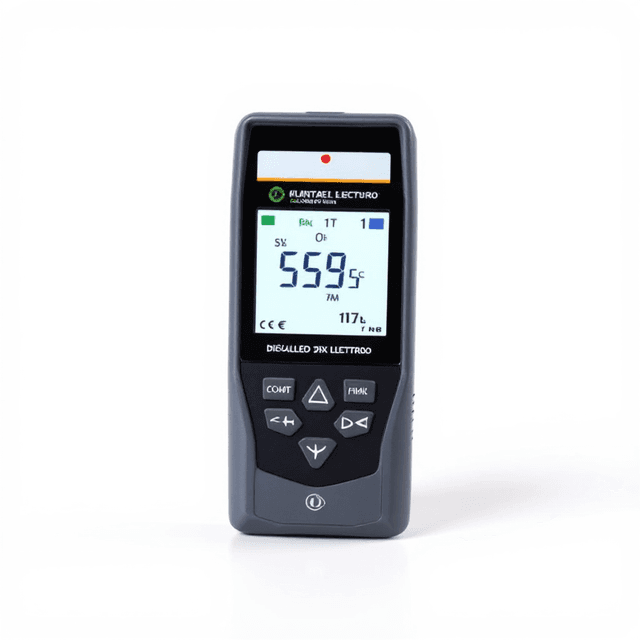
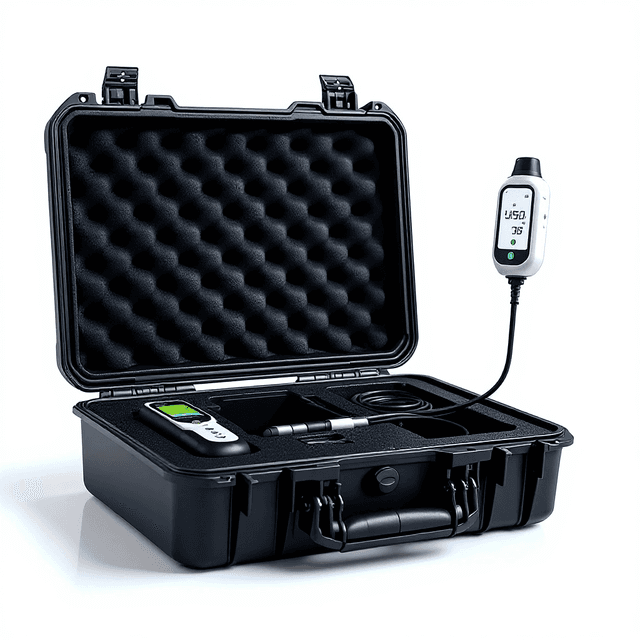
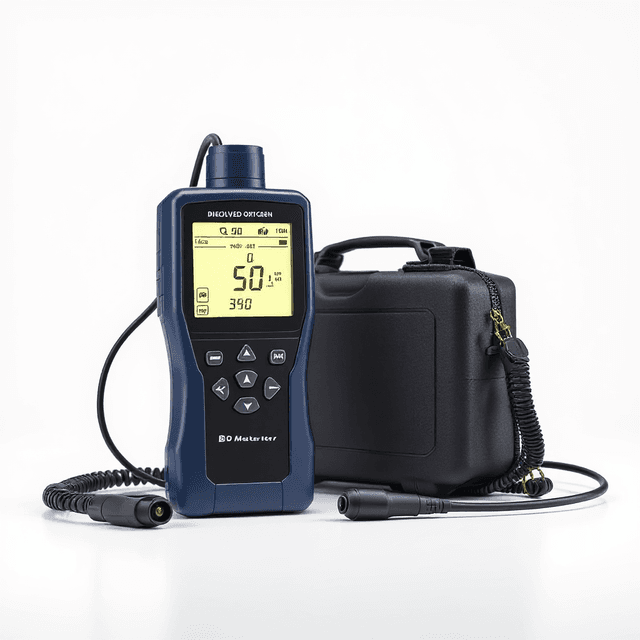
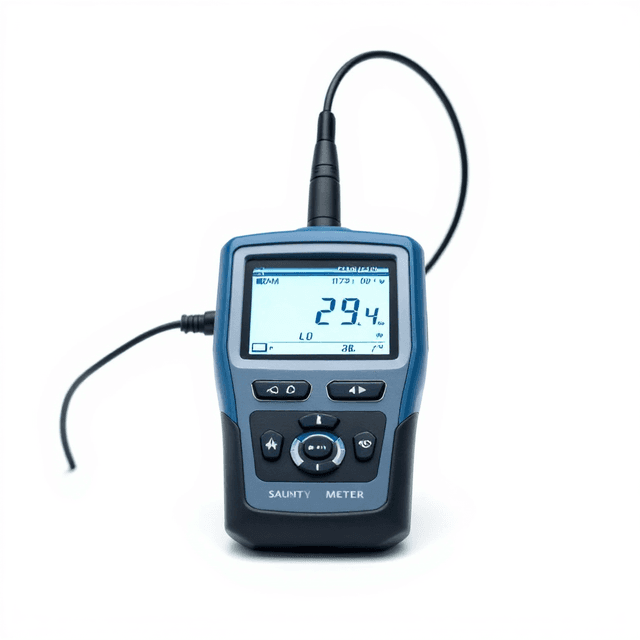
Portable Ozone Meter Colorimeter
Portable DPD colorimeter for quantitative ozone analysis in water samples, offering 0.00-2.50 mg/L measurement range with spectrophotometric detection at 520-525 nm wavelength.

Louise Corscadden, PhD
Director of Science · ConductScience
Ask Louise about Portable Ozone Meter Colorimeter fit, setup, configuration, or quote prep.
Already working with us? Sign in to connect this with My Scientist.
Key Specifications
Full details →- Model fit
- Configured during quote
- SKU family
- CS-LH-DO1
- Shipping box
- 7.09 x 2.68 x 1.02 cm
- Ordering
- Online checkout and quote request available
- Category
- Portable Analyzers
- Build notes
- Confirm accessories, station layout, and support needs before purchase
The Portable Ozone Meter Colorimeter (Model LH-DO1) is a handheld spectrophotometric analyzer designed for rapid quantification of ozone concentrations in water samples. The instrument employs the DPD (N,N-diethyl-p-phenylenediamine) colorimetric method, in which ozone reacts with reagents to produce a red-colored complex measured at 520-525 nm wavelength. This approach provides field-portable analysis with measurement range of 0.00-2.50 mg/L and accuracy of ±0.05 mg/L for concentrations below 0.50 mg/L.
The colorimeter features an integrated LCD display for real-time readings and operates under ambient conditions from 0-40°C with relative humidity up to 90%. At 220g weight and compact 180×68×26 mm dimensions, the instrument enables on-site ozone monitoring where laboratory analysis would be impractical. The DPD spectrophotometric principle has been established in water quality analysis protocols and provides results consistent with standardized analytical methods for ozone determination in aqueous samples.
How It Works
The colorimeter operates on the DPD spectrophotometric principle, where ozone in the water sample reacts with N,N-diethyl-p-phenylenediamine reagent to form a red-colored complex. The intensity of this color development is directly proportional to the ozone concentration in the sample. The instrument measures light absorbance at 520-525 nm wavelength, where the colored complex exhibits maximum absorption.
During analysis, the sample is mixed with DPD reagent in the measurement chamber. The LCD light source provides stable illumination while the photodetector measures transmitted light intensity. The microprocessor converts the absorbance reading to concentration units using built-in calibration curves. The system displays results digitally, with automatic range detection and over-range indication when samples exceed the 2.50 mg/L upper limit.
Temperature and humidity variations within the 0-40°C and 0-90% RH operating range are compensated through the instrument's calibration algorithm. The measurement process requires minimal sample volume and provides results within seconds of reagent addition.
Features & Benefits
Model
- LH-DO1
Product name
- Portable Ozone meter colorimeter
Test item
- Ozone
Measuring range
- 0.00~2.50mg/l
Light source
- LCD
Wavelength
- 520-525nm
Test method
- DPD spectrophotometry. Solution with reagent and ozone turns red.
Working condition
- 0~40âï¼Rh:0-90%
Code
- Meanings
0.00
- The instrument has been zeroed
X.XX
- Show the result
HHHH
- Show theover range, pleasedilutethe sample, repeat the test
00:00
- Show the timing
Automation Level
- manual
Brand
- ConductScience
Accuracy
- ±0.05mg/l (conc.ï¼0.50mg/l)±5% (conc.â¥0.50mg/l)
Dimensions
- 180mm*68mm*26mm
Weight
- 220g
Research Domain
- Analytical Chemistry
- Environmental Monitoring
- Food Science
- Industrial Hygiene
- Pharmaceutical QC
Shipping weight
- 0.15 lb
Shipping box
- L: 7.09 cm
- W: 2.68 cm
- H: 1.02 cm
| Feature | This Product | Typical Alternative | Advantage |
|---|---|---|---|
| Measurement Range | 0.00-2.50 mg/L | Entry-level units often provide narrower ranges or higher minimum detection limits | Covers typical ozone concentrations in water treatment and environmental monitoring without requiring sample dilution. |
| Detection Wavelength | 520-525 nm optimized for DPD complex | Some instruments use broader wavelength ranges or less specific detection | Wavelength optimization maximizes sensitivity to ozone-DPD color development for improved measurement precision. |
| Portability | 220g handheld design with LCD display | Laboratory instruments typically require bench space and AC power | Enables on-site analysis where sample transport or laboratory access presents logistical challenges. |
| Operating Conditions | 0-40°C, 0-90% RH operation | Laboratory instruments often have narrower environmental tolerance | Functions reliably under field conditions without climate-controlled environment requirements. |
| Display System | Digital LCD with timing and range indication | Basic units may lack timing functions or over-range alerts | Timing display ensures consistent reaction periods while range detection prevents measurement errors. |
This colorimeter combines DPD colorimetric methodology with handheld portability for field ozone analysis. The 520-525 nm wavelength detection and 0.00-2.50 mg/L range address common water quality monitoring requirements, while compact design enables deployment beyond laboratory settings.
Practical Tips
Perform zero calibration with deionized water before each measurement session to establish accurate baseline absorbance.
Why: Optical components may drift slightly with temperature and humidity changes, affecting measurement accuracy.
Analyze samples promptly after collection, as ozone concentrations decrease rapidly in stored water samples.
Why: Ozone is chemically unstable and decomposes over time, leading to underestimation of actual field concentrations.
Clean measurement chamber thoroughly with deionized water between samples to prevent cross-contamination.
Why: Residual reagent or sample matrix can interfere with subsequent measurements and bias results.
Record environmental temperature and humidity during field measurements for data quality documentation.
Why: Operating conditions within specification ranges ensure measurement validity and aid in troubleshooting anomalous results.
Handle DPD reagents according to safety data sheet requirements and store in cool, dry conditions.
Why: Proper reagent storage maintains analytical performance while preventing exposure to potentially harmful chemicals.
If display shows 'HHHH', dilute sample with deionized water and repeat analysis to bring concentration within range.
Why: Over-range conditions saturate the detector response and prevent accurate quantification of high ozone levels.
Allow instrument to equilibrate to ambient temperature before use when moving between different temperature environments.
Why: Thermal equilibration ensures stable optical performance and prevents condensation in the measurement chamber.
Setup Guide
What’s in the Box
- Portable Ozone Colorimeter (Model LH-DO1)
- User manual and operation guide
- Sample measurement chamber
- Calibration instructions
Warranty
ConductScience provides a standard one-year manufacturer warranty covering defects in materials and workmanship, with technical support for calibration and operational questions.
Compliance
References
Background reading relevant to this product:
What is the detection principle and measurement wavelength used by this colorimeter?
The instrument uses DPD spectrophotometry at 520-525 nm wavelength, where ozone reacts with reagent to produce a red-colored complex measured by light absorbance.
What sample volume is required for analysis?
Consult product datasheet for specific sample volume requirements, as this varies with measurement chamber design and reagent protocols.
How frequently does the instrument require calibration?
Zero calibration with deionized water should be performed before each measurement session. Formal calibration intervals depend on usage frequency and accuracy requirements.
What environmental conditions affect measurement accuracy?
Operating temperature range is 0-40°C with relative humidity 0-90%. Extreme conditions outside this range may affect LCD performance and measurement stability.
How should samples be handled to prevent ozone loss?
Samples should be analyzed promptly after collection as ozone is unstable in aqueous solution. Minimize headspace and avoid prolonged storage before analysis.
What interfering substances affect DPD colorimetric measurements?
DPD method responds to various oxidizing agents. Consult product documentation for specific interference patterns and sample pretreatment options.
Can the instrument store measurement data or connect to external devices?
Data storage and connectivity features are not specified in the provided specifications. Consult product datasheet for digital interface capabilities.
Have a question about this product?
Have a question? Just ask.
Send it over and we'll email you a personalized answer — no call, no scheduling.
Prefer to talk it through?