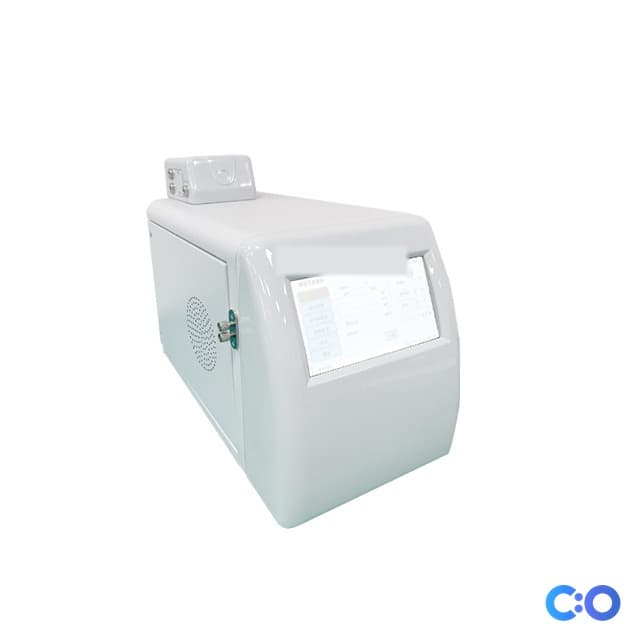
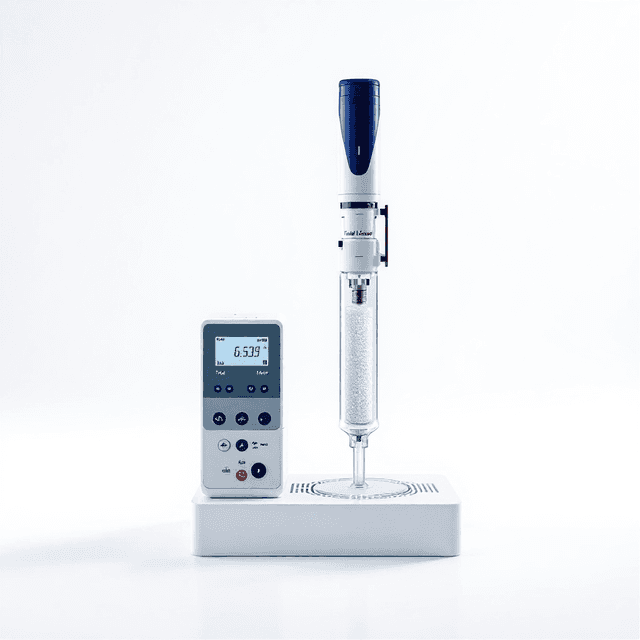
Portable Water Quality Analyzer
Field-portable spectrophotometric water analyzer measuring COD, ammonia nitrogen, total phosphorus, and total nitrogen across four wavelengths with 5% precision for environmental and industrial water quality assessment.

Louise Corscadden, PhD
Director of Science · ConductScience
Ask Louise about Portable Water Quality Analyzer fit, setup, configuration, or quote prep.
Already working with us? Sign in to connect this with My Scientist.
Key Specifications
Full details →- Model fit
- Configured during quote
- SKU family
- CS-LH-D65
- Shipping box
- 4.92 x 3.54 x 2.76 cm
- Ordering
- Online checkout and quote request available
- Category
- Benchtop Analyzers
- Build notes
- Confirm accessories, station layout, and support needs before purchase
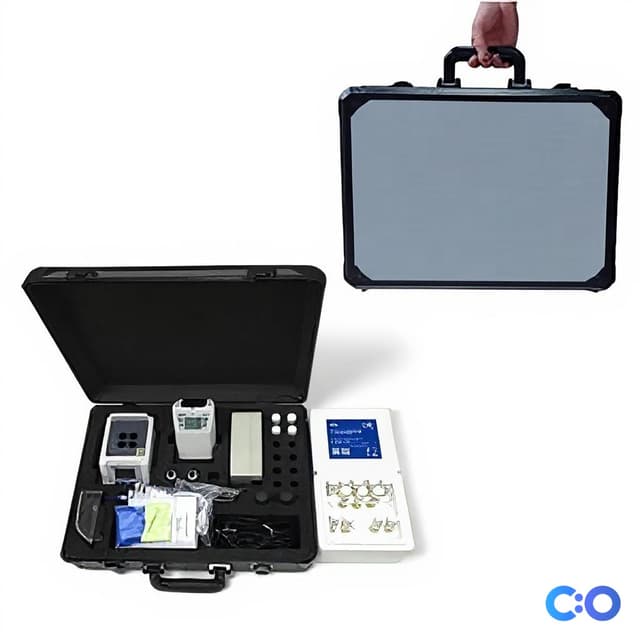
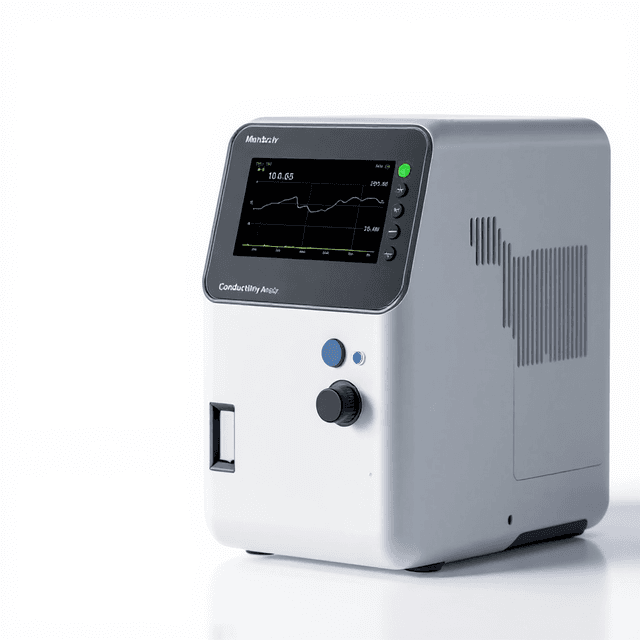
The ConductScience Portable Water Quality Analyzer (Model LH-D65) employs spectrophotometric analysis across four discrete wavelengths (420nm, 450nm, 520nm, 610nm) to quantify key water quality parameters. This field-portable instrument measures chemical oxygen demand (COD: 0-15,000 mg/L), ammonia nitrogen (0-50 mg/L), total phosphorus (0-20 mg/L), and total nitrogen (0-50 mg/L) with 5% precision using silicon diode light sources and no moving optical components.
The analyzer operates on spectrophotometric principles, where target analytes react with specific reagents to produce colored complexes with characteristic absorbance spectra. The instrument's compact design (90×70×125mm, 300g including battery) and IP65 protection rating enable direct field deployment for real-time water quality assessment. Battery operation provides >30 hours of continuous use, supporting extended sampling campaigns without external power requirements.
How It Works
The analyzer utilizes Beer-Lambert law principles, where light attenuation through colored solutions is proportional to analyte concentration. When water samples are mixed with specific reagents, target compounds (COD, ammonia nitrogen, total phosphorus, total nitrogen) form colored complexes with characteristic absorption spectra. Silicon diode light sources emit at four discrete wavelengths (420nm, 450nm, 520nm, 610nm), each optimized for specific analyte-reagent complexes.
The spectrophotometric measurement occurs in a fixed-path optical cell where transmitted light intensity is compared to reference measurements. Microprocessor-based calculations convert absorbance values to concentration units using pre-programmed calibration curves specific to each parameter and wavelength. The absence of moving optical components ensures measurement stability and reduces mechanical failure points during field operation.
Reagent chemistry varies by parameter: COD analysis typically employs dichromate oxidation under acidic conditions, producing chromium(III) complexes; ammonia nitrogen measurement uses indophenol blue formation; phosphorus analysis utilizes molybdenum blue chemistry; and total nitrogen determination combines digestion with subsequent colorimetric detection.
Features & Benefits
Model
- LH-D65
Test item
- COD,Ammonia nitrogen,Total phosphorus,Total nitrogen
Test range
- 0-15000(COD)0-50(Ammonia nitrogen)0-20(Total phosphorus)0-50(Total nitrogen)
Wave length
- 420nm/450nm/520nm/610nm
Method
- Spectrophotometer
Light source
- silicon diode
Life of battery
- More than 30h
Size and weight
- 90x70x125mm 300g(including battery)
Automation Level
- semi-automated
Brand
- ConductScience
Accuracy
- 5%
Research Domain
- Analytical Chemistry
- Environmental Monitoring
- Food Science
- Industrial Hygiene
- Microbiology
- Pharmaceutical QC
Shipping weight
- 0.37 lb
Shipping box
- L: 4.92 cm
- W: 3.54 cm
- H: 2.76 cm
| Feature | This Product | Typical Alternative | Advantage |
|---|---|---|---|
| Wavelength Options | Four fixed wavelengths (420nm, 450nm, 520nm, 610nm) optimized for water quality parameters | Many portable units offer fewer wavelengths or single-parameter measurement | Enables multi-parameter analysis from a single instrument deployment, reducing field equipment requirements. |
| Measurement Precision | 5% precision across all parameters | Entry-level field instruments often provide lower precision specifications | Delivers quantitative results suitable for regulatory compliance monitoring and research applications. |
| COD Measurement Range | 0-15,000 mg/L COD range | Basic portable analyzers typically offer narrower measurement ranges | Accommodates both clean surface waters and highly contaminated industrial effluents without dilution requirements. |
| Battery Life | More than 30 hours continuous operation | Standard portable instruments often require more frequent charging | Supports extended field campaigns and remote site monitoring without power infrastructure. |
| Optical Design | Silicon diode light sources with no moving parts | Some field instruments use mechanical components in optical systems | Eliminates mechanical failure points and provides consistent performance during transport and field use. |
| Protection Rating | IP65 protection against dust and water ingress | Basic field units may offer lower environmental protection | Enables operation in challenging field conditions without additional protective enclosures. |
This analyzer combines multi-parameter capability with field-rugged design, offering four-wavelength spectrophotometric analysis in a compact, weatherproof package. The extended battery life and wide measurement ranges support comprehensive water quality assessment in diverse field environments.
Practical Tips
Verify calibration using fresh standard solutions at the beginning of each field campaign and when environmental conditions change significantly.
Why: Standard solution degradation and temperature variations can introduce systematic errors in field measurements.
Clean measurement cells with distilled water between samples and inspect optical windows for contamination or scratches.
Why: Optical contamination directly affects light transmission and measurement accuracy across all wavelengths.
Allow reagents and samples to equilibrate to ambient temperature before mixing to ensure consistent reaction kinetics.
Why: Temperature differences affect reagent reaction rates and can cause measurement variability in field conditions.
Run duplicate measurements on 10% of samples and include blank measurements throughout the sampling session.
Why: Quality control measurements help identify measurement drift and ensure data reliability for regulatory or research applications.
If measurements appear erratic, perform a blank measurement to check optical system stability before proceeding with sample analysis.
Why: Optical system problems affect all parameters simultaneously and can be diagnosed quickly through blank measurement evaluation.
Handle reagent chemicals according to safety data sheets and dispose of reaction mixtures following local environmental regulations.
Why: Water quality reagents may contain hazardous chemicals requiring proper handling and disposal procedures.
Record environmental conditions (temperature, humidity) and sample collection details with each measurement for data interpretation.
Why: Environmental factors and sample history affect measurement reliability and help explain unusual results during data analysis.
Prepare calibration standards using the same water matrix as your samples when possible to minimize matrix effects.
Why: Matrix differences between standards and samples can cause systematic bias in spectrophotometric measurements.
Setup Guide
What’s in the Box
- Portable Water Quality Analyzer (Model LH-D65)
- Rechargeable battery pack
- AC power adapter/charger
- Sample cuvettes and measurement cells (typical)
- USB data cable (typical)
- Calibration standard solutions (typical)
- Reagent starter kit (typical)
- Operating manual and quick reference guide
- Carrying case (typical)
Warranty
ConductScience provides a standard one-year manufacturer warranty covering defects in materials and workmanship, with technical support for calibration procedures and troubleshooting assistance.
Compliance
References
Background reading relevant to this product:
What reagent volumes are required for each parameter measurement?
Sample and reagent volumes depend on the specific parameter and measurement cell configuration. The compact optical system is designed for small sample volumes to minimize reagent consumption during field deployment.
How frequently does the instrument require recalibration during field campaigns?
Calibration stability depends on measurement frequency and environmental conditions. The fixed optical path and silicon diode light sources provide stable performance, though daily calibration checks with standards are recommended for quantitative work.
Can the analyzer measure turbid or highly colored samples directly?
Sample turbidity and background color can interfere with spectrophotometric measurements. Pre-filtration or sample dilution may be required for turbid samples, while colored samples may need blank correction procedures.
What is the measurement time per sample for all four parameters?
Measurement time varies by parameter due to different reagent reaction kinetics. The spectrophotometric reading itself is rapid, but total analysis time includes reagent mixing and reaction development periods specific to each analyte.
How does temperature affect measurement accuracy in field conditions?
Temperature affects both reagent reaction rates and optical system performance. The 5% precision specification assumes operation within normal temperature ranges, with potential for increased variability under extreme conditions.
What data storage and transfer capabilities does the instrument provide?
Data management capabilities include measurement storage and transfer options, though specific capacity and connectivity features should be verified based on current firmware and hardware configuration.
Can custom calibration curves be developed for specific sample matrices?
The microprocessor-based system supports calibration curve storage, enabling matrix-specific calibrations for improved accuracy in specialized applications or unique sample types.
What maintenance procedures are required for optical system performance?
Optical system maintenance focuses on keeping measurement cells clean and protecting silicon diode light sources from contamination. Regular blank measurements help monitor optical system stability.
Have a question about this product?
Have a question? Just ask.
Send it over and we'll email you a personalized answer — no call, no scheduling.
Prefer to talk it through?
Accessories
Enhance your setup with compatible accessories