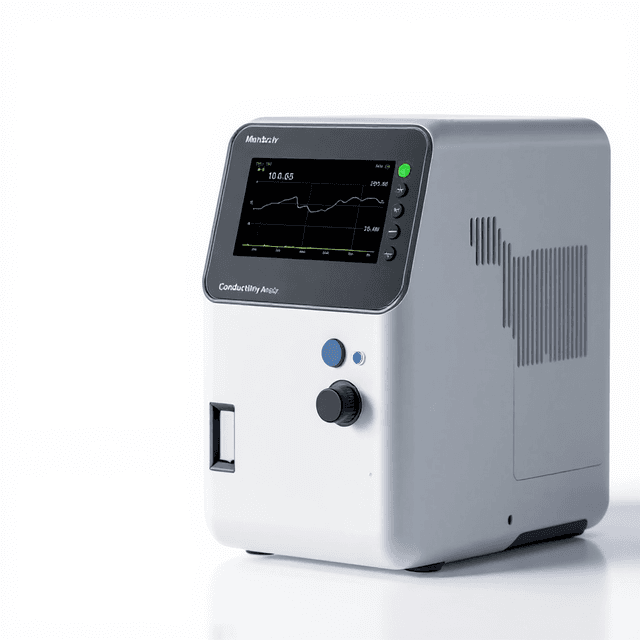
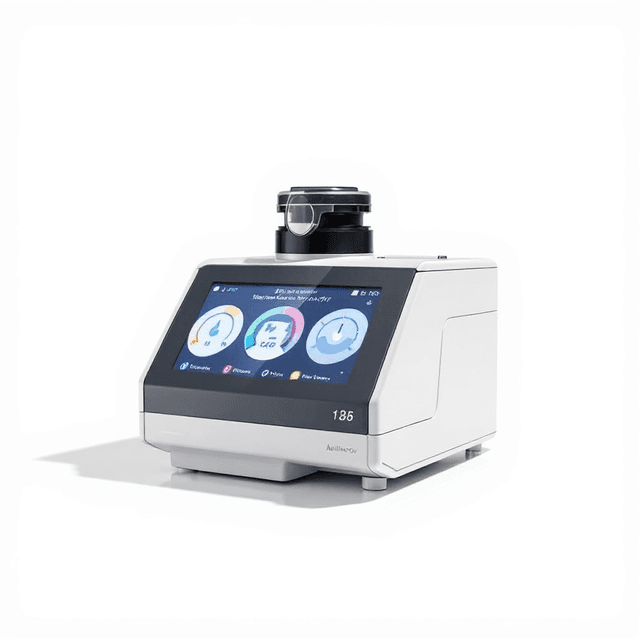
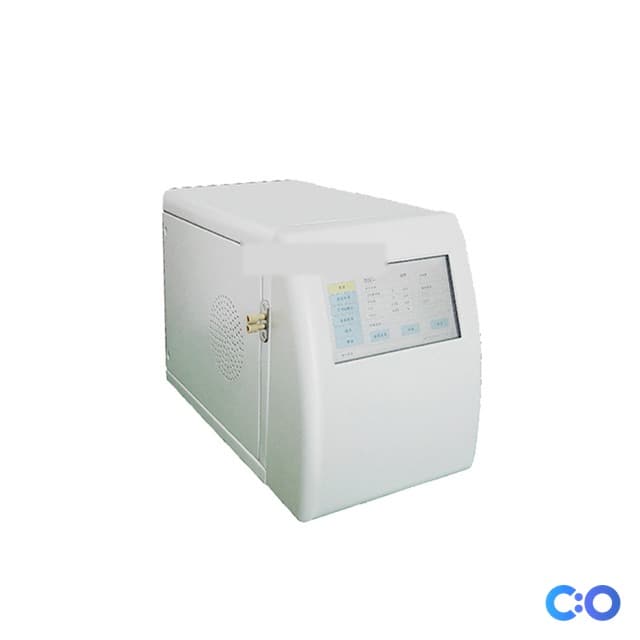
High Accuracy Benchtop Turbidity Analyzer
Precision benchtop turbidity analyzer with 0-4000 NTU range, 0.001 NTU resolution, and USEPA 180.1 compliance for accurate water quality assessment in laboratory and field applications.

Louise Corscadden, PhD
Director of Science · ConductScience
Ask Louise about High Accuracy Benchtop Turbidity Analyzer fit, setup, configuration, or quote prep.
Already working with us? Sign in to connect this with My Scientist.
Key Specifications
Full details →- Model fit
- Configured during quote
- SKU family
- LH-WQ-0007
- Shipping box
- 387.0 x 300.0 x 150.0 cm
- Ordering
- Online checkout and quote request available
- Category
- Benchtop Analyzers
- Build notes
- Confirm accessories, station layout, and support needs before purchase
The High Accuracy Benchtop Turbidity Analyzer is a precision optical instrument designed for quantitative measurement of suspended particle concentrations in aqueous solutions. Utilizing a focused tungsten lamp and nephelometric detection principles, this analyzer provides accurate turbidity measurements across a wide dynamic range from 0 to 4000 NTU with 0.001 NTU resolution. The instrument operates according to established measurement standards including USEPA 180.1 and HJ 1075-2019, ensuring consistent and traceable results for water quality assessment applications.
The analyzer features an 8-point multi-calibration system and 7-inch color touchscreen interface for streamlined operation and data visualization. With integrated data storage capacity for 40,000 measurement sets and cloud IoT connectivity, the system supports comprehensive data management and remote monitoring workflows. The benchtop design (387 × 300 × 150 mm, 6.2 kg) provides laboratory-grade stability while maintaining accessible operation for routine water quality analysis protocols.
How It Works
The turbidity analyzer employs nephelometric detection principles based on light scattering by suspended particles in solution. A focused tungsten lamp generates incident light at a specific wavelength, which is directed through the sample cell containing the test solution. When light encounters suspended particles, photons are scattered in multiple directions according to Rayleigh and Mie scattering principles, with scattering intensity proportional to particle concentration and size distribution.
The instrument measures scattered light at a 90-degree angle to the incident beam using a photodetector system. This nephelometric configuration minimizes interference from transmitted light while maximizing sensitivity to particle-induced scattering. The detection system converts scattered light intensity to electrical signals, which are processed through amplification and analog-to-digital conversion circuits. The microprocessor-based control system applies calibration algorithms to convert raw signals to standardized turbidity units (NTU, FNU, or EBC) according to the selected measurement standard.
The 8-point multi-calibration system uses certified reference standards spanning the full measurement range to establish the relationship between scattered light intensity and turbidity values. Temperature compensation algorithms account for thermal effects on optical components and sample properties, ensuring measurement accuracy across varying environmental conditions.
Features & Benefits
Light Source
- Focused tungsten lamp
Measurement Standards
- USEPA 180.1, HJ 1075-2019
Measurement Units
- NTU, FNU, EBC
Measuring Range
- 0-4000 NTU
Accuracy (0-1000 NTU)
- +/-2% + 0.01 NTU
Accuracy (1000-4000 NTU)
- +/-5%
Data Storage
- 40,000 sets
Connectivity
- Cloud IoT
Calibration
- 8-point multi-calibration
Automation Level
- semi-automated
Brand
- ConductScience
Display Type
- 7-inch color touchscreen
Accuracy
- 0.001 NTU
Power/Voltage
- 24V, 2.5A adapter
Research Domain
- Analytical Chemistry
- Environmental Monitoring
- Food Science
- Industrial Hygiene
- Microbiology
- Pharmaceutical QC
Shipping weight
- 6.2 lb
Shipping box
- L: 387.0 cm
- W: 300.0 cm
- H: 150.0 cm
| Feature | This Product | Typical Alternative | Advantage |
|---|---|---|---|
| Measurement Range | 0-4000 NTU with 0.001 NTU resolution | Entry-level models often provide 0-1000 NTU range with 0.01 NTU resolution | Extended range accommodates high-concentration industrial samples without dilution requirements, while enhanced resolution enables detection of subtle changes in low-turbidity environmental samples. |
| Calibration Points | 8-point multi-calibration system | Standard instruments typically offer 2-4 point calibration | Comprehensive calibration provides improved linearity across the full measurement range, reducing systematic errors and enhancing accuracy for diverse sample types. |
| Accuracy Specifications | ±2% + 0.01 NTU (0-1000 NTU) and ±5% (1000-4000 NTU) | Basic models often specify single accuracy values without range differentiation | Dual accuracy specifications ensure validated measurement uncertainty across both low and high concentration ranges, providing confidence for regulatory compliance applications. |
| Data Storage | 40,000 measurement sets with cloud IoT connectivity | Portable units commonly store hundreds to thousands of measurements | Extensive storage capacity supports long-term monitoring campaigns and batch analysis protocols without frequent data downloads or external logging equipment. |
| User Interface | 7-inch color touchscreen display | Basic models often feature simple LCD displays with button navigation | Intuitive touchscreen interface reduces operator training requirements and enables real-time data visualization for immediate measurement assessment and trend analysis. |
| Measurement Standards | USEPA 180.1 and HJ 1075-2019 compliance | Some instruments may support fewer standardized methods | Multiple standard compliance ensures measurement traceability and compatibility with diverse regulatory requirements for environmental and industrial applications. |
This analyzer combines laboratory-grade accuracy with extensive measurement range and comprehensive calibration capabilities. The 8-point calibration system and dual accuracy specifications provide enhanced reliability across low and high concentration applications. Cloud connectivity and extensive data storage support modern laboratory workflow integration requirements.
Practical Tips
Perform calibration verification using mid-range standards (100-500 NTU) between full 8-point calibrations to detect drift without consuming expensive standard solutions.
Why: Mid-range verification provides early indication of calibration drift while conserving certified reference materials for comprehensive calibrations.
Clean sample cells with dilute acid solution followed by deionized water rinse to remove mineral deposits and protein films that scatter light independently of sample particles.
Why: Contaminated cell surfaces contribute to measurement error by providing additional scattering sources that are not representative of sample turbidity.
Allow samples to equilibrate to room temperature and eliminate air bubbles before measurement to ensure consistent optical conditions.
Why: Temperature gradients and air bubbles create refractive index variations that interfere with accurate particle scattering measurements.
If measurements drift during analysis, check for sample settling by gently mixing and re-measuring to verify particle homogeneity.
Why: Particle settling changes the concentration in the optical measurement zone, leading to decreasing turbidity readings over time.
Record ambient temperature and measurement time for each sample to enable post-analysis correction for thermal effects on particle aggregation.
Why: Temperature influences particle behavior and aggregation kinetics, affecting turbidity measurements in samples with unstable particle distributions.
Handle sample cells by the sides to avoid fingerprints on optical surfaces, and use appropriate PPE when measuring unknown or potentially hazardous samples.
Why: Optical surface contamination causes measurement errors, while unknown samples may contain biological or chemical hazards requiring proper handling precautions.
Store turbidity standards in dark, temperature-stable conditions and check expiration dates before use to maintain calibration accuracy.
Why: Standard degradation from light exposure or temperature cycling compromises calibration accuracy and measurement traceability.
Measure blanks (deionized water) periodically during sample runs to monitor optical system stability and detect contamination.
Why: Blank measurements provide quality control indicators for instrument performance and help identify systematic measurement drift during extended analysis sessions.
Setup Guide
What’s in the Box
- High Accuracy Benchtop Turbidity Analyzer main unit
- 24V, 2.5A power adapter
- Sample measurement cells (typical)
- Turbidity calibration standards set (typical)
- USB cable for data transfer (typical)
- User manual and quick start guide (typical)
- Calibration certificate (typical)
Warranty
ConductScience provides a standard one-year manufacturer warranty covering parts and labor, with comprehensive technical support for installation, calibration, and troubleshooting assistance.
Compliance
What calibration standards are required for the 8-point calibration procedure?
The system requires certified turbidity standards spanning the 0-4000 NTU measurement range. Typical calibration points include 0, 10, 50, 100, 500, 1000, 2000, and 4000 NTU standards traceable to primary reference materials. Consult product datasheet for specific standard requirements and acceptable uncertainty tolerances.
How frequently should the instrument be calibrated for optimal accuracy?
Calibration frequency depends on measurement accuracy requirements and sample matrix complexity. For routine water quality monitoring, monthly calibration verification with quarterly full 8-point calibration is typically sufficient. High-precision applications or challenging sample matrices may require weekly verification with monthly full calibration.
What sample preparation is required for accurate turbidity measurement?
Samples should be thoroughly mixed to ensure homogeneous particle distribution and measured at consistent temperature. Remove large debris through coarse filtration if necessary, but avoid fine filtration that removes particles of interest. Measure samples promptly after collection to minimize settling and aggregation effects.
Can the analyzer measure colored samples accurately?
Colored samples may exhibit absorption interference that affects turbidity measurements. The tungsten lamp and nephelometric detection minimize color effects compared to transmission methods, but highly colored samples may require dilution or alternative measurement approaches. Consult product specifications for acceptable color limits.
What data formats are supported for export and analysis?
The cloud IoT connectivity enables data export in standard formats, though specific file types should be confirmed in the product datasheet. The 40,000 measurement storage capacity suggests compatibility with laboratory information management systems and statistical analysis software.
How does temperature affect measurement accuracy?
Temperature variations affect both optical component performance and sample properties including particle aggregation and solution viscosity. The instrument likely incorporates temperature compensation algorithms, but maintaining consistent measurement temperature improves precision. Consult specifications for operating temperature range and accuracy.
What maintenance procedures are required for optimal performance?
Regular maintenance includes cleaning optical components, verifying zero-point stability, and checking calibration drift. Sample cell cleaning between measurements prevents cross-contamination. The tungsten lamp will require periodic replacement based on operating hours and intensity degradation.
How does this analyzer compare to portable turbidity meters for field applications?
This benchtop analyzer provides superior accuracy, wider measurement range, and extensive calibration capabilities compared to portable meters. However, it requires stable power supply and controlled environment, making it better suited for laboratory analysis of field-collected samples rather than direct field measurement.
Have a question about this product?
Have a question? Just ask.
Send it over and we'll email you a personalized answer — no call, no scheduling.
Prefer to talk it through?
Accessories
Enhance your setup with compatible accessories
Upgrade Options