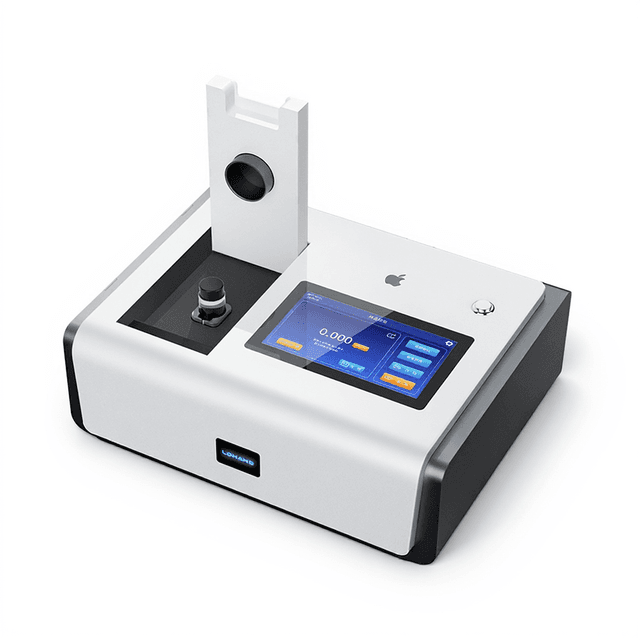
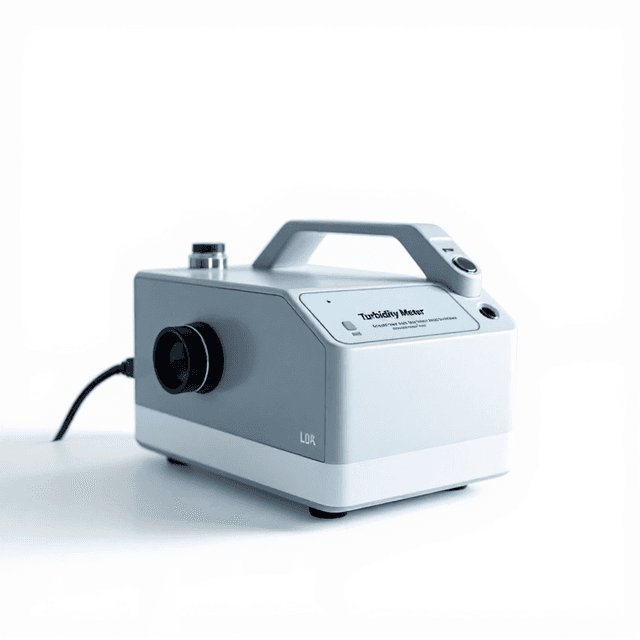
Multi-Parameter Laboratory Water Quality Detector
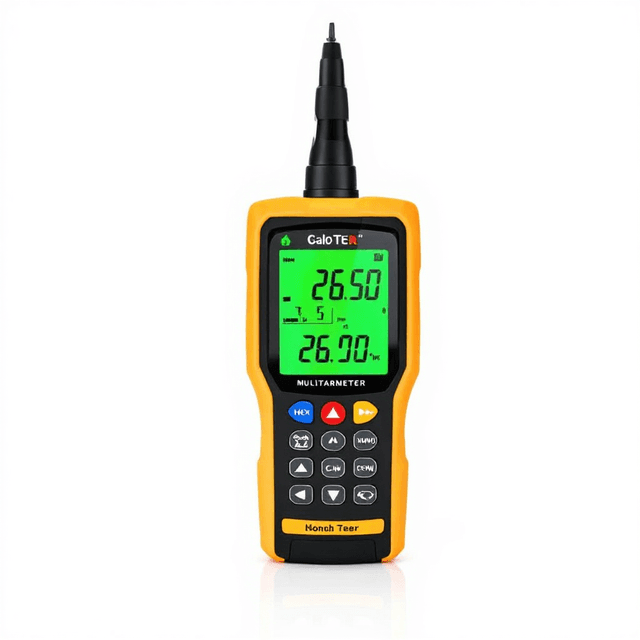
Portable spectrophotometric analyzer for simultaneous determination of COD, ammonia nitrogen, total phosphorus, and total nitrogen in water samples using four discrete wavelengths.

Louise Corscadden, PhD
Director of Science · ConductScience
Ask Louise about Multi-Parameter Laboratory Water Quality Detector fit, setup, configuration, or quote prep.
Already working with us? Sign in to connect this with My Scientist.
Key Specifications
Full details →- Model fit
- Configured during quote
- SKU family
- CS-LH-CLR015
- Shipping box
- 4.92 x 3.54 x 2.76 cm
- Ordering
- Online checkout and quote request available
- Category
- Benchtop Analyzers
- Build notes
- Confirm accessories, station layout, and support needs before purchase
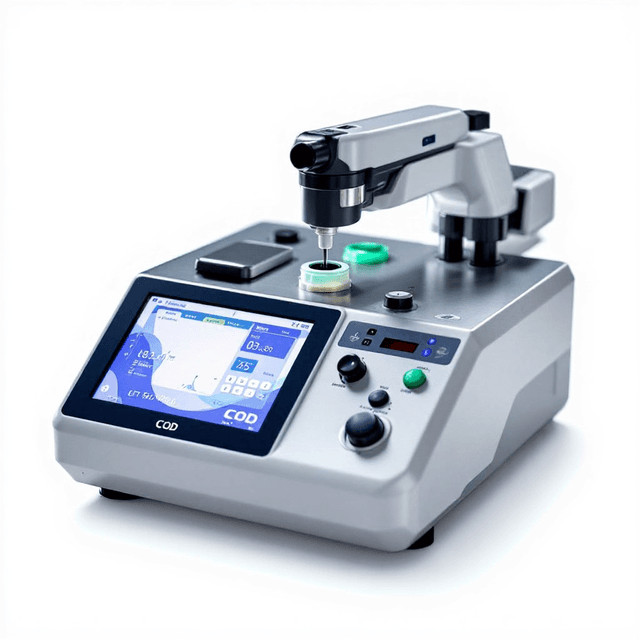
The Multi-Parameter Laboratory Water Quality Detector employs spectrophotometry to quantify four critical water quality parameters: chemical oxygen demand (COD), ammonia nitrogen, total phosphorus, and total nitrogen. This portable analyzer utilizes four discrete wavelengths (420nm, 450nm, 520nm, 610nm) with a silicon diode light source to enable colorimetric determination of analytes following standardized digestion and reaction protocols.
The instrument operates without moving parts, providing measurement precision of 5% across the specified analytical ranges. Sample and reagent requirements are minimized through optimized optical path design, while the integrated battery system supports more than 30 hours of continuous operation. The compact form factor (90×70×125mm, 300g including battery) enables field deployment while maintaining laboratory-grade analytical performance.
This system addresses the analytical requirements of environmental monitoring laboratories, wastewater treatment facilities, and industrial process control applications where rapid, multi-parameter water quality assessment is required. The spectrophotometric method provides quantitative results traceable to established analytical protocols while eliminating the complexity associated with electrode-based measurement systems.
How It Works
The analyzer employs spectrophotometry based on the Beer-Lambert law, where analyte concentration is proportional to light absorption at specific wavelengths. Sample aliquots undergo standardized chemical digestion and colorimetric reaction procedures to form chromophoric complexes with maximum absorbance at the instrument's four available wavelengths (420nm, 450nm, 520nm, 610nm).
For COD determination, samples are digested with dichromate in acidic conditions, with absorbance measured at 420nm or 610nm depending on concentration range. Ammonia nitrogen analysis utilizes the indophenol blue reaction, forming a colored complex measured at 450nm or 520nm. Total phosphorus requires acid digestion followed by molybdate complex formation, with absorbance quantified at the appropriate wavelength for the expected concentration range.
The silicon diode light source provides stable illumination across all wavelengths, while the optical system lacks moving parts to minimize drift and maintenance requirements. Internal calibration algorithms convert absorbance measurements to concentration values based on stored calibration curves, with results displayed directly on the instrument interface.
Features & Benefits
Test item
- COD,Ammonia nitrogen,Total phosphorus,Total nitrogen
Test range
- 0-15000(COD)0-50(Ammonia nitrogen)0-20(Total phosphorus)0-50(Total nitrogen)
Wave length
- 420nm/450nm/520nm/610nm
Method
- Spectrophotometer
Light source
- silicon diode
Life of battery
- More than 30h
Size and weight
- 90x70x125mm 300g(including battery)
Automation Level
- semi-automated
Brand
- ConductScience
Accuracy
- 5%
Research Domain
- Analytical Chemistry
- Environmental Monitoring
- Food Science
- Industrial Hygiene
- Microbiology
- Pharmaceutical QC
Shipping weight
- 0.37 lb
Shipping box
- L: 4.92 cm
- W: 3.54 cm
- H: 2.76 cm
| Feature | This Product | Typical Alternative | Advantage |
|---|---|---|---|
| Number of Parameters | Four parameters (COD, ammonia nitrogen, total phosphorus, total nitrogen) | Single-parameter analyzers or basic multi-parameter systems with 2-3 analytes | Reduces equipment costs and laboratory space while providing comprehensive water quality assessment from a single instrument platform |
| Wavelength Options | Four discrete wavelengths (420nm, 450nm, 520nm, 610nm) | Entry-level models often provide 1-2 fixed wavelengths | Enables optimization of analytical wavelength for each specific analyte-chromophore complex to maximize sensitivity and minimize interference |
| Measurement Precision | 5% across all parameters | Portable analyzers typically range from 3-10% depending on parameter | Consistent precision specification across all analytes simplifies quality control procedures and meets regulatory monitoring requirements |
| Battery Life | More than 30 hours continuous operation | Portable systems typically offer 8-16 hours of operation | Supports extended field campaigns and remote monitoring applications without frequent recharging or external power requirements |
| Analytical Range Coverage | Wide dynamic range (COD: 0-15,000 mg/L, others: 0-20 to 0-50 mg/L) | Limited range instruments often require sample dilution for high concentrations | Accommodates both environmental and industrial samples without dilution steps, reducing analysis time and potential dilution errors |
| Optical Design | No moving parts with silicon diode light source | Some systems use filter wheels or tungsten lamps requiring replacement | Eliminates mechanical wear and lamp replacement while providing stable long-term performance with minimal maintenance requirements |
This multi-parameter analyzer combines four critical water quality measurements in a portable platform with consistent 5% precision and extended battery life. The four-wavelength capability and wide analytical ranges accommodate diverse sample types from environmental monitoring to industrial applications. The no-moving-parts optical design minimizes maintenance while the silicon diode source provides long-term stability.
Practical Tips
Prepare calibration standards in the same matrix as your samples when analyzing complex waters or industrial effluents.
Why: Matrix effects can alter chromophore formation and absorbance characteristics, leading to systematic bias in results.
Clean cuvettes with 10% nitric acid followed by deionized water rinse after analyzing high-concentration samples.
Why: Residual organic matter or precipitates can affect baseline absorbance and cause carryover between measurements.
Allow digested samples to cool to room temperature before spectrophotometric measurement to minimize temperature-dependent absorbance drift.
Why: Temperature variations affect both the chromophore stability and the optical characteristics of the measurement system.
If precision exceeds the 5% specification, verify reagent expiration dates and prepare fresh standards from certified reference materials.
Why: Degraded reagents or standards are the most common cause of precision deterioration in colorimetric methods.
Run duplicate analyses on 10% of samples and maintain control charts tracking recovery of certified reference materials.
Why: Statistical process control identifies systematic drift or precision issues before they affect data quality in routine analyses.
Perform digestions in a well-ventilated area or fume hood, especially for COD analysis using dichromate-sulfuric acid mixtures.
Why: Acid digestion procedures generate heat and potentially hazardous vapors that require proper ventilation for operator safety.
Store the instrument at room temperature and allow 15-20 minutes equilibration time before calibration or sample analysis.
Why: Temperature fluctuations affect both the light source stability and the optical detector response characteristics.
Document digestion times and temperatures for each batch of samples to ensure consistent chromophore development across analyses.
Why: Incomplete or variable digestion conditions lead to poor recovery and increased measurement variability between sample batches.
Setup Guide
What’s in the Box
- Multi-parameter water quality analyzer main unit
- Rechargeable battery (installed)
- Power adapter and charging cable
- Sample cuvettes and holders (typical)
- User manual and method protocols
- Calibration certificate
- Protective carrying case (typical)
Warranty
ConductScience provides a standard one-year manufacturer warranty covering defects in materials and workmanship, with technical support available for method development and troubleshooting assistance.
Compliance
References
Background reading relevant to this product:
What sample preparation is required for the different analytes?
COD requires acid dichromate digestion at elevated temperature. Total phosphorus needs acid persulfate digestion. Ammonia nitrogen uses direct colorimetric reaction with salicylate reagents. Total nitrogen requires alkaline persulfate digestion followed by cadmium reduction. Consult product datasheet for specific digestion protocols.
How does the 5% precision compare to EPA method requirements?
The 5% precision meets or exceeds typical EPA method specifications for water quality parameters. EPA Method 410.4 for COD specifies precision within 5-10% depending on concentration level. Method 350.1 for ammonia requires precision typically within 3-7%. This analyzer provides consistent 5% precision across all parameters.
Can the instrument analyze turbid or colored samples directly?
Turbid samples may require filtration or dilution to minimize light scattering interference. Colored samples can affect baseline absorbance and may need sample blanks or dilution to bring color within acceptable limits. Pre-treatment protocols should be validated for specific sample matrices.
What is the typical analysis time per sample?
Analysis time depends on digestion requirements. COD analysis requires 2-hour acid digestion. Total phosphorus needs 30-60 minute persulfate digestion. Ammonia nitrogen provides results in 10-15 minutes after reagent addition. Spectrophotometric measurement itself takes less than 1 minute per parameter.
How frequently does the system require recalibration?
Recalibration frequency depends on usage intensity and analytical requirements. Daily single-point checks using mid-range standards are recommended for routine use. Full multi-point calibration should be performed weekly or when quality control standards exceed ±10% of expected values.
What data output and storage capabilities are available?
Consult product datasheet for specific data logging and connectivity options. Most portable spectrophotometric analyzers provide numerical display of results with basic data storage capabilities. External data transfer methods vary by model.
Are there interferences common to these spectrophotometric methods?
COD analysis can be affected by chloride ions, which require silver sulfate masking. Ammonia measurements may be interfered by high calcium or magnesium levels. Phosphorus analysis can be affected by arsenate or silicate. Total nitrogen may show positive bias from nitrite. Matrix-matched calibrations help minimize interference effects.
How does this compare to discrete analyzer or continuous monitoring systems?
This portable analyzer offers field deployment capability and multi-parameter analysis not available with single-parameter continuous monitors. Precision and accuracy are comparable to discrete analyzers but with lower throughput. The main advantages are portability, battery operation, and consolidated analysis of four key parameters.
Have a question about this product?
Have a question? Just ask.
Send it over and we'll email you a personalized answer — no call, no scheduling.
Prefer to talk it through?
Accessories
Enhance your setup with compatible accessories